
Chocolate Yesterday & Cheese Today
- Deborah Kade
- 10 minutes ago
- 7 min read

Yesterday I went to Cailler in Broc. Today, Michael and I decided to go to Gruyères for raclette.
"According to legend, Gruyères was founded in 400 B.C. by the Vandal King Gruerius. He saw a crane (“grue” in French) flying across the crimson evening sky and decided to build his town on that very spot. This is why the coat of arms of Gruyères depicts a crane on a red background. The symbol of the heraldic animal of the former Count of Gruyères has a significant presence throughout the region up to the present day."
Raclette

Gherkins and pickled onions

Crusty crust on the bread

Complimented the cheese.

"The picturesque town of Gruyères, also known as Greyerz, rises majestically on a hill at the foot of the Pre-Alps in the canton of Fribourg and offers a breathtaking view of the surrounding countryside. This car-free village with its charming cobblestone streets and the central fountain takes visitors back in time and invites you to take a leisurely walk, where the historic atmosphere becomes tangible. The medieval town is not only the namesake of the region of La Gruyère, but also of the world-famous cheese Gruyère AOP, whose production is a proud tradition of the region."


Unique burner for fondue


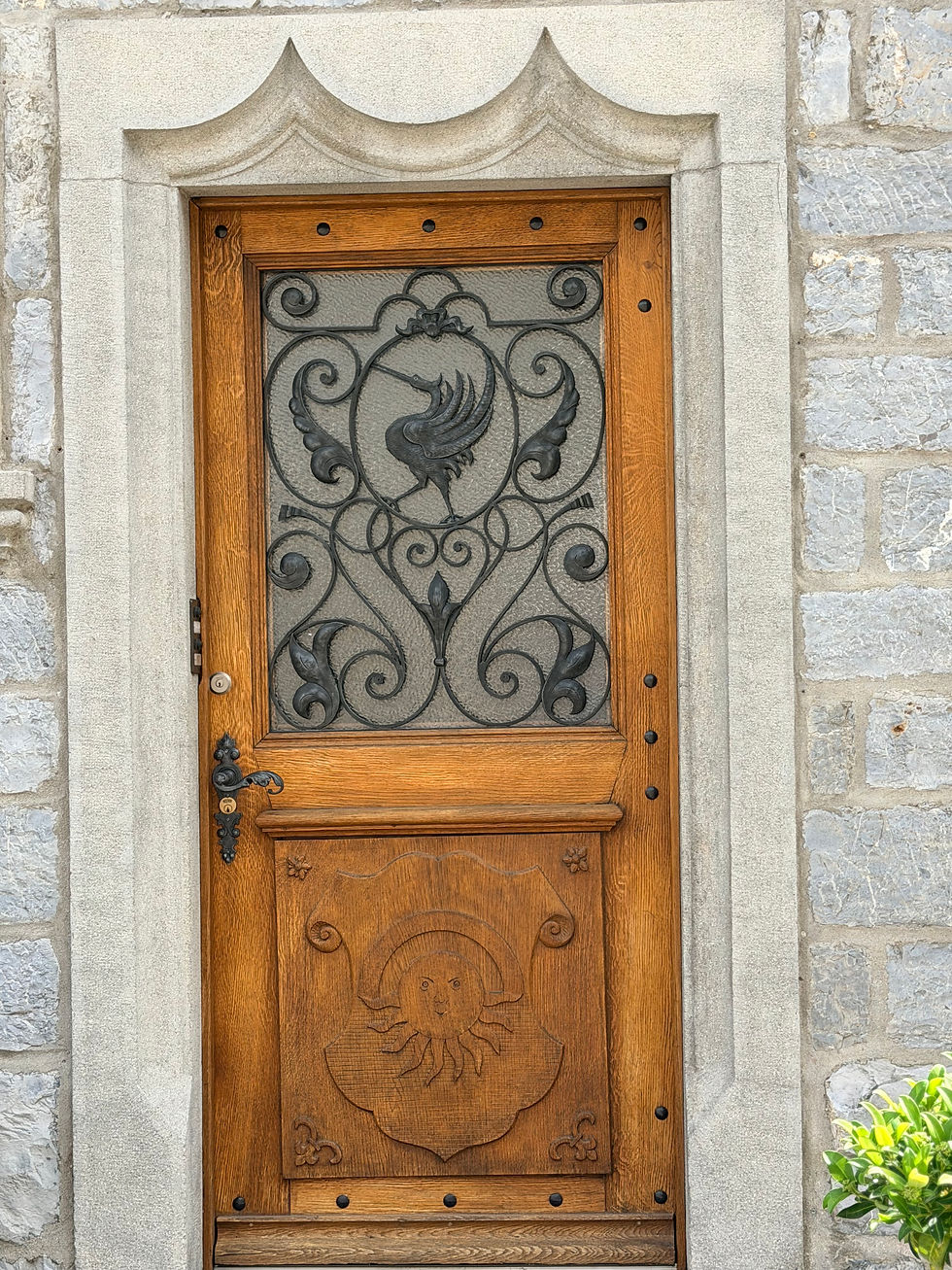


Even ducks on aprons


Pretty curtains and flower boxes


Socks


Notice the door bell on the right of the door. Just pull the long metal handle down and a bell rings in side the house.

The cat walk

It's not every day you see a cat on a leach being carried around.


Royal dragon water spout


A variety of traditional and cozy restaurants offer the famous specialties of the region: fondues, roasts, chalet soup, Älplermagronen, meringue with double cream or a Kilbi menu – a true culinary delight for visitors who want to experience the authentic taste of the region.
Gruyères, a medieval village in the canton of Fribourg, charms with its museums, local cuisine, and pre-Alpine setting. Famous for its cheese, it is ranked among Switzerland’s most beautiful villages.
The small picturesque town of Gruyères (also known as Greyerz in German) appears to have emerged straight out of the Middle Ages.
The Castle of Gruyères is a must-see but since we may go again with friends, we skipped it! Built in the 13th century, the former residence of the Counts takes you on a journey through eight centuries of art and history, with some superb temporary exhibitions. From its medieval ramparts to the romantic lounges, you can let yourself be carried away on a journey through time.


When we tired of looking at the panorama of the Alpine foothills from the Castle terrace, we strolled through the traffic-free streets of the small town.


They even have a swing

I can barely see her eyes.

New photo opportunities present themselves at every step.

The Museum and Bar of H.R. Giger, who won an Oscar for designing the xenomorphs in the film Alien, offers a completely different kind of cultural experience, as does the Tibet Museum.
H.R. Giger creations


Tibet Museum


Traditional restaurants serve the legendary specialties of the Fribourg Pre-Alps, such as fondues and dishes from the Bénichon menu.
The festival of the Bénichon has a religious origin: from the Latin “benedicto”, which means blessing, the Bénichon corresponds to the anniversary of the church’s consecration.
"However, the religious festival was followed by secular festivities, very ancient and vivid by comparison, which lasted three days. The secular festival was assuming too much significance, according to the authorities. They tried to put limits on the timing of the Bénichon. They fixed the festival at the second Sunday in September for the majority of the canton and at the second Sunday in October for the alpine regions."
"From that time, the festival took on a new dimension: it marked the end of work in the fields for the September Bénichon and the return of the herds to the plain after a summer on the mountain for the October Bénichon. Thus, the Bénichon meal marks the time of reunions. Family and friends meet again around the table. If the oldest mention of the Bénichon menu, as we know it today, dates from 1852, many products have been known for much longer, for example, the cuchaule, which was cited in 1558. The Bénichon is still today a traditional festival, valued and constantly reinvented by the people of Fribourg."
"Hay cart race in Charmey, traditional market and procession at Châtel-St-Denis, Bénichon fair at Romont, shooting at Fétigny, Vernay or Rueyres-les-Prés, folklore market at Ecuvillens, tracto-bénichon at Corserey or even hurling the cuchaule – or at least a reproduction of it made of spruce – at Attalens, the Bénichon festivals break new ground. If many families carry on the tradition of the Sunday meal, other tasty alternatives are enjoying success: many restaurants offer a Bénichon menu.
A delicious accompaniment to the ragoût d’agneau (lamb stew) of the Bénichon meal, Poire à Botzi AOP is a typical Fribourg variety and also the first Swiss fruit to benefit from an AOP label. It takes its name from the patois "botset", which means "bunch". This little pear, in fact, develops in clusters of up to five fruits."
"It takes its name from the patois "botset", which means "bunch". This little pear, in fact, develops in clusters of up to five fruits, advises Michel Losey from Sévaz, like the well-informed professional he is.If the Poire à Botzi AOP is also profoundly linked to the Bénichon, it is because it was always harvested at the same time as the great celebration of Autumn, that is, mid-September. Each farmer had a Poire à Botzi tree in his orchard and could thus enhance his Bénichon meal with these luscious and tasty marvels. For the pear reveals its most surprising flavors when it is cooked. A caramelized taste that goes equally well with main dishes as with desserts.A delicate cultivation process. Only some twenty farmers grow this fruit in the region. Very sensitive to its surroundings, it acquires its flavor according to the place where it is cultivated. Thus a pear growing near a forest will not have the same flavor as one growing near a field of rape. Its cultivation demands much care and supervision. The period of maturation is also very short, no more than a few days. The harvest is, therefore, a true race against time."
The Bénichon menu: Cuchaule AOP and Bénichon mustard - Sensler Brätzele - Cabbage soup - Jambon de la Borne AOP (chimney-smoked ham) - Leg of lamb - Poires à Botzi AOP (Small pears) -Meringue with La Gruyère double cream - Treats of the Bénichon
Pear Recipe:
Preparation : 160 min
Ingredients :
• 3 or 4 Botzi pears per person
• 1 l red wine
• 300g brown sugar•
1 cinnamon stick
Preparation :Wash the pears, take the "eye" out and leave the stalk.
Cook the wine, sugar and cinnamon for 30 to 40 min.
Add the pears, cook about 1h 30min
Test the pears, they should be well cooked, a little shriveled.
Reduce the cooking juice into a caramel and pour it over the pears.
Cuisine & traditions au Pays de Fribourg. Editions La Sarine.
"The Fondue Academy gives visitors the opportunity to gain an insight into the art of fondue preparation by master cheese makers. Nutritious indulgence with friends is guaranteed! Chocolate fans can reserve a place in a workshop at the Chocolaterie de Gruyères."


Trying to interest Michael into taking this class, but he isn't too interested.

A variety of traditional and cozy restaurants offer the famous specialties of the region: fondues, roasts, chalet soup, Älplermagronen, meringues with double cream or a Kilbi menu – a true culinary delight for visitors who want to experience the authentic taste of the region.
We always eat at The Restaurant Hôtel de Ville.The traditional fondue as well as the jambon de la borne can be enjoyed. Also on the menu are raclette, röstis and croûtes au fromage, still in "Swiss specialties" fashion. Those who like a bit of freshness can enjoy a wide range of salads or savor trout from La Gruyère, the house specialty.
We always order the raclette here.
Raclette is a dish of Swiss origin, also popular in other countries, based on heating cheese and scraping off the melted part, then typically served with boiled potatoes. Raclette is historically a dish originating from the canton of Valais in Switzerland. This cheese from Valais benefits from an AOP. Raclette cheese is also a Swiss-type cheese marketed specifically to be used for this dish.
Raclette is also served as street food, but often with bread instead of potatoes. Our waitress was Suzan from Porto, Portugal. She has waited on us several times over the years.


I love it when it bubbles to form a crusty brownish layer.

I put the cheese over gherkins, pickled onions, and small potatoes. Always add pepper to bring out the taste.


Love my pepper


We ordered another piece


We wanted Gruyère double cream and raspberries but they ran out. Instead Michael changed to meringues and double cream.I shared some of his.

A spoon can sit up straight in the double cream.

It is tradition for the double cream to be served in a wooden container


My reactions to the meal!!!

Love sign


We did something different going to and from Gruyères.
Instead of taking three trains, we took two trains and two buses. We had the best time laughing on the buses. It was like being on a rollercoaster. at ab amusement park or on a Disney ride. The scenery along the way is spectacular!!
Caution Caution Caution Caution Caution Caution Caution Caution
There Are Hairpin Curves That May Make You Dizzy, So Don't View The Movies. Proceed At Your Own Risk!
Up the mountain we go! In Boltigen, we switched to bus 259.

There was construction in different locations

Bus was too close to the motorcyclist.

Buses have the right of way so cars need to pull over to the side to let buses go first.


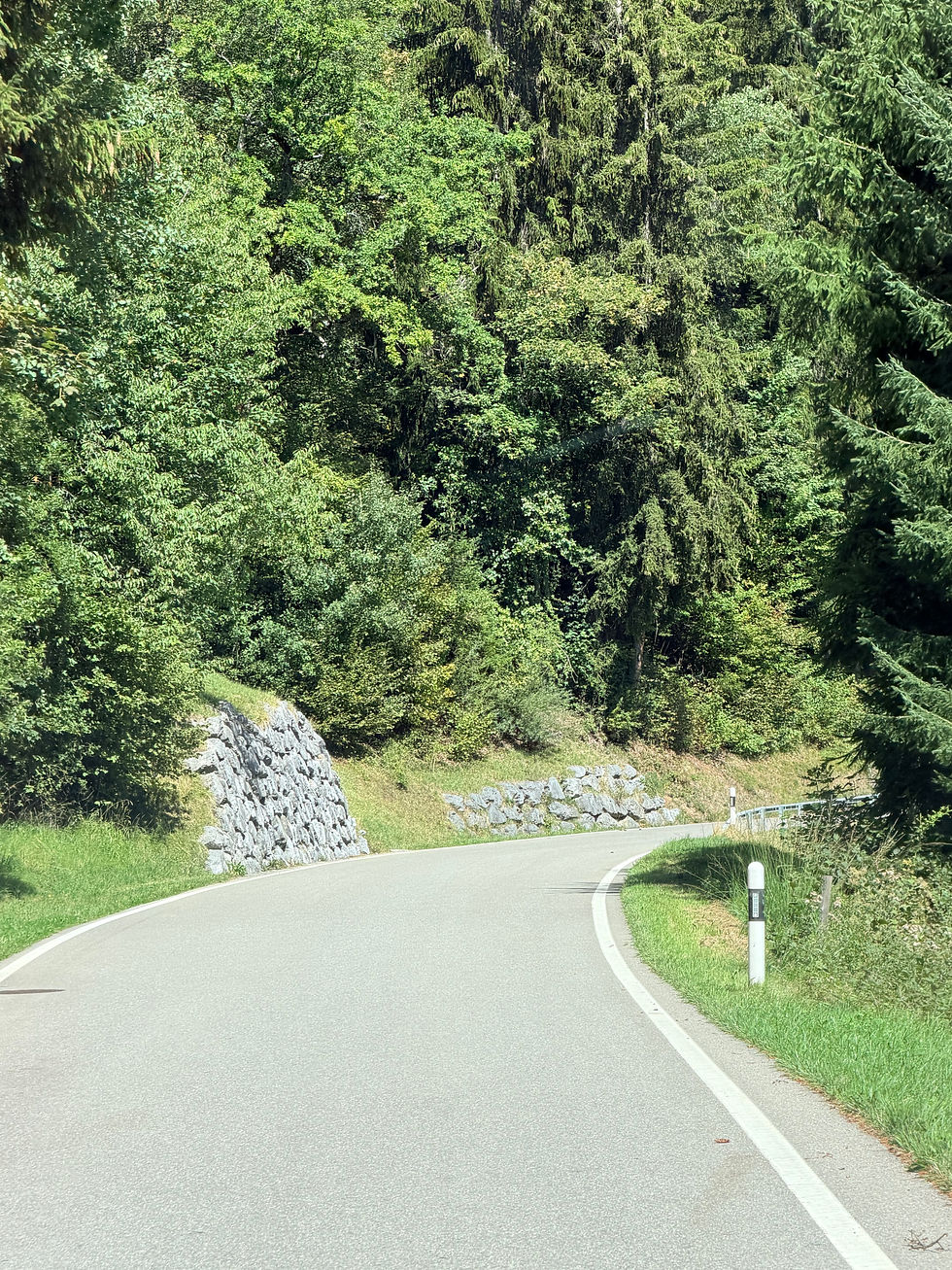


Jaun Pass
Jaun Pass is a high mountain pass (elevation1508 m. or 4948 ft. ) in the Swiss Alps linking Charmey and Jaun in the canton of Fribourg with Reidenbach (part of the municipality of Boltigen) in the canton of Bern. The pass itself is located within the canton of Bern.
The pass road was completed in 1878.
Many hiking trails


Went from bus 259 to the 260 which brought us all the way to Gruyères Ville
No litter on this bus. We and another lady were the only people on the bus. On both buses, we sat in the front seat so I could take pictures.


The castle in Gruyères is under construction.

Passed by the cheese dairy where they show you how they made Gruyère cheese.

Heading back to Unterseen via the Jaun Pass.


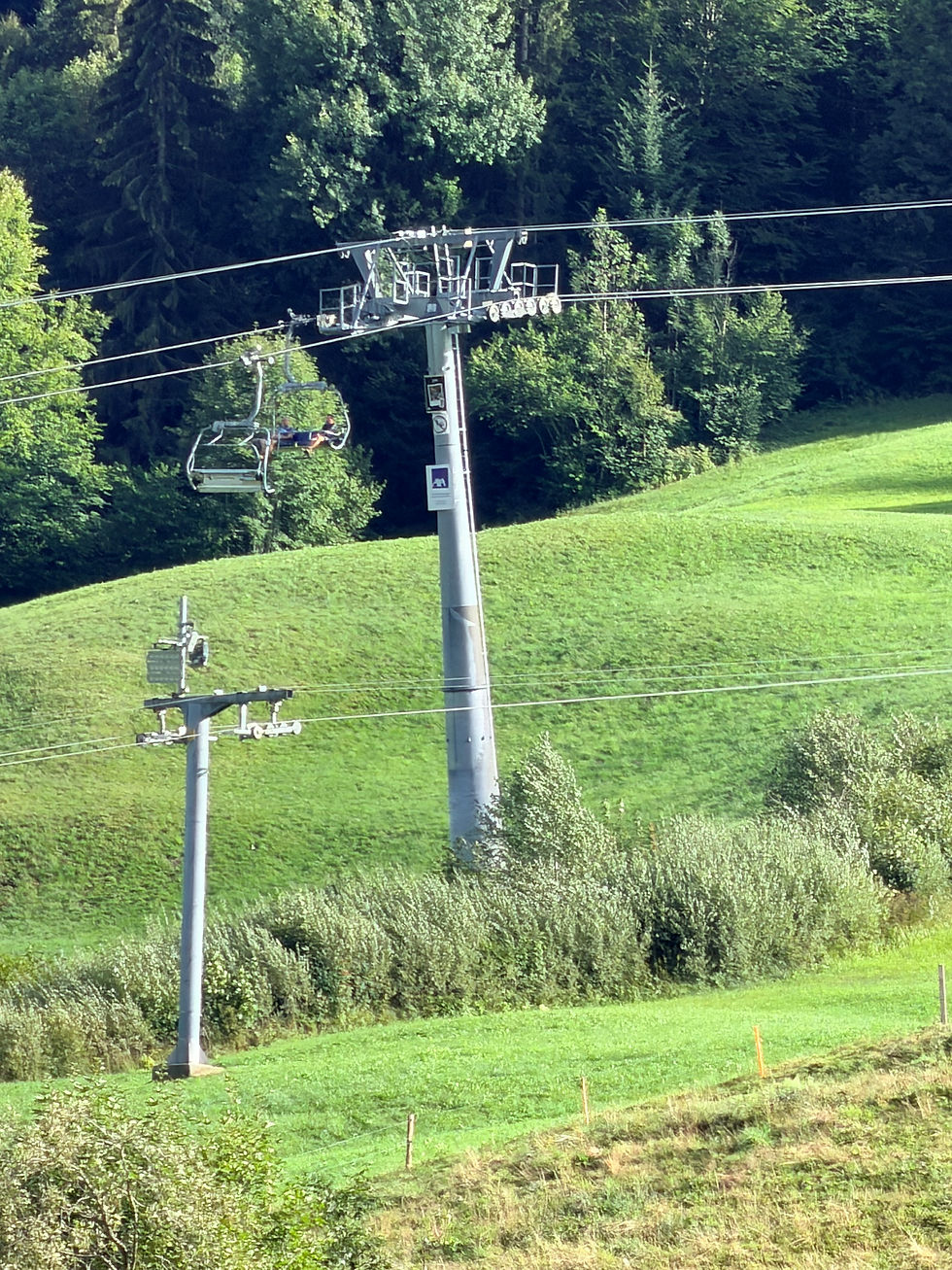


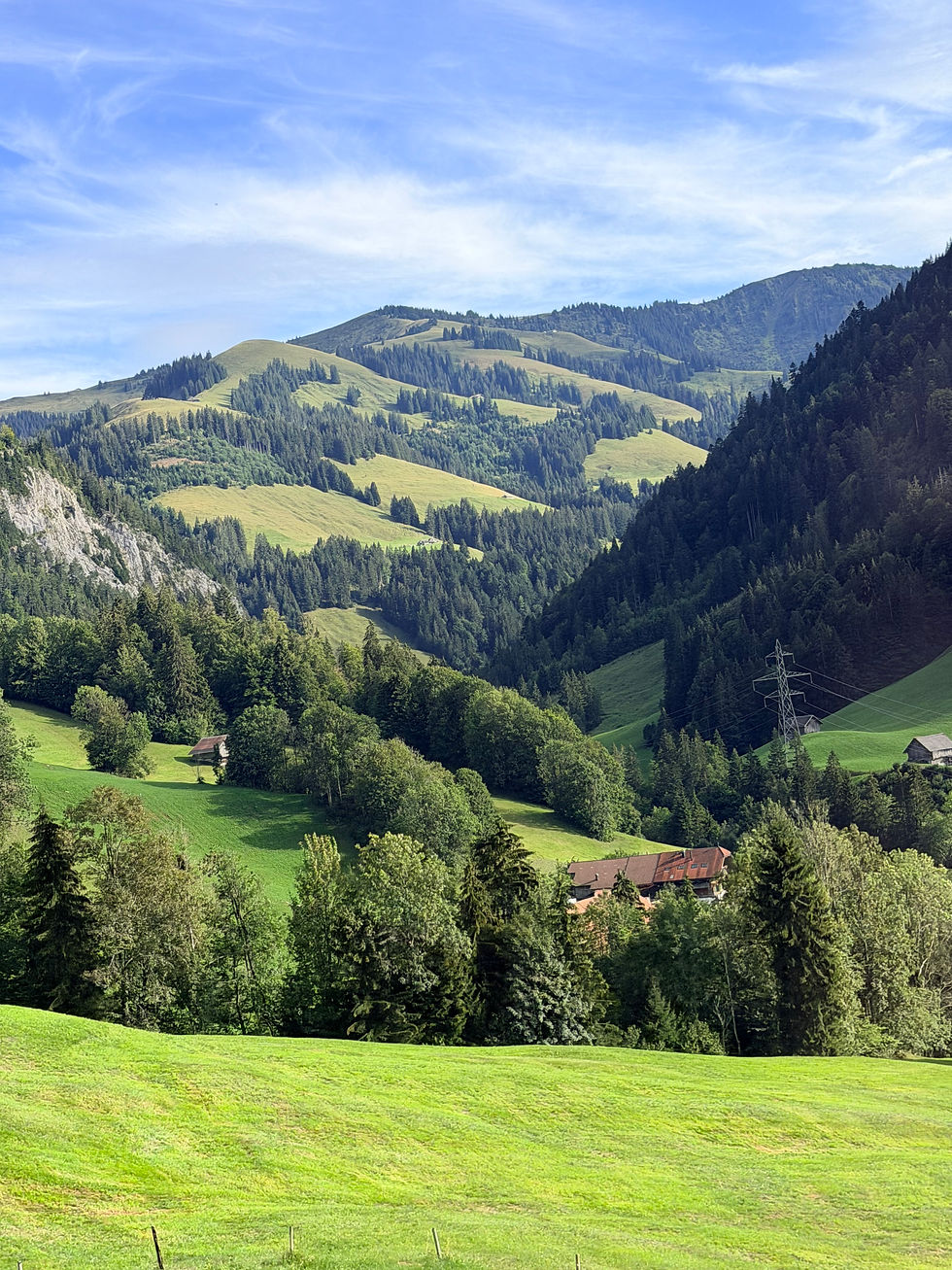


The bus disturbed so many hawks. Almost missed the picture of all these birds.

We are high up on the mountain.


Cars yielding the right of way to the bus


What an adventure on the bus!! I will add this to the tour for friends and family.

Who needs a car rental when you have trains and buses!!!!!!!!!


Comments