
Petunias: Prevalent Flower in Gstaad
- Deborah Kade
- 11 minutes ago
- 9 min read


Most of the buildings had hanging petunias


The Gstaad region is famous for: The Edelweiss: The iconic white star-shaped alpine flower symbolizing the Swiss Alps.
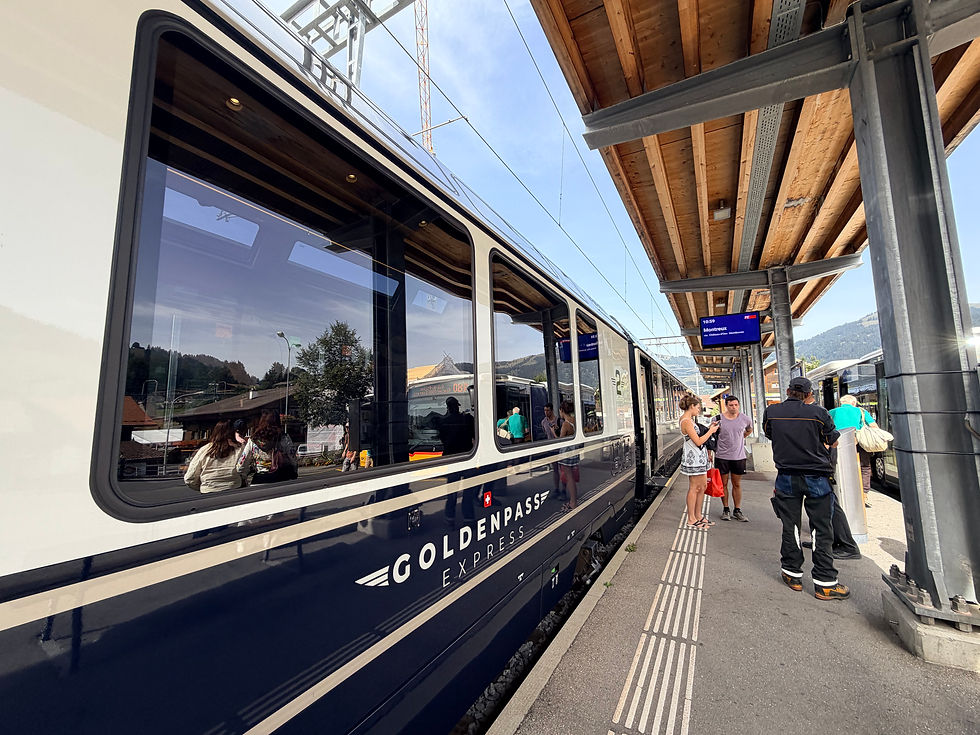
Today, I’m taking the Goldenpass Express train which starts from the Interlaken Ost station all the way to Montreux. I started the journey from the Interlaken West train station and I will get off in Gstaad.


By taking the Goldenpass Expresss, I can stay on the same train instead of changing in Spiez and again in Zweisimmen.
The Goldenpass Express is quite luxurious with its windows and seats. The luggage racks are more spacious than those on other trains. Smaller luggage fits between the seats, too. So, I relaxed and enjoyed the views!


Views of Lake Thun


Some of the features of the train:
Name of the train

The next stop and some of the stops before reaching Montreux. Our first stop was Spiez and the time we arrive in Spiez. The map shows the location where we are presently. I'm in wagon 11

The speed we are traveling at.

These tell you if the seat is empty or if someone reserved it. Then it will tell from where travel started and will end.

When we arrive in Spiez, we have additional information. What!! It looks like the Basel train is 7 minutes late. Oh, I know why. It's the German train which is always late.

Some views along the way. This region is known for the typical Swiss chalet.


In Erlenbach, I always check the lumber yard.


The two ladies were busy serving, coffee, champagne, sandwiches, etc.

It's too early to be drinking champagne.

Place small luggage between the seats

Luggage racks for the larger suitcases.

Coffee not served in paper cups on this train!

This train is headed back to Interlaken

Scenery is greener in this area.


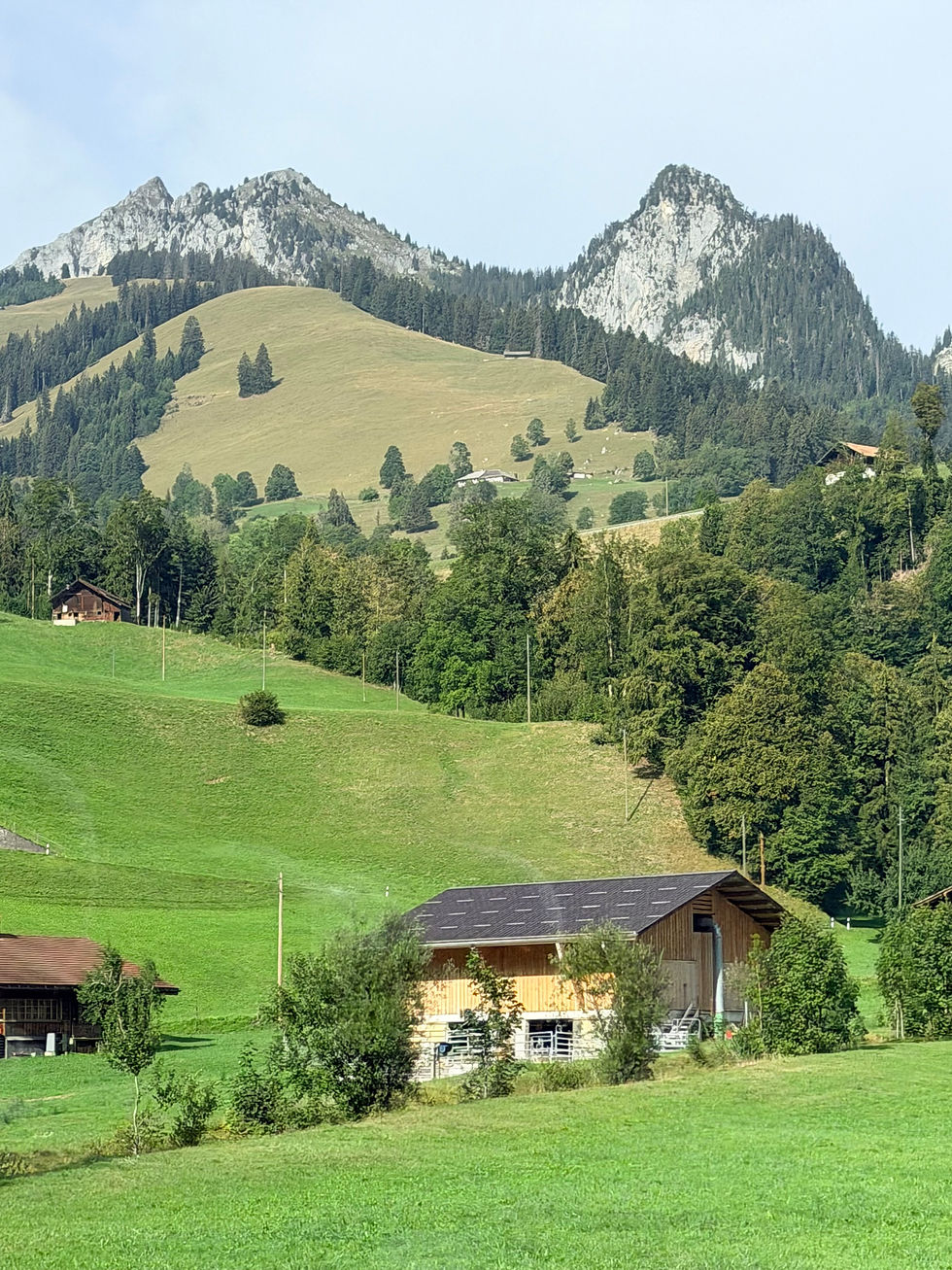

Who needs a watch when there are clocks everywhere.


Stopped in Zweisimmen but I don't have to change trains; where coming back to Interlaken I will have to.

Look at the route we will be following.

Ski and hiking region.

Strange that I don't see any cows.


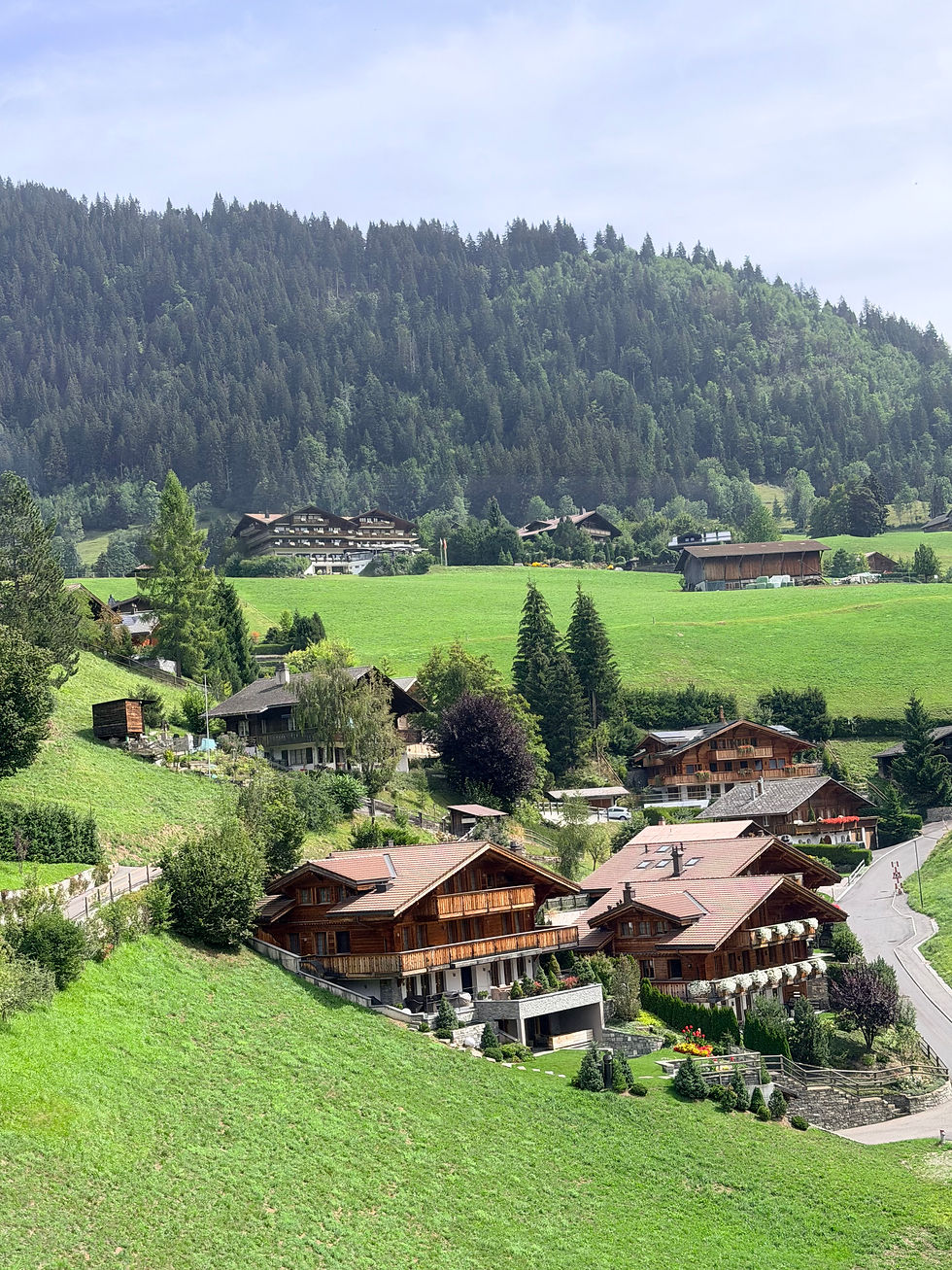
One stop before Gstaad. Noticing flowers hanging off the balconies. Well, sort of.

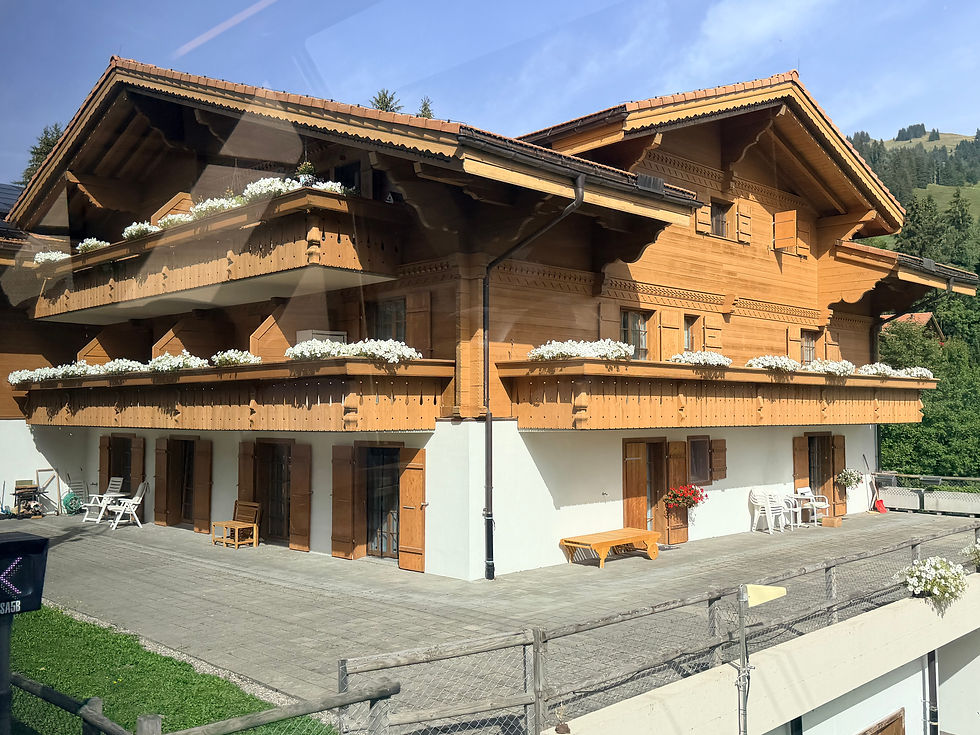


The barns have solar panels

Coming down the hill into Gstaad
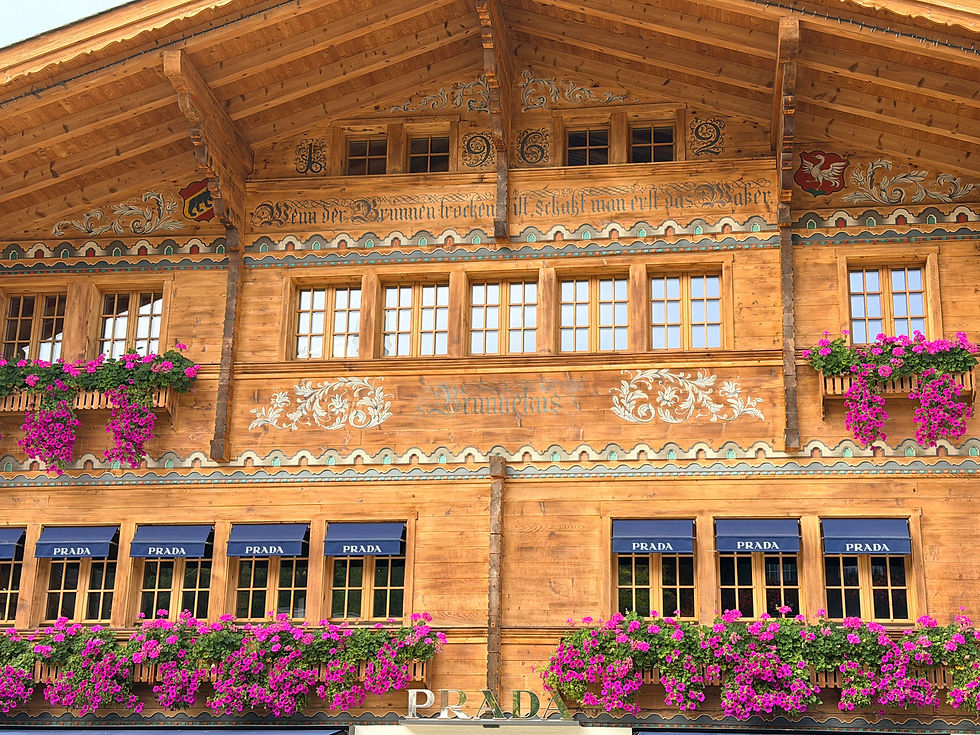
In Gstaad you will find a mix of glamour, coziness and enjoyment. Let yourself be enchanted by the chalet village with its car-free promenade and the many expensive shops. If they didn't have such a hot summer, I wonder how the petunias would have be different.
Finally arrived.
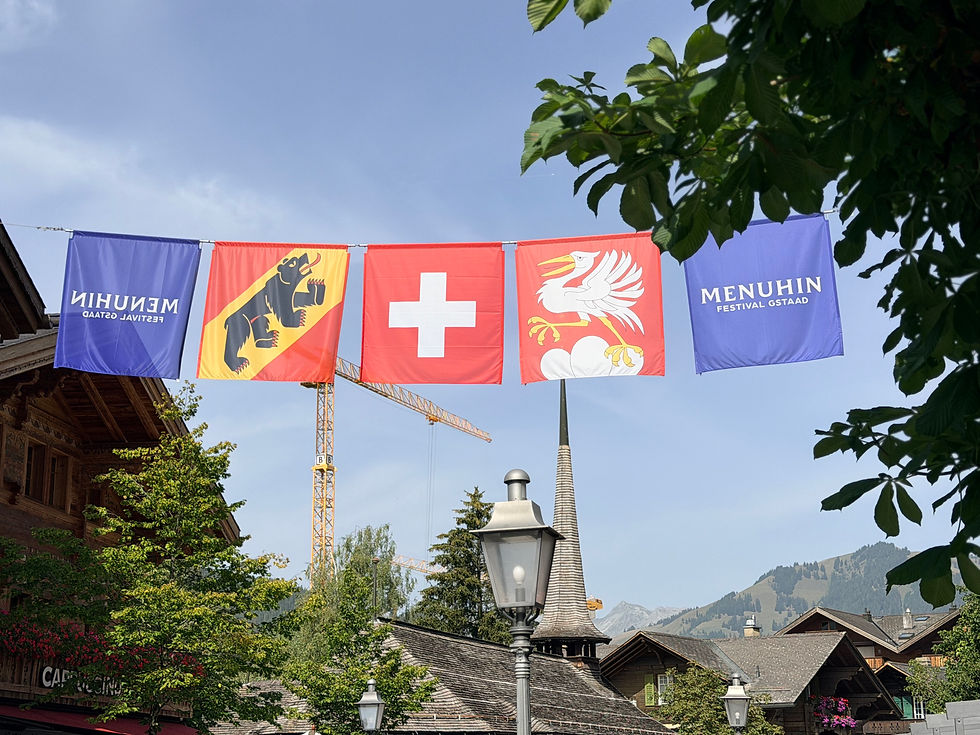
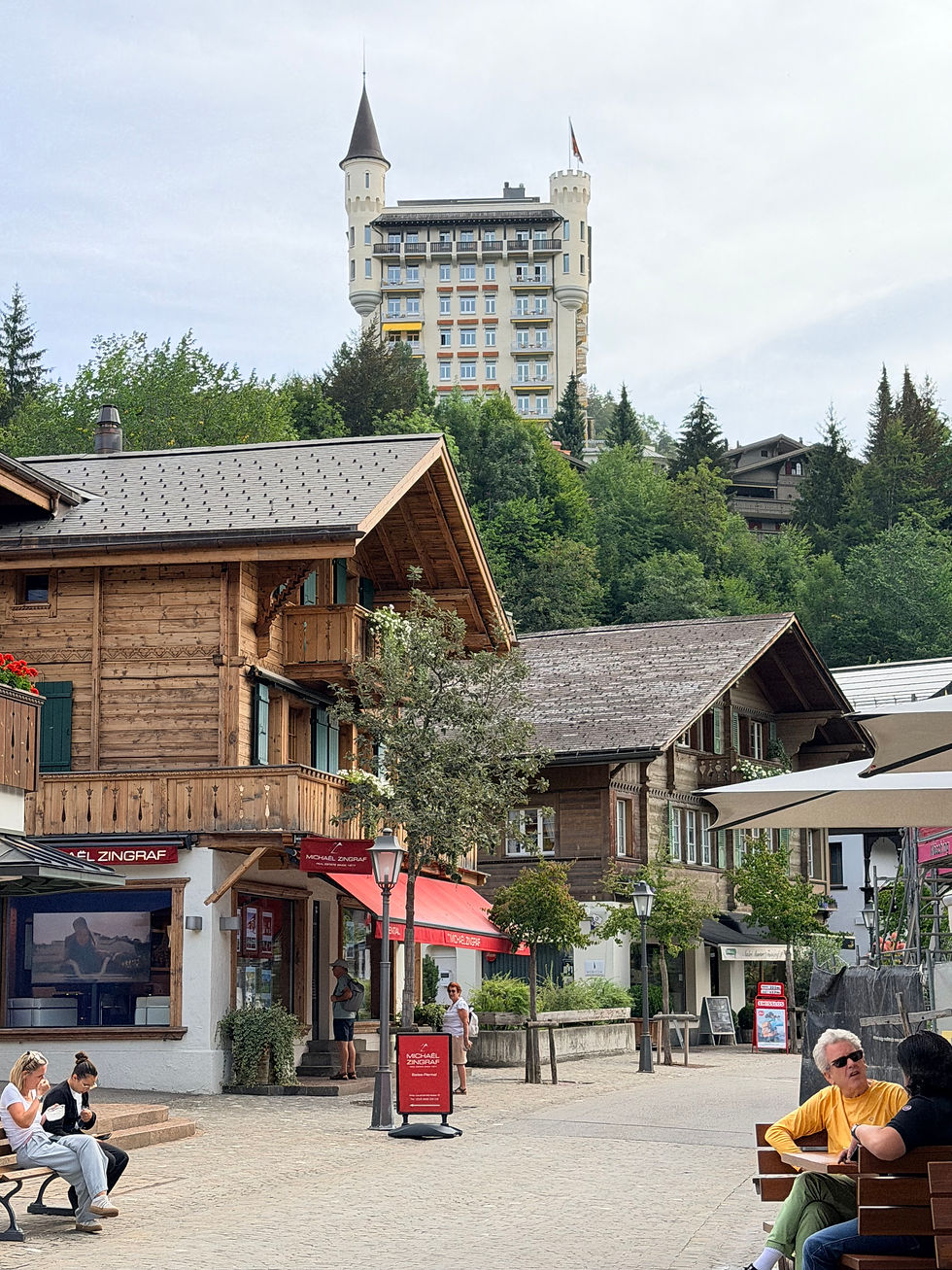
I explored the car-free village center of Gstaad with its wooden-style cafés and shops.
"Gstaad is an upscale resort town in the Bernese Oberland region of the Swiss Alps. Its soaring mountains and prestigious international boarding schools have long made it a holiday destination for royalty and celebrities. Cable cars connect surrounding ski areas such as Wispile and Rinderberg, with hundreds of kilometers of all-level pistes and cross-country trails. Glacier 3000 offers nearly year-round skiing."
Gstaad is located at 1050 meters (3445 feet) above sea level. It belongs to the political community of Saanen.
The village center has been a largely car-free zone since 1998, with through traffic passing through a bypass tunnel. Numerous exclusive shops, restaurants and hotels are available on the promenade. The houses are modeled on the chalet style and characterize the townscape.
"Gstaad is the main tourist resort in Saanenland. Here many celebrities of the jet set spend their holidays, such as Bernie Ecclestone and in the past Roger Moore, Tony Curtis, Gunter Sachs, Curd Jürgens, Richard Burton, Elizabeth Taylor, Princess Gracia Patricia, Yehudi Menuhin and Axel Springer. Here they appreciate, compared to fashionable places such as Zermatt or St. Moritz, the calm and especially the absence of autograph collectors. The luxury hotels Gstaad Palace and Le Grand Bellevue have been in existence since the early 20's. They are among the oldest and internationally most famous hotels in Gstaad. In Gstaad and in the surrounding villages of Saanen, Schönried and Saanenmöser you will also find inexpensive hotels and restaurants."
"Gstaad is a holiday destination in both winter and summer. In Gstaad itself are the ski resorts Wispile, Eggli-Saanen-Chalberhöni-Videmanette and Wasserngrat, and in the immediate vicinity those of Saanenmöser, Schönried, Zweisimmen, Gsteig, Lauenen and Les Diablerets/Alpes Vaudoises."



Beautiful writing


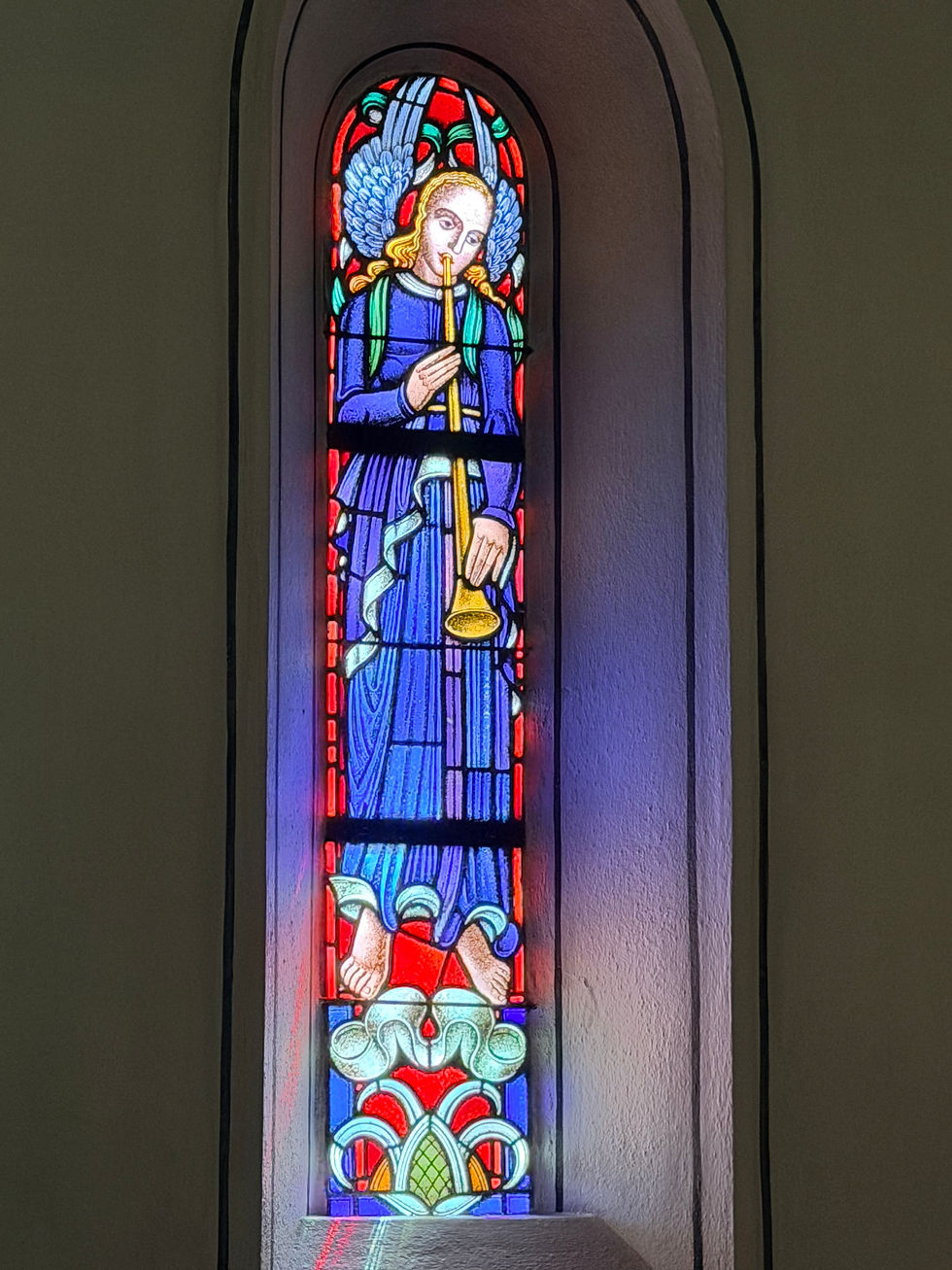


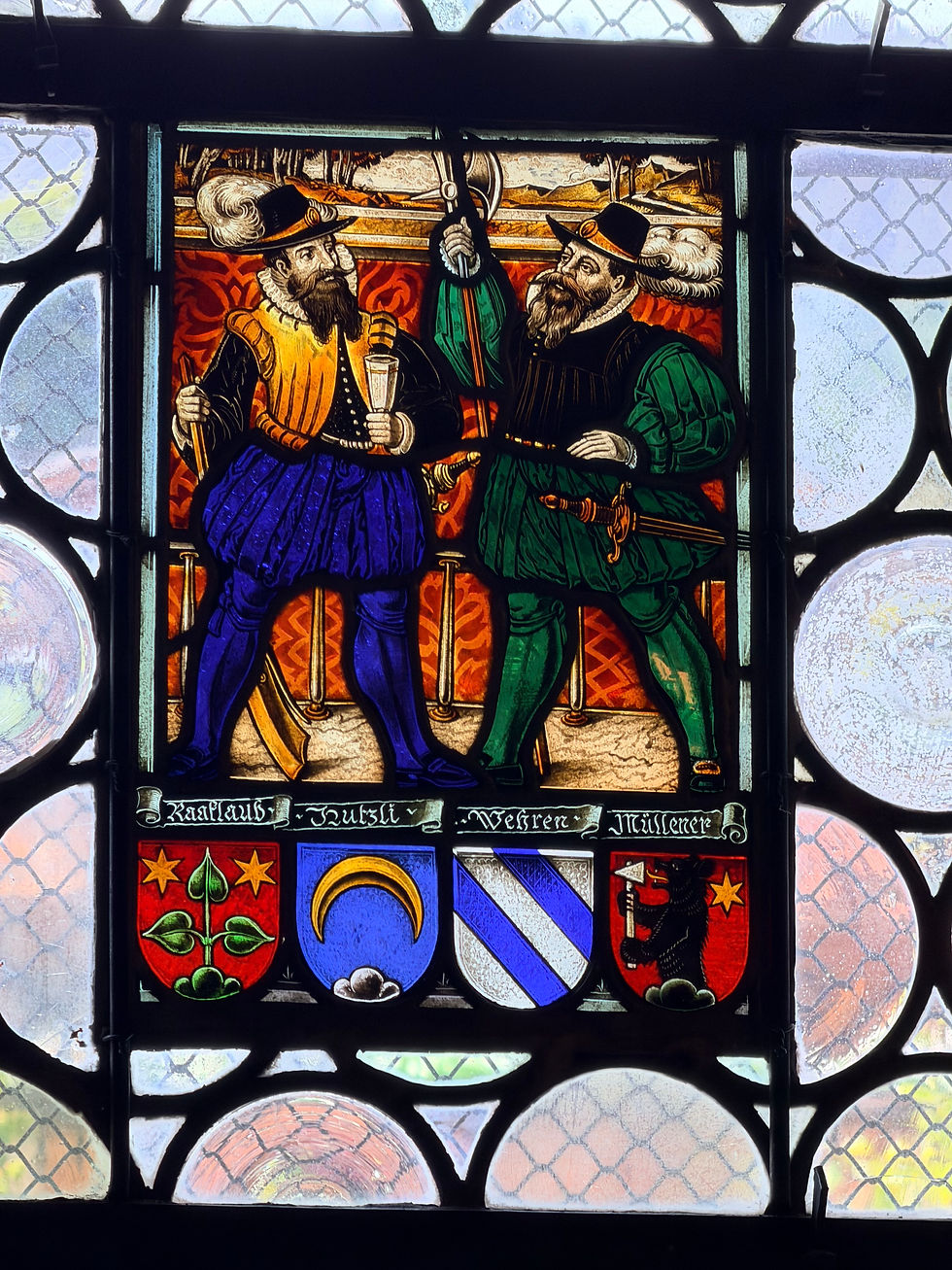
Quite a ceiling


Check out the last pew on the left. There was someone sleeping there. Never thought I would see something like that is Gstaad.


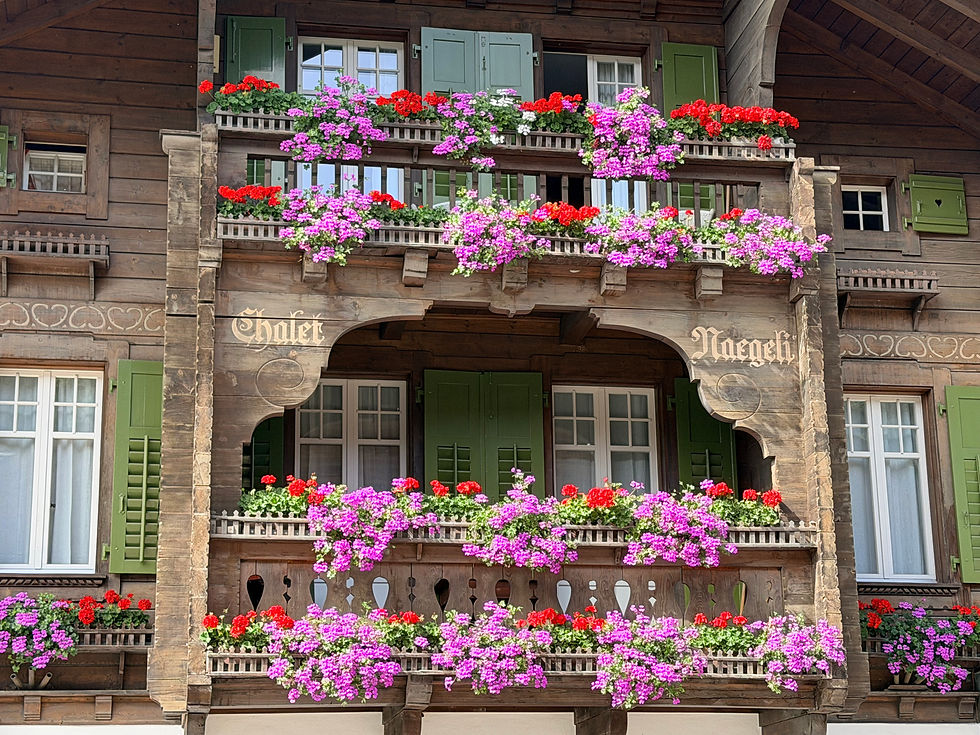

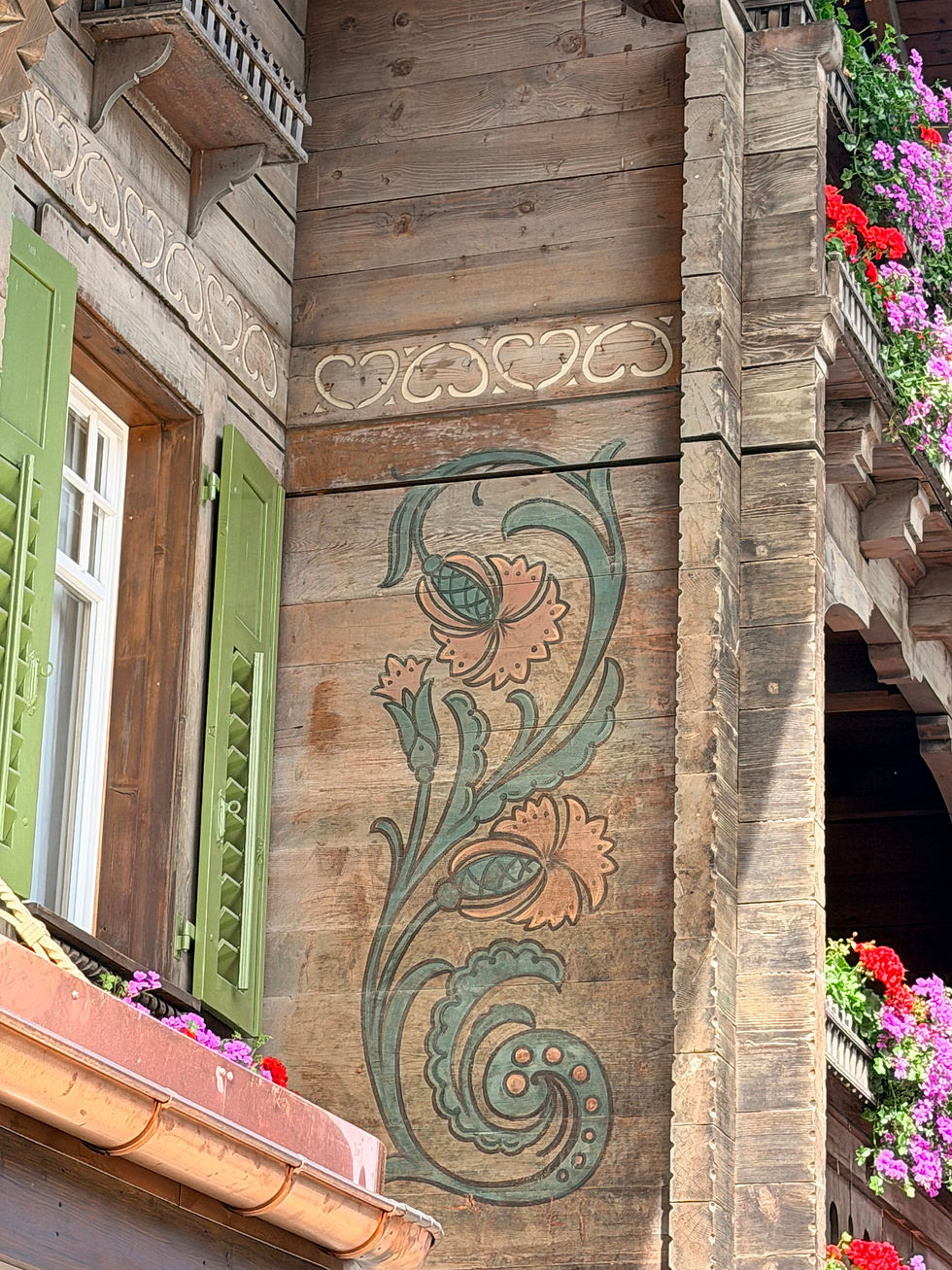


Standing guard for mom and dad.






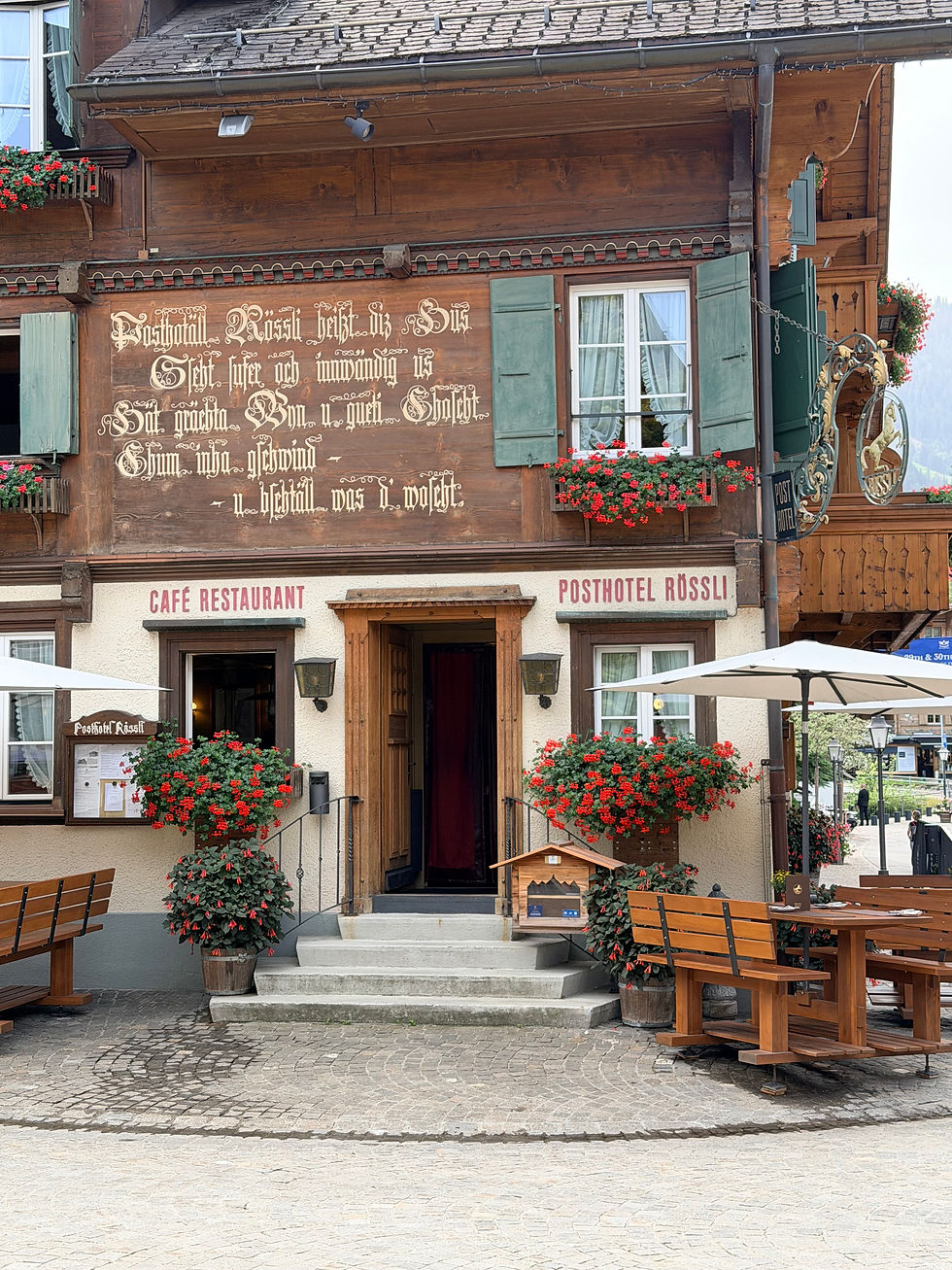
One year, Michael and I had lunch here as it was the only restaurant that had availability. We actually were invited to sit at the stammtisch table. A Stammtisch is an age-old German tradition that translates literally to "regulars' table." It refers to both a physical table in a pub or restaurant reserved for local regulars, and the informal group that gathers around it on a recurring basis.

There is a lending book library.

A Stammtisch, "regulars' table", is an informal group meeting held on a regular basis, and also the usually large, often round table around which the group meets. A Stammtisch is not a structured meeting, but rather a friendly get-together.
"Traditionally, the meeting table is marked with a somewhat elaborate sign reserving it for regulars. Historically, a Stammtisch was an all-male affair that might involve socializing, card playing (such as Skat or Schafkopf), and often political or philosophical discussions. The words Stammtischpolitik (Stammtisch politics) and Stammtischniveau (Stammtisch level) describe the simplified nature of Stammtisch discussions, and have an established metaphorical usage in describing simplified political and social discussions beyond the Stammtisch itself."
"Especially in rural areas and smaller villages, being part of the Stammtisch was often related to a certain social status. In the second half of the 19th century a Stammtisch typically consisted of local dignitaries such as the mayor, doctor, pharmacist, teacher, forester or wealthy farmers. Inviting a stranger to take a seat at the Stammtisch was a sign of extraordinary appreciation. This was similarly the case with types of regulars’ tables in cafes consisting of writers and artists."
"This culture is still to be found in the Iberian area (Spain, Portugal, Latin America and Brazil) in the form of Tertulias. In Great Britain and Ireland many pubs fulfilled this function by having a snug or otherwise offering separate back rooms (in case there was no doorkeeper). In the United States a group of regulars (such as in the T.V. series Cheers) would be a close equivalent."
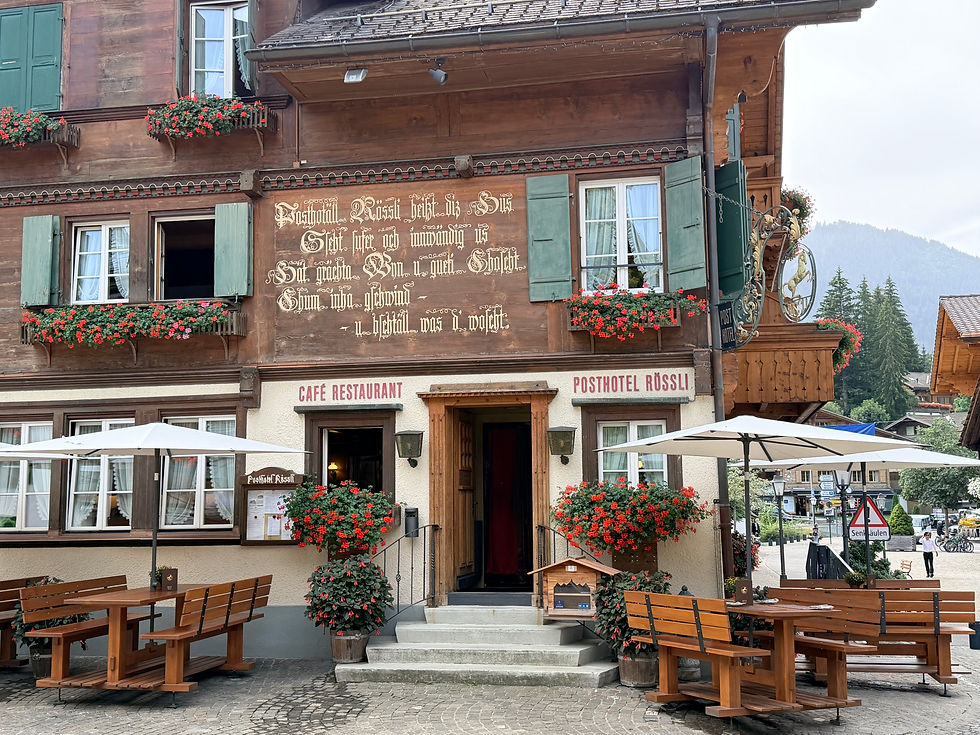
Today a Stammtisch is not connected to a specific social status. It is now all about community, intimacy, and shared interests, such as traditional card games.



Is this going by slow mail or fast mail?




Who wants to try on wool clothing when it is 89 degrees?


We have had so many adventures and experiences with ducks this year, so I am declaring 2026 as "the Swiss duck year".


The roof top bar was open

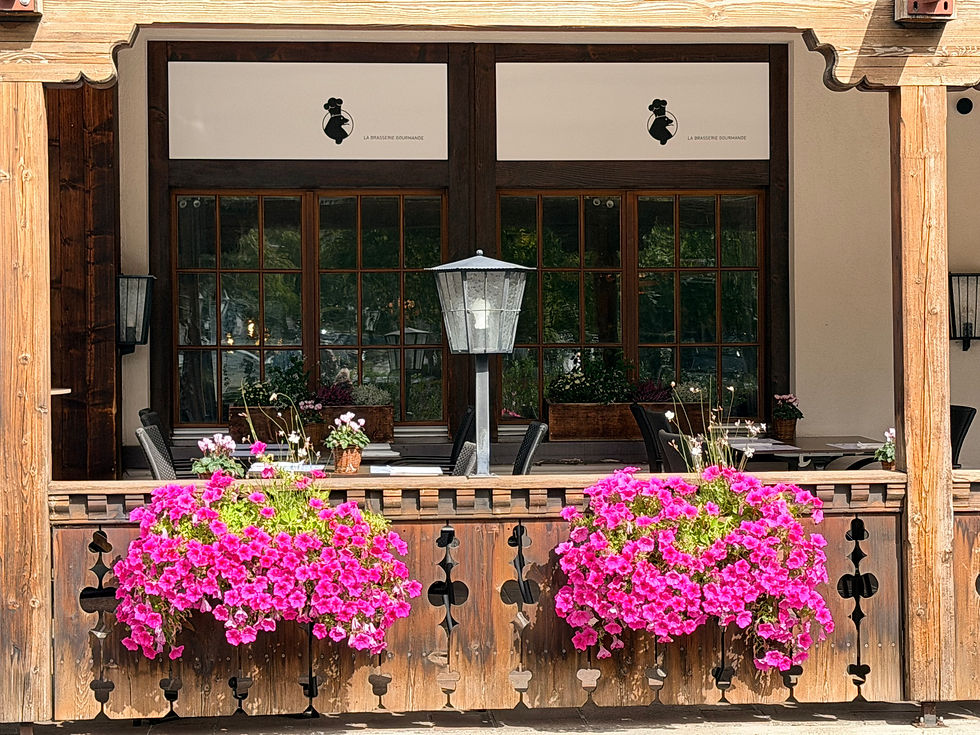
These at least are hanging petunias


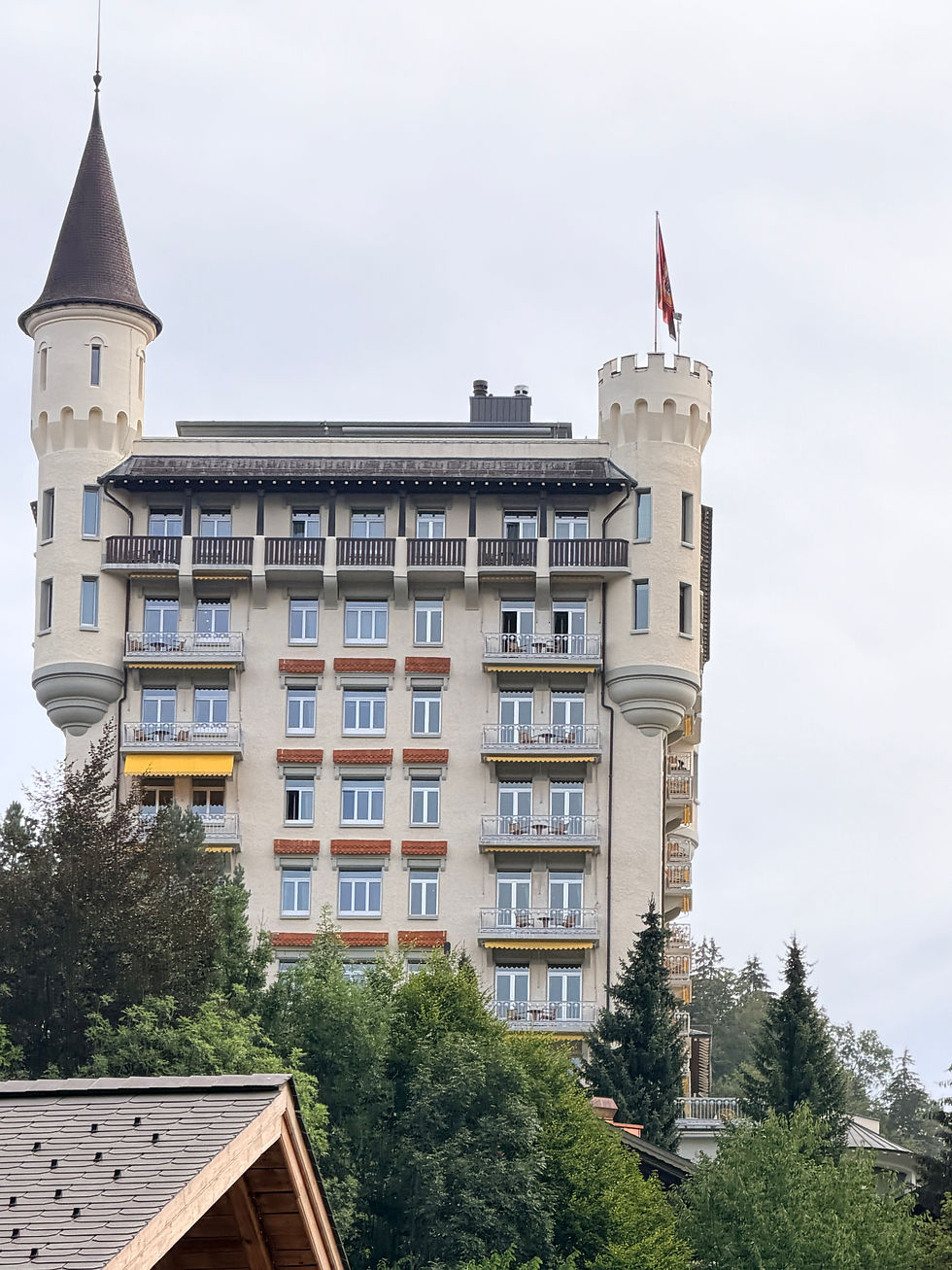
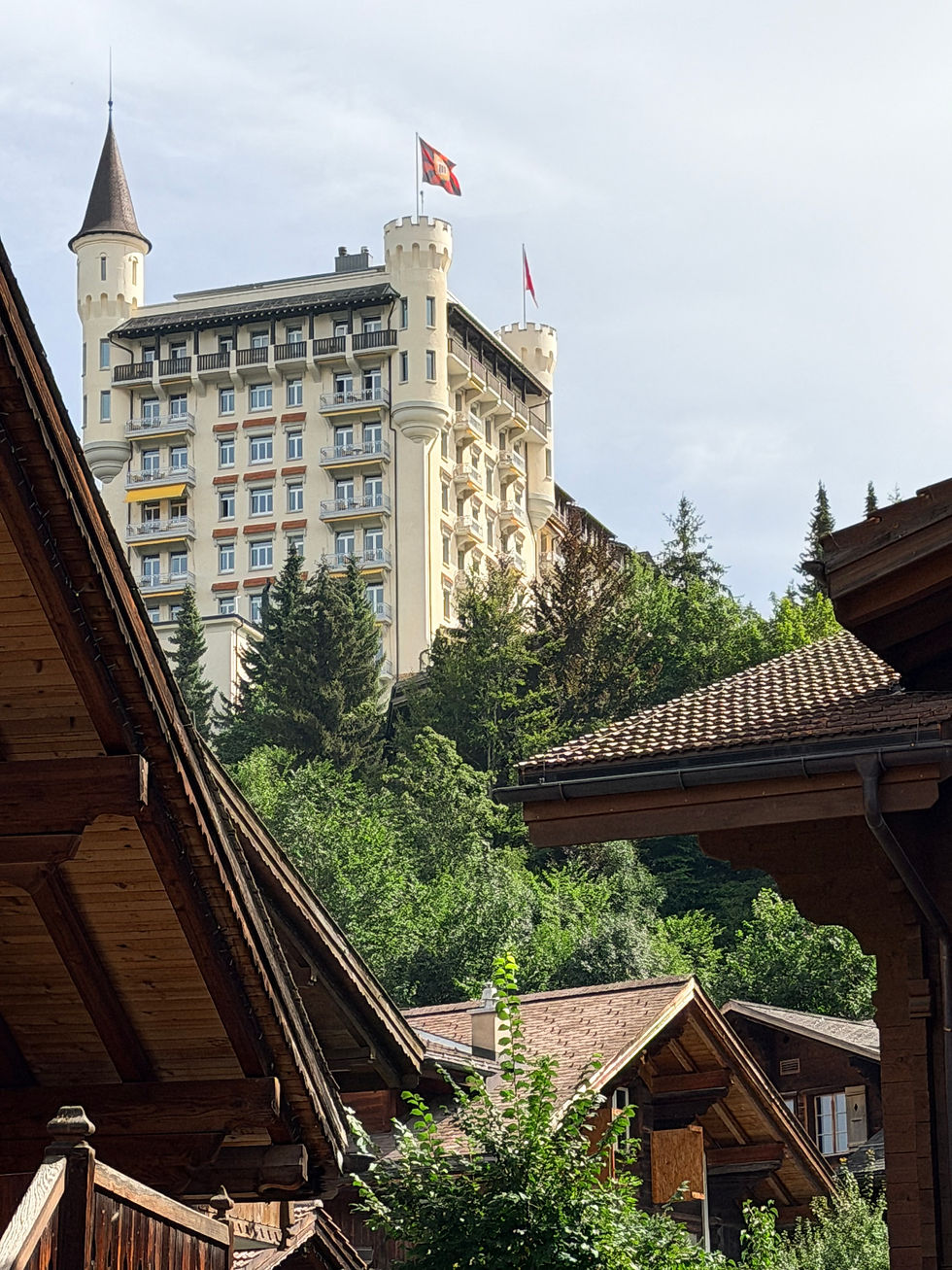
Le Grand Bellevue
Le Grand Bellevue is a luxury five-star superior hotel located in a quiet private park in the center of Gstaad.

It;s a five star and it looks it!!!!!
"Originally built in 1912 as a cure house and spa, the historic property blends grand Swiss tradition with a cozy, creative country-house style."
Key Highlights
Accommodations: 57 spacious, individually styled rooms and suites, including multi-room suites with panoramic forest and mountain views.
Dining: Home to Leonard’s, a stylish restaurant awarded 16 GaultMillau points, alongside Le Petit Chalet, a tiny alpine log cabin in the garden serving traditional Swiss fondue and raclette.
Le Grand Spa: A massive 3,000-square-meter wellness area featuring 17 different wellness zones, a thermal oasis, indoor pool, saunas, and an ice fountain.
Location: Situated right at the edge of Gstaad's traffic-free promenade, offering easy access to local boutiques while remaining completely private.
Afternoon Tea
"Journey through some of the world’s most divine tea blends. To celebrate the flavours of the Middle East, Oudh Delight incorporates natural oil of agarwood for a sweet-balsamic note with vanilla, must and amber to create this green tea blend. Mount Oolong will transport you to the mist covered mountains of Nepal with its smooth and sweet tea, with notes of wild grape and sweet almond undertones whilst Darjeeling black tea from the Himalayas offers a fine floral and muscatel aroma. Venturing south to India is met with our Masala Chai, a warming Indian black tea blended with cinnamon, ginger, and cardamom. Other tea blends such as apple strudel, rooibos tiramisu and mango & strawberry are available at The Lounge for those who crave a sweet fix."

So much to do at Le Grand Bellevue


Caffè Corretto
Caffè corretto translates to "corrected coffee" in English.
What Goes Into It
The Coffee: A fresh, hot shot of espresso.
Common Spirits:
Grappa (most traditional in northern Italy)
Sambuca
Brandy or Cognac
Any takers for this ritual?

Heading back home.
Had to step over the dog to get to my seat. He slept all the way from Gstaad to Spiez.
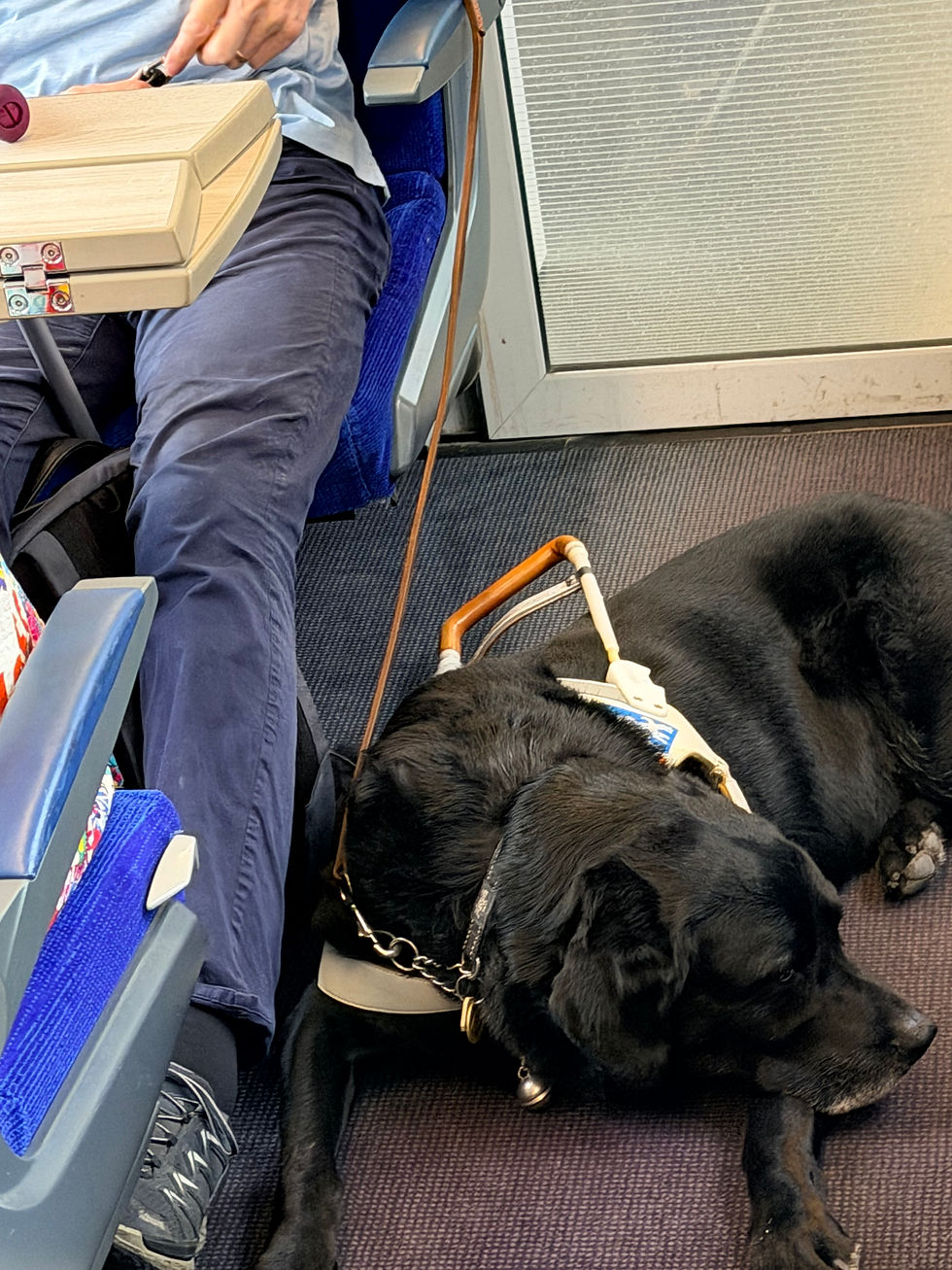


Train from Zweizimmen to Spiez


Spotted this sign at the old bus stop at the end of Helveticastrasse


Went to Città Vecchia for a two plus hour dinner. Well worth the time!
Fresh baked piping hot bread just out of the oven

We both had the mixed salad with Italian dressing. Americans would have mixed all the vegetables together.

Lettuce, tomatoes, cucumbers, beets corn, red cabbage, and carrots

We sat outside. Well, we were the first people there.


I had the lasagna with spinach and regular noodles

Michael had the veal scallopine with lemon sauce.

For dessert, Michael had the panna cotta

hot berries

I had the colonel: lemon sorbet and vodka

Didn't skimp on the vodka

Michael had a limoncello
Limoncello is a traditional lemon liqueur produced mainly in Southern Italy, especially around the Gulf of Naples, the Gulf of Salerno, as well as in Sicily and in Gargano. It is the second-most popular liqueur in Italy and is traditionally served chilled as an after-dinner digestive.

Michael has made limoncello from our own Meyer lemons.
10 organic lemons, washed and dried
1 750-ml bottle vodka (100-proof preferred, or 80-proof)
1 to 4 cups granulated sugar, to taste
Key Ingredients for Limoncello
Lemons: Standard lemons are just fine for making limoncello, though I do recommend buying organic lemons. Since non-organic lemons are usually coated with wax, you’ll get a better extraction from organic lemons. Plus, alcohol will pull everything from those peels, including any pesticides or insecticides used on the lemons.
Vodka: If you have the option, 100 proof vodka or even higher-proof grain alcohol is the very best to use for making limoncello. This will extract more and better lemon flavor from the peels, and makes a smoother, less cloying limoncello.
Sugar: Start with a simple syrup made of 1 cup of sugar dissolved in 1 cup of water — start here whether you used 100 proof or 80 proof vodka. Add this to the infused vodka, taste, and add more simple syrup to taste. You can play with the ratios of water to sugar here, all the way up to 4 cups of water with 4 cups of sugar and anything in between. More water will dilute the alcohol base, making a less alcoholic, milder, and smoother-sipping liqueur. More sugar will make a sweeter limoncello.
How to Make Limoncello
Peel the lemons. Use a vegetable peeler to remove the peels from all the lemons. Try to remove only the outer yellow skin and as little of the pith as possible. Transfer the lemon peels to a 1-quart jar.
Cover the peels with vodka. Cover the peels with vodka and screw on the lid.
Infuse the vodka. Let the vodka and lemon peels infuse somewhere out of the way and out of direct sunlight for at least 4 days or as long as a month. The longer you let the vodka infuse, the more lemony your limoncello.
Strain the vodka. Line a strainer with a large coffee filter and set it over a 4-cup measuring cup. Strain the infused vodka through the filter. You may need to stir the vodka in the strainer if the flow stops.
Prepare a sugar syrup and mix it with the infused vodka. Prepare a sugar syrup of at least 1 cup of water and 1 cup of sugar — bring the water to a simmer and stir in the sugar to dissolve; allow to cool. Pour the sugar syrup into the infused vodka. Stir gently to mix. Taste and add additional sugar syrup if desired.
Bottle the limoncello and chill. Insert the funnel in the neck of one of the bottles and fill with limoncello. Repeat with remaining bottles. Chill the limoncello in the fridge or freezer for at least 4 hours before drinking. Limoncello can be kept in the fridge for up to a month or the freezer for up to a year.
Meyer lemons: If you have access to them, Meyer lemons make a superb limoncello.
Other types of citrus: You can also branch out into other citrus fruits like grapefruits, oranges, and tangerines.
80 proof vodka: 80 proof vodka is fine to use — it’s also easier to find and less expensive than 100 proof. If you use 80 proof vodka, you won’t need to add as much sugar syrup after infusing the vodka.
I don't have Michael's recipe he learned from our friend Rosie's granddaughter in Italy, though. It probably is a secret.
Quite a delicious meal!!


Comments