
Made The Circle

Today, we started our train ride in Interlaken West to Bern. Changed trains in Bern and then direct to Broc Chocolaterie. On the way back to Interlaken West, we started at Broc Chcolaterie; changed in Bulle to the one going to Montbovon; then changed to one going to Zweisimmen. Decided to stop in Gstaad for an hour. Got back on the train toward Zweisimmen; changed trains in Zweisimmen and then again in Spiez. I'm tired just writing about it!
Went to Cailler to take the chocolate tour.
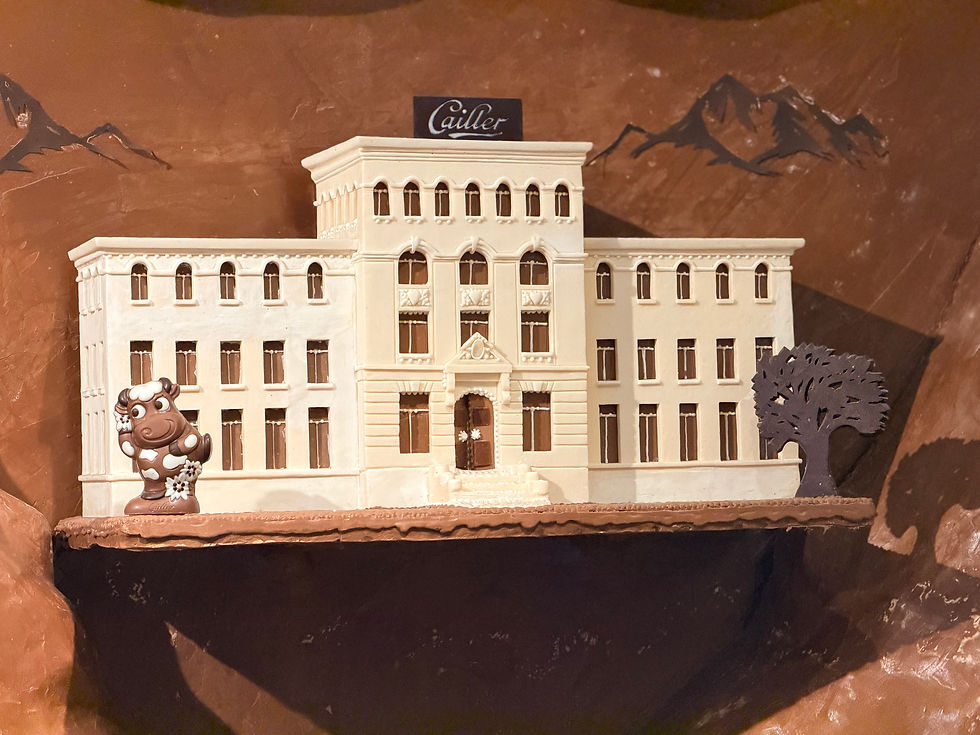
The buildings and the cow are all made of chocolate.

For past workshops, our instructors have been Patrick, Geraldine, and Antonio.


Cailler advertisements over the years.


Chocolate was a gift from the Aztecs.
Chocolate did not originate in Mexico, contrary to what many history books say – the world’s first chocoholics were in South America, in modern-day Ecuador.
The world’s most famous chocoholics, the Aztecs, revered cocoa deeply and used it as medicine, currency, to help soldiers ‘soldier on’.
Chocolate was a power drink in Aztec society and drunk for its potency, Montezuma used it to increase his sexual prowess with women.
"Chocolate as we know it has only existed for a couple of centuries, but drinking chocolate has a much longer past, stretching back into prehistory! Cocoa was of paramount importance to the people of Tenochtitlan, who ruled over much of central Mexico and beyond in the late medieval period, between 1428 and 1521 CE. These people are known as the Mexica, but you might know them by their other name: the Aztecs."
"Chocolate came to Europe via the Aztec Empire. But how did it get there in the first place? Well, legend has it that the cocoa tree was taken from a sacred mountain by the feathered-serpent deity Quetzalcoatl. The god gave the cocoa to the Toltec people, and taught their women to make drinking chocolate."
"Rather than eating chocolate as a solid, the Aztecs enjoyed chocolate as a frothy drink made from cocoa beans. It was used in a wide variety of important social events, from diplomatic alliances to marital negotiations. Cocoa was drunk in religious rituals to commerce, and had roles in military and medical spheres."
"Serving chocolate could be ritually important at ceremonies to mark betrothals, marriages, or other milestones. It was also a key feature of large festivities which brought the community together with singing and dancing."
"Aztec cocoa was used as a medicinal beverage, mixed with a variety of other ingredients varying from tree bark to opossum tails, depending on the ills it was supposed to cure. Cocoa was used as a curative by people of all classes to treat digestive ills, infections, fever, or heavy coughs. It is even said that cocoa-based drinks made with the blood washed off a sacrificial knife could be given to sacrificial victims to bind them to their fate."

"When the Spanish arrived in modern-day Mexico, they were offered cocoa-based drinks. To the indigenous peoples, cocoa served a diplomatic purpose."
"The Spanish did not immediately adopt the habit of drinking chocolate. Their initial descriptions of the beverage mostly describe it as repulsive, or an acquired taste (Though occasional exceptions depict it as refreshing and nourishing). Nonetheless, the Spanish encouraged cocoa production during early colonial years, and extracted it as tribute from indigenous communities. Cocoa beans continued to be used as a currency in New Spain for years after the conquest."
"Missionaries picked up on chocolate’s religious significance. They encouraged indigenous people to offer cocoa beans to Christian icons, as they had to their old gods. The old and new religions mixed, spawning such strange hybrids as the Christ of Cocoa in Mexico City. The true beneficiaries of these offerings were Catholic priests, who grew wealthy and consumed chocolate regularly."
"The conquest decimated Aztec society, and led to the lifting of social restrictions on cocoa consumption. Chocolate-drinking spread through to different sectors of society, although it remained an indicator of prestige. Over the course of the sixteenth century, chocolate drinking became increasingly common among the colonial elite. Colonists and missionaries also brought chocolate back to Europe, where it became popular with the Catholic clergy. By the early seventeenth century, chocolate truly began to take hold in the New World!"
10 cocoa beans for a rabbit and 100 for a slave.
The church first called chocolate the devil's drink which was not suitable for women or children. Finally, the Dominican clergy and Pope Pious the fifth said it was fine to drink the frothy chocolate even during Lent.
Marie Antoinette even wanted a cup of frothy chocolate as her last meal before her execution.

In Italy and Portugal the thick whipped chocolate was drunk lying down.
Crane's nest as a company symbol

The merger of Cailler and Nestlé came in 1930.
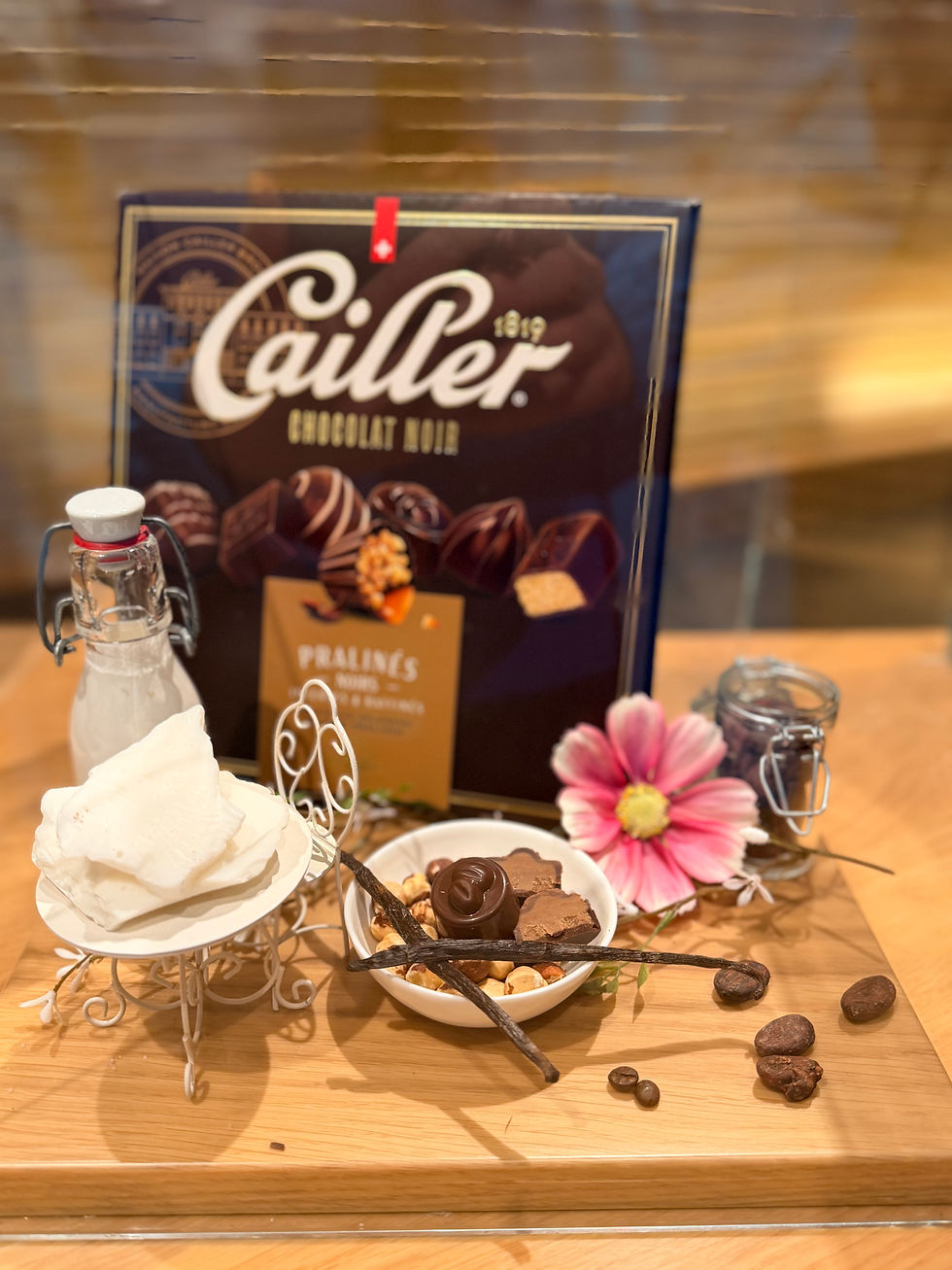
Where products come from.

Almonds come from Spain and California if you wanted crushed or whole almonds

Italy if you want whole Roma hazelnuts

Vanilla beans are hand pollinated and very expensive.

cocoa beans

cocoa beans


cocoa beans

Hazelnuts
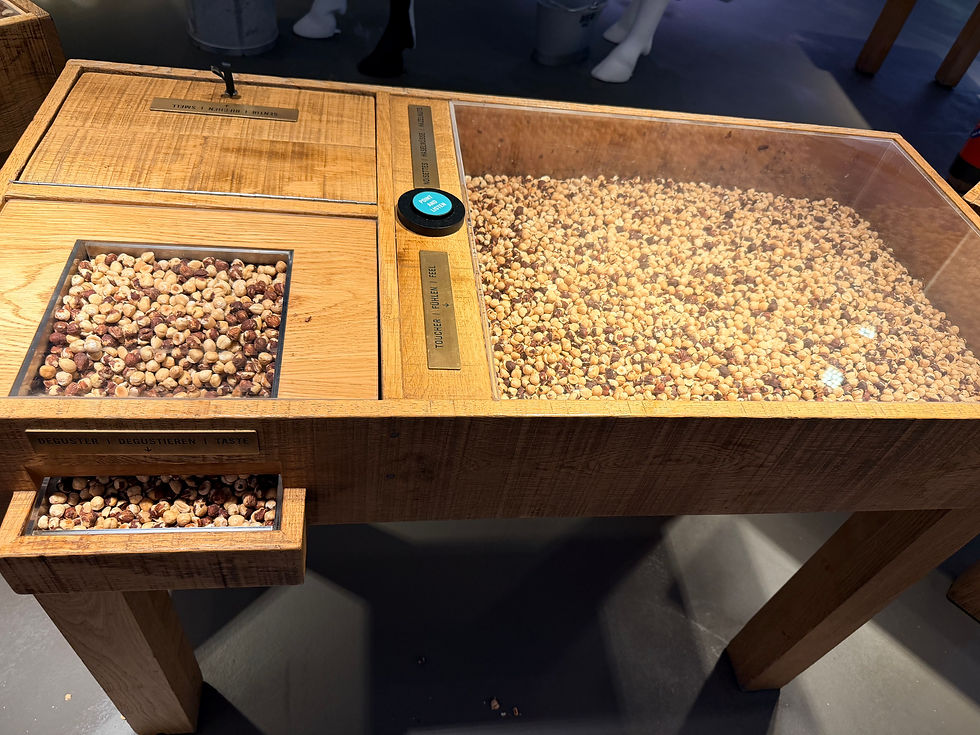
Vanilla

Cocoa butter

Milk from 1800 Holstein cows used.


How Branch chocolates are made.
You could try as many as you liked.


An employee making handmade poured chocolate items in molds.


Positive aspects from chocolate


Read the label


Mixing - Grinding - Conching


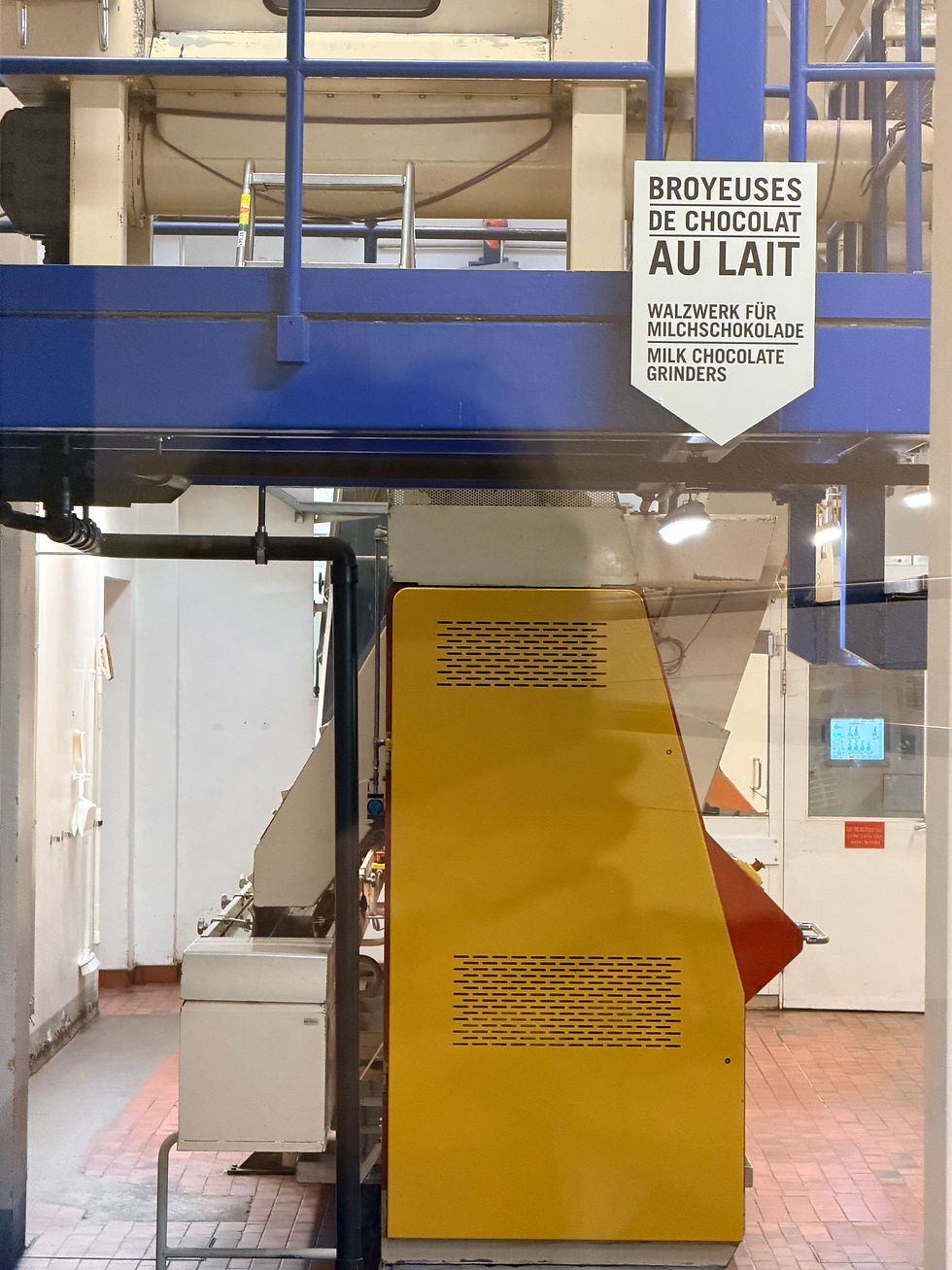


Follow the steps to appreciating chocolate
Look at it

Listen while you break it in two

Smell it

Feel it. Smooth, rough, etc

Taste it

6. What do you get as an aftertaste?

In the tasting room, you may try as much chocolate as you want. You can't take any away, though.


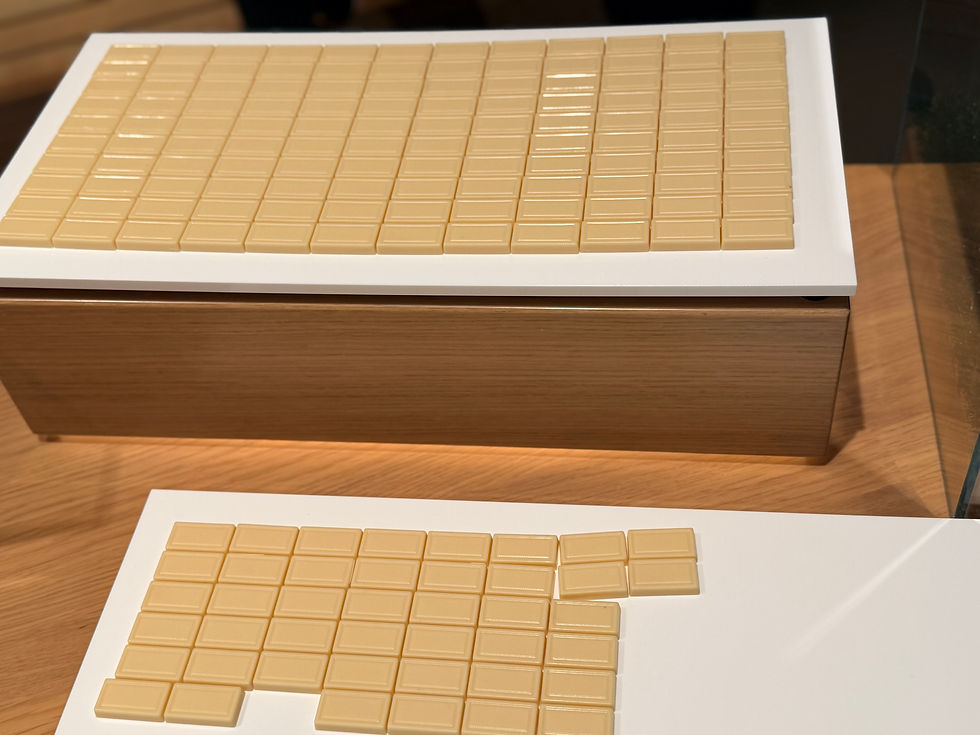


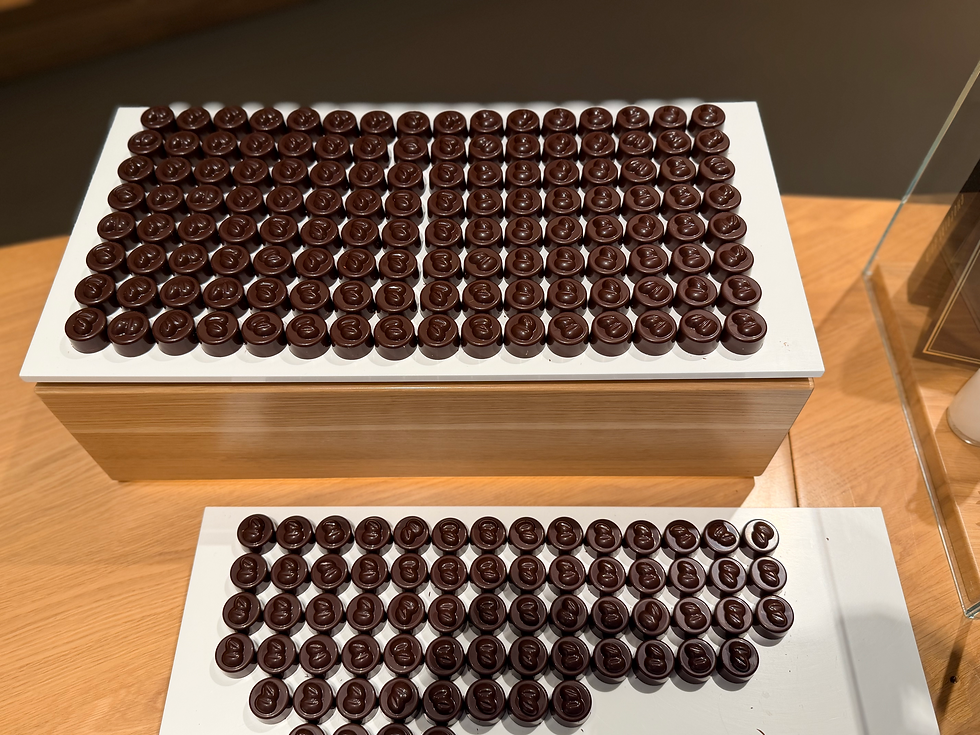


This is solid chocolate

A creation of Geraldine's.


Quite a small class.

Tempering chocolate isn't easy


What's your favorite?


Had to have a hot chocolate!!!!!
I tried the special which was hazelnut hot chocolate

Thick whipped cream


Toppings

Michael loves meringues


Phone charging station
Put your phone in, hook up, close door, choose your code to open it. Get a free charge while you explore Cailler.

Dog on train

Cat sleeping outside the Nestlé outlet store.

Scenery seen from the train by Gruyères

Gruyères


Train headed to Montreux. Would be fun sitting upfront. The driver sits above Check out the window wiper up top.

Stopped in Gstaad for some shopping.
The cutout is for a wheelchair.


I asked Michael about this car and he asked AI. This this the answer AI gave.
"This is a photo of a Rolls-Royce Dawn (the two-door convertible) in dark navy blue, parked on a cobblestone street in what looks like a Swiss Alpine village."
"The building behind it is a traditional chalet-style hotel with wooden shutters, flower boxes, and a row of national flags (including Switzerland, Italy, and others). The scene has the typical mix of luxury cars, outdoor seating, and mountain-town architecture you'd see in places like Gstaad or a similar high-end Swiss resort in summer. A wooden bench and cobblestones are in the foreground, with a few people walking nearby."
"A Rolls-Royce Dawn like the one in the photo was a -$335,000-$400,000+ new car when it was current (2016-2023), depending on options and market.
'Base U.S. MSRP started around $335k-$356k; Black Badge versions were higher (often $400k+), and heavily optioned examples commonly landed near or above $400,000."
"It's out of production now, so you're looking at the used market:
• Typical asking/sale prices today are roughly $180,000-$320,000 USD, with many clean examples clustering around $210,000-$260,000.
• Lower-mileage, later-year, or Black Badge cars sit at the high end; higher-mileage early cars sit lower."
"In Switzerland/Europe (relevant to the photo's setting), recent listings have been in the CHF 279,000-CHF 350,000 range (~€280k-€350k), again depending on year, miles, and spec."
"Exact value of this car would depend on year. mileage, options, and condition-none of which are visible from the photo."
That's a lot of information I was given!


The hood ornament goes down the car is not in use so no one can break it off or steal it.


Farms around the Zweisimmen area.


Comments