
Running of the Cows

Michael and I stopped by to see Gaby and Felix. She finished the carving of the birds. Michael and I fell in love with the piece when we first saw it. By next week at this time it will be hanging up in our home. I just haven't decided where to hang it.
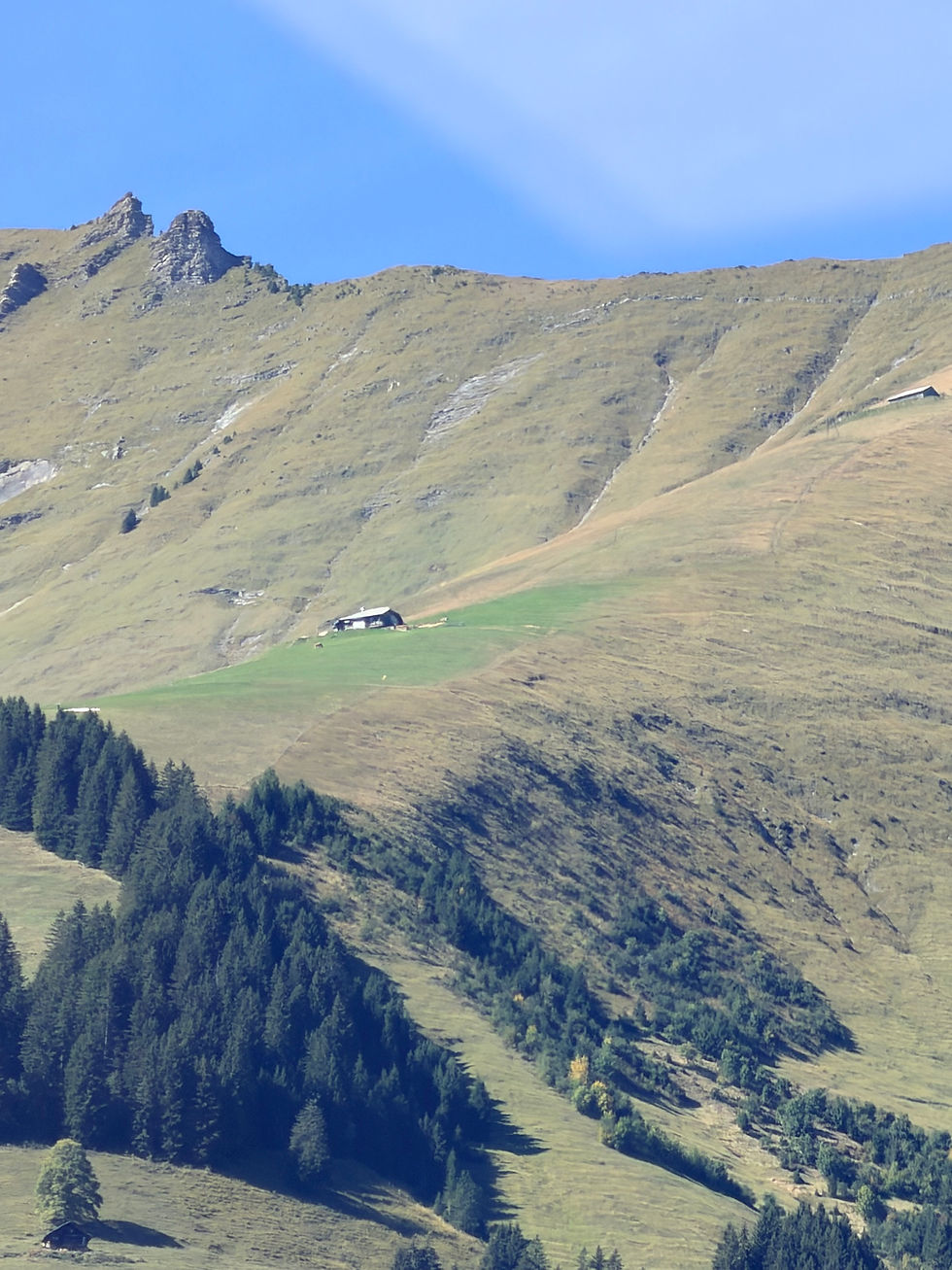
Felix could hear cow bells. The cows that are high up the mountain behind Unterseen come down to Matten for the winter. The farmers and the cows were practically running down the street as the cows had to be across the railroad tracks before the train came rushing by.
Gaby has her usual spot so she can help direct the cows from going down the side street, if they stray.

When the days get shorter and the nights colder, it’s time for the cattle and the herdsmen to leave the alp and make their way back to the valley. The return of the herds to lower fields is one of the most celebrated Alpine festivals in Switzerland – and one of the most beautiful as the cows, sheep and goats are artfully decorated with twigs and flowers.
The origin of the ‘cattle homecoming’
Approximately 400,000 cattle, 200,000 sheep and goats and even alpacas spend the summer up on an alp in the Swiss mountains. The return of the herds and herdsmen has been celebrated as an ancient custom. Originally the festivities were a thanksgiving for a summer season without accidents or losses. Depending on weather conditions, the homecoming is celebrated between mid-August to mid-September. This year the descent happened earlier due to lack of water high in the mountains and the lack of food for the cows to eat.
"Highlights of every return of the cattle are the colorful flower crowns worn by the cattle. The herdsmen carefully choose the animals which get to wear the crowns for the descent. Especially the cows who gave the most milk or who lead the herd are decorated with care. The design of the flower crowns, the so called ‘tschäppl’, varies from farm to farm. It’s mostly seasonal flowers and twigs that are being used for the decoration, such as sunflowers, chrysanthemum or dahlias. Tissue flowers are used to reduce the weight of bigger arrangements. Depending on the region and custom, it’s crosses, wooden panels, styrofoam crowns, an upside-down milking-stool or the horns of the cows that are decorated."
"In many villages, the return of the cattle and herdsmen is celebrated with a festival including market stalls, music and culinary delights. The colorful parade of the cattle is the main attraction of the festivities. Besides the decorated animals, visitors will see local traditional costumes and impressive bells with beautifully hand stitched straps. Yodeling and alphorn sounds are an important part of the festivities too. In any places, guests can find a culinary offering as well as market stalls selling local crafts, cheeses, and sausages. Some regions also celebrate the official distribution of the cheese that was produced on the Alp among the herdsmen."
Tomorrow, we will be going to the Wengen Cheese Festival.
Michael did a narration.


Small bell

Gaby is very talented and does such beautiful work! Michael and I have many of her pieces including the complete Christmas manger scene.


We then took the train to Frütigen with a change in Spiez. In Frütigen we took a bus to the Blausee.


Blausee,"Blue Lake" is located in Kandergrund. It is located near the Kander River. The lake is at an elevation of 887 meters (2,910 ft) and an area of 0.64 hectares (1.6 acres).
After a short 200-meter walk through the traffic-free nature park, you'll reach the world-famous lake with its crystal-clear water in the most beautiful shades of blue. The impressive natural surroundings are reminiscent of a fairytale landscape. You will be enchanted by the gnarled trees and moss-covered boulders.


"The Blausee itself does not appear to have been visibly or dramatically affected the way many larger Swiss lakes and rivers were this summer."
"Summer 2026 was Switzerland’s hottest and one of its driest on record. Precipitation in parts of the Bernese Oberland ran well below normal, groundwater and spring discharges were low nationally, and big surface-fed lakes (Bodensee, Zürichsee, Walensee and others) dropped to unusually low or record-low levels for the season."
"Blausee is different. It is a small (about 0.64 ha), spring-fed karst/glacial lake with no major surface inflow. Its water comes from underground sources, stays cold and clear year-round, and the park has stayed open as usual. The official site lists normal hours for today ( September 26, 2026), and recent visitor posts from mid-to-late September still show the familiar turquoise water and submerged trees.
The only current note on the site is that the trout-farm viewing area is closed for cleaning. That is not described as a drought measure; the farm had a serious disease outbreak in late 2025."
"So the lake’s famous look and the nature park have held up. The surrounding region felt the drought, but Blausee has not made the news as a low-water or dried-up site."


Look between the trees. Could it be "half a green person" staring at you?


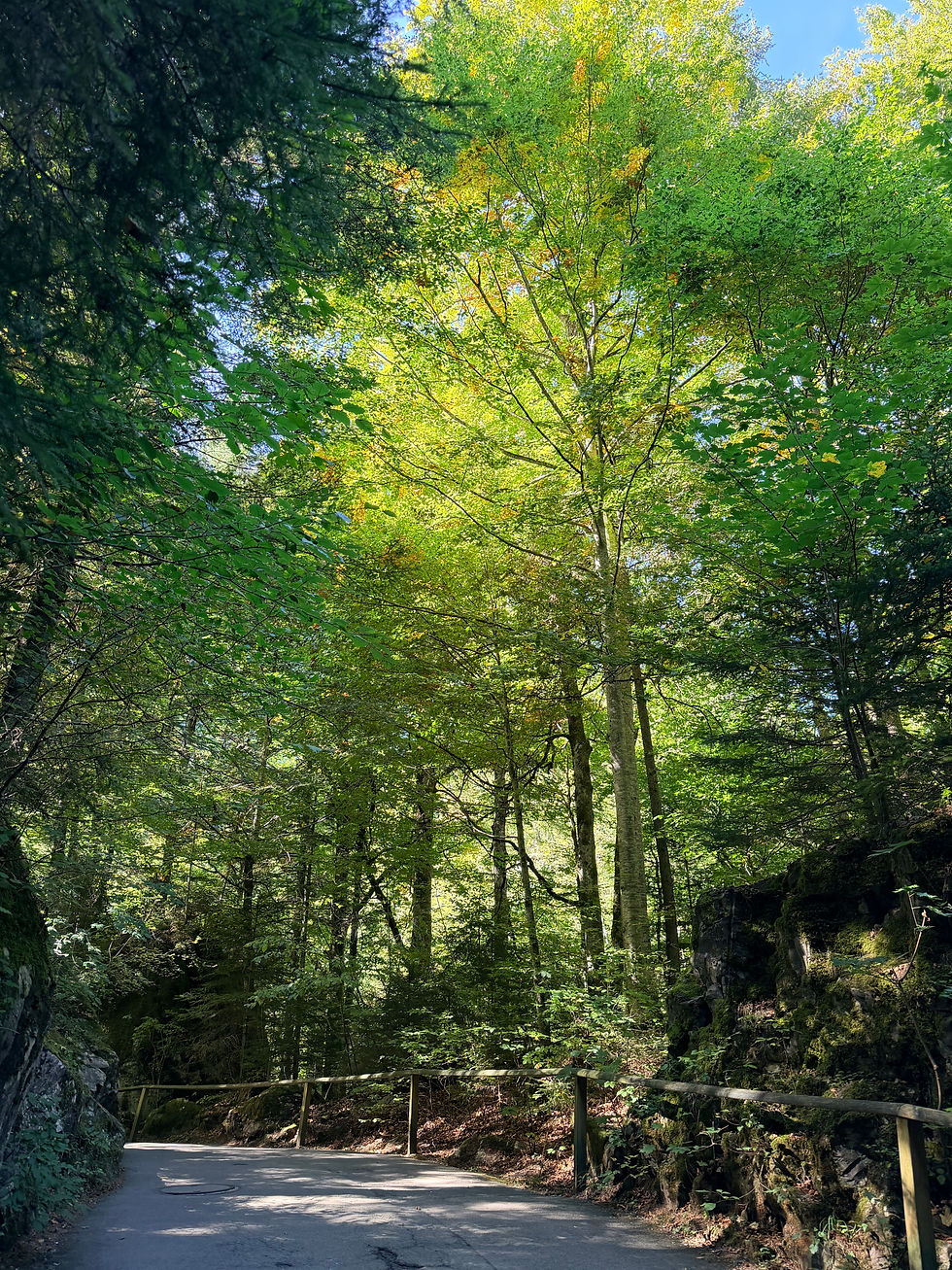
Recharge your energy at this unique place of power. Whether autumn, winter, spring, or summer, the Blausee (Blue Lake) is always a captivating attraction.


Although the turquoise, crystal-clear lake is only 17 meters from the Kander River, the water is of a different origin: Lake Blausee is fed by the groundwater flow of the Kander Valley. The water's extraordinary color results from its clarity. Because only the blue component of light is absorbed, the water appears in a magnificent blue. The tree trunks and rocks, lying up to 12 meters below the surface, appear to be just below the surface. The glass-bottom rowboat ride is included in the admission price.


Wedding are also held at the Blausee and we saw one today. The restaurant was to be closed starting at 4 PM so we ate earlier.


For a starter, we both had the roasted cauliflower cream soup with caramelized hazelnuts and herb oil. Plain and nut bread were served with the soup.

Had a glass of Spietzer wine with our meal.

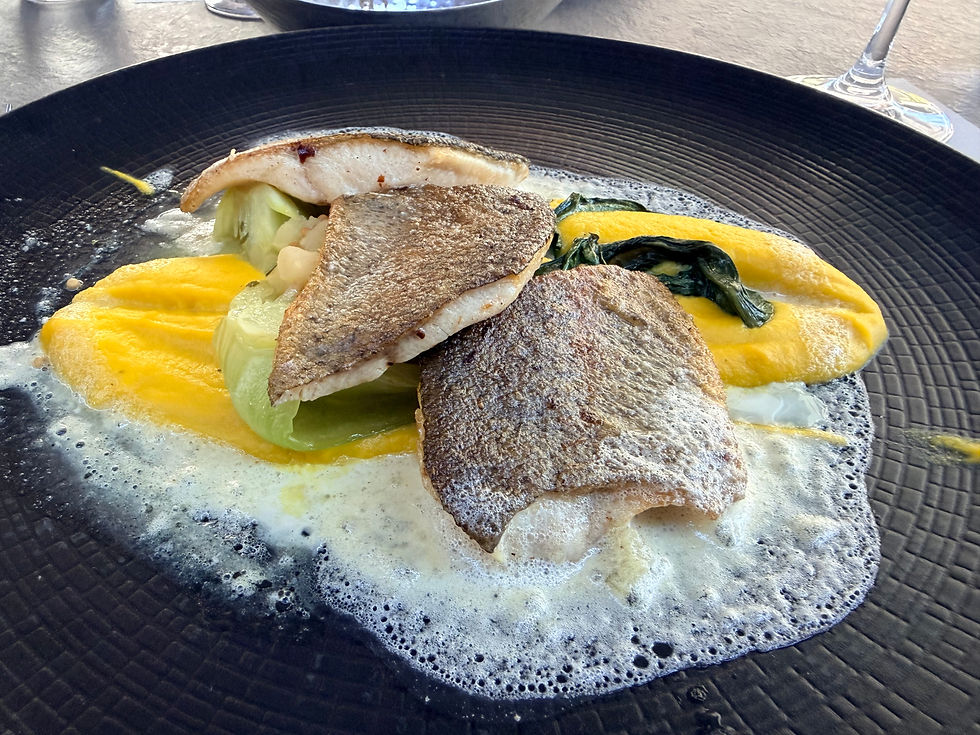
For the main, we both had the sautéed Blausee organic trout fillet with yellow carrot purée, bok choi, apple, mustard seeds, and nut butter foam. Oh, my! Quite an amazing dish! The skin was so crunchy, too.
For dessert, I had the banana split. Vanilla ice cream, banana, chocolate sauce, almond crunch, and whipped cream

Michael opted for coupe blausee. Kandertaler yoghurt, fresh fruits, apricot sorbet, and strawberry ice cream.
Huge pieces a strawberries in the ice cream.

There were huge pieces of apricots, too.

The Blue Lake Saga
"Long ago, the charming little lake in the upper Kander Valley looked quite different than it does today. Its water was no different from that of other small mountain streams. Near its shores lived a young girl who had fallen in love with a shepherd boy. Often, on bright moonlit nights, the two would go to the alpine lake, surrounded by ancient fir trees, where the boy had floated a small boat for amusement. On its silvery waters, they would dream away happy hours of their young lives. Then, the boy, while climbing high into the cliffs to gather hay in a rope, fell to his death over a rock face. From that moment on, the girl was inconsolable. At midnight, she would often sneak to the hidden lake and mourn her lad. Thus, the girl's mind gradually became confused. Her parents' warnings to stop her nightly visits were in vain. A mysterious force drew the unfortunate girl there again and again. One morning, however, the ship and its skipper were found at the bottom of the lake. From that hour on, the lake had taken on a deep blue color. People say they are the tears of unrequited love, and that the water is as blue as the unfortunate girl's eyes once were."


The mountains are so high, shadows quickly run across the lake. A wave of cold air sweeps across the lake. Darkness comes quickly now.
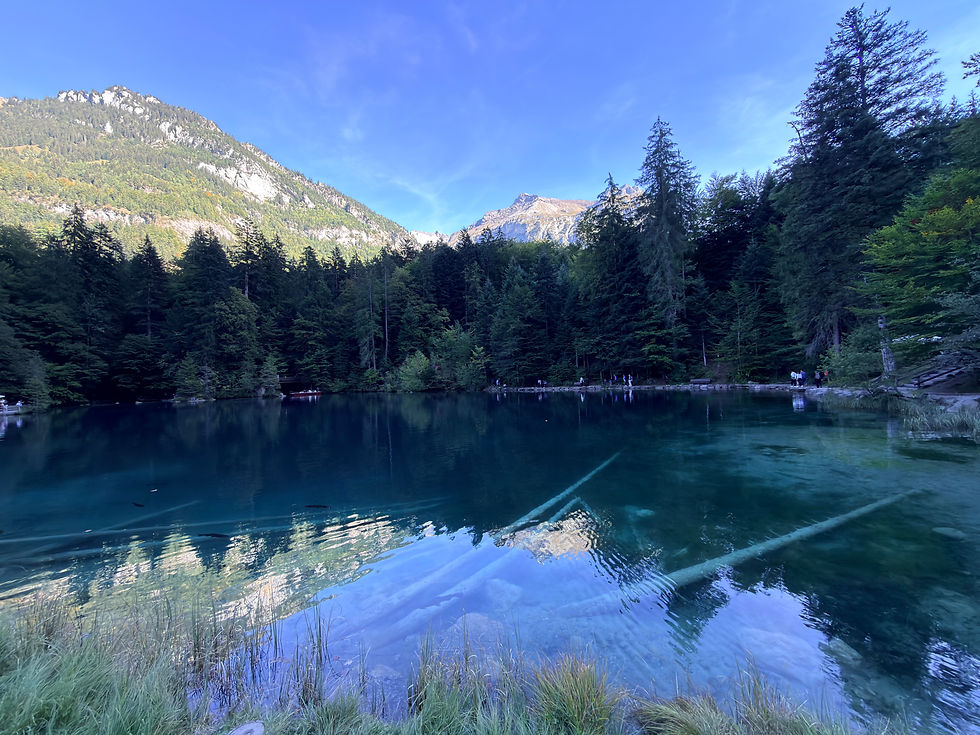


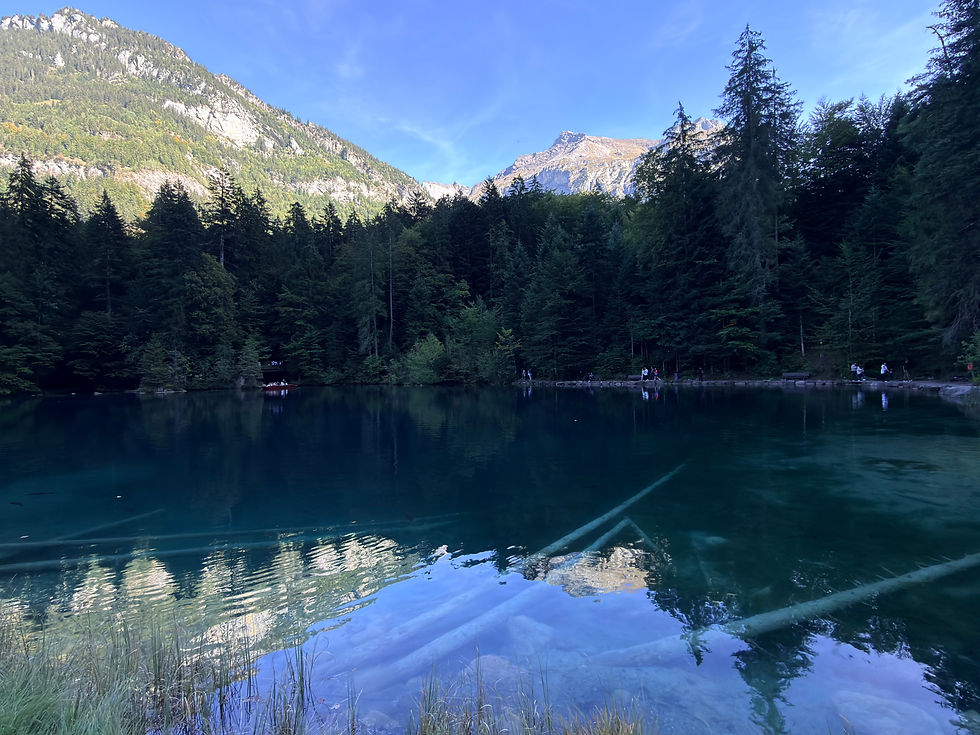


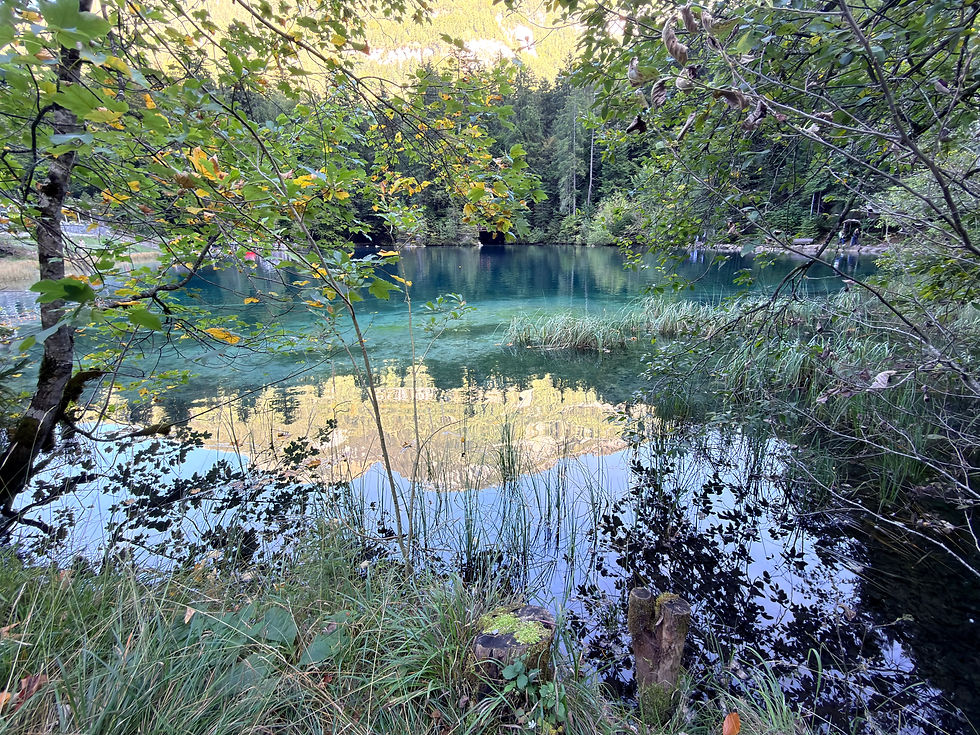


The walk across the lake is more challenging with steep uneven stairs.


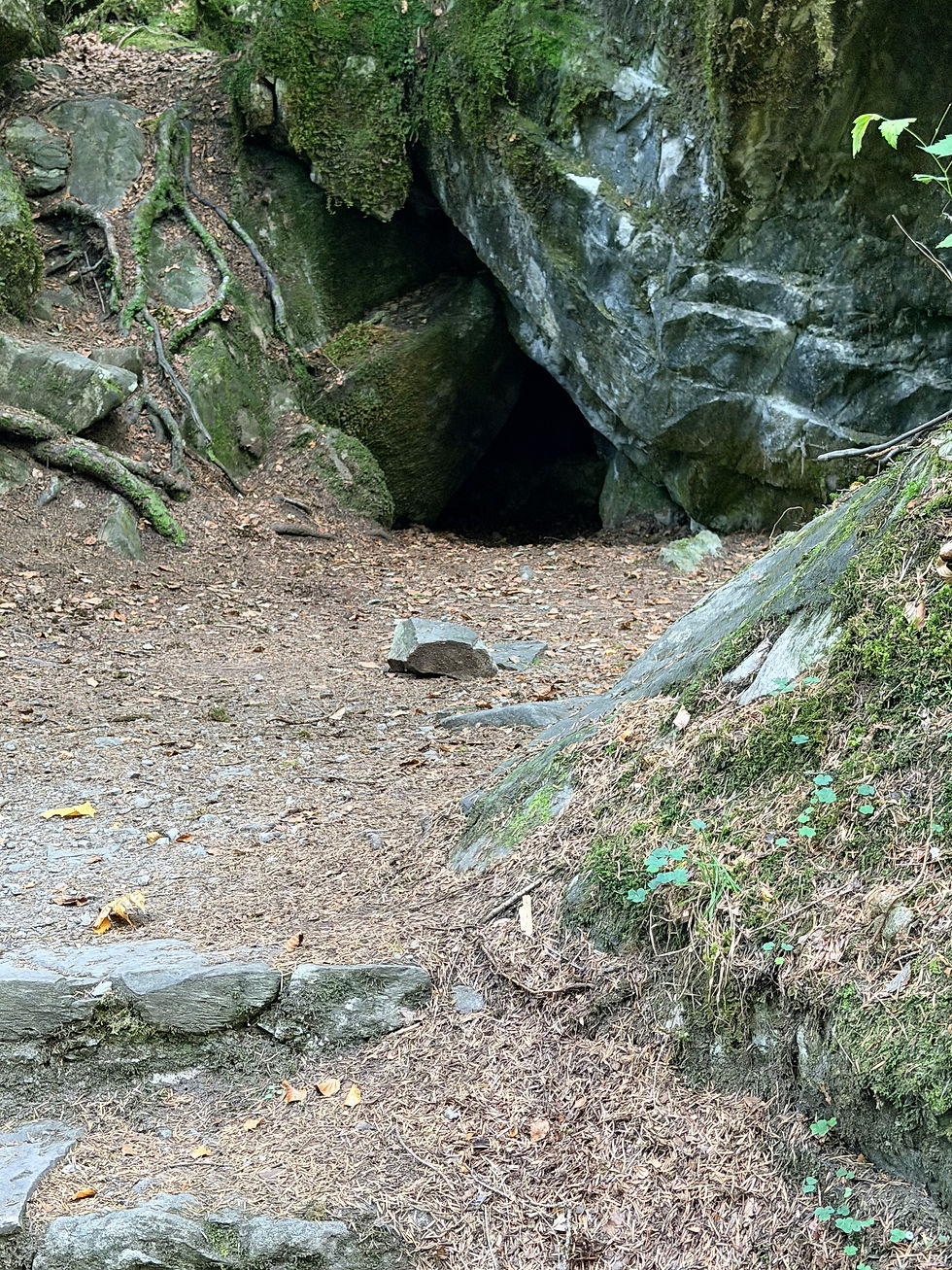


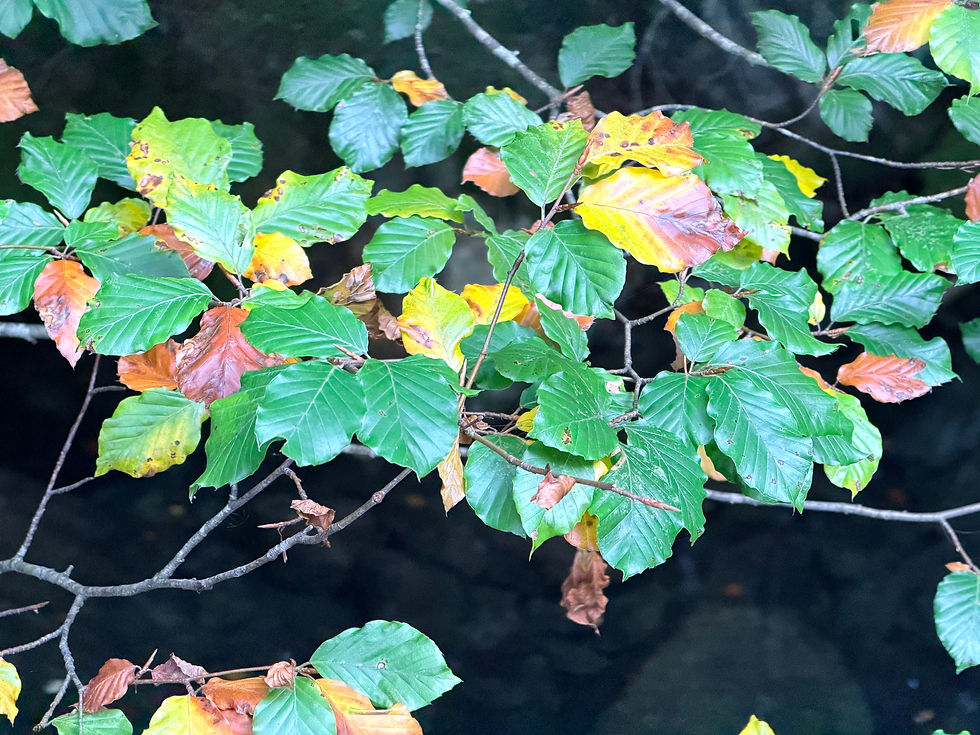


The lake is stocked with trout. Trout chase each other or quickly move away.


"Kandersteg is very close to the Blausee. Near Kandersteg, at the entrance to the Gasterntal (by the Kander and close to the old Lötschberg tunnel north portal), is Führungsanlage K20, the Swiss federal government’s command bunker. It was built from the mid-1980s and finished in 1999. Its existence and general location are public; the interior remains classified."
"It was designed as a protected seat for the Federal Council, senior military staff, a limited number of parliamentarians, and supporting personnel in a crisis (including nuclear, biological, or chemical threats). Public reporting has long described capacity on the order of about 1,000 people and several months of autonomy. Construction cost was in the range of 230–260 million francs. A connected cavern has also been widely reported as a Swiss National Bank gold store. "
"That is the main “government officials in the mountain” site people mean. It is not a secret village of many separate government bunkers."
The wider Kandersteg / Kandertal / Thun area does have many other military works from the WWII National Redoubt (Réduit) and the Cold War: infantry and artillery bunkers, barriers, and prepared demolitions along the Kander line and around Wimmis, Einigen, and Spiez. Those were army defensive positions, not civilian government shelters. Switzerland also requires civilian fallout shelters nationwide; those are ordinary building basements, not Alpine government caverns.
So: one large, well-documented government command bunker in the Kandersteg area, plus a dense older military fortress landscape. The interior of K20 is not open to the public."
Our day was a big surprise but what a perfect one!


Comments