
It Was 90 Degrees F(32 C)In Basel Today!!!

Yes, it was 90 degrees F (32 C) in Basel today. It was absolutely miserable temperature wise!! The only saving grace was the train travel to and from, as the trains are air conditioned. Also, I went direct with stops in Spiez, Thun. Bern, and Olten but I didn't have to switch trains anywhere along the route.
"Basel is considered the cultural capital of Switzerland and is also known internationally as the "City of Museums". With nearly 40 museums throughout the canton and a wide range of cultural offerings, Basel is famous for its numerous world-class art and cultural institutions, making it one of the cultural centers in Europe largest relative to its size and population. The city's art museum houses what is generally considered the most important public art collection in Switzerland. Together with the "Amerbach Cabinet", acquired by the city in 1661, the collection is the public accessible art museum in the world."
"The University of Basel is the oldest in Switzerland and one of the oldest in Europe. Over the centuries, its faculty and researchers have included Erasmus of Rotterdam , Paracelsus , Daniel Bernoulli , Leonhard Euler , Friedrich Nietzsche , Karl Jaspers , Nobel Laureates Werner Arber and Tadeus Reichstein , and the philosopher Jeanne Hersch . Basel thus hosted the first Zionist Congress in 1897, chaired by Theodor Herzl.The congress has been held a total of ten times in the city on the Rhine River before the Establishment of the State of Israel in 1948, more often than in any other city in the world."
"Basel is a world-leading center for the chemical and pharmaceutical industries, a world-renowned trade fair center, and an important hub; the Bank for International Settlements has its global headquarters in Basel. The same is true for, among others, the two pharmaceutical companies Novartis and Hoffmann-La Roche and the insurance company Helvetia Baloise .
In 2024, the management consultancy Mercer ranked Basel, along with Zurich and Geneva, as one of the ten cities with the highest quality of life in the world. "
The Basel Town Hall (Rathaus) is a 500-year-old red sandstone building on the Marktplatz that serves as the seat of government and parliament for the canton of Basel-Stadt.


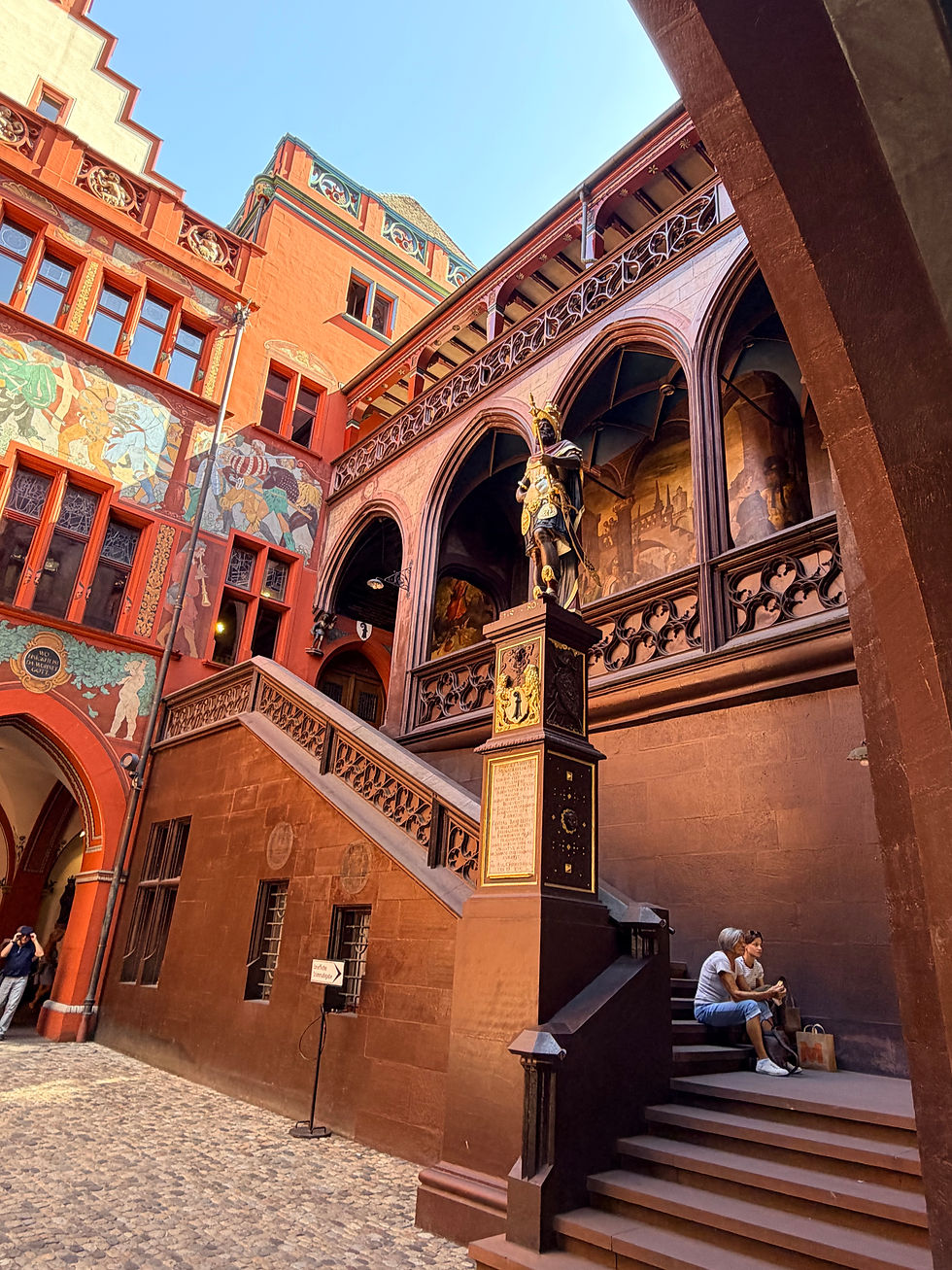


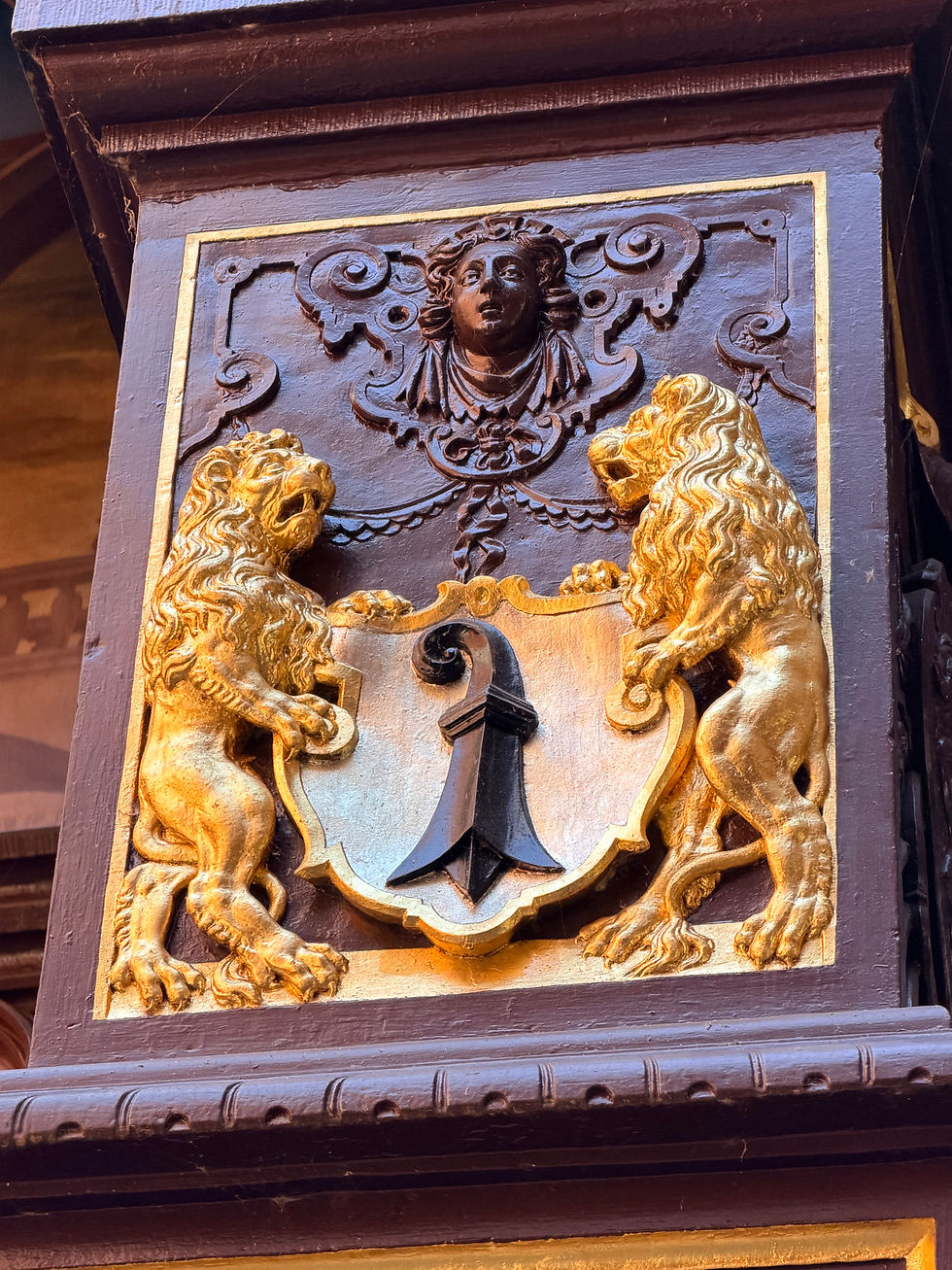


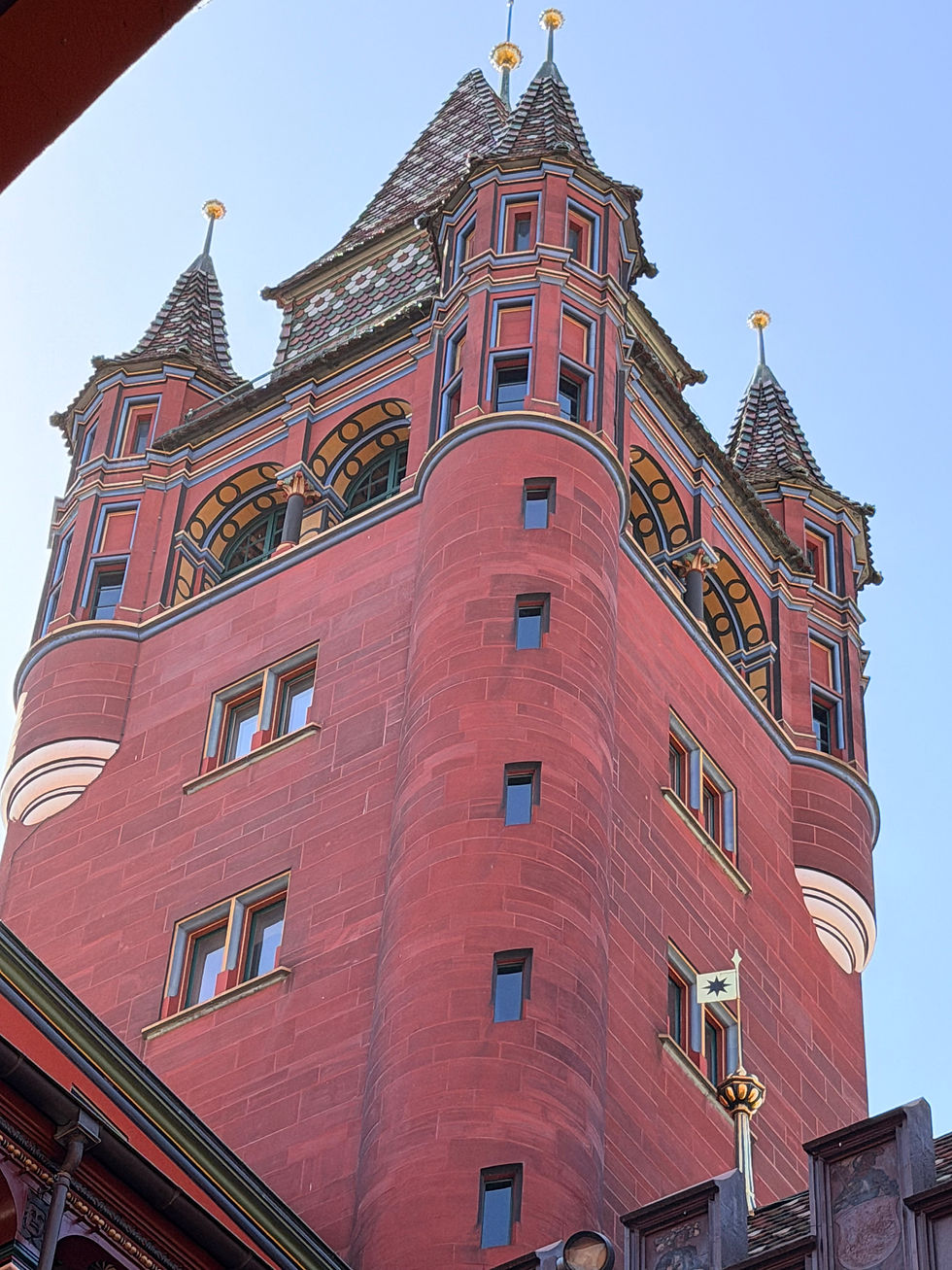
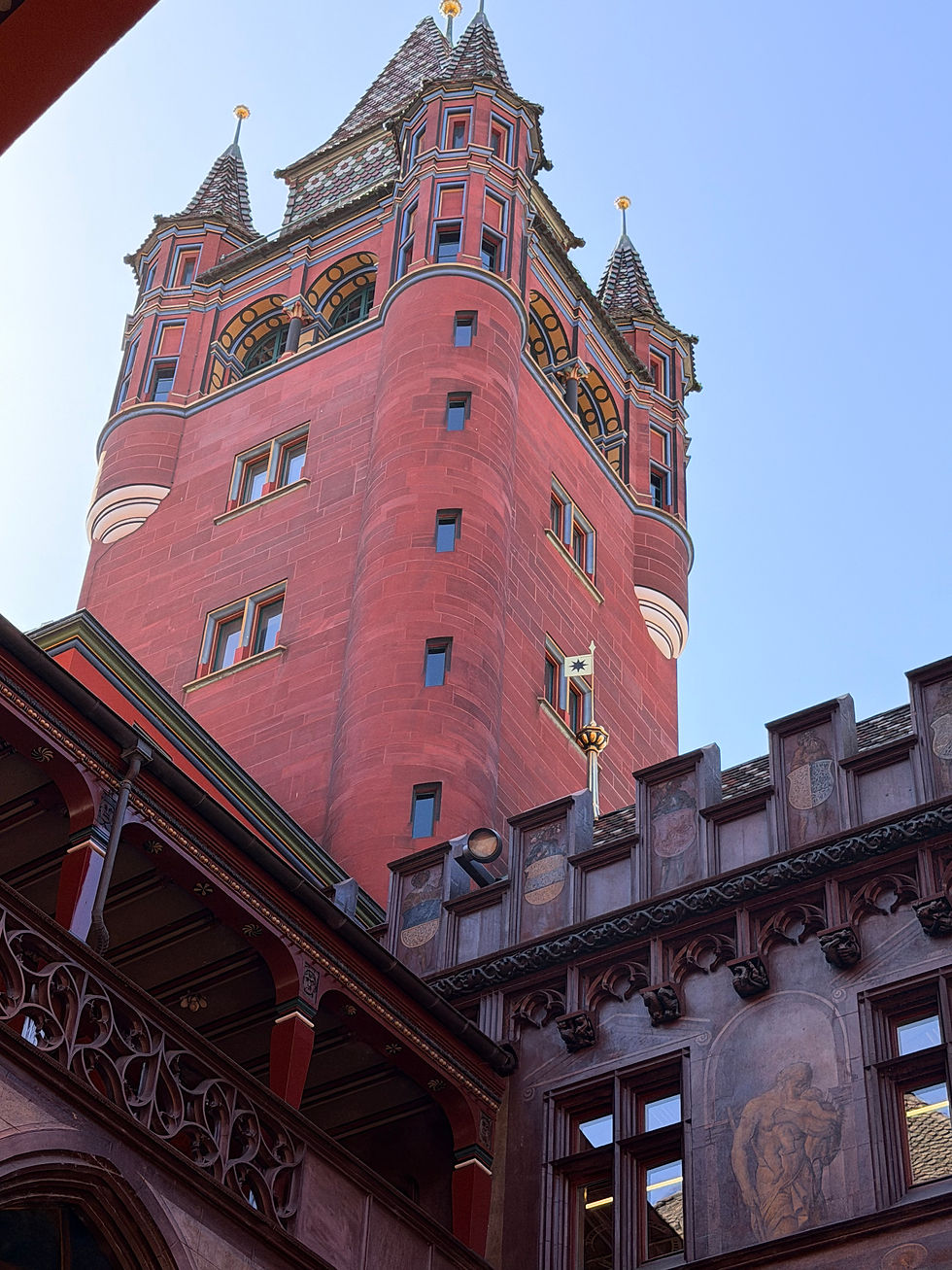


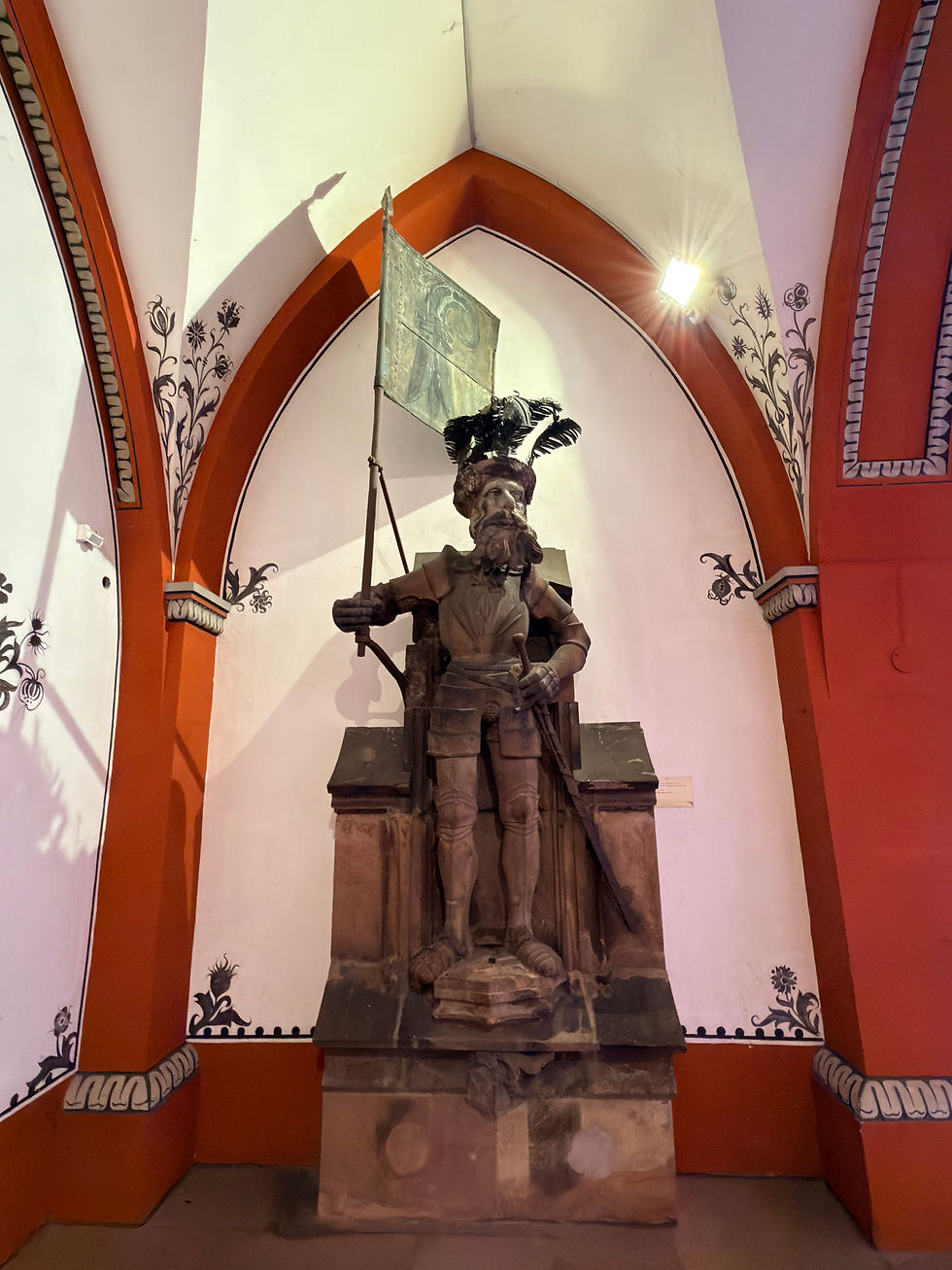


13th Century: The site on the Marktplatz functioned as a civic administrative center and courthouse (Richthaus).
1356: A massive earthquake severely damaged the original structure, leading to temporary replacements.
1501: Basel joined the Old Swiss Confederation.
1504–1514: To celebrate Swiss independence and civic pride, the city built the lavish main red-sandstone building.
1521: Renowned artist Hans Holbein the Younger painted frescoes in the assembly hall, though only fragments survive today.
17th Century: The building was expanded with Gothic-style front chambers, and artist Hans Bock decorated the facade with trompe-l'œil paintings.
1899–1900: A prominent left wing and the iconic red bell tower were added after public debate.
"The so-called Richthaus was destroyed by the Basel earthquake of 1356 and all records and documents were lost. It was replaced by the “Palace of the Lords". In 1501, Basel joined the Swiss Confederation. In 1503, the Grand Council resolved to construct a new building adjoining the “Palace of the Lords” to commemorate the city’s entry into the Confederation. Construction took place from 1504 to 1514. During this time, the coats of arms of the cantons were also added to the battlements. The original “Palace of the Lords”, now situated behind the newer building, was raised in height between 1517 and 1521, when the Great Council Chamber was also established.
The Great Council Chamber at one time featured a series of frescoes painted in 1522 by Hans Holbein the Younger, which have been lost.Fragments of the work as well as some of the initial drawings are kept in the Kunstmuseum."
"The German term "Rathaus" literally means "council house" while the local Basel German dialect term "Roothus" means both "council house" but also sounds like "red house", a pun with reference to the red sandstone facade of the building."


Construction on Marktplatz, so the farmers' market wasn't quite as large as in years' past.

Fruits mostly


Wide variety of tomatoes


My favorites!!!

Love fresh mushrooms

In summer, the Kleinbasel banks of the Rhine are the place to be! You can put your clothes in a “Wickelfisch” swim bag and simply float down on the gentle current through the picturesque Old Town. The colorful Wickelfisch – a swim bag in the shape of a fish, which was invented in Basel, will keep your clothes dry.


The four Rhine river ferries “Wild Maa”, “Leu”, “Vogel Gryff” and “Ueli” link Grossbasel to Kleinbasel. They are attached to a long wire cable and are driven purely by the current of the Rhine itself.


The ferries will silently bring you to the opposite shore all year round. Experience the way in which time seems to stand still during this letter crossing.


Rhine River water levels are currently low.Viking is actively managing low-water disruptions by executing "ship swaps" where passengers disembark, travel via motor coach around shallow segments, and board an identical sister ship on the other side.

There was a diver searching for something.


The current water level of the Rhine River at Basel (Rheinhalle) is 244.84 meters above sea level with a discharge of 380 m³/s, according to the Federal Office for the Environment. Means nothing to me. but some official is monitoring levels.
Water level: 244.84 m a.s.l. (last reading on September 7, 2026).
Discharge: 380 m³/s, staying close to the 24-hour minimum of 373 m³/s.
General Trend: Water levels across Swiss rivers and lakes remain relatively low following summer droughts and high evaporation rates, though recent rains in parts of the region have provided some stabilization.


Switzerland is facing severe summer droughts and unusually low water reserves in 2026, leading over 150 municipalities to ration water use despite its reputation as Europe's "water tower".
Drought and Low Water Levels
Low Precipitation: Spring rainfall reached only 56% of the long-term average, matching the historic dry conditions of 1976.
Shrinking Reservoirs and Rivers: Water levels in major rivers like the Rhine and several alpine lakes have dropped significantly.
Melting Glaciers: The long-term retreat of glaciers and a reduced winter snowpack mean the country is losing its natural seasonal water storage.
Municipal Rationing and Bans
Local Bans:
At least 151 towns and cities have banned non-essential water uses, such as filling swimming pools, washing cars, or watering gardens with hoses, carrying fines up to CHF 2,000.
Fragmented Rules: Because water management is handled at the cantonal and municipal level rather than nationally, rules change from village to village.
Agricultural and Economic Strain
Crop and Fodder Impacts: Dry soils are causing poor harvests and creating critical fodder shortages for livestock.
Hydropower and Shipping: Low river flows and warm water temperatures reduce electricity production at river power plants and limit cargo loads for ships on the Rhine.
The Rhine River is only partially navigable right now because historic low water levels have severely disrupted or halted commercial shipping past key bottlenecks.
Other than the docked cruise ships, I didn't see any other ships traveling on the Rhine.


Basel Münster
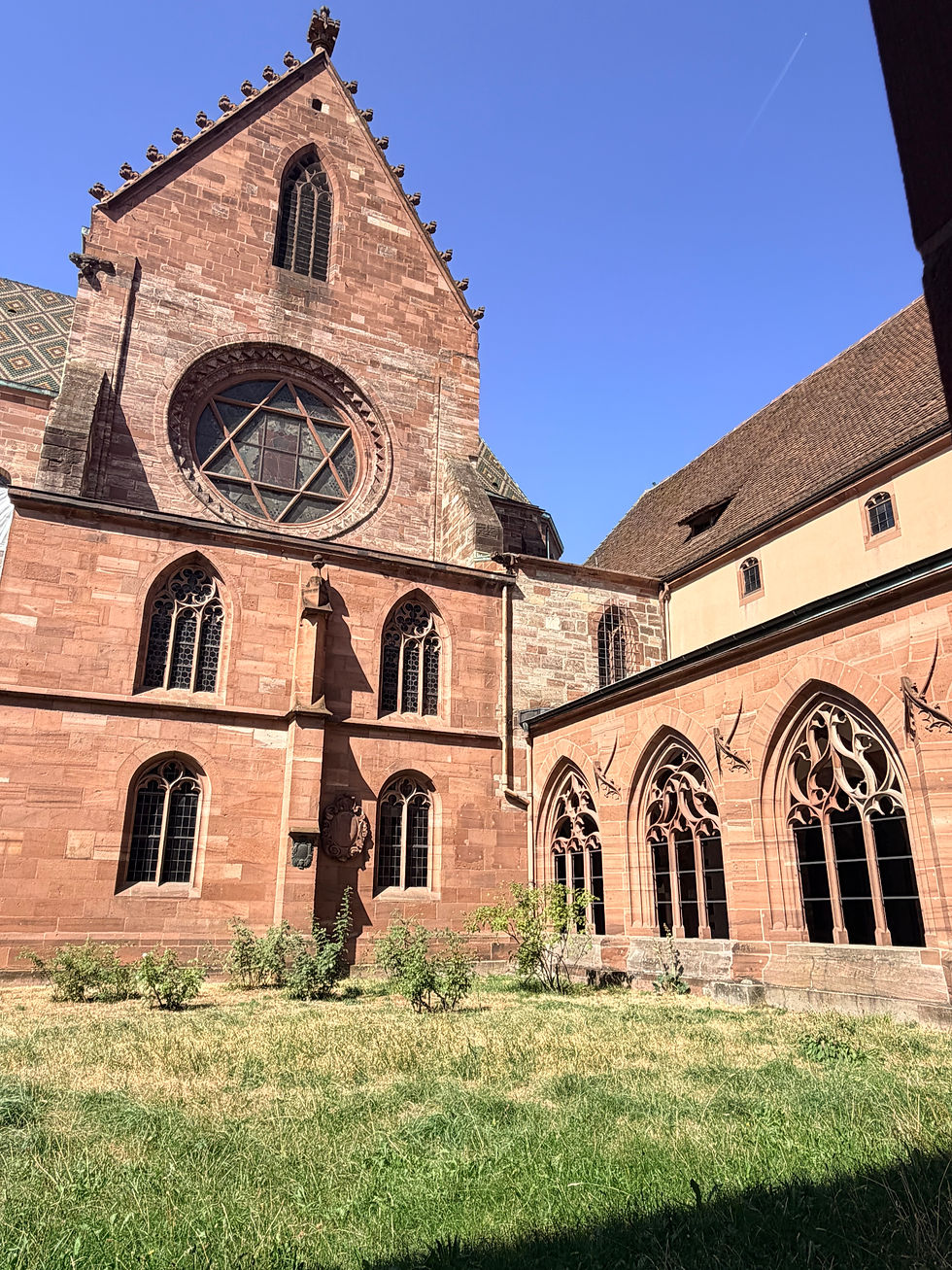
"The original cathedral was built between 1019 and 1500 in Romanesque and Gothic styles. The late Romanesque building, destroyed by the 1356 Basel earthquake, was rebuilt by Johannes Gmünd, who was at the same time employed for building the Freiburg Münster. Ulrich von Ensingen, architect of the towers at Ulm Minster and Strasbourg Cathedral, extended the building from 1421. Hans Nußdorf completed the southern Martinstower (after St.Martin) in 1500.
One of the main landmarks and tourist attractions of Basel, it adds definition to the cityscape with its red sandstone architecture and colored roof tiles, its two slim towers and the cross-shaped intersection of the main roof. The Swiss inventory of cultural property of national and regional significance lists the Münster as a heritage site of national significance.
"During the iconoclasm of the Protestant Reformation, many valuable pieces of art belonging to the city of Basel and the minster were destroyed in 1528 and 1529. Numerous citizens stormed many of the churches in Basel, some of them by armed force in order to demolish religious paintings and statues. Huldrych Zwingli, an influential church reformer, condemned the worship of God in the form of pictures as idolatry."
"A group of 40 armed men is said to have ascended to the minster from the crowded market place at approximately 1 pm on February 9, 1529. After a first attack on the church, during which an altarpiece was tipped over and smashed, they departed for reinforcements. The chaplains took the opportunity to lock the gates of the minster. The returning mob of 200 loud and rowdy men assaulted and finally smashed through the barrier. Once inside the church they destroyed altars, crucifixes, and images of the Virgin Mary and saints. In the course of the afternoon the iconoclasm extended to other churches in Basel as well.'
"The impressive treasure of the minster was saved and remained complete until the Canton of Basel was split into "half-cantons" in 1833. In the 1850s new stained glass windows by Franz Xaver Eggert have been installed."
"The main front which points at the west is bestrided by two towers. The northern tower is called Georgsturm (64.2 m) and the southern tower is called Martinsturm (62.7 m). The towers are named after Georg and Martin, saints of the knights. Copies of both saints are portrayed by corresponding equestrian sculptures next to the main entrance upon high pilasters below the particular towers. The statue of Holy Martin originated from the year 1340; today, the archetype can be found in the Klingentalmuseum. A mechanic clock and a sundial are located above the archetype. It is remarkable that the sundial of the Basler Münster shows the “wrong time” due to the Basler Zeit. Below the Georgsturm a monumental picture (1372) can be found which shows knight Georg fighting against a remarkably small dragon."
"After a heavy earthquake in 1356 the Münster, which originally had five steeples, was reconstructed with only two steeples remaining. At the older Georgsturm, the lower brighter part that has remained untouched, can still be seen. In 1500, a gorgeous finial was put on top of the Martinsturm. By using the steep spiral stairs in the southern steeple it is possible to see the old church clock from 1883. The belfry is situated in between the two steeples which are connected through a gallery. Georgturm and Martinsturm can both be accessed by 242 stairs. From there one can get an overwhelming view of the city of Basel and the foothills of the Black Forest and the Jura Mountains."
"Both of the steeples consist of three lower, undivided stories and several Freigeschosse. The two lower stories are simple and block-like. The steeples’ upper stories soar up the tracery gallery. As those were not constructed simultaneously, they differ slightly in their outer appearance. In contrast to the southern steeple, the octagonaly cross-sectioned steeple and the steeple topping attach only over a rectangle story at the northern steeple. Comparable to the Freiburger Münster, lank Fialentürme project at the corners of the octagons."


Lit many candles

Almost filled the box with individual prayer requests for family and friends.




Next visit, I will stay a little longer and see more places and take the ferry across the Rhine, but the heat was unbearable so I left a little sooner than I had planned..


Comments