
How Ricola Got Its Name

In his hometown, Emil Richterich starts a small confectionery called "Richterich & Co., Laufen", which was shortened to Ri-co-la. A mighty brand is born.

Michael said, "Aleksandra is right. Always listen to Aleksandra." It was so true when she talked about the Ricola products! She was so helpful, informative, enthusiastic, etc. With her bubbly personality and warm smile, she should be doing the Ricola commercials and advertisements. Thanks for your help, especially in recommending the Ricola with salt. We never expected how much the little added salt would intensify the orange flavor. Michael wrote a Google review while we waited for the train.


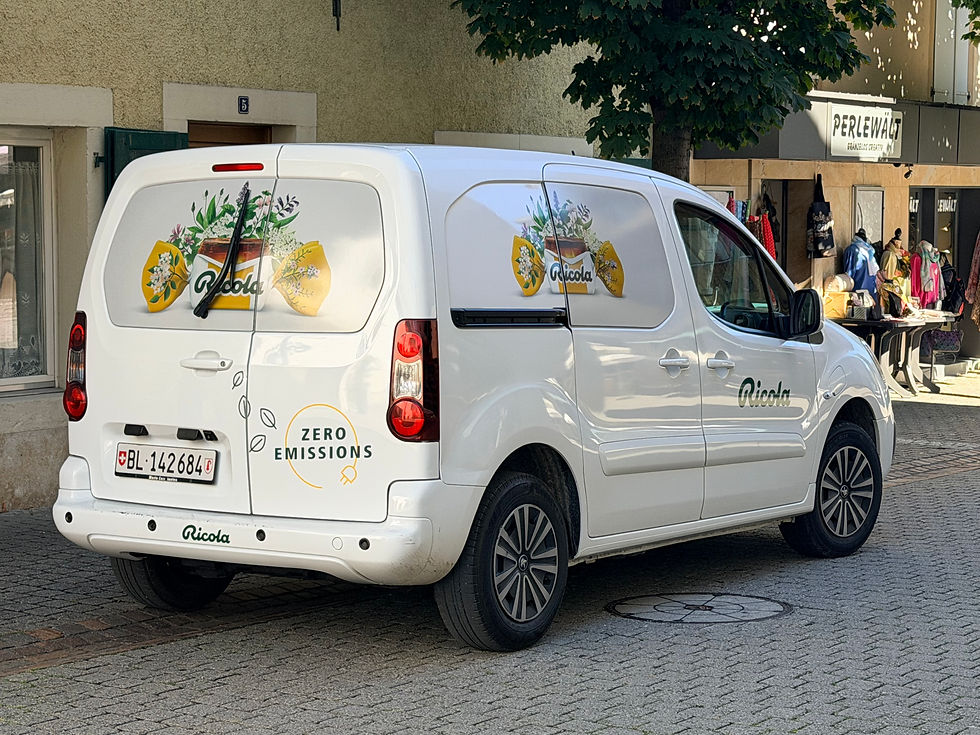
Ricola Ltd./Ricola AG is a Swiss manufacturer of cough drops, instant tea, tea bags, and breath mints. The head office of Ricola is located in Laufen, and has subsidiaries in Italy, Great Britain, Asia, and the United States. According to the company, it exports to around 45 countries in Europe, Asia, and North America."
"Ricola is a family business owned by the Richterich family; the Chairman of the Board of Directors is Felix Richterich. At the end of November 2011, he also took over the position of managing director until he was replaced by Thomas P. Meier in May 2019. Since then, the operational management of Ricola Group AG has been entirely in the hands of executives who do not belong to the owning family."
"Ricola began in 1930 when master baker Emil Wilhelm Richterich and Daniel Ruoss Sr. established Confiseriefabrik Richterich & Co. Laufen after the purchase of a small bakery in his birthplace Laufen, just outside Basel. Under Richterich, the bakery specialized in confectionery such as Fünfermocken, a sweet similar to caramel."

" In 1940, Richterich experimented with the healing power of herbs and created Ricola's Swiss Herbal Sweet incorporating a blend of 13 herbs, which remains almost unchanged today. In the 1950s the sweet became appreciated for its ability to be dissolved in boiling water, creating an aromatic herbal tea or tisane, which inspired Richterich to create a Ricola Herbal Tea a few years later."
"In 1967, Emil Richterich and his sons Hans Peter and Alfred renamed the company Ricola, an abbreviation of Richterich & Compagnie Laufen. Export began in the 1970s, introducing Ricola's products to foreign markets in Japan, Hong Kong, Singapore, and the United States. At the end of the decade, Ricola moved to a new purpose-built factory in the vicinity of Laufen, where its headquarters are still located."
"In 1976, after extensive research on sugar-free confectionery, Ricola launched Switzerland’s first chewable sugarless herbal sweet. Ricola first started to advertise its products on television in the 1980s, an era that saw increased awareness of the need for good dental hygiene, increasing the demand for sugar-free products such as the ones that Ricola offered. In 1985, the cooperation with Swiss farmers for the natural cultivation of herbs according to Bio Suisse standards began. The Klosterfrau Healthcare Group has been responsible for the distribution of Ricola products in Germany since 1987. In 1988, the company started packaging their products in small boxes. In 2019, sales in Germany switched to CFP Brands, a joint venture in which Ricola participated."
"In 1993, the confectionery producer Disch from Othmarsingen was taken over, which was sold to the investment company Alrupa Finanz Holding in 2015. Disch produces the brands Sportmint and Mocken, which belong to Ricola."
" In 2006, the company put a state-of-the-art candy factory into operation in Laufen and in 2014 the new Kräuterzentrum production building was put into operation at the same location. It is made of clay and is the largest clay house in Europe. The construction was developed by the Austrian ceramist and clay building pioneer Martin Rauch, the architects were Herzog & de Meuron."
In 2022, the company opened the first Ricola shop in Paris, where customers can also create their own sweets. In March 2023, the company opened its Ricola shop in Laufen, Switzerland. Ricola and IP-SUISSE, in 2023, agreed on a long-term partnership for the sustainable cultivation of sugar beets to produce 25,000 tons of sugar annually without the use of fungicides, insecticides, and herbicides."
In December 2023, Ricola was certified as a B Corporation by the non-profit organization B Lab.
The company is now managed by Thomas P. Meier as CEO and Felix Richterich as President of the Board. Today, Ricola exports to over 50 countries in Asia, North America and Europe.
"The invention of the original: The breakthrough happens in 1940 with the invention of the 13-herb blend. From a range of over 80 different products, the original Ricola Herbal Drop with its distinctive cube shape is born."
"In 1962, Ricola goes international: Ricola begins exporting its herbal drops to Germany and Italy. The overwhelming success: 1 million drops sold in the first year."
"In 1970, Ricola continues to expand and starts selling its herbal drops in Japan, Hong Kong, Singapore, and the USA."
"In close cooperation with farmers in the Swiss mountain regions, Ricola pioneers systematic herb cultivation in Switzerland, in 1979.
Ricola brings sugar-free drops to market in a convenient click-box, in 1988.
The world starts to sing "Riiicooolaaa!": The first TV commercials featuring the Ricola yodel are broadcast in Switzerland and Germany in 1993.
Focus is on sustainability in 2014: The new Ricola Herb Center is built in Laufen. Its structure is made of clay, gravel, and marl sourced from the Laufental Valley.
"In 2121, Ricola updated their brand logo and look: Ricola’s herbal drop now takes center stage at the heart of the new packaging design.
Ricola, in 2023, becomes a B Corp: They take corporate responsibility seriously, aligning boththe brand and their company with change and sustainable growth.
Ricola has been collecting contemporary art from Switzerland since 1975. The collection was established by the owners of the family business and is constantly being expanded with works by contemporary artists. It spans more than half a century, reflecting both historical and current developments in the art world. The collection is exhibited in company buildings designed by the Basel-based architects Herzog & de Meuron, who have been working with Ricola since 1983. The result is a globally unique group of buildings created by the acclaimed duo, who received the Pritzker Architecture Prize in 2001. Jacques Herzog describes the Ricola buildings as “milestones in our work“.
"Ricola commissioned Herzog & de Meuron to renovate the residential and factory building at Baselstrasse 31 in Laufen, originally occupied in 1950. Completed in 1983, the renovation is notable for its sensitivity to the building’s original structure, which remains largely intact on the exterior. Inside, the space was carefully expanded to accommodate its new function as office space, featuring more open room connections and an updated spatial layout."
"In 1986, Ricola added a fully automated high-bay storage facility next to its factory, built in 1967, in Lochfeld, Laufen. The building features a striking façade designed by Herzog & de Meuron. Despite its substantial dimensions—60 meters long, 26 meters wide, and 17 meters high—the structure appears surprisingly light, thanks to the façade's upward-widening design. This visual effect is further enhanced by the angled struts that support the cantilevered roof. The façade design recalls the architecture of a Renaissance palazzo, underscoring the importance of this utilitarian building within Ricola’s operations."
"A few years later, Ricola expanded its original factory near the new storage building. Instead of demolishing the 1967 facility, Herzog & de Meuron designed an innovative addition known as a rider structure to create the needed space. Supported by steel double T-beams, the two new floors were built above the existing production halls without placing additional load on the original building’s structure."
While the active ingredient in most Ricola products is menthol, an important part of Ricola products is the herb mixture. The following herbs are noted as being part of Ricola's classic blend of 13 herbs:[3
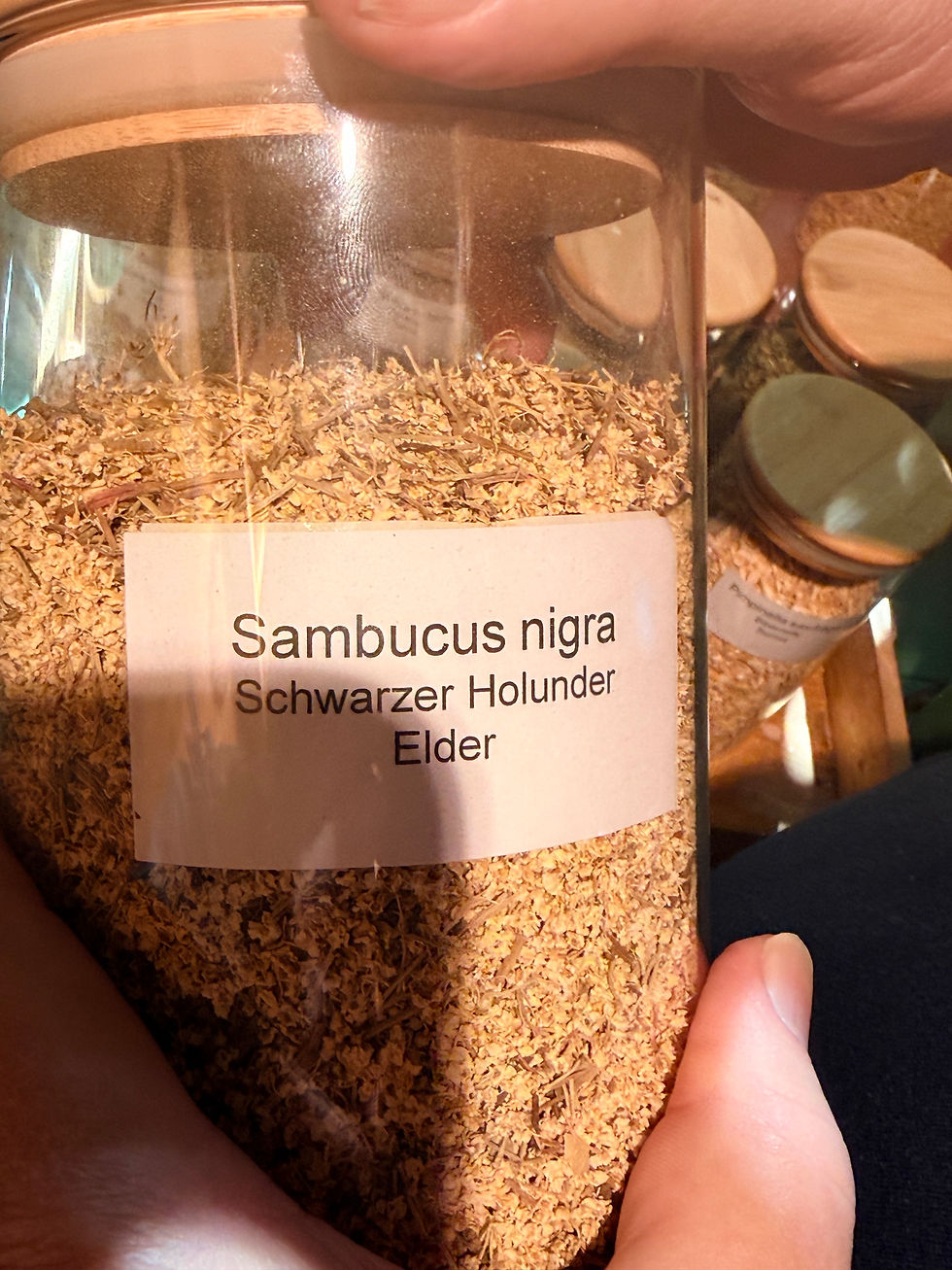
Elder (Sambucus nigra)
Horehound (Marrubium vulgare)
Mallow (Malva silvestris)
Peppermint (Mentha × piperita)
Sage (Salvia officinalis)
Thyme (Thymus vulgaris)
Cowslip (Primula veris)
Burnet (Pimpinella saxifraga)
Yarrow (Achillea millefolium)
Marsh mallow (Althaea officinalis)
Lady's mantle (Alchemilla vulgaris)
Speedwell, a.k.a. veronica (Veronica officinalis)
Ripwort plantain (Plantago lanceolata)
In the US market, ten herbs make up the herbal mixture, three of which are not in the list above.
These are linden flowers (Tilia platyphyllos), wild thyme (Thymus serpyllum) and hyssop (Hyssopus officinalis).
The company offers over 60 types of herbal sweets that are supplemented with essential oils, natural flavorings, or vitamin C. All Ricola products are manufactured in Laufen, where Ricola produces 7 billion candies a year. Variants available in Switzerland include Herbs Original, Lemon Balm, Honey Herbs, Orange Mint, Herbs Caramel, Honey Sage, Echinacea Honey Lemon, Cranberry, Mixed Berry, Sage, Elderflower, Glacial Mint, Eucalyptus and Calendula."

"Sugar-free versions are also available. Since the beginning of 2022, some of their products have been sweetened with steviol glycosides from the stevia plant. As of November 2023, the official US Ricola site mentioned their continuing use of aspartame artificial sweetener in some products, as well as a stevia-sweetened option."
"Ricola products are also gluten-free, halal, and kosher.
The product range is tailored to each market individually. For example, filled sweets are also available in Germany and North America. All Ricola products are based on the 13-herb mixture. It also contains isomalt, which carries a risk of intestinal distress when consumed in large quantities (above about 20–30 g (1 oz) per day)."
Merchandise:


Products:
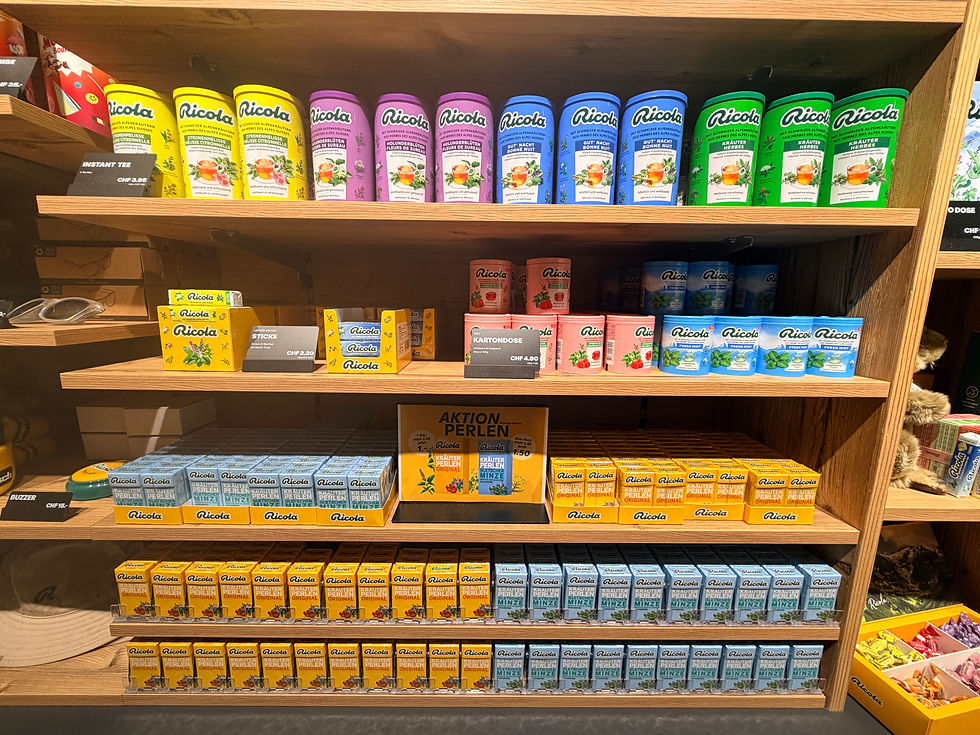


These will have to be rationed. The drink is that tasty! These are new and only sold in Switzerland. As we would say: "This is a keeper!"


These pieces are sold by the weight. You can put them in a bag or a decorative tin.

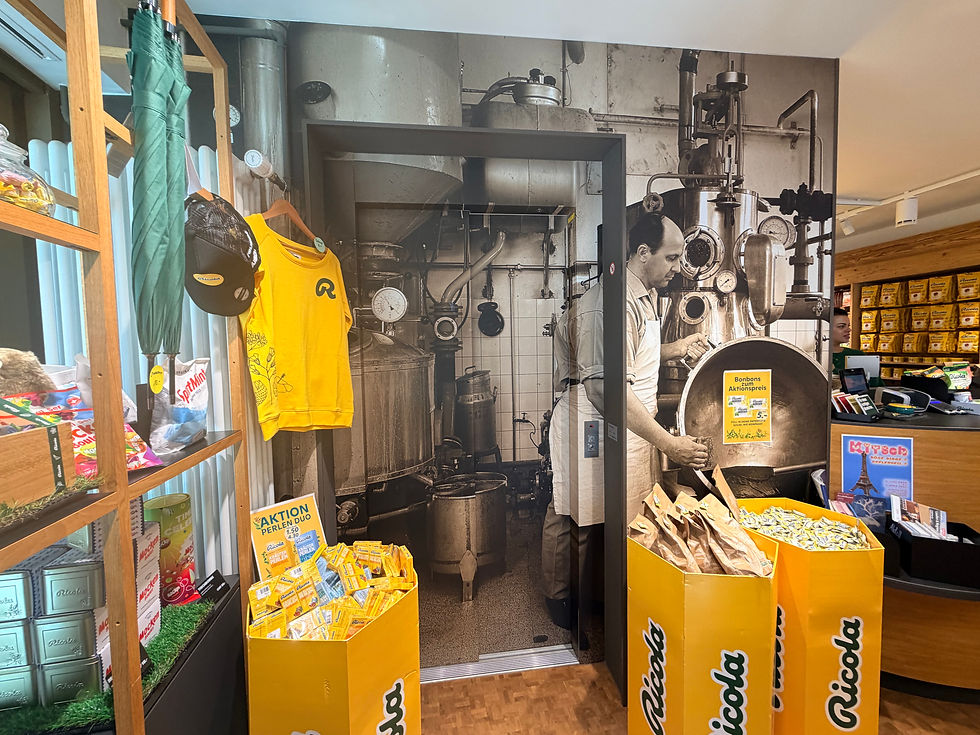


Opened and smelled all the containers.


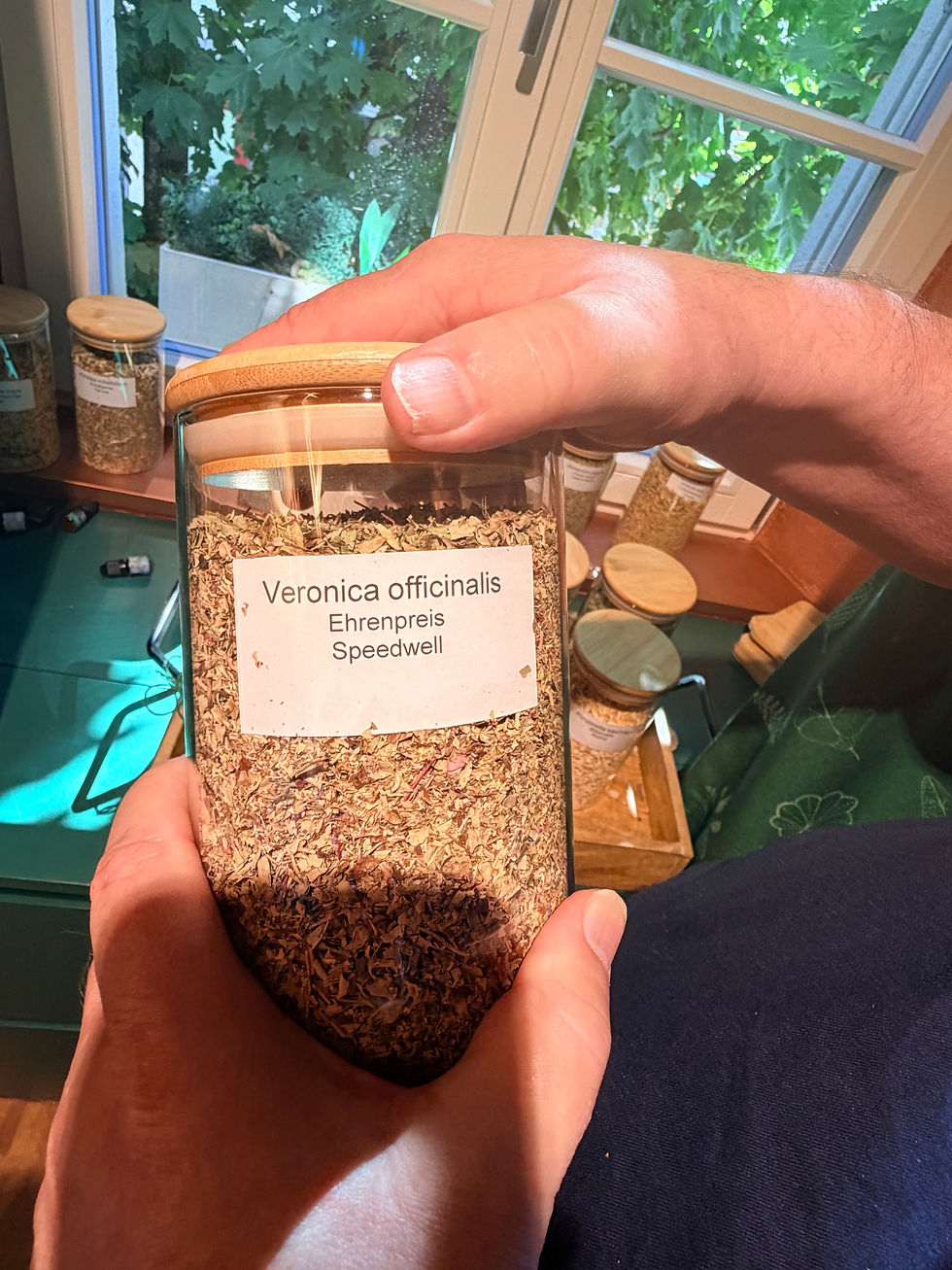


Did you know the original Ricola had sugar added. All the American ones have added sugar while only the ones with honey have sugar in Switzerland.
A soap making class was scheduled for later in the day.


We wanted to take the tour of the fields, but it is sold out until late October. The tours start up again in May.
Read, look and smell.

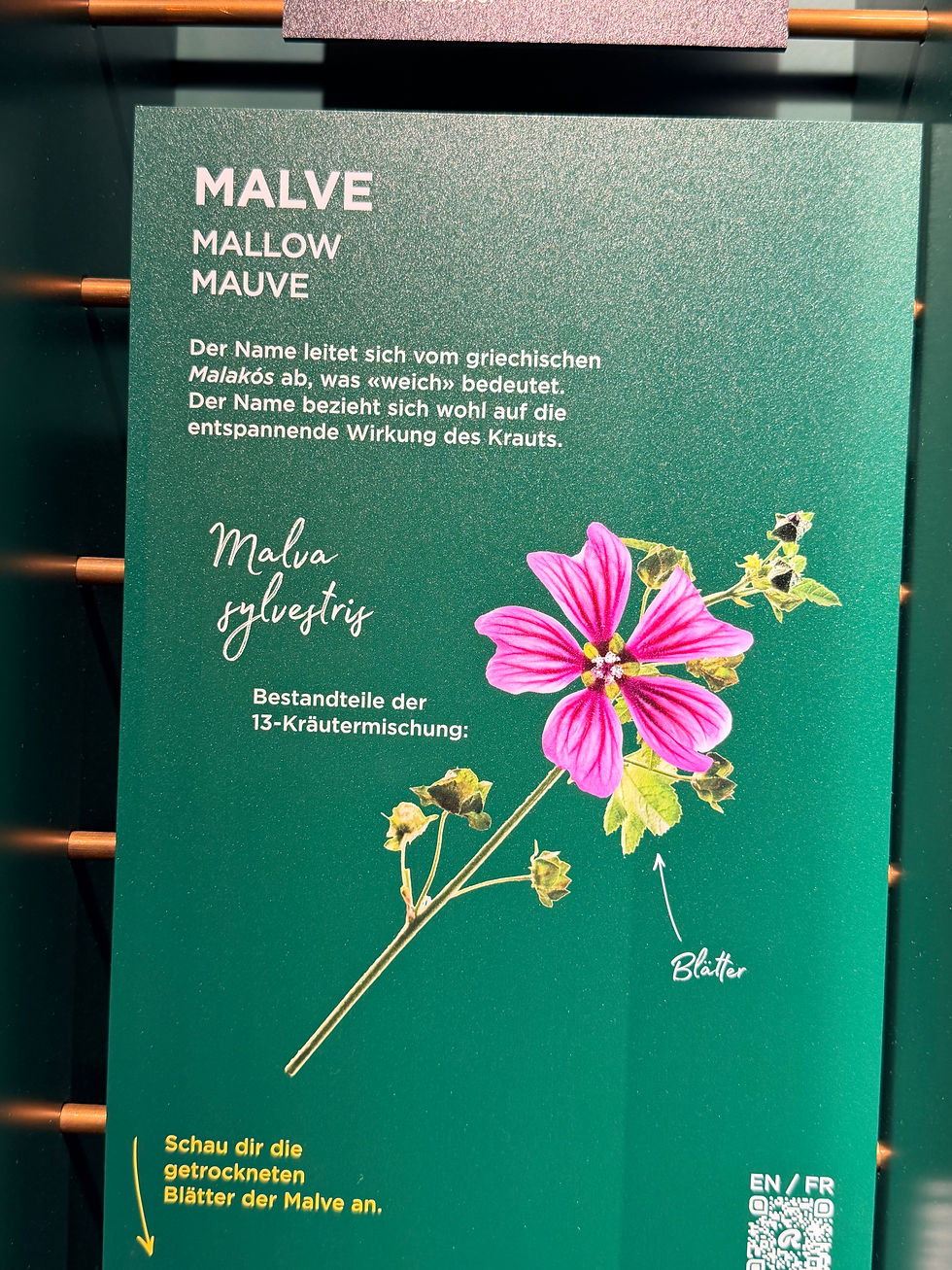


Always time to play and have a little fun! Doesn't take much to amuse us!!


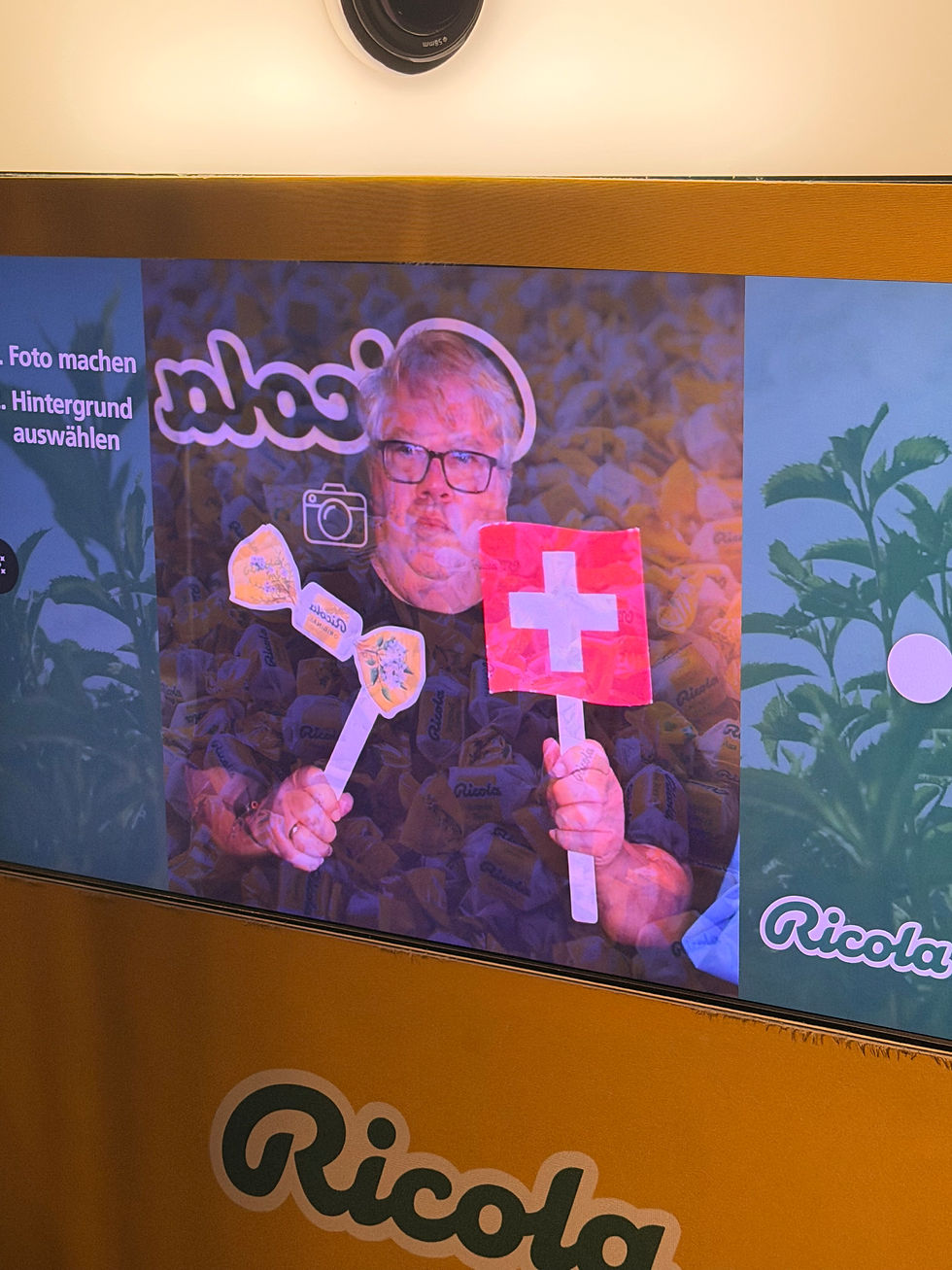
I am going to add Ricola to my tour list besides Cailler and Kambly.

Ricola is located in the town of Laufen.
Laufen is a historic town on the Birs river, located in the Laufental valley in the canton of Basel-Landschaft. Particularly impressive are the partially preserved town wall with its city gates and the striking main street.
"Laufen's old town is characterized by its partially preserved city wall and three city gates. The Delsberg and Basel gates mark the beginning and end of the main street, which is also the town's trademark. The wide, cobbled street is dominated at its upper end by the unusually elegant town hall and at its lower end by the baroque town church. The Water Gate – the third city gate – provides access to the Birs River, which flows past the old town at this point, through an old pointed arch. The suburb, bordering the old town, also exudes an exceptional charm. It is characterized by many stately buildings that line a wide alleyway. At its northern end, this alleyway widens into a square where the magnificent town hall, dating from 1672, stands. Laufen was shaped by its industry, of which only a few buildings remain today. In the 19th century, quarries, stonemasons, and a cement factory operated in the town. A pottery factory and an aluminum factory also operated there. Meanwhile, the industrial areas have given way to newer neighborhoods, which feature surprising green spaces such as the city park. Laufen has only been part of the canton of Basel-Landschaft since 1994. With the secession of the canton of Jura a few years later, the Laufental valley also separated from the canton of Bern."

It's a medieval old town with a partially preserved city wall and three gates: Obertor, Untertor and Wassertor
Obertor, the so-called. Time tower, with large dial and astronomical clock


The Ricola store was located at the end of the street.
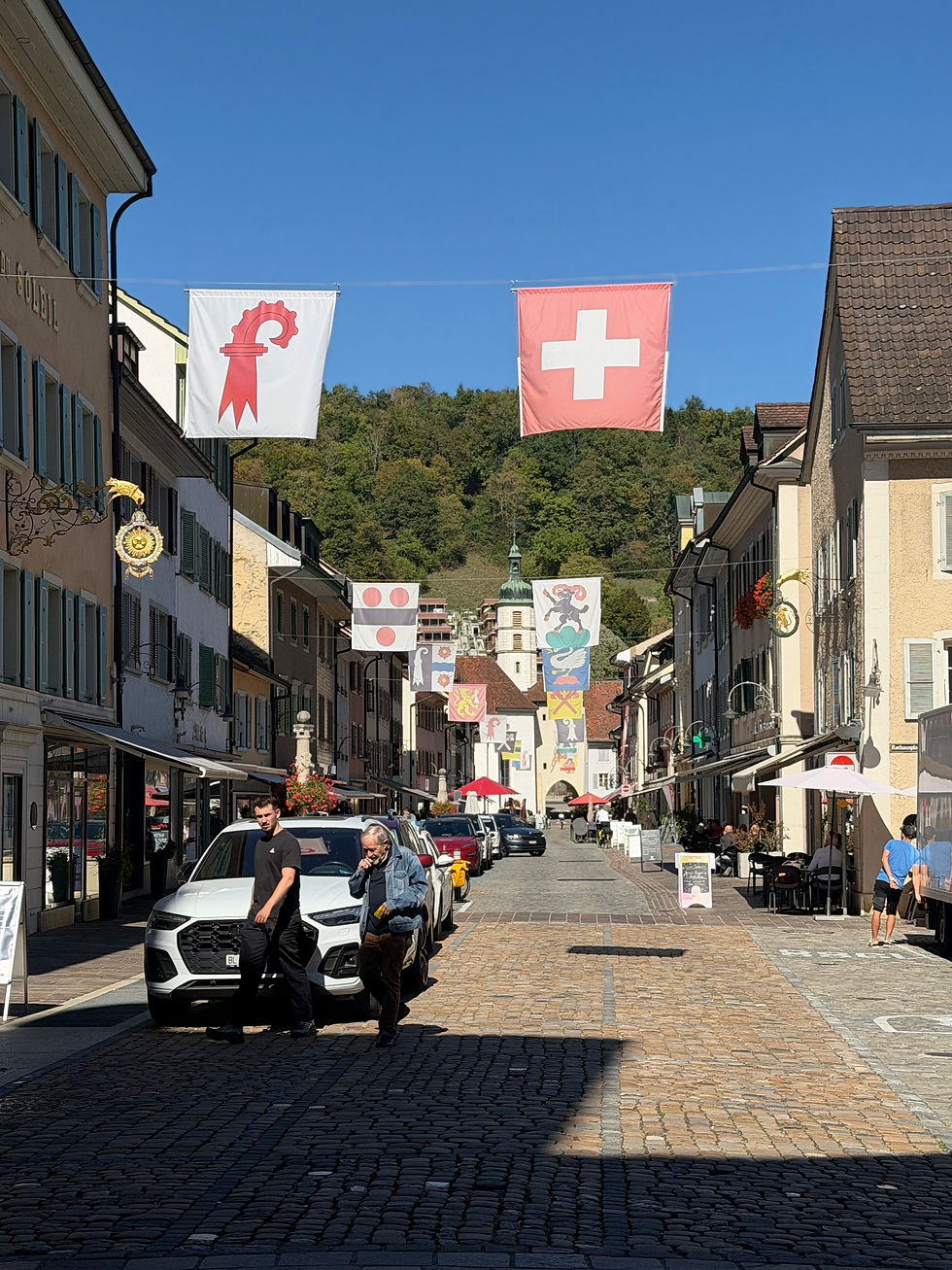
Not sure what this is.

Pears in red wine


Decided to go back home via Biel instead of going back through Basel.
In Delémont, we came upon a transport train which had its wagons loaded with sugar beets.


"Here is a short explanation of how Swiss sugar beets are turned into sugar. Switzerland processes sugar beets at two factories (Aarberg and Frauenfeld) run by Schweizer Zucker AG. The harvest-and-processing campaign usually runs from mid-September into December. About eight to nine beets yield one kilogram of sugar; the roots themselves are typically 15–20% sugar. The industrial process is:
Washing. Beets arrive by truck or rail and are unloaded with water cannons. They are thoroughly washed; the soil is not discarded but turned into potting compost.
Slicing. Clean beets are cut into thin strips (Schnitzel or cossettes). This greatly increases surface area for extraction. (A cossette is a thin strip, slice, or piece of a root vegetable—most commonly a sugar beet or chicory—cut into specific shapes to extract sugar or make coffee substitutes. In food service, the term also refers to grated or shredded cheese (such as mozzarella) used for toppings.)
Extraction (diffusion). The strips are treated with hot water in an extraction tower. Sugar dissolves out, producing a dark raw juice that is about 16% sugar. The leftover pulp is pressed and sold as energy-rich animal feed. The Frauenfeld plant also extracts pectin from the pulp.
Purification. Milk of lime and carbon dioxide are added (carbonation). Impurities precipitate and are filtered out, leaving a clear thin juice that is essentially water plus sugar. The lime residue is returned to farms as fertilizer.
Evaporation. Water is boiled off in multi-stage evaporators until the juice reaches roughly 65% sugar and becomes a thick syrup (Dicksaft). (Dicksaft" translates to thick juice, syrup, or juice concentrate in English, depending on the context.) (Sugar production (industrial): Thick juice or juice concentrate.)
Crystallization. Under vacuum, still more water is removed so sugar crystals grow. The resulting massecuite is a mix of crystals and syrup. (Massecuite is a dense, semi-fluid mixture of sugar crystals suspended in a residual liquid syrup (called mother liquor or molasses), produced at the end of the crystallization stage in sugar manufacturing.)
Centrifugation and refining. Centrifuges spin the crystals free of the syrup (molasses). The molasses is recrystallized; the resulting raw sugar is dissolved, filtered, and crystallized again to produce white granulated sugar. The crystals are then dried and packed.
"Nothing is wasted: pressed pulp and molasses go to livestock feed (molasses is also used for yeast and, in Aarberg, Swiss ethanol); lime cake becomes fertilizer; wash soil becomes garden substrate. The factories use a large share of renewable energy." (Lime cake in sugar production is the solid waste residue composed primarily of calcium carbonate, organic non-sugar impurities, and trapped water that is filtered and separated out during the juice purification or carbonatation stage.)
(The carbonatation process is used in the production of sugar from sugar beets. It involves the introduction of limewater (milk of lime - calcium hydroxide suspension) and carbon dioxide enriched gas into the "raw juice" (the sugar rich liquid prepared from the diffusion stage of the process) to form calcium carbonate and precipitate impurities that are then removed. The whole process takes place in "carbonatation tanks" and processing time varies from 20 minutes to an hour.)
Our new first adventure to Laufen proved to be quite enjoyable! We will go back next year.


Comments