
Carry-on Filled With Cailler


Today, Michael and I went to Cailler to buy the rest of the chocolate bars we need to take home.
Each chocolate bar is 100 grams. Here is the question for the last contest. How many grams of chocolate did we buy from Cailler? Please submit your answer to me by Thursday, September 24, 2026 at 8:00 A.M. Eastern Daylight Saving Time. The winning guess is the one that is the closest by 100 grams. Good luck!!!!!!!
There isn't much to write about tonight. We took it slow and easy today.
A church with a rooster on top of the steeple is most commonly Protestant (particularly Reformed, Lutheran, or Swiss/European Protestant traditions), though the symbol itself has ancient Christian roots used across various denominations.
Distinction from Catholics: Historically in parts of Europe, Protestant and Reformed churches used roosters instead of or above crosses on their steeples to distinguish themselves from Roman Catholic buildings. For example, in Switzerland, a rooster on a clock tower traditionally signifies a Swiss Reformed church, while a cross indicates a Catholic one.
Biblical Symbolism: The rooster refers to the biblical story where the Apostle Peter denied Jesus three times "before the cock crows," serving as a reminder of human weakness, repentance, and Christ's forgiveness.
Watchfulness: Pope Leo IV placed a rooster on old St. Peter's Basilica in the 9th century, and Pope Nicholas I later encouraged their use as a call to spiritual watchfulness and readiness. Over time, many of these figures also doubled functionally as weather vanes.

"The rooster is a symbol of the rising sun because this is the bird that announces the dawn. So, “like Christ, it announces the arrival of the day after the night, the arrival of good after bad.”
Roosters are proud, courageous, intelligent and vigilant – the qualities we expect the church to demonstrate in its community."
"The rooster is used because early Christians met for morning prayers according to the bird’s crowing, at least until the first bell-towers appeared in the 5th century and took over that function.
The cock on the weather vane always faces into the wind, so it’s a symbol of the way Christ facing into the sins and dangers of the world."
In Switzerland, it's really easy to spot what church a specific building belongs to, by looking at the symbol on top of the clock tower. If it is a rooster the church is Swiss Reformed, if it is a cross, it's most likely some fashion of Catholic.

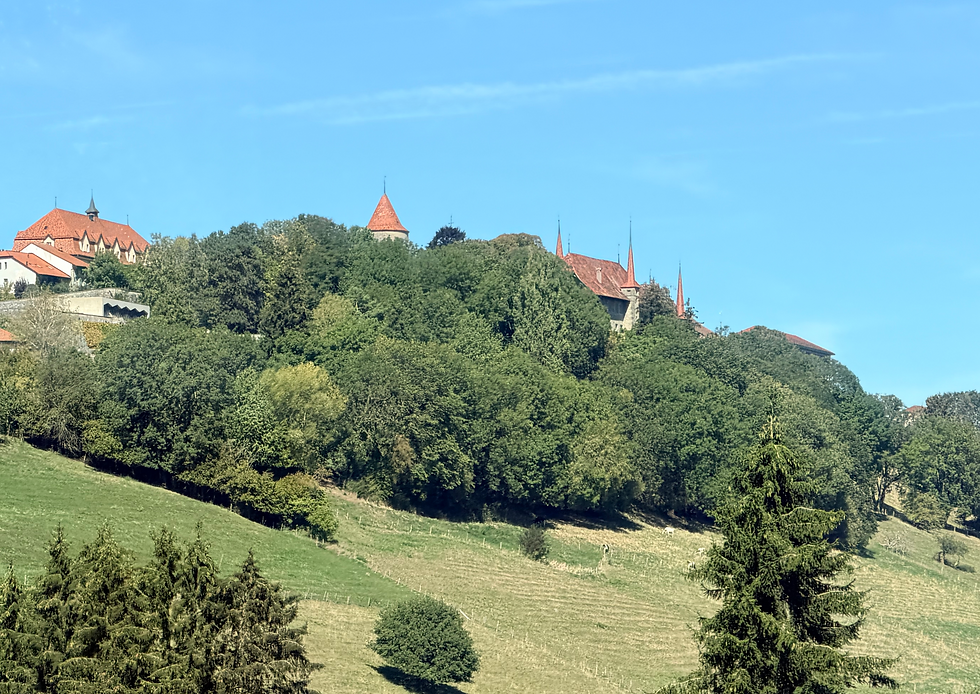
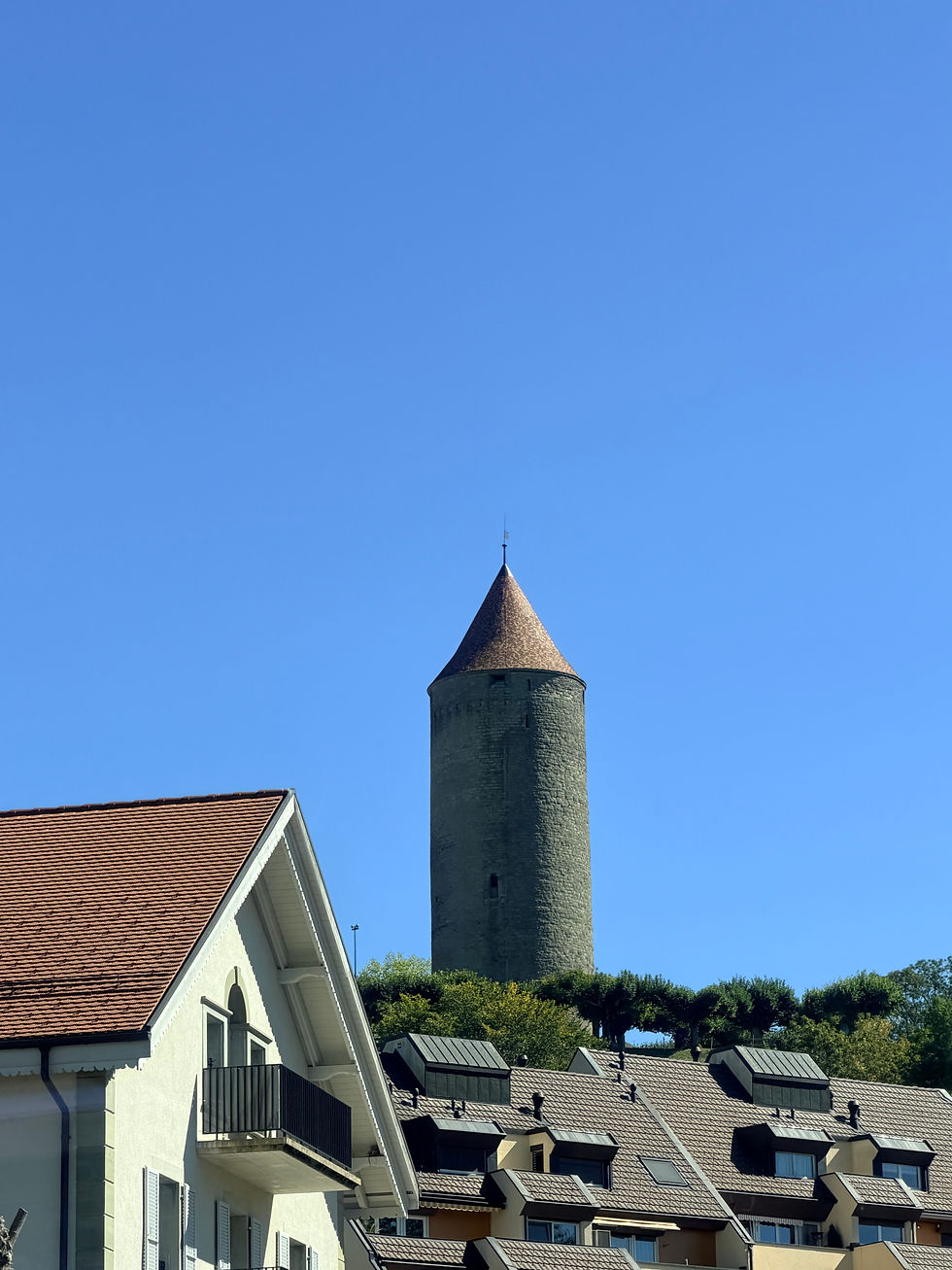
Romont
Romont is first mentioned in 1177 as in Rotundo Monte. In 1244 it was mentioned as Romont. The municipality was formerly known by its German name Remund, however, that name is no longer used.
Romont, a small picturesque town dating back from the 10th century, is located on the main roads and railway lines connecting Lausanne and Fribourg, between the lakes and the mountains.
The name “Romont” comes from the Latin “Rotundus Mons” (round hill) and dates from 1177. On this wooded hillside, Peter II of Savoy built a castle and founded a town in the 13th century. The little town saw pilgrims, travelers and merchants pass through. Its wide streets allowed markets and great fairs to be held.
Built on the top of a hill, Romont is a medieval town rich in history and art. Its castle, with a beautiful court yard shelters the Swiss Stained Glass Museum. Its gothic Church is decorated with stained glass windows from 15th to 20th century, with wooden stalls and with sculptures. Surrounded by city walls and watching towers, shops and restaurants welcome travelers.

Gruyères
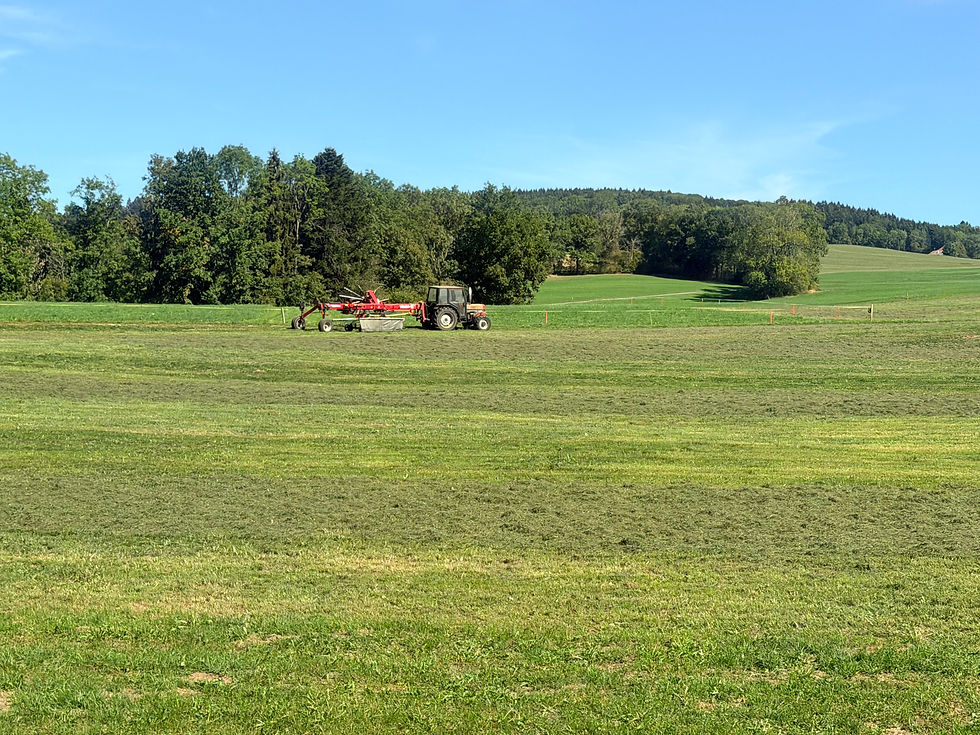
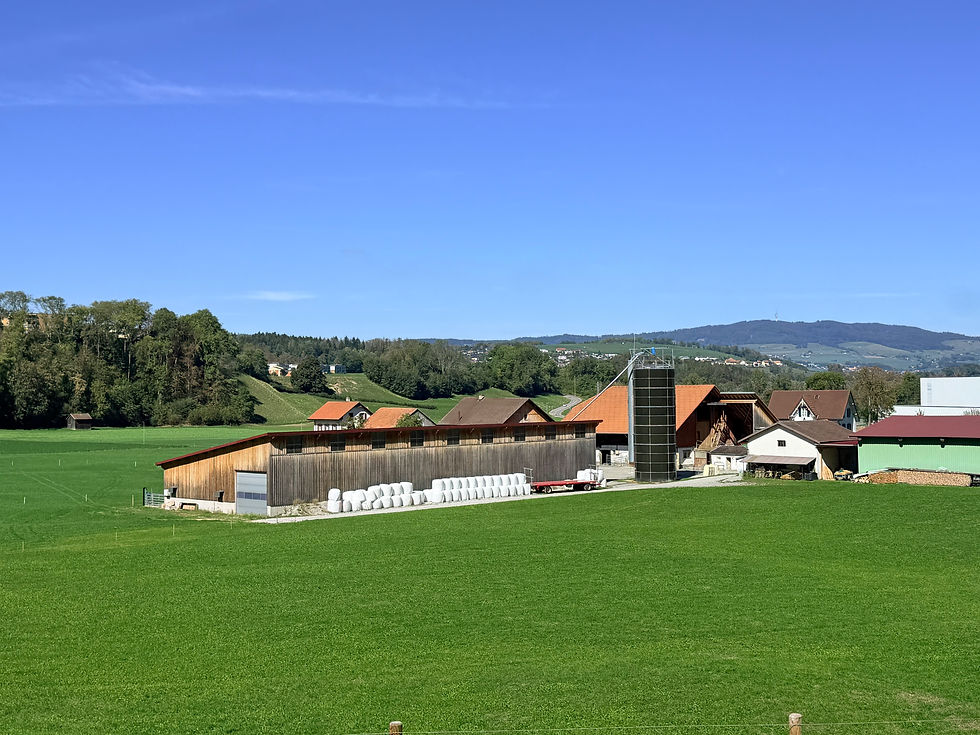
This area transitions from the rolling hills of the Swiss Plateau into the Fribourg pre-Alps.

This landscape is famous worldwide for producing rich dairy products, most notably Gruyère cheese.



Gorgeous night to watch the half moon peering out from behind the mountains.


Michael thinks this looks like a piece of cheese.





View from our patio


Comments