
A Day at the Einsiedeln Monastery

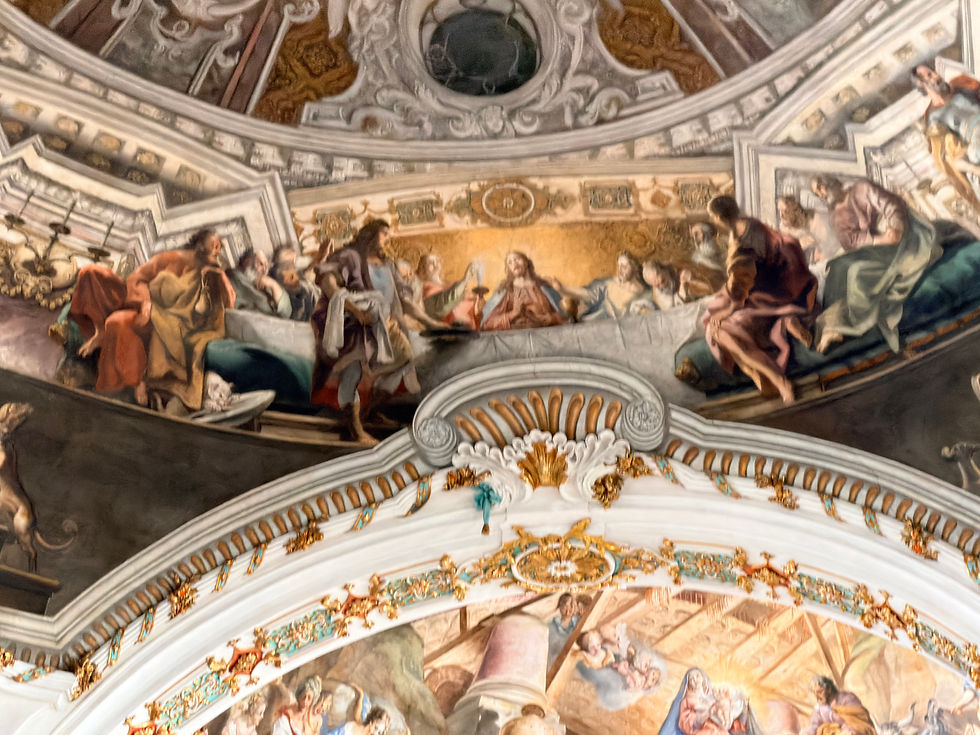
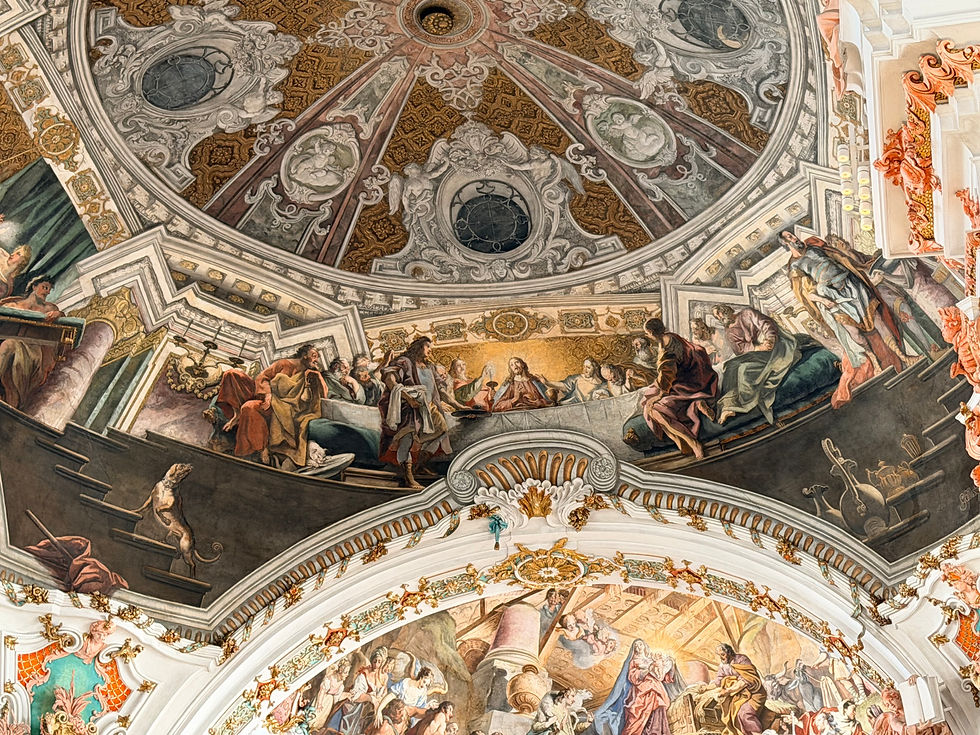
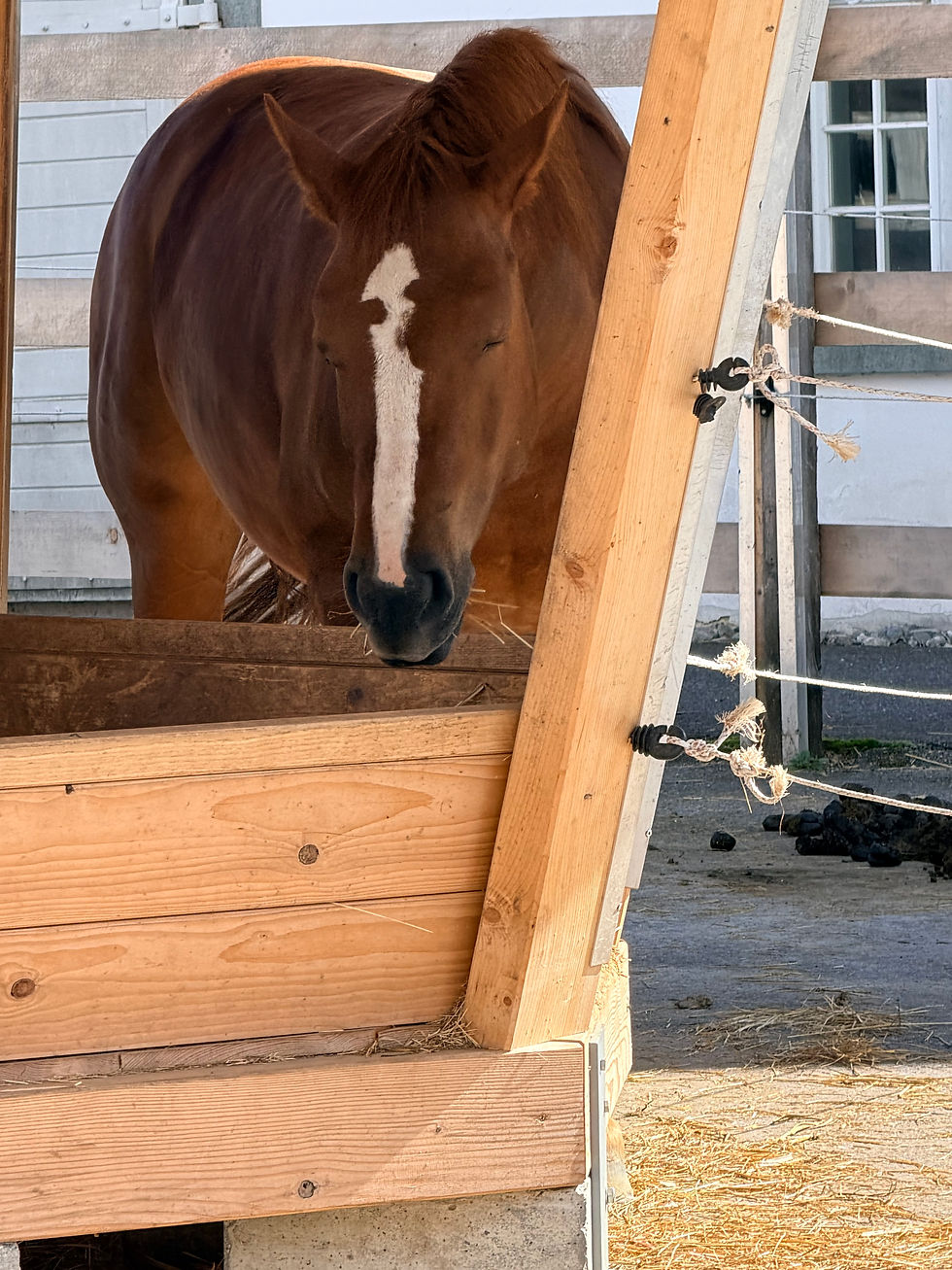
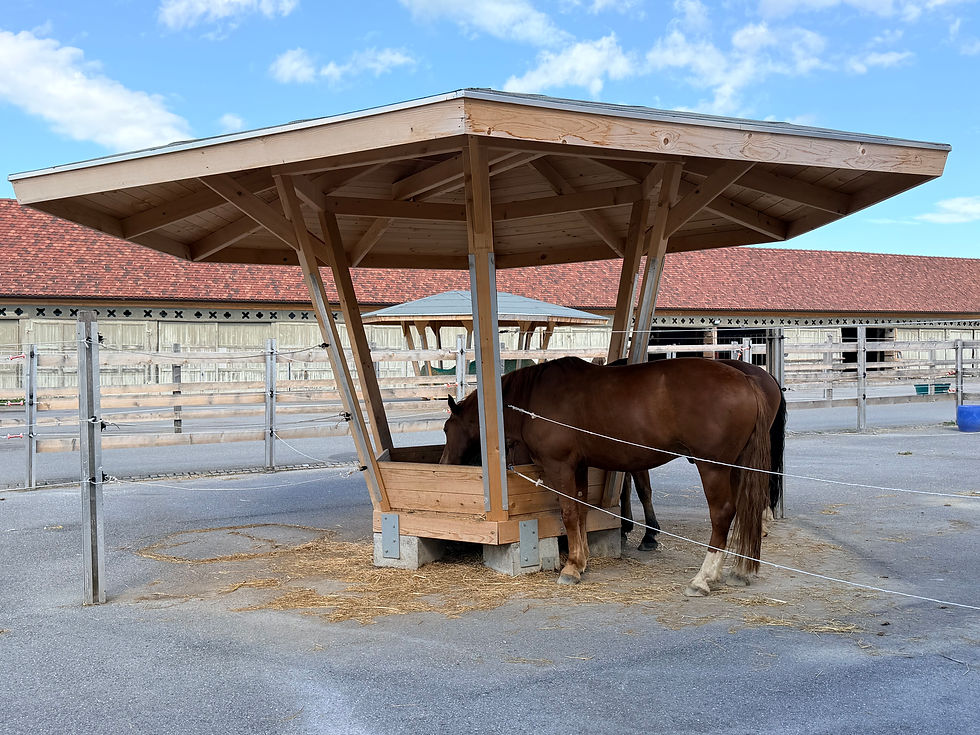
This is not a painting of the horse corral and stables at Einsiedeln.


"The hermit pilgrimage motto 2026 is «Let yourselves be renewed!» and refers to a special anniversary that we will celebrate in the monastery of Einsiedeln this year: 500 years of re-emergence. The quotation from the Epistle to the Ephesians wants to point out that it is the personal conversion to Jesus Christ, which helps to renew and flourish again. The pilgrimage to the Sanctuary of Our Lady of Hermitages can make a valuable contribution to personal renewal. Get on your way in 2026 and come to Maria Einsiedeln!"

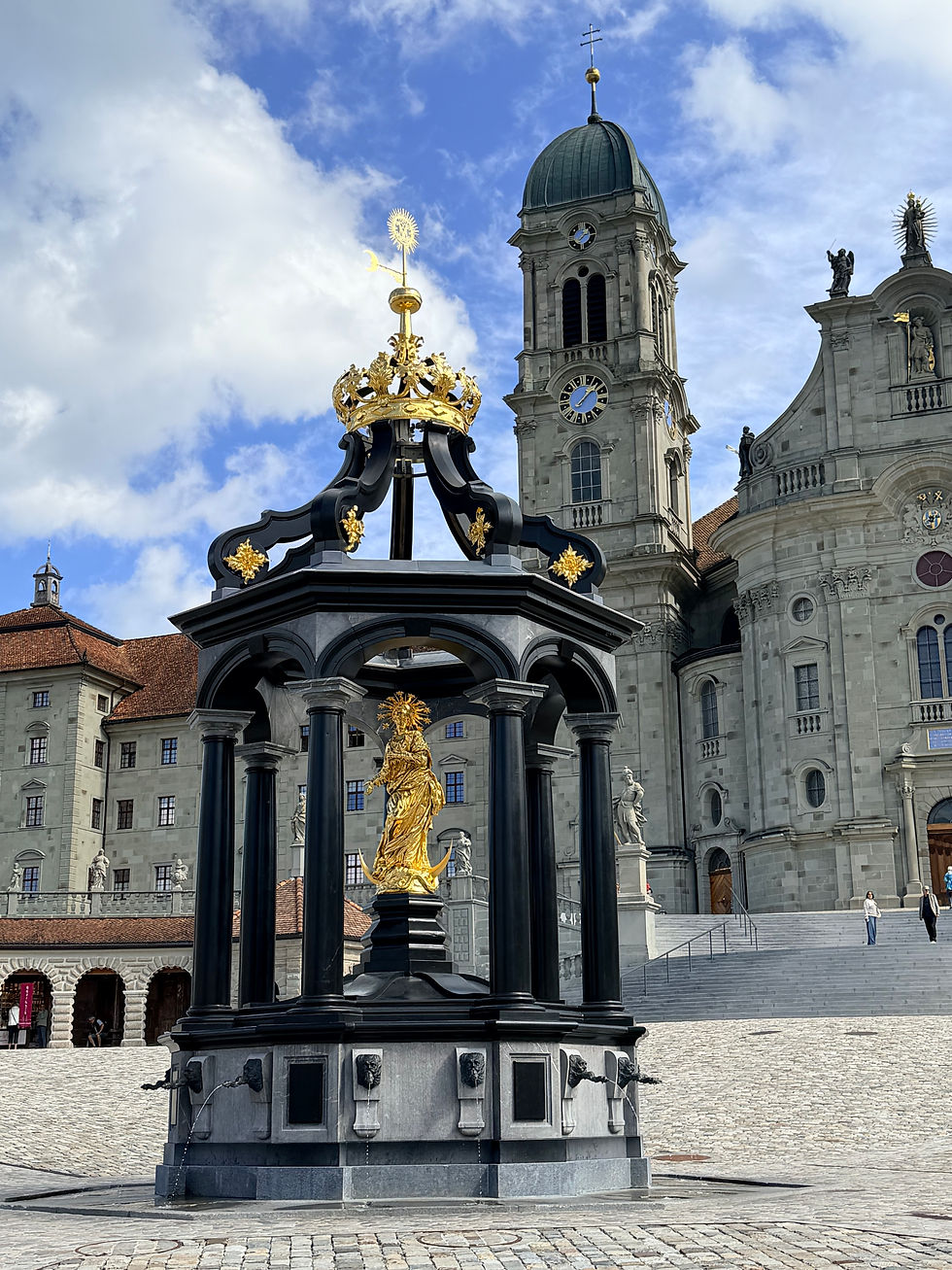


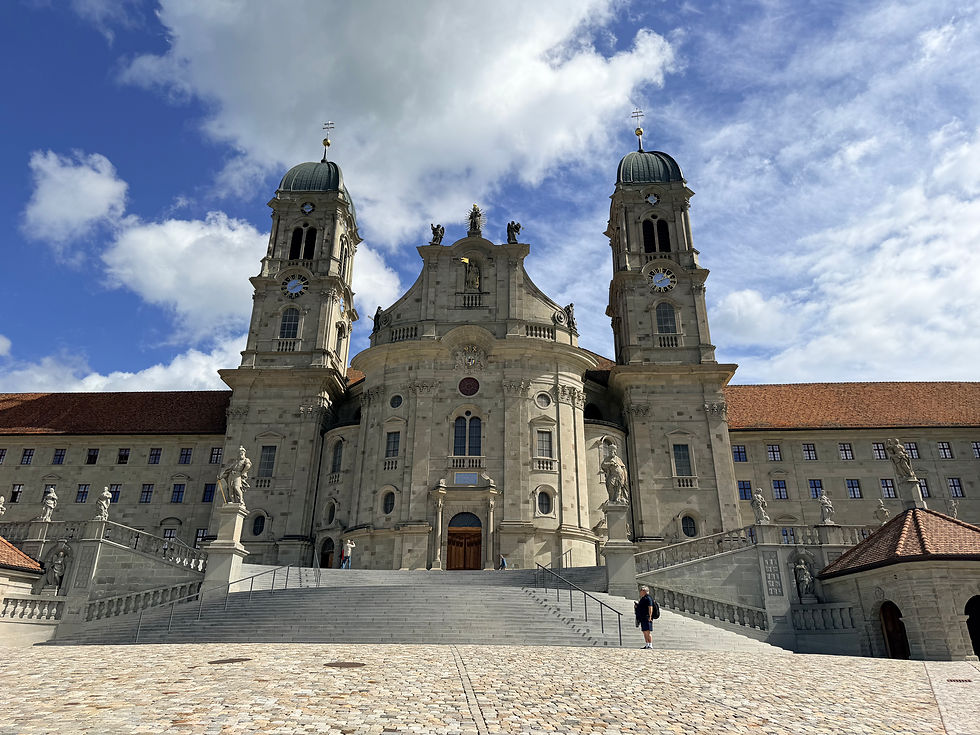





Monasteries are mostly centuries-old institutions with a strong identity. Associated with this is a pronounced sense of history, which is evident in the celebration of special anniversaries. This is also the case with the Einsiedeln monastery.
"The 934 Benedictine Abbey Einsiedeln, founded on the site of the Mein-radszell, is taking great steps towards the celebration of the 1100th anniversary in 2034. But the year 2026 with the memory of a special event exactly 500 years ago shows that such a long Klos-tergeschichte is not a continuous success story, but also includes times of crisis, decline and reorientation in addition to heydays.
The pilgrimage to Einsiedeln took in the 15. centuries. But while the pilgrimage flows swelled, the number of monks steadily declined. The year 1526 finally marked the turning point. Because the Convention had shrunk to a single monk: the then already 86-year-old Abbot Konrad von Hohenrechberg. The fact that this minimal occupation did not mean the end of the monastery and the place of pilgrimage Maria Einsiedeln is thanks to the intervention of the Schwyzer authorities. This set the day before the day of the Assumption of the Virgin Mary in 1526 the St. Gallen monk Ludwig Blarer as the new abbot of Einsiedeln with the mission to secure the existence of the Benedictine abbey – and thus also the place of pilgrimage. It is remarkable that the rescue came from a side that has so far appeared primarily as a political and economic competitor."
"As believing people, in the events of 1526 we recognize not only human action, but also the work of God. In the anniversary year 2026, we thank you for God’s faithful walking through history and for the decisive and generous support of countless people, which we hermits Benedictines can experience to this day. And we are invited to refer the words of the Apostle Paul in the hermit pilgrimage motto 2026 also to ourselves: "Let yourselves be renewed!"
"The history of the monastery, spanning over a thousand years, reflects the history of both church and society. It demonstrates that the monastery is not an island, but rather interconnected with its surroundings in myriad ways. Periods of flourishing and decline, idealism and decadence, holiness and sin, light and shadow have alternated throughout the centuries. And yet, what began in the 9th century with Saint Meinrad has borne fruit in myriad ways and has been a blessing to countless people. Thus, the monastic community can build upon a solid foundation in the 21st century and feels privileged to continue writing the story of the monastery and pilgrimage site."
Around the year 835, Saint Meinrad, a monk of the island monastery of Reichenau in Lake Constance, built his hermitage on the site of today's Chapel of Grace.
"Following the violent death of Saint Meinrad at the hands of two robbers on January 21, 861, other hermits settled at the site of his martyrdom. Like Saint Meinrad, they too keep alive the memory of those men and women who, since the beginning of the 4th century, withdrew to the deserts of Palestine and Egypt to seek God in solitude. The secluded "Dark Forest" in the high valley between Lake Zurich and Lake Luzern serves as the Swiss equivalent of the Middle Eastern desert."
"Provost Eberhard (+958) of Strasbourg was also drawn to the life example of Saint Meinrad, but he envisioned the ideal of the Benedictine monastery, in which communal life and the shared praise of God are central. Thus, in 934, he gathered the hermits into a community. He gave them the Rule of Saint Benedict (+547) as their rule of life and became their first abbot."
Charter from the year 947 – Emperor Otto grants imperial immediacy and free election of abbots.
Under the leadership of Abbot Eberhard and his two successors, Abbots Thietland (+966) and Gregory (+996), the young community developed into a model Benedictine monastery. Numerous monks were appointed abbots of other monasteries or bishops of neighboring dioceses.
In 1130, Baron Lüthold von Regensberg gifted his property on the Limmat River to the Einsiedeln convent with the stipulation that a women's monastery be established there. Since then, the convents of Fahr and Einsiedeln have formed a double monastery under the leadership of the Abbot of Einsiedeln.
"Since its founding, Einsiedeln Abbey has enjoyed the goodwill and support of local nobles and the emperors of the Holy Roman Empire. These generous donations were accompanied by sovereign rights, so that in the following centuries the abbot ruled his territory as Prince-Abbot. This combination of spiritual mission and secular power, however, was not particularly conducive to the abbey's continued prosperity. From the 13th century onward, only sons of the nobility were admitted to the abbey, which led to the continuous decline of the Einsiedeln community in the following centuries."
Political turmoil caused great damage to the church. Of particular note is the so-called Marchen dispute with the peasants of Schwyz, which culminated in an attack on the monastery and the abduction of the monks to Schwyz on Epiphany in 1314.
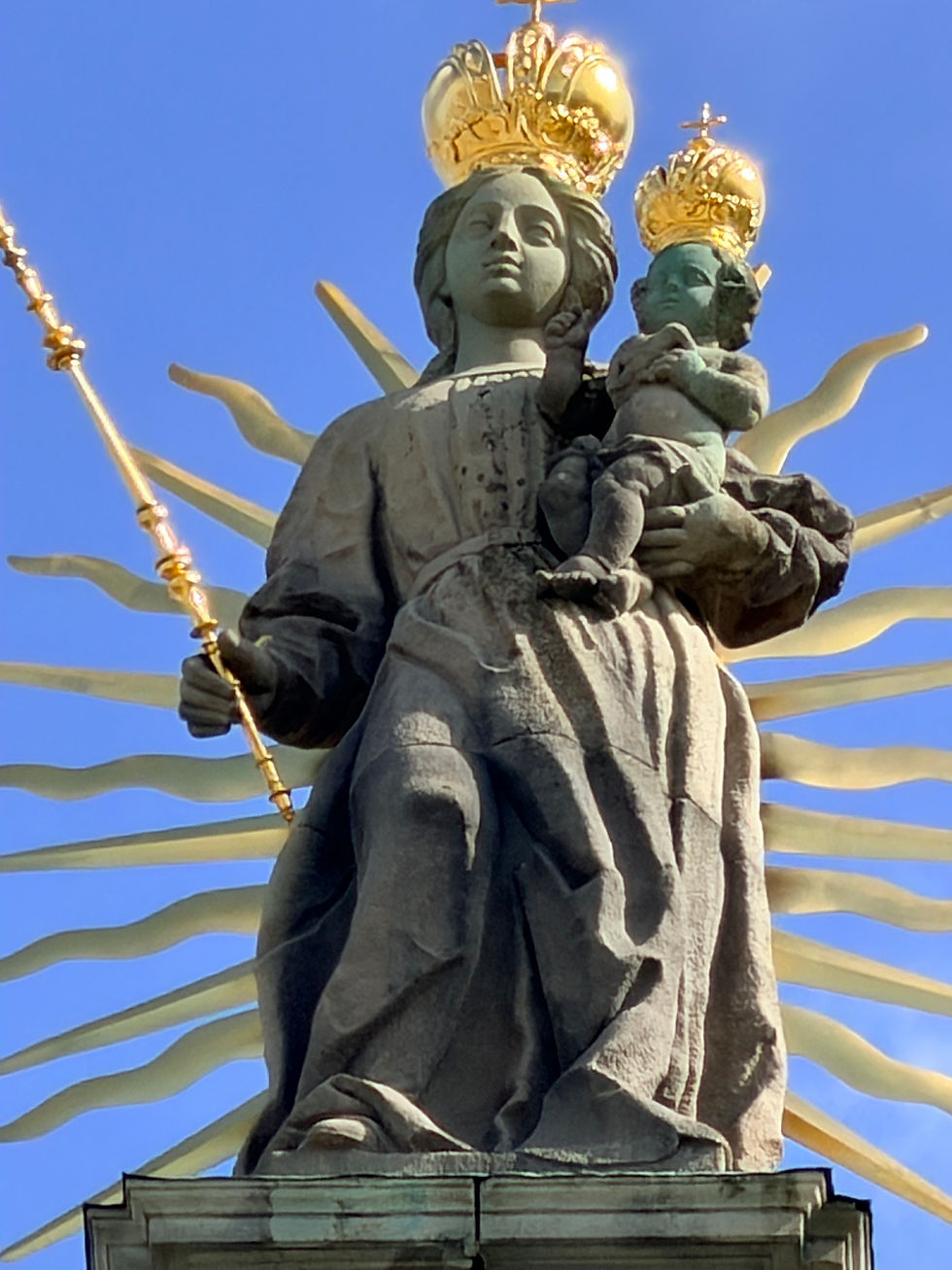
"It seems remarkable that, at the same time as the monastery's internal decline, the pilgrimage to Einsiedeln flourished. For many centuries, Einsiedeln's significance as a pilgrimage site was linked to the legend of the so-called Consecration by the Angels. According to this legend, Jesus Christ himself, accompanied by many angels and saints, consecrated the old Einsiedeln chapel in honor of his mother Mary on the night of September 14, 948. People originally made pilgrimages to the chapel sanctified by God's presence. Over time, the focus of the pilgrimage shifted from Christ to his mother Mary, and during the High Middle Ages, Einsiedeln became a Marian pilgrimage site, attracting pilgrims from across Europe. In 1466, the Gothic image of grace, the famous Black Madonna of Einsiedeln, which remains highly venerated to this day, was displayed in the chapel."
"On the eve of the Reformation, only two monks remained at Einsiedeln Abbey: Diebold von Geroldseck and Abbot Konrad von Hohenrechberg. When Diebold von Geroldseck converted to the Reformed faith and later fell fighting alongside Huldrych Zwingli at the Battle of Kappel (1531), the abbey was on the verge of collapse. But help came from an unexpected quarter: the old adversaries, the ruling class of Schwyz, took the abbey under their wing. After the resignation of the elderly Abbot Konrad von Hohenrechberg, they appointed Ludwig Blarer (+1544), Dean of St. Gall Abbey, as abbot on August 14, 1526."
"And the miracle occurs: The new abbot succeeds in making a fresh start by admitting commoners into the monastery. This new beginning, however, takes time. Abbot Ludwig and his successors fight hard for the monastery's survival. Abbot Joachim Eichhorn (+1569) is particularly instrumental in the material and spiritual reconstruction and can be considered the monastery's second founder. He is the only council father from the German-speaking world to participate in the Council of Trent (1545-1563)."
"Abbot Augustin II Reding of Biberegg (1625-1692), a highly educated theologian, deserves special mention. The number of monks steadily increased, allowing them to take on numerous new responsibilities."
"Eventually, despite regular expansions (library in 1602, convent building in 1659, choir of the monastery church from 1674-1681), the old medieval monastery became too small for the community, and the decision was made to build a completely new one. Brother Kaspar Moosbrugger (1656-1723), who had entered the monastery in 1681, was commissioned to plan the new monastery. The foundation stone was laid on March 31, 1704."
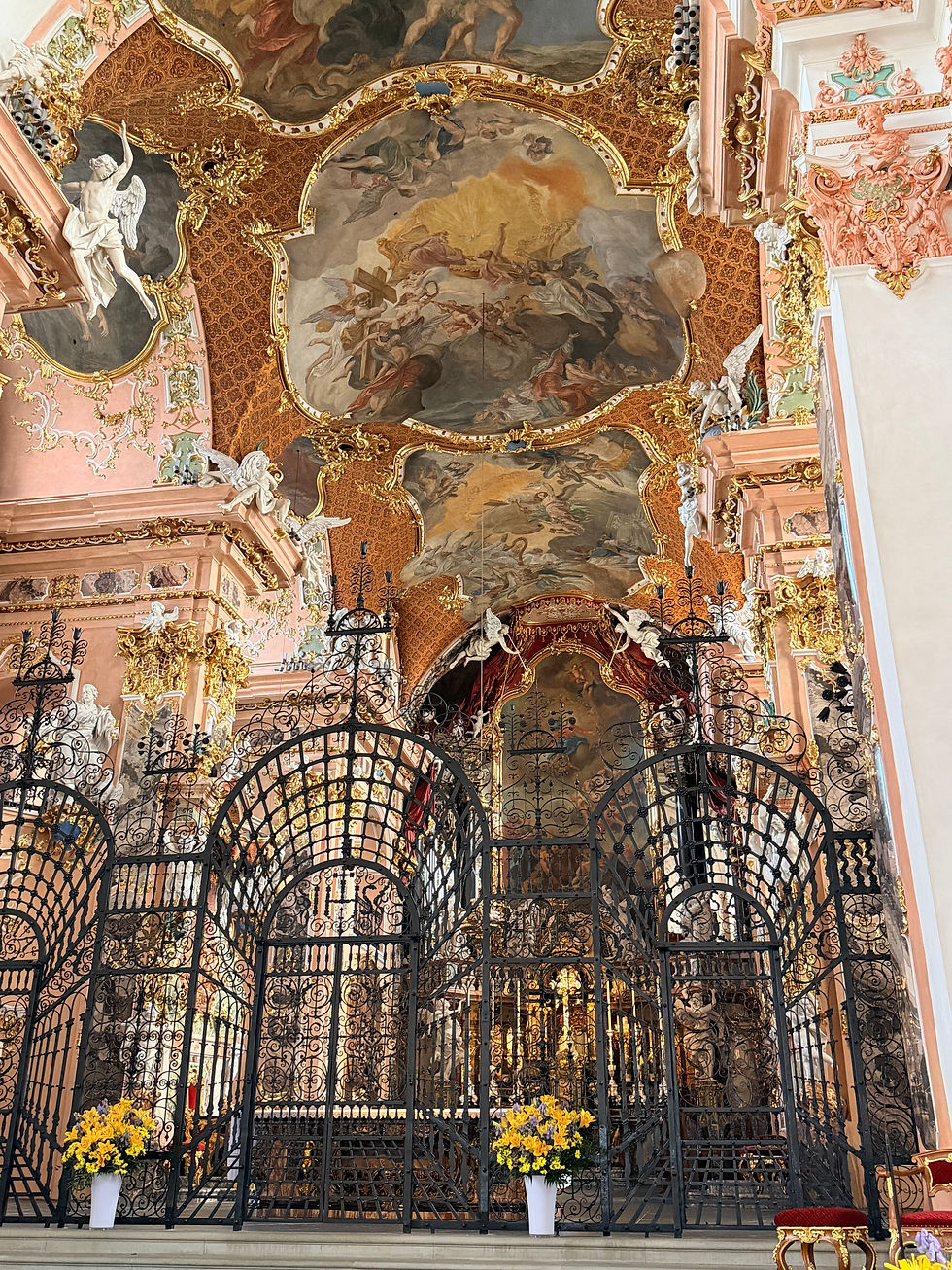
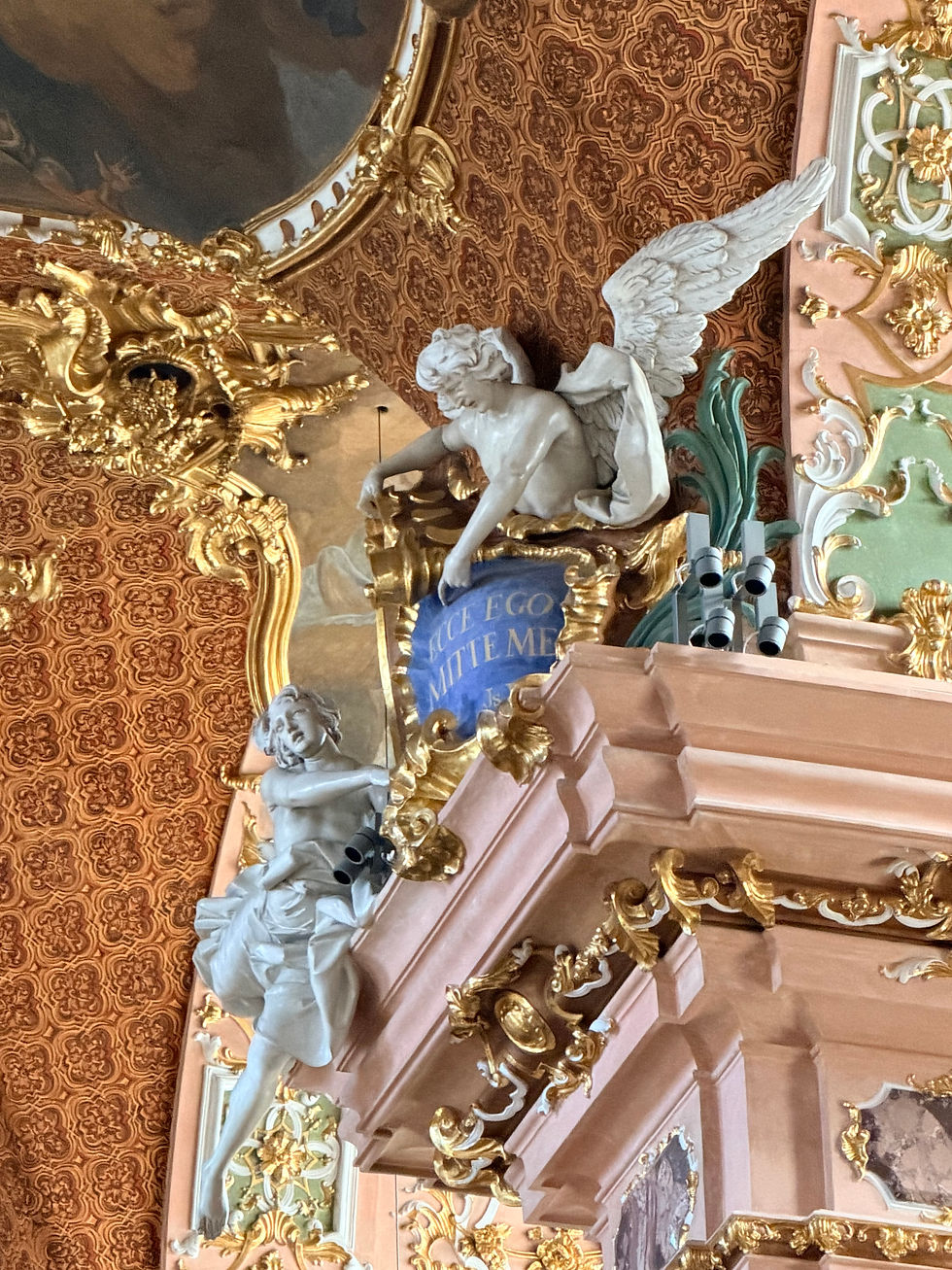
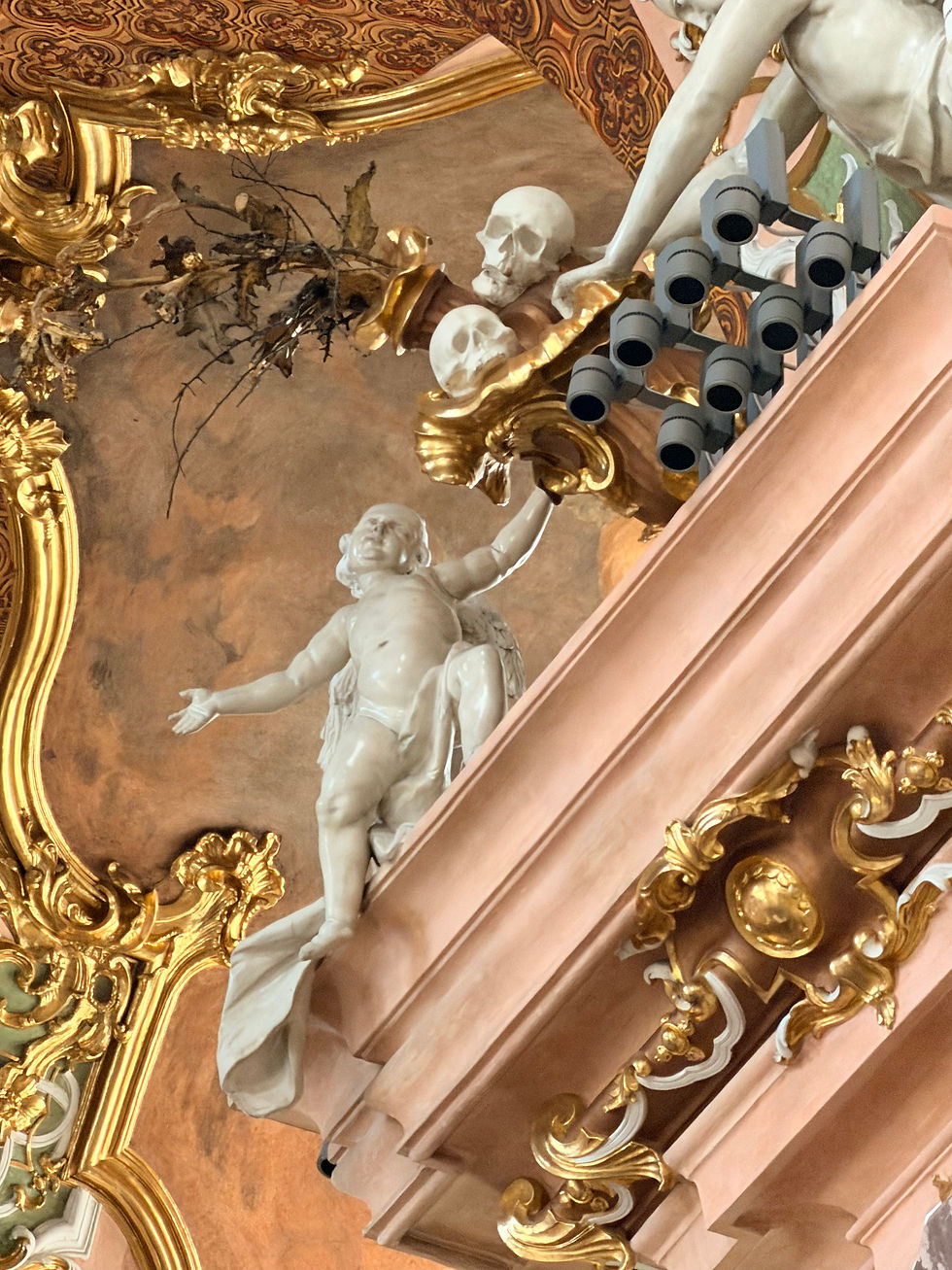
"Ten years later, after the completion of the monastery buildings, Brother Kaspar ventured to plan the new monastery church. The foundation stone for the new church was laid on July 20, 1721. The brothers Cosmas Damian and Ägid Quirin Asam, along with other prominent artists, were commissioned to decorate the interior of the monastery church. The monastery church was solemnly consecrated on May 3, 1735. Together, the church and monastery form a unique example of Baroque architecture and still bear witness to the spirit of renewal that prevailed at that time."
"But in 1798, dark clouds once again gathered over the monastery. The Ancien Régime of the Swiss Confederation was crushed by French troops. On May 3, 1798, the soldiers marched into Einsiedeln and plundered the monastery for several days, after the monks had been forced to flee their home just a few days earlier. A large number of them fled with Abbot Beat Küttel (1733-1808) to the monastery's St. Gerold priory in the Grosses Walsertal (Vorarlberg). The Black Madonna was transported to Austria via Italy by a circuitous route. Once again, the future of the monastery seemed uncertain."
"But the political climate changed again. In 1801, the first monks returned to the monastery, followed by Abbot Beat Küttel on January 11, 1802. The era of the Prince-Abbey of Einsiedeln was over, but the monastery's continued existence was secured. Once again, arduous reconstruction work was required. All the furnishings and usable materials were removed from the monastery and scattered in all directions."
"The revolutionary troops also demolished the Chapel of Grace. It was rebuilt between 1815 and 1817 in the neoclassical style, using as much of the old building fabric as possible."
"In the following decades, the monastery flourished, attracting capable men to the community. Considerable effort was invested in establishing a secondary school. Monks became increasingly involved in parish ministry or served as spiritual directors in convents and other church institutions. The large number of monks made it possible to found a daughter house in the United States. In the state of Indiana, the monks were to serve as pastors to German-speaking immigrants. This new foundation, which was elevated to the status of an independent abbey in 1870, was named Saint Meinrad."
Since the end of the 19th century, pilgrimages have experienced an unprecedented boom thanks to the railway, and Einsiedeln has become the religious center of Catholic Switzerland.
"In January 1947, Pope Pius XII publicly confirmed the rights of Einsiedeln Abbey as a territorial abbey in a decree issued on December 13, 1948. Pope Pius X had already declared in a motu proprio of May 7, 1907, that Einsiedeln Abbey was an "abbatia nullius," meaning it was not subject to any episcopal jurisdiction. Since the mid-20th century, the abbot of Einsiedeln, as "ordinarius loci," has been a member of the Swiss Bishops' Conference with his own episcopal jurisdiction."
"Two monks from Einsiedeln participated as Council Fathers in the Second Vatican Council (1962-1965): Abbot Raymund Tschudi (1914-2011) and Abbot Primate Benno Gut (1897-1970). In the years following the Council, efforts were made to adapt monastic life to its decrees. During this time, life in the monastery underwent significant changes: German was introduced into the Mass and the Divine Office, yet at the same time, efforts were made to maintain the important role of Latin in the monastic liturgy. The monastery thus sought a middle ground, avoiding extreme positions in either direction. It is to this struggle for a middle path that we owe today's liturgy, for which many believers come to Einsiedeln. Certainly, the most decisive change in daily monastic life made in the context of the Council was the equal status of lay brothers and priest-monks. The monastery no longer consists of two separate groups of brothers and priests, but of one community consisting of brothers and priests."
"In 1984, Pope John Paul II honored the monastery with a visit. His stay of several days at the Shrine of Our Lady of Einsiedeln was part of his pastoral visit to Switzerland, which lasted from June 12 to 17, 1984. The highlight of his time in the Dark Forest was the solemn consecration of the new high altar in the choir of the monastery church on June 15, 1984."
Today, the Einsiedeln monastic community numbers around forty monks. They are active in the school, pilgrimage ministry, and parish work, and perform numerous tasks within the monastery. The monks strive to live the Gospel of Jesus Christ and the Rule of Saint Benedict in modern times, creating a place that invites people to encounter God.
Angel Consecration Legend
"The history of Einsiedeln began almost 1200 years ago with Saint Meinrad. In 835, Meinrad withdrew to the Dark Forest as a hermit to devote himself entirely to God. After his violent death at the hands of two robbers on January 21, 861, his cell stood empty – but not for long. In remembrance of his exemplary life as a monk and priest, God-fearing men followed his example and lived as hermits in the Dark Forest.
Einsiedeln Abbey was founded in 934. In 948, the monks of the young monastery asked Bishop Konrad of Constance to consecrate their new abbey church.
So much for the historically established facts. At this point, the legend of the Angel Consecration begins, describing a miraculous event in fantastical imagery:
The night before the consecration, Bishop Konrad went to the small chapel to pray. There, in a vision, he saw Jesus Christ descending from heaven. He was accompanied by hosts of angels and many saints, and the Virgin Mary appeared as if enveloped in light. In a solemn service, Jesus Christ consecrated the chapel in honor of his mother Mary. She was to be venerated in Einsiedeln in a special way and to show people the way to her son.
The Archangel Michael conducts the choir of angels; apostles and church fathers perform various services within a solemn pontifical mass.
The next morning, when Bishop Konrad was to solemnly consecrate the chapel, he hesitated. Urged on by the monks, he finally relented and was about to proceed with the ceremony. He was already putting on his vestments for the service when an angel appeared and said, "Brother, stop! The chapel has already been consecrated by God." And so the consecration of the chapel was not performed.
So goes the legend."

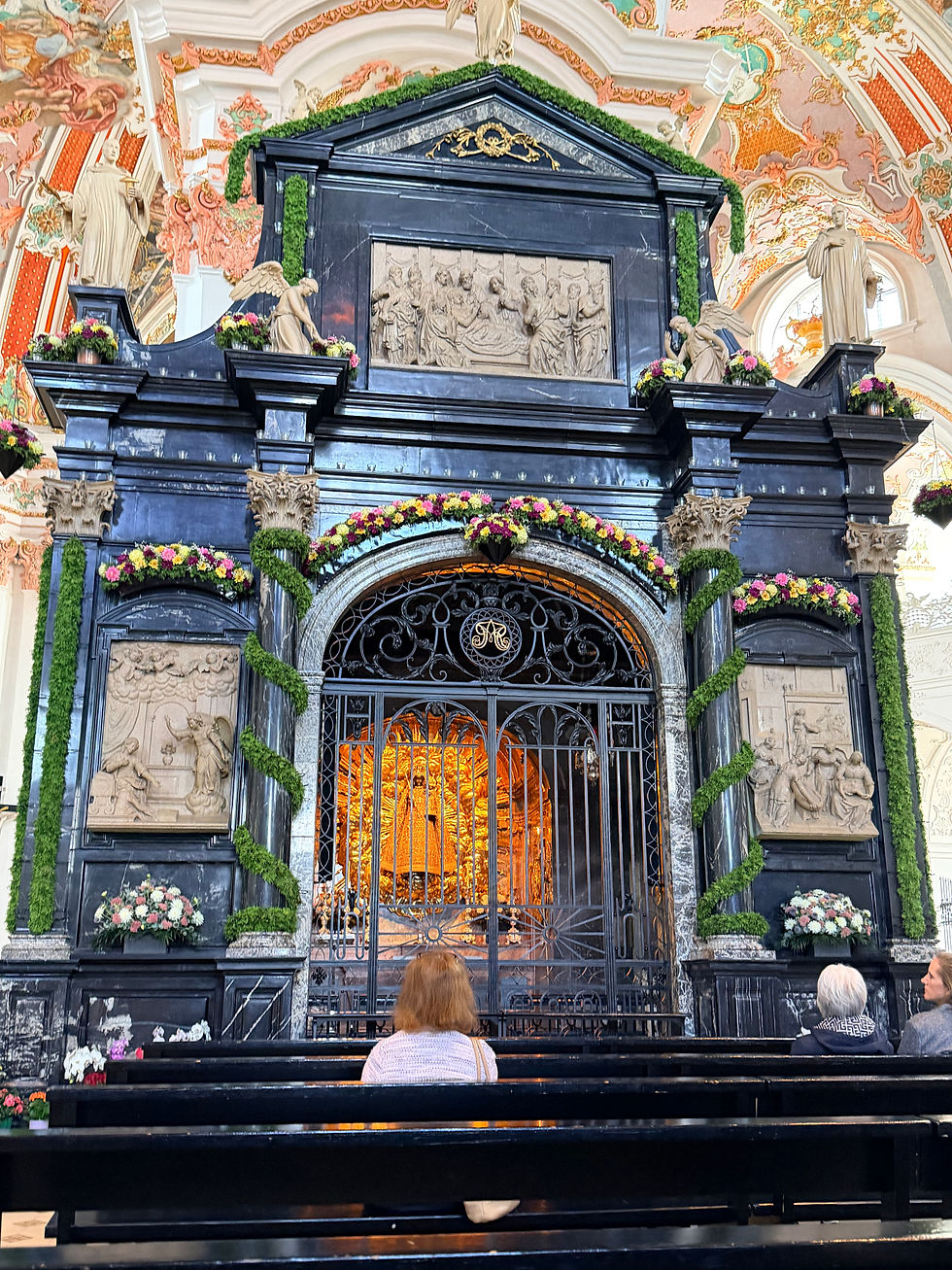
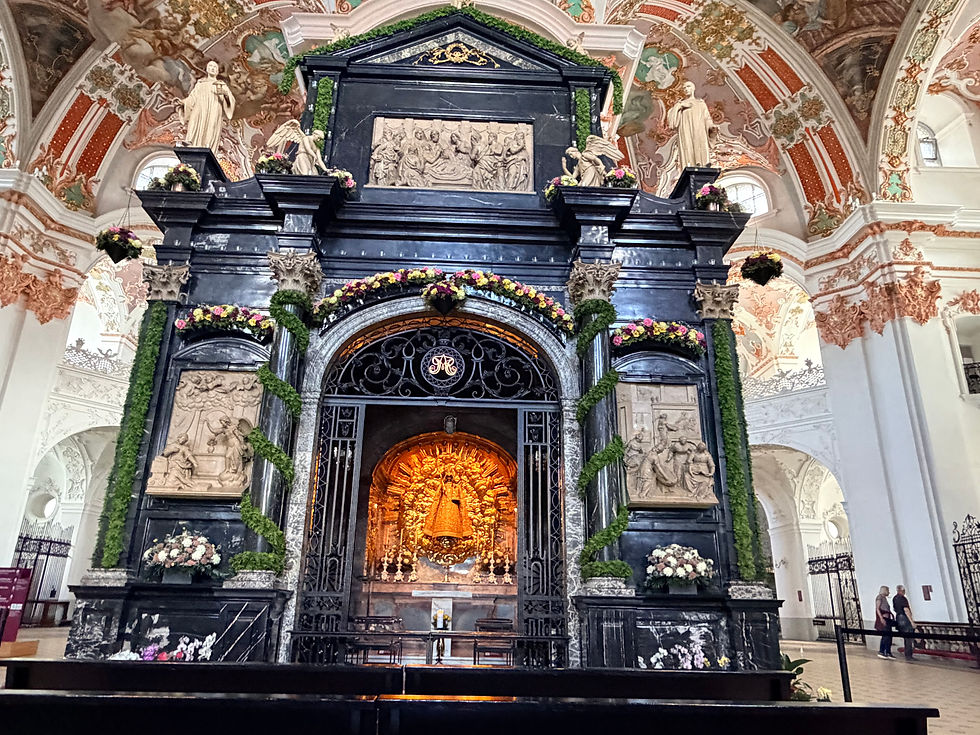


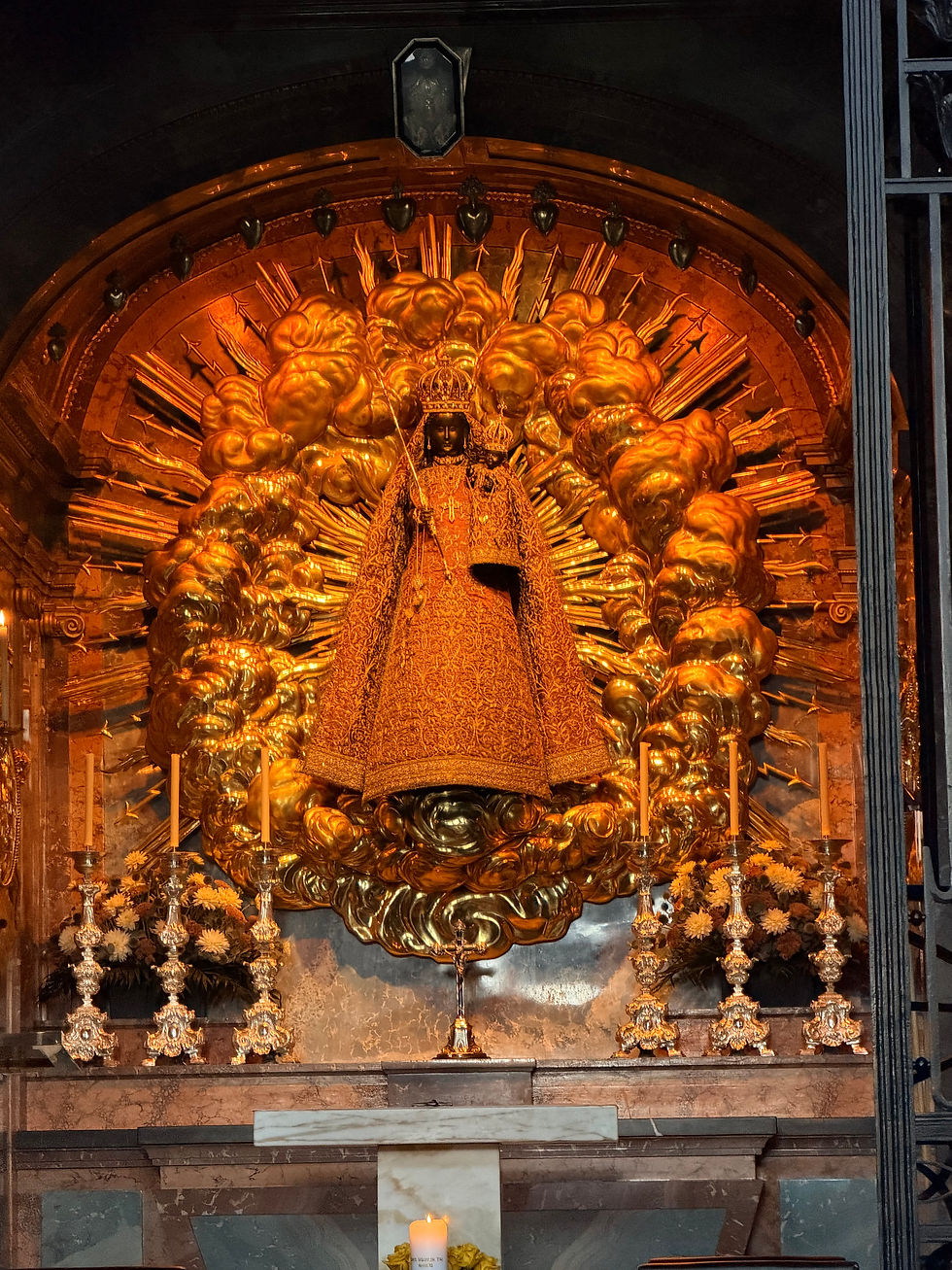


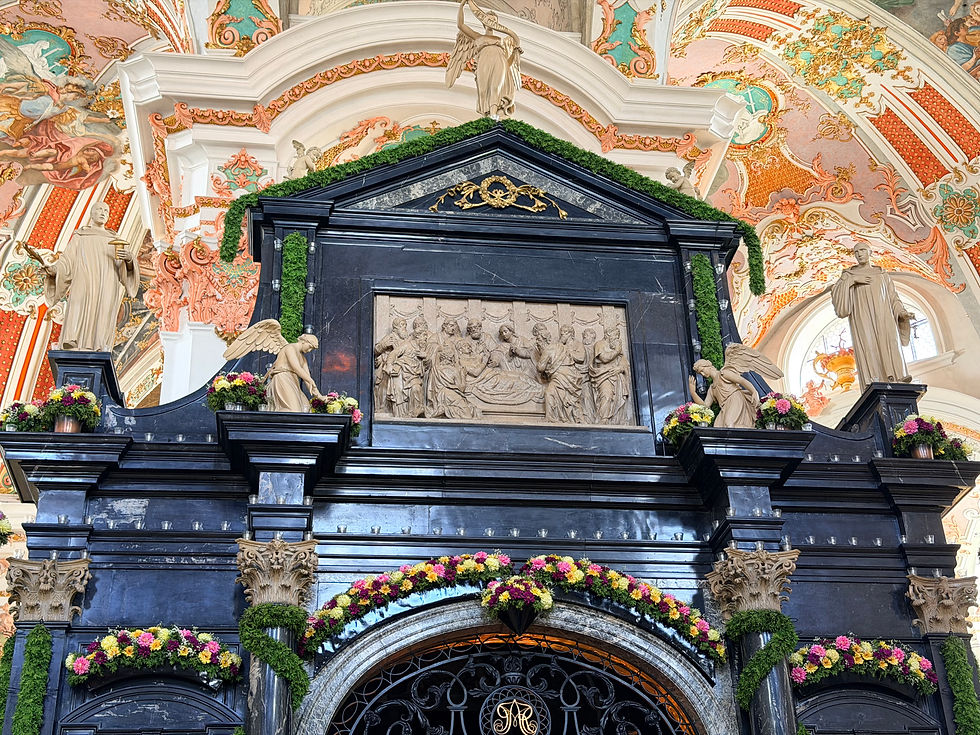


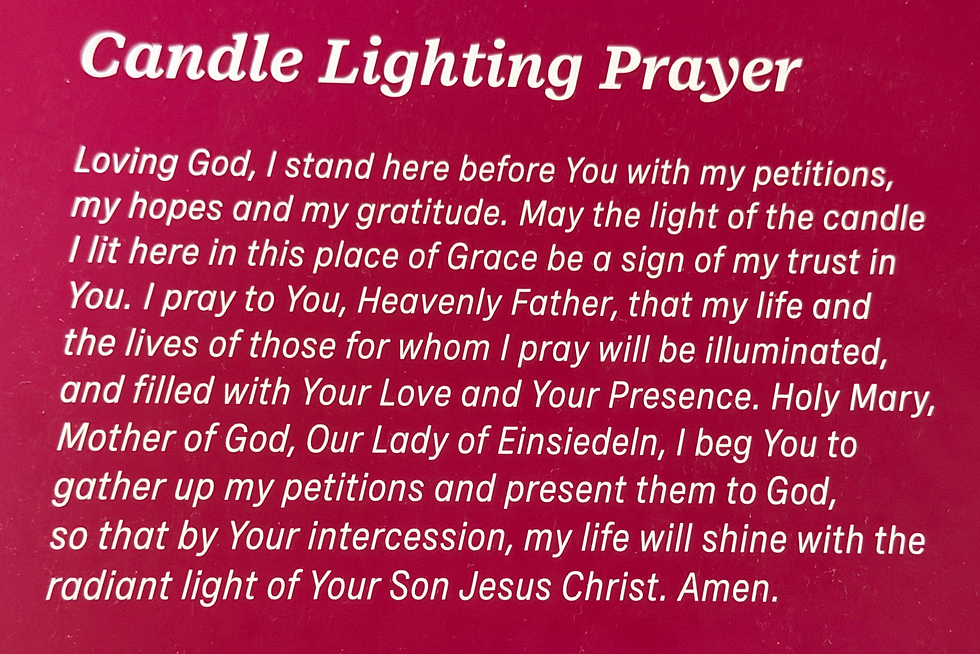


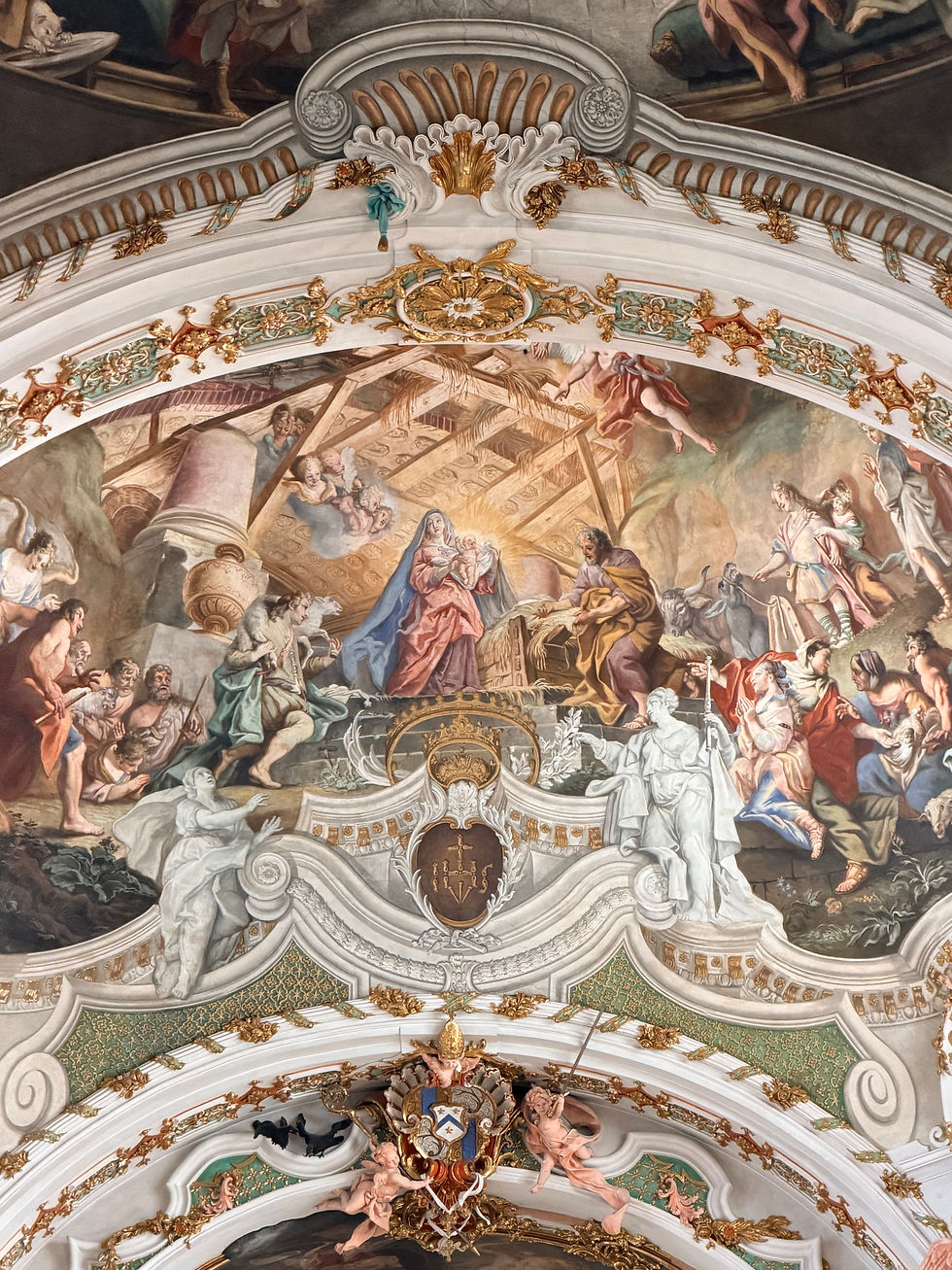
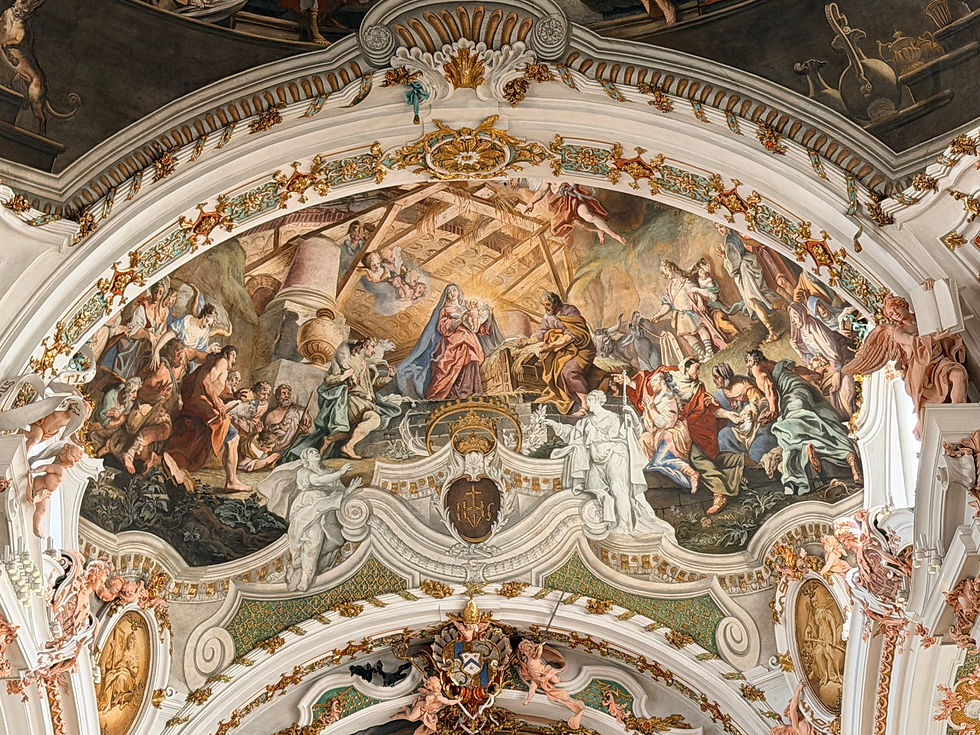


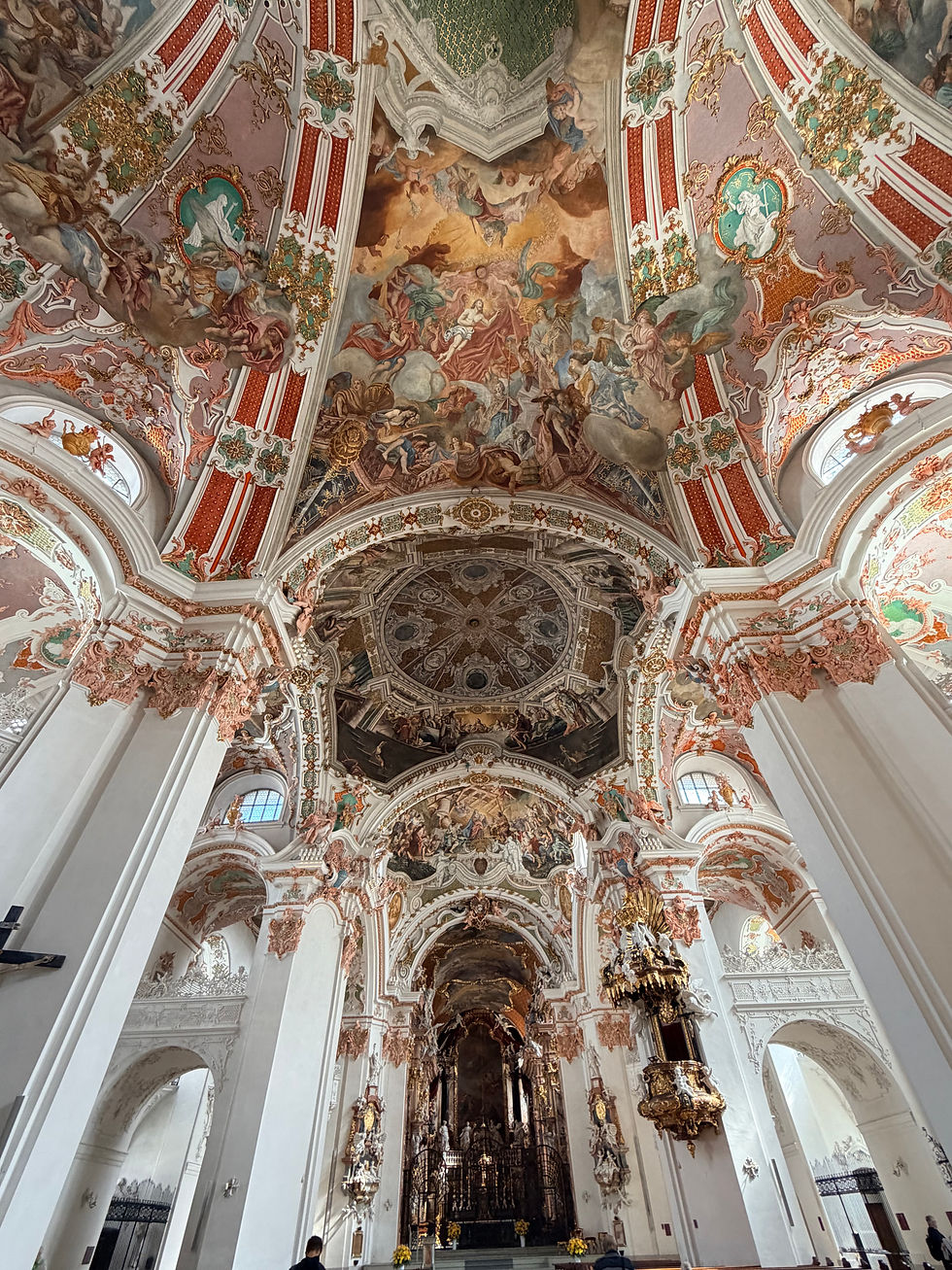


I wrote many prayer requests.









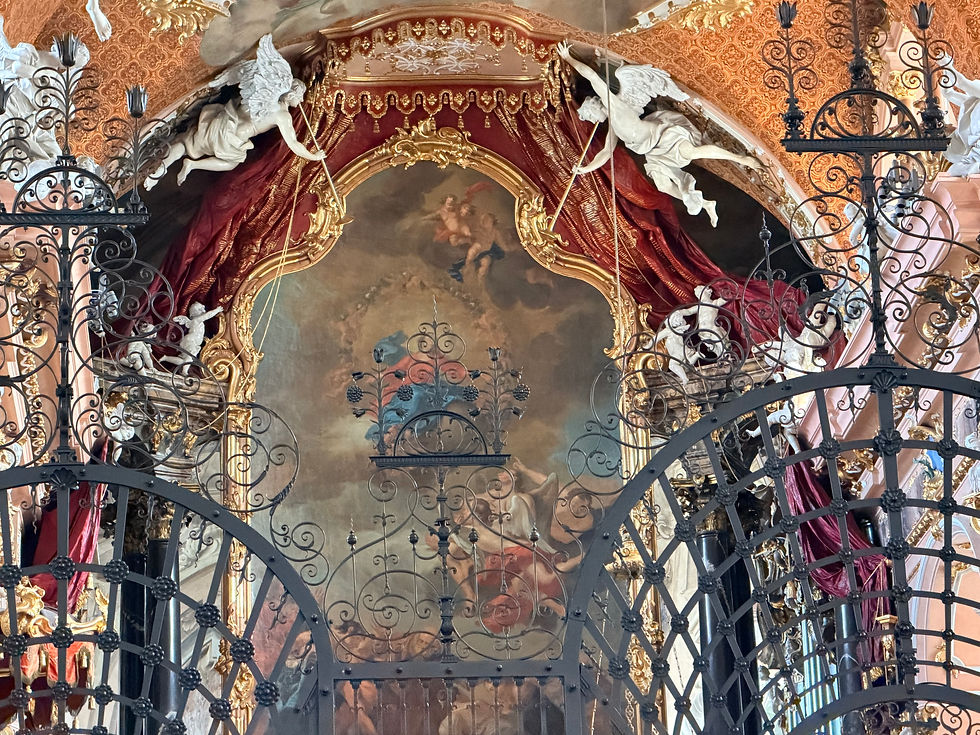


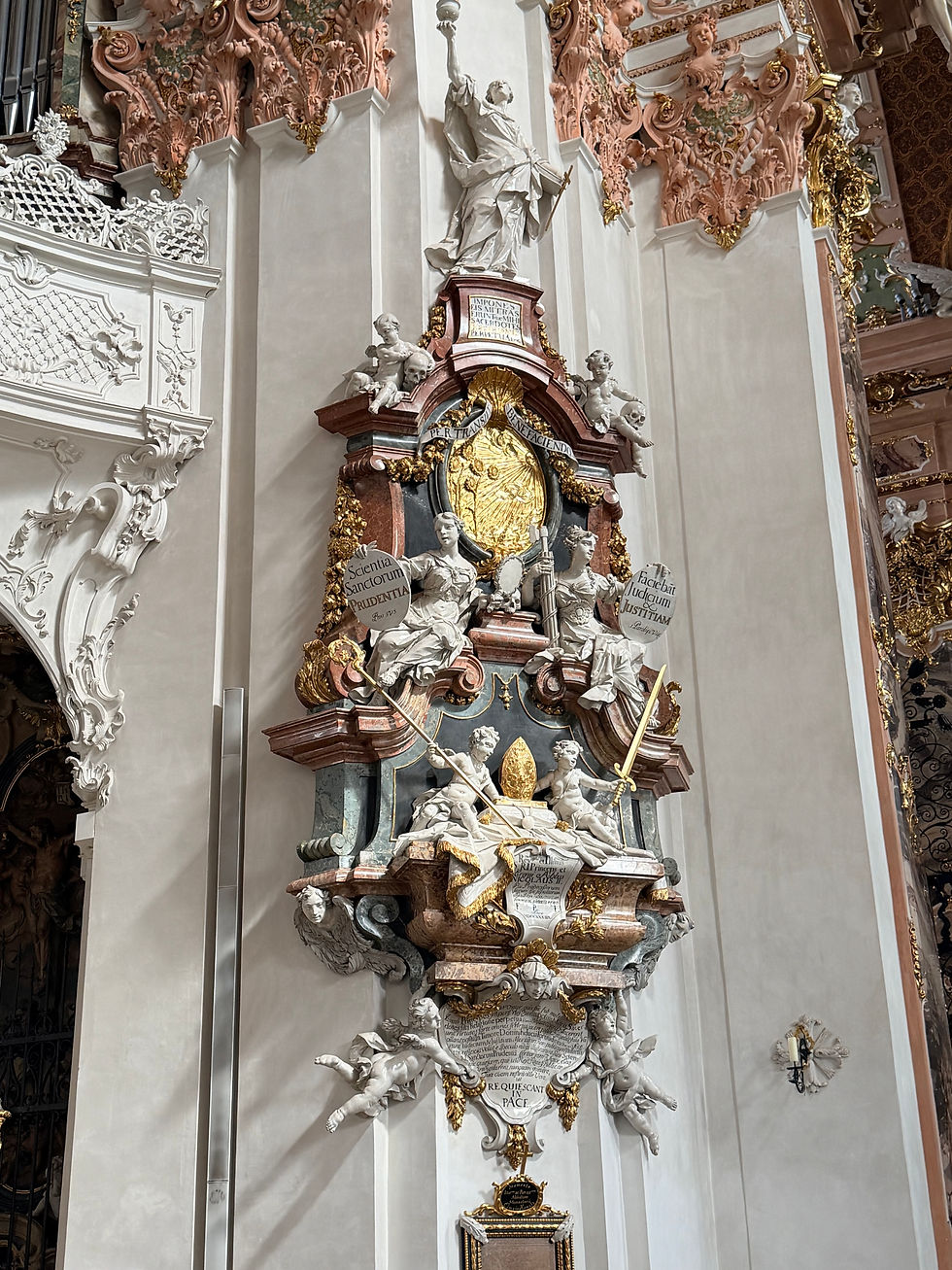


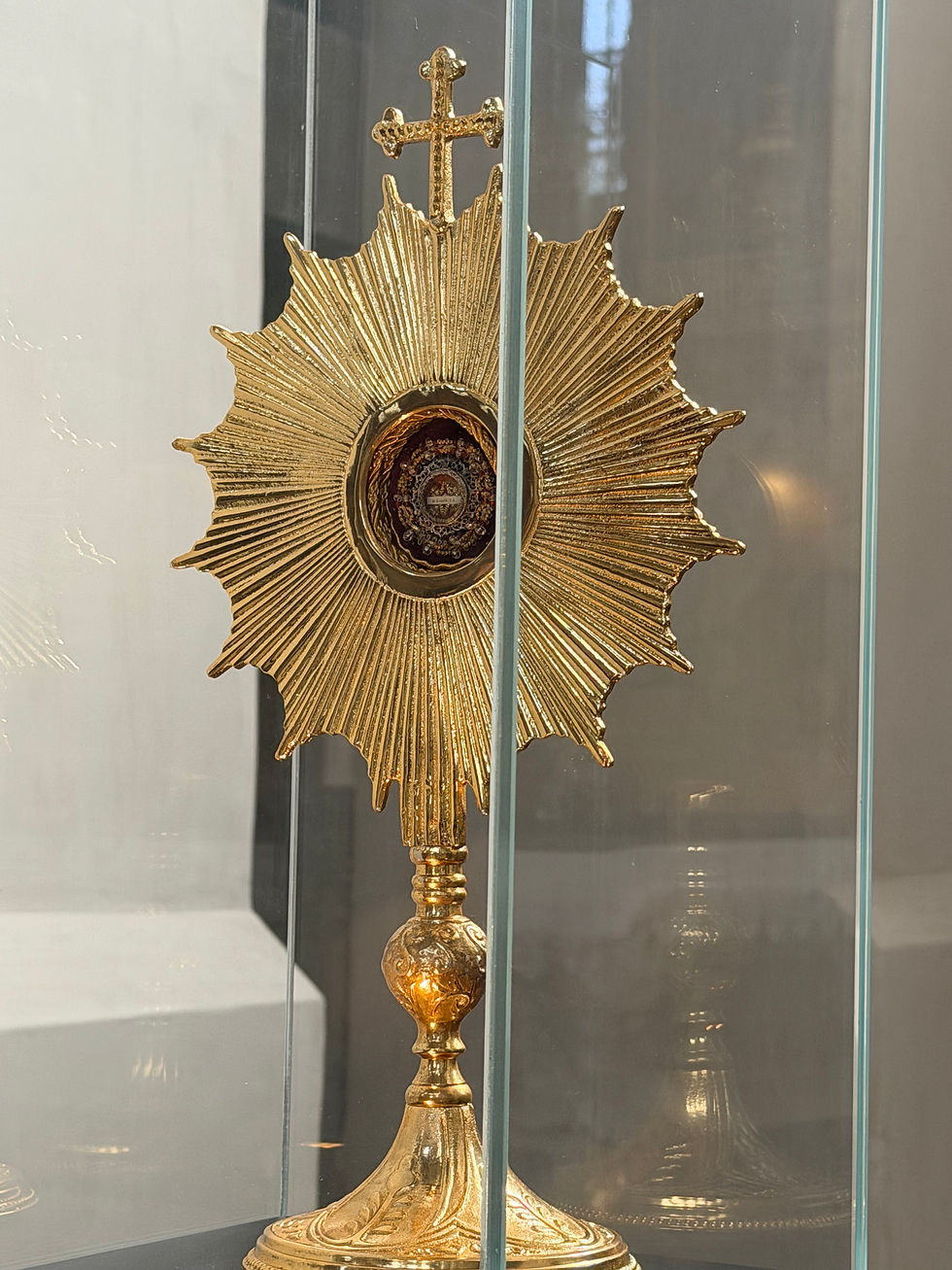


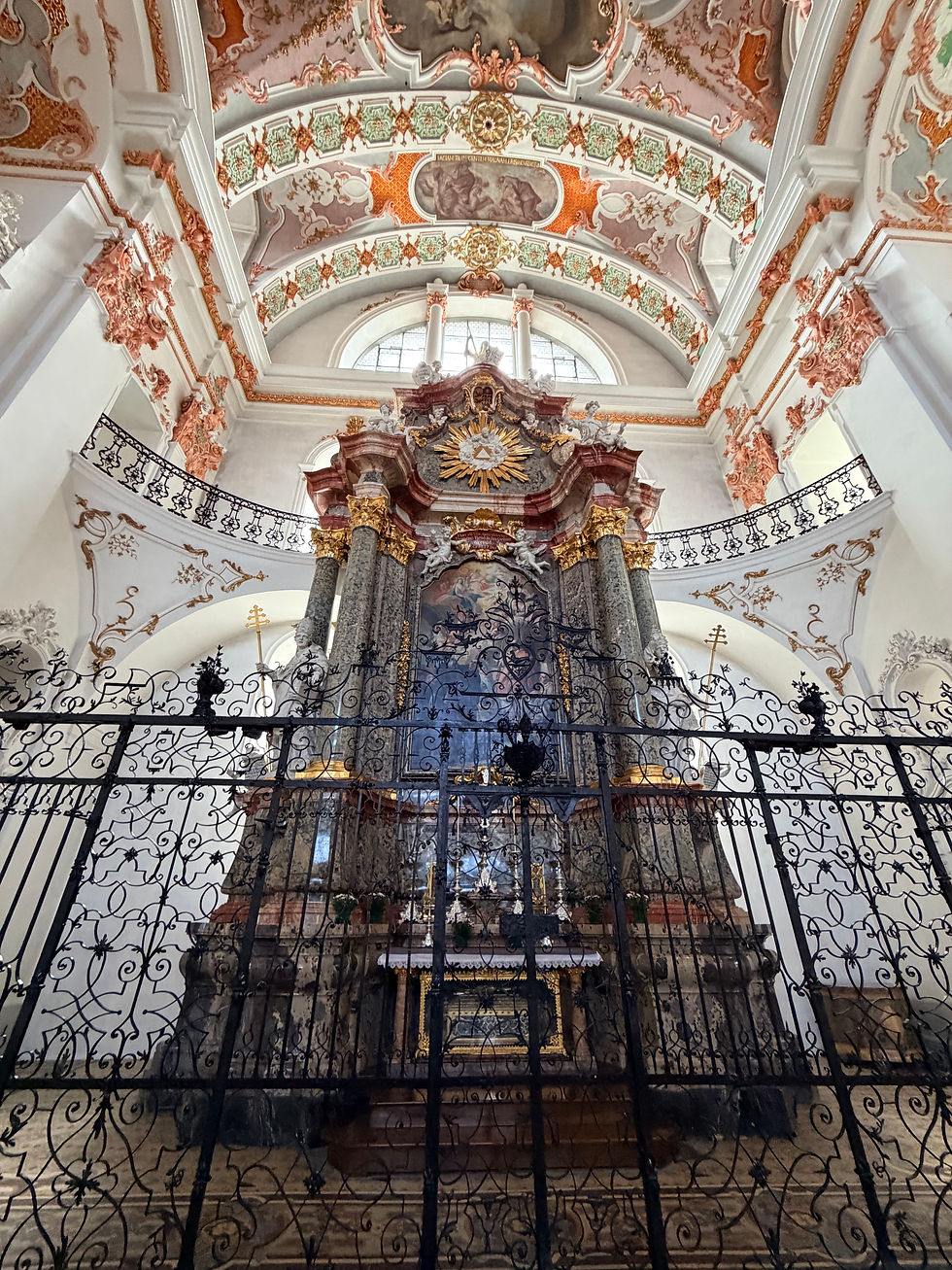

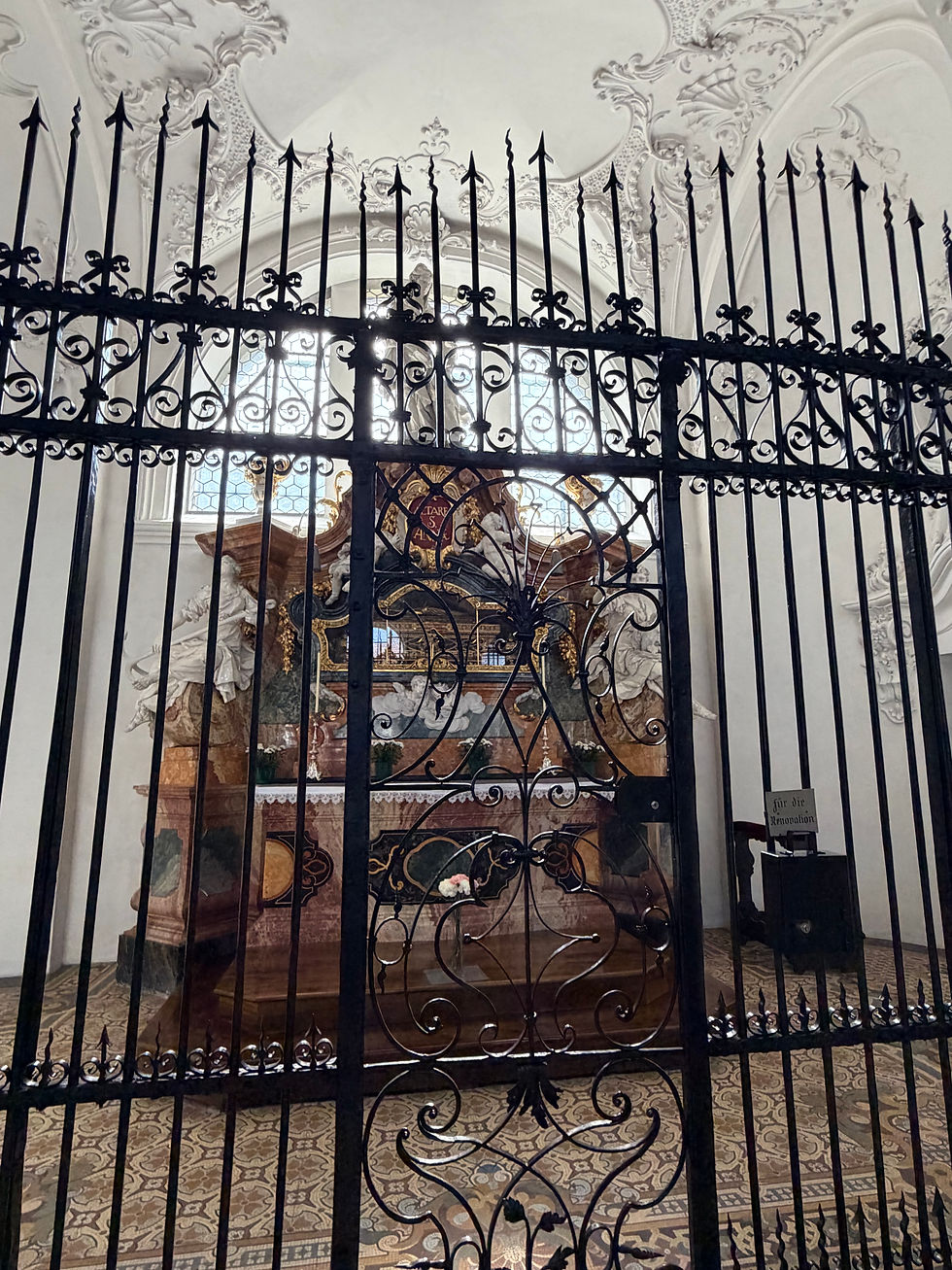

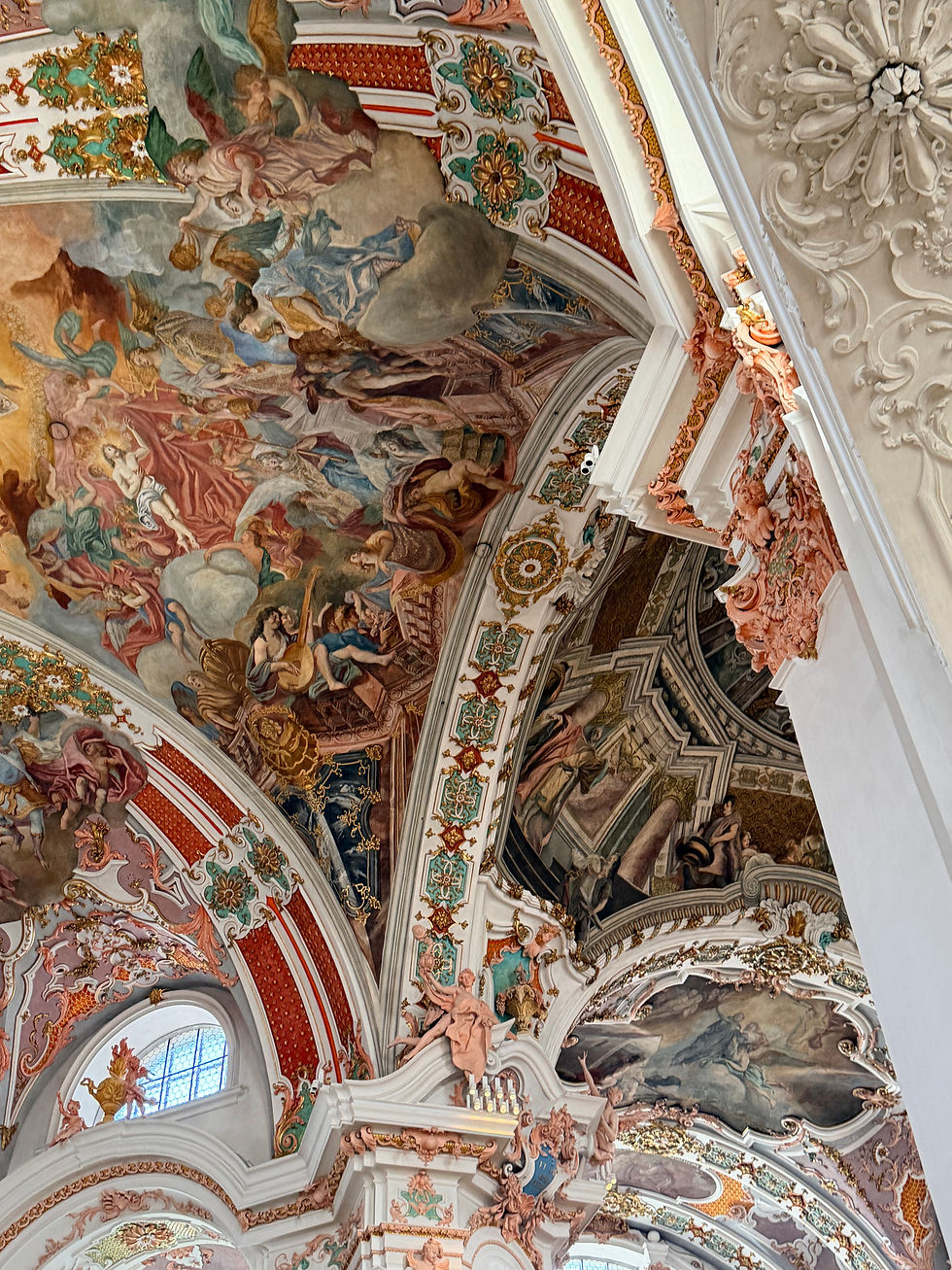


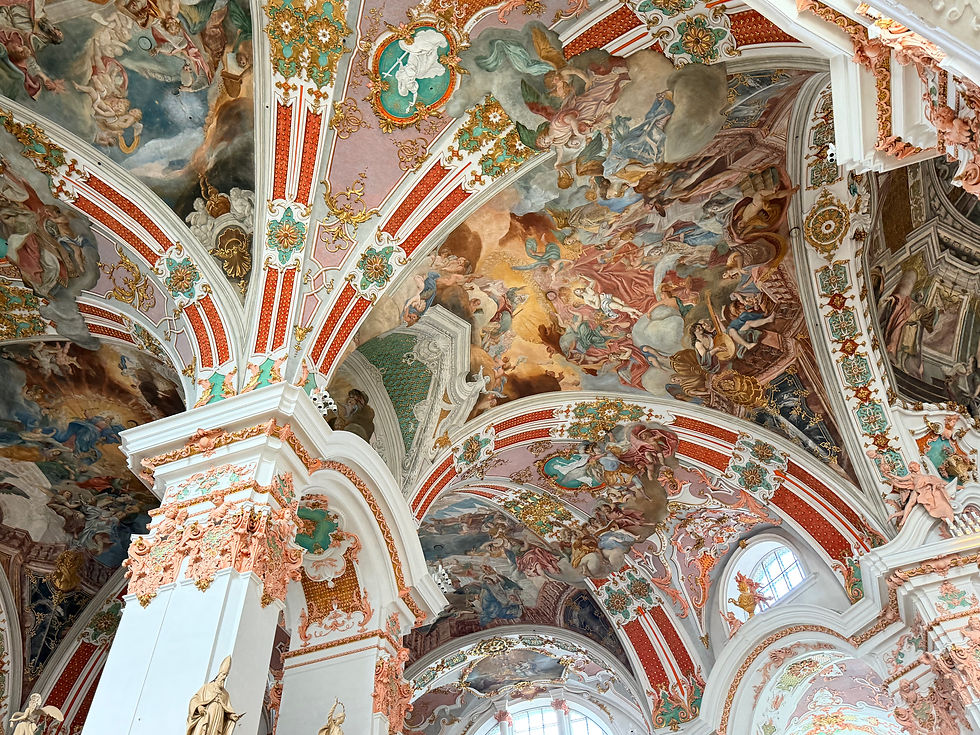


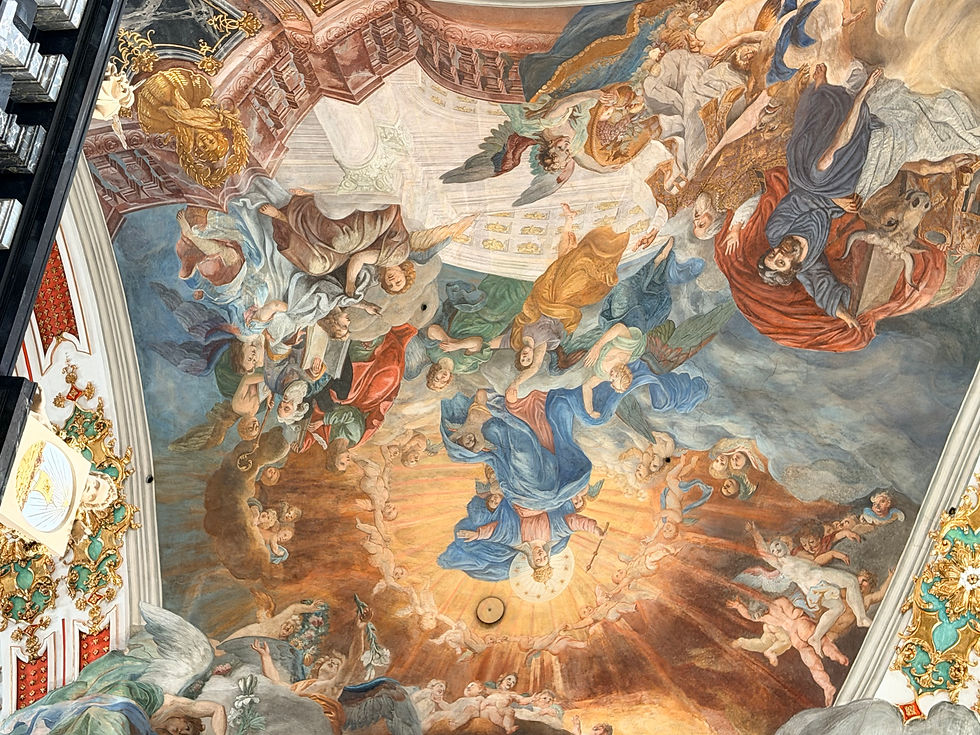






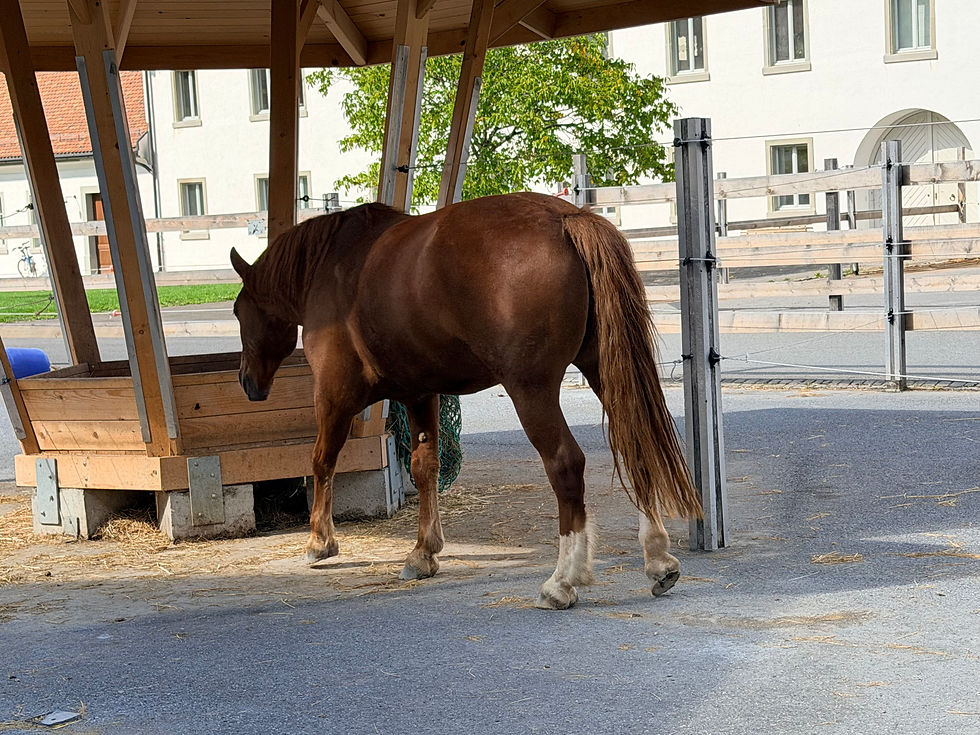

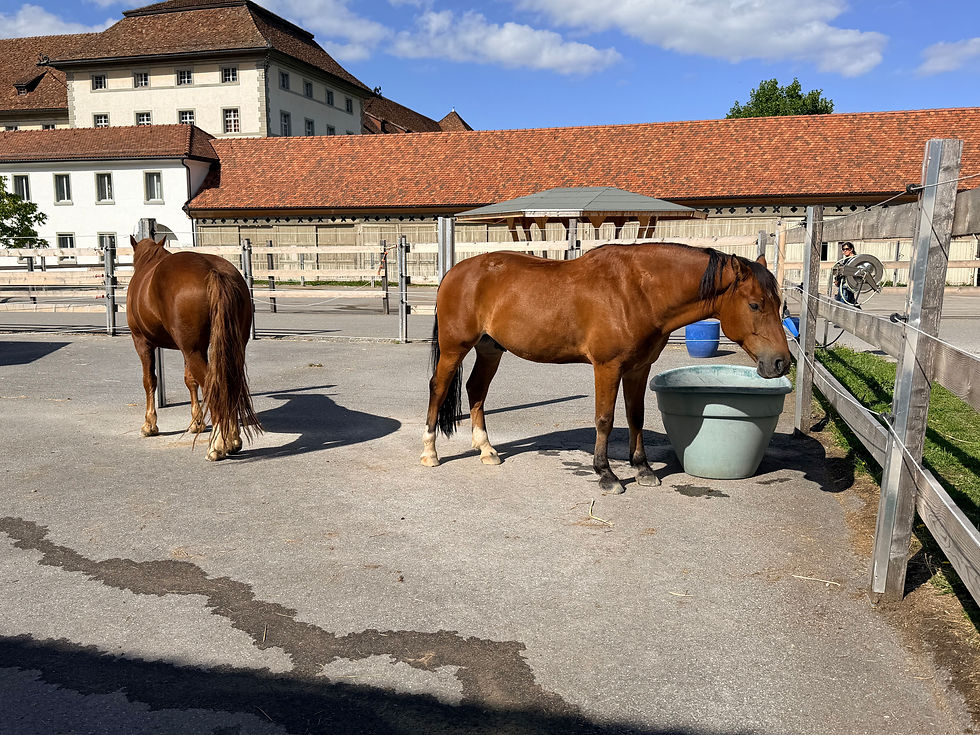


Decided to eat at the outside monastery restaurant. We both had cordon bleu.

The cheese just oozed out. Tender and delicious!!

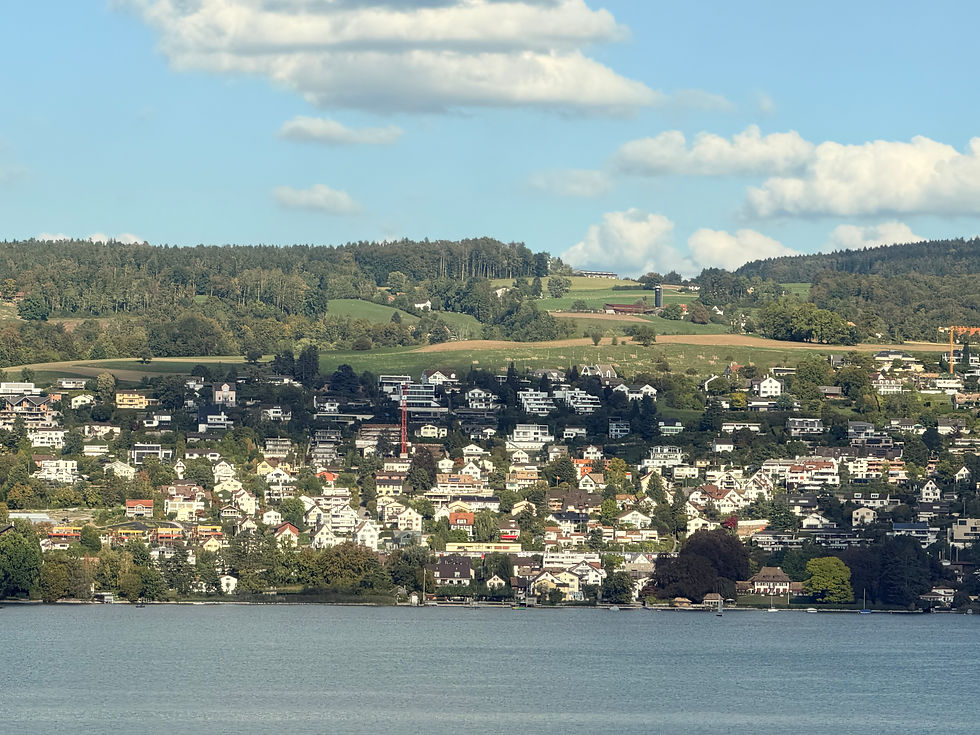
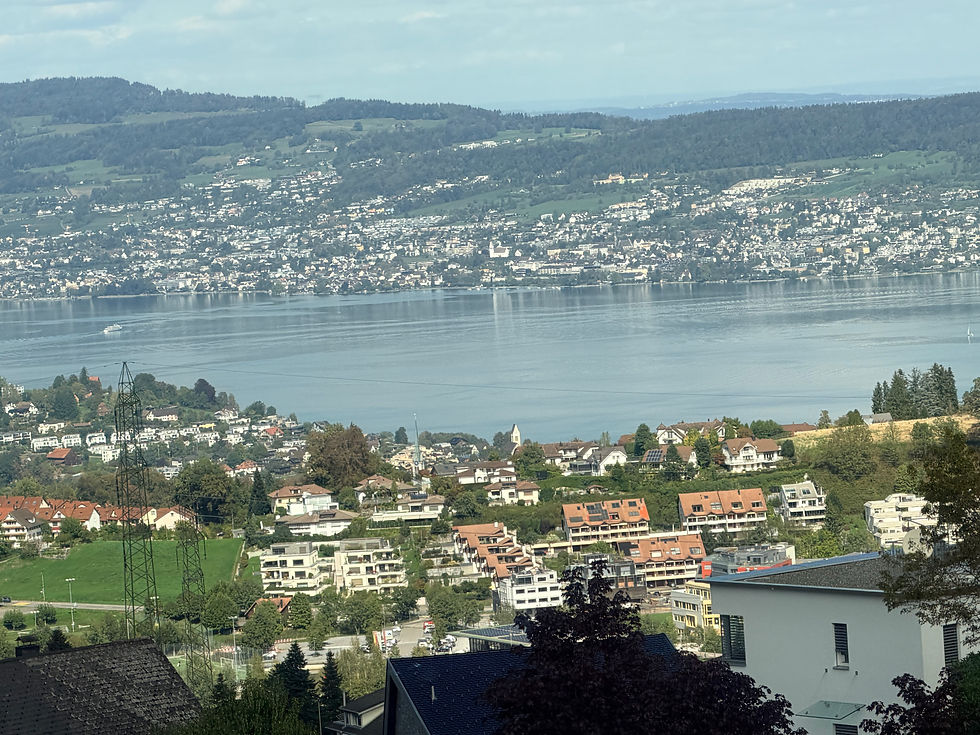
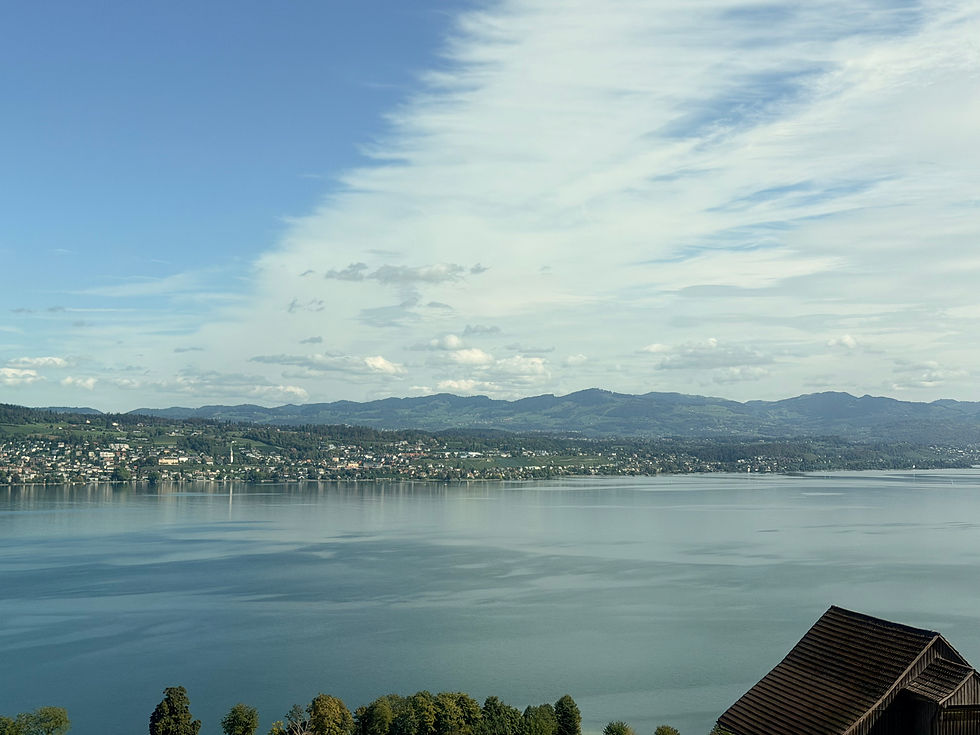
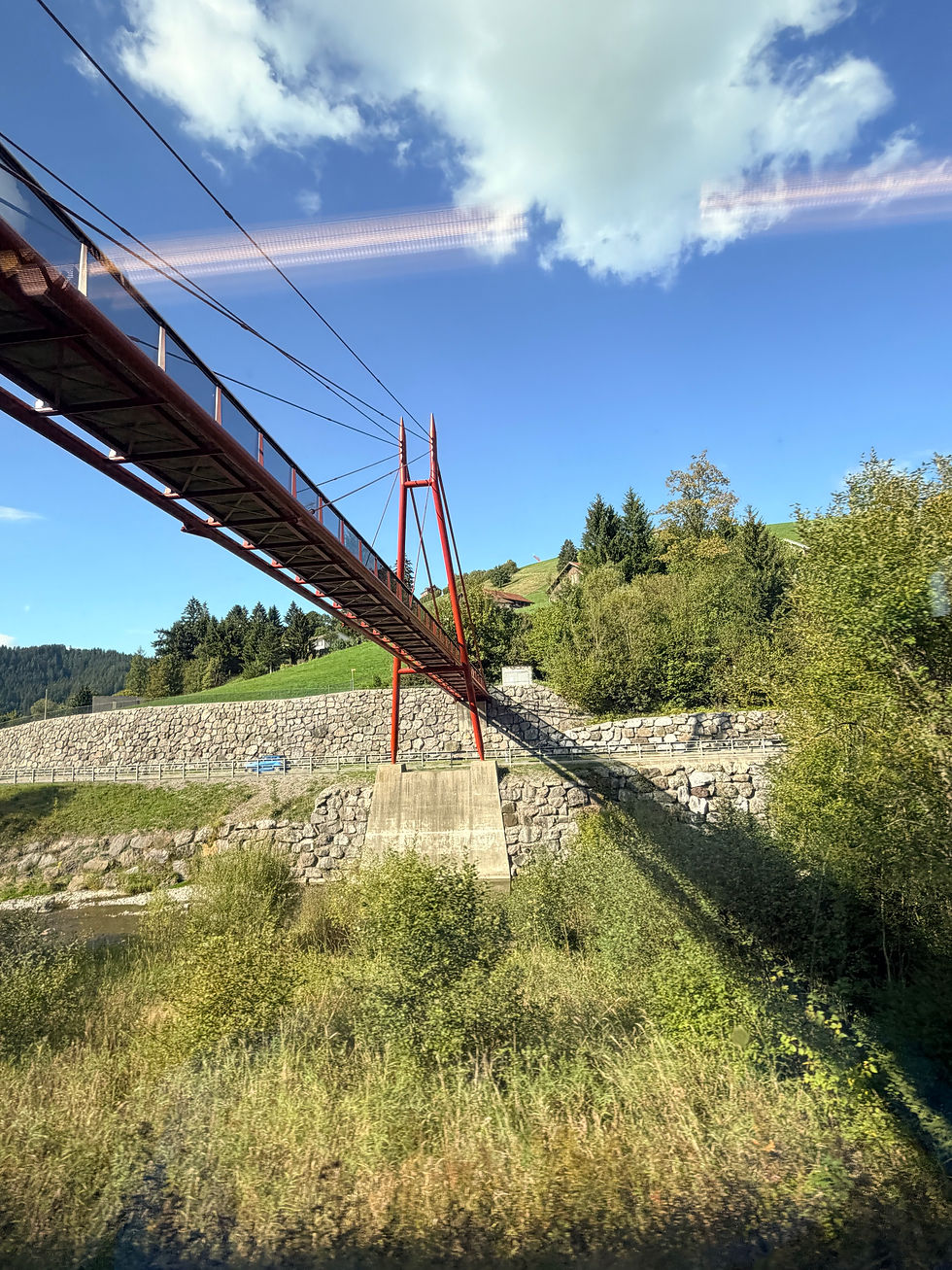
Some of the sights along the way from Zürich to Einsiedeln.






Ravens are central to the founding legend of Einsiedeln Abbey, as they avenged the 9th-century hermit Saint Meinrad by exposing his murderers.
In 835 AD, Saint Meinrad settled as a hermit in the dark forests of Switzerland, where he tamed and raised two ravens that kept him company. In 861 AD, two robbers attacked the hermit, believing he hid vast treasures. Even after offering them hospitality, Meinrad was beaten to death. Legend says the two faithful ravens chased the killers all the way to Zurich, loudly cawing and pecking at their heads until authorities grew suspicious and arrested them.
Two black ravens appear on the official coats of arms for both the town of Einsiedeln and the Abbey of Einsiedeln.

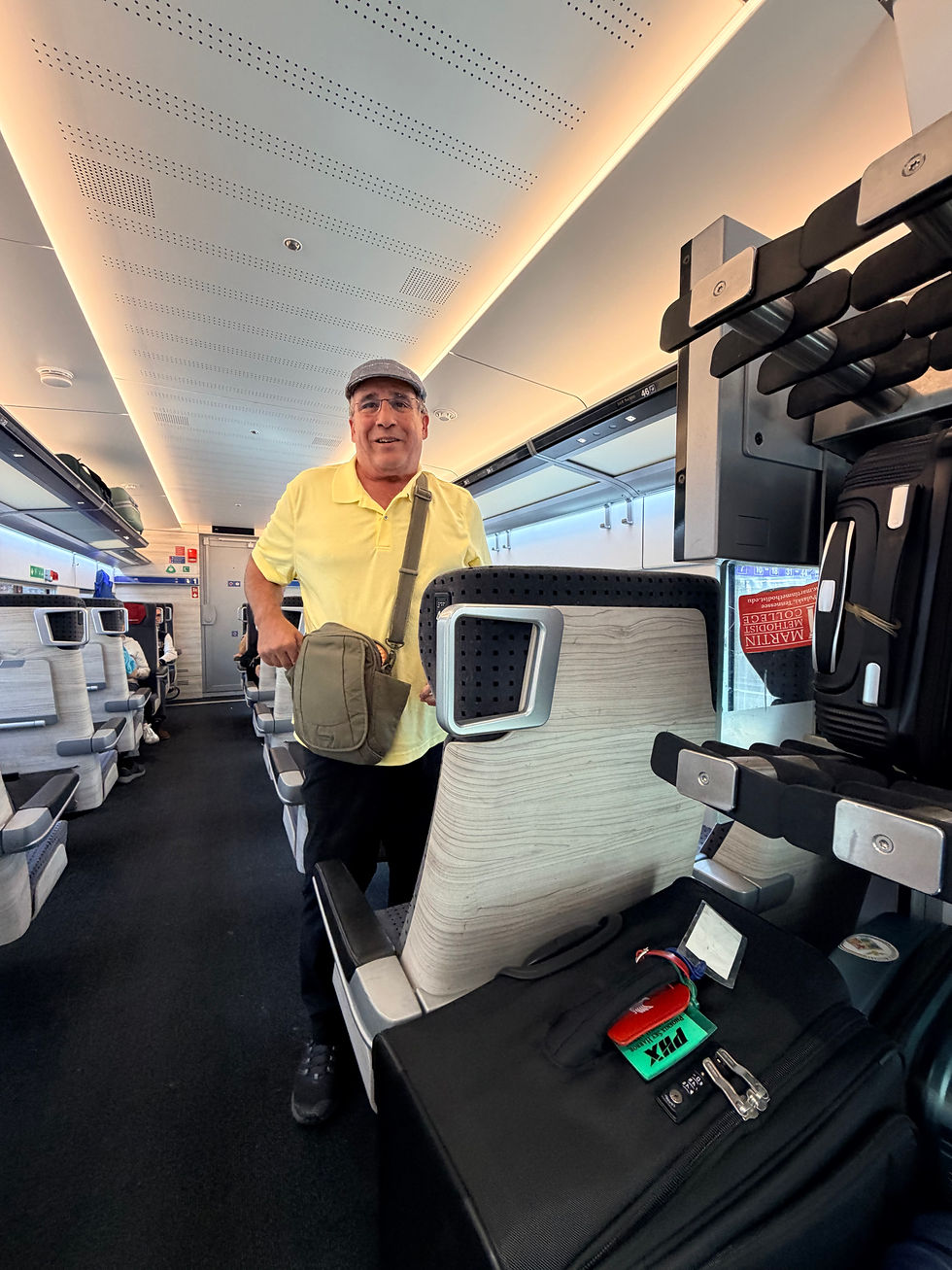
Our friends Sharon and Bennett left for Venice today. We went with them to the Zürich train station to see them off.

Another duck to add to my collection! Yes, in past years, I might have used two cameras at once. This trip I have used my phone more.


Comments