
Taraksan, Tea, and a Temple
- Deborah Kade
- Mar 23
- 6 min read

June, our tour guide, planned so many exciting experiences for us today! Thank you for another wonderful day!! She is the best!
Naksan is is a mountain in the Jongno Distric of Seoul. It is 125 meters (410 ft) tall. It and Namsan are well known for their panoramic views of downtown Seoul.

The mountain and its surrounding area is Naksan Park. Naksan Park is named for its shape which resembles a camel's back. As this place used to be a royal ranch that supplied milk for the palace, it was also known as Taraksan. The park offers spectacular view of Daehangno from its peak and is a great spot to enjoy beautiful sunset or night view of the city.

The park is known for iys panoramic city views and romantic night vistas.


A section of the 18.2 km-long fortress wall passes through Naksan. Starting from Hyehwamun and ending at Heunginjimun, the whole length is 2.1 km. A path was built alongside the wall, offering visitors a leisurely stroll while admiring the cityscape. The path would connect with other paths and lead to various viewpoints across the park, including Naksanjeong Pavilion, built in traditional Korean architecture.


The area is called longevity.


The free park is a popular spot for hiking along the fortress trail, photography, and exploring the adjacent Ilwa Mural.


Naksan Park is famous as the filming location for popular Korean TV dramas like the SBS's The Inheritors (/The Heirs) by leading actors Lee Min-Ho and Park Shin-Hye and My Lovely Girl.
The Joseon royal family enjoyed the natural beauty of the granite mountain.
However, hasty manner of urban planning resulted in the demolition of most parts of the mountain during the Japanese colonial period.
In an effort to save the remaining green belts, Naksan was designated as a park on June 10, 2002.


Before heading to lunch, we stopped at a charming tea shop. The white tea had a wonderful aroma and taste.
We had lunch at "A Flower Blossom on the Rice". They made their own tea blend. Very unique! A piping hot container was placed at the table. Delicious taste!


A Flower Blossom on the Rice serves beautiful, healthy meals using ingredients grown in accordance with eco-friendly practices. Diners can expect to enjoy dishes made with organic rice grown in Bongha Village, pesticide-free vegetables, wheat, traditional pastes, and undyed meats. Popular menus include the vegetable course, suitable for vegans, the tteok bulgogi made with Korean beef, braised rockfish harvested around Heuksando Island, and the five-colored bojagi bibimbap.
This is the restaurant's pledge.
"We cook with the finest ingredients from trusted producers.
We are committed to sharing wholesome food with people around the world, using only quality ingredients. Even among eco-friendly options, we prioritize local ingredients, including organic rice grown using natural farming methods.We use only traditionally fermented soy sauce, doenjang (Korean soybean paste), and cold-pressed oils, all crafted from domestic ingredients. We’d like you to experience the clean, rich flavors of the food we prepare with care."
Michelin recognized restaurant
"As the restaurant’s first branch, this eco-friendly location has been recognized for its commitment to sustainable gastronomy, offering delicious food made from quality ingredients and grounded in the values of beauty."

There were even fresh flowers in the bathroom.

Selected for the Michelin Bib Gourmand for 8 consecutive years (2018 - 2025)
Selected for the Michelin Green Star for 5 consecutive years (2021 - 2025)
Selected for 100 Taste of Seoul for 5 consecutive years (2021 - 2025)
Selected for Blue Ribbon Survey for 8 consecutive years (2018 - 2025)
Michael and I both had the Bojagi Bibimbap.
Biodynamic farming organic rice, 6 types of organic vegetables, unsalted seaweed, non antibiotic viable egg, organic edible flower, traditional Korean seasoning soy sauce and traditional sesame oil.

Started with carrot soup and a salad


Sesami Oil and Soy Sauce

Sides were pickled radish and sea weed

We ate with our eyes even before tasting the food. We were also served a seaweed soup.


The outside egg crepe was thin. Easy to cut and expose the inner delicacies.

Next major stop was Seoul Bongeunsa Temple
Once known as Gyeonseongsa Temple, Bongeunsa Temple is located north of COEX, and was constructed in the 10th year of Silla King Weongseong’s reign (794). In 1498, Queen Jeonghyeon refurbished Gyeonseongsa Temple and renamed it Bongeunsa Temple.

White flowers for the deceased and colored flowers for the living.


Originally located near the Royal Tomb of King Seongjong, the temple was transferred to its current location during Joseon King Myeongjong’s reign. The temple is home to 3,479 Buddhist scriptures of 13 types, including the works of Kim Jeong-hee. The Buddhist ceremony called Jeongdaebulsa is held on the ninth day of the eighth month of the lunar calendar, where monks march carrying the scriptures on their heads and recite the Beopseongge (Buddhist rites).

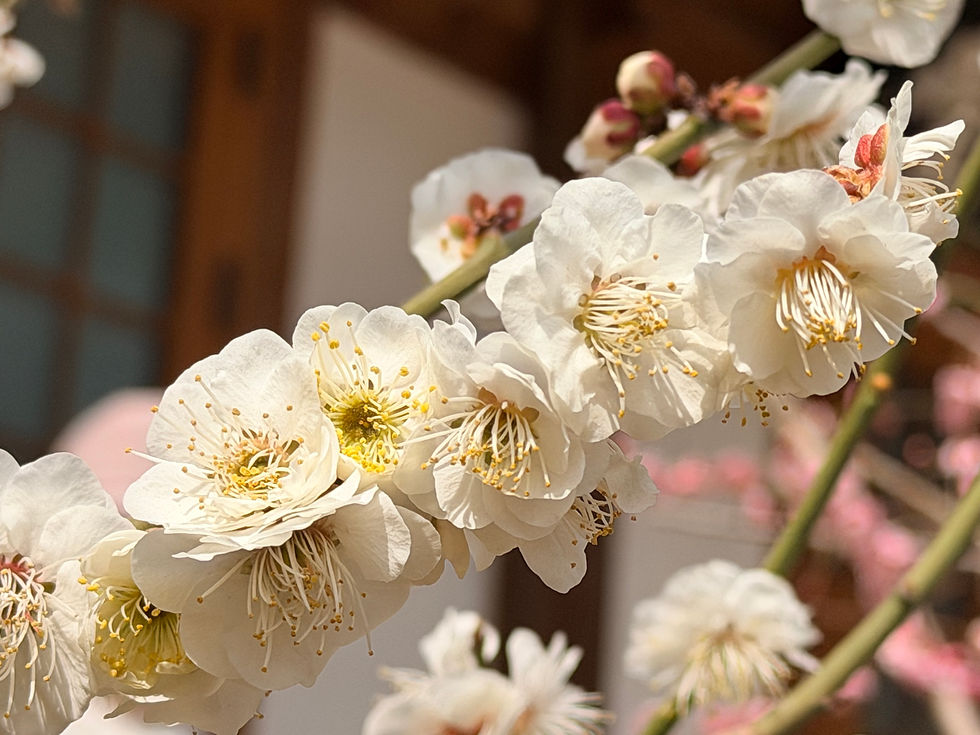
Plum tree blossoming


Three varieties of plum blossoms


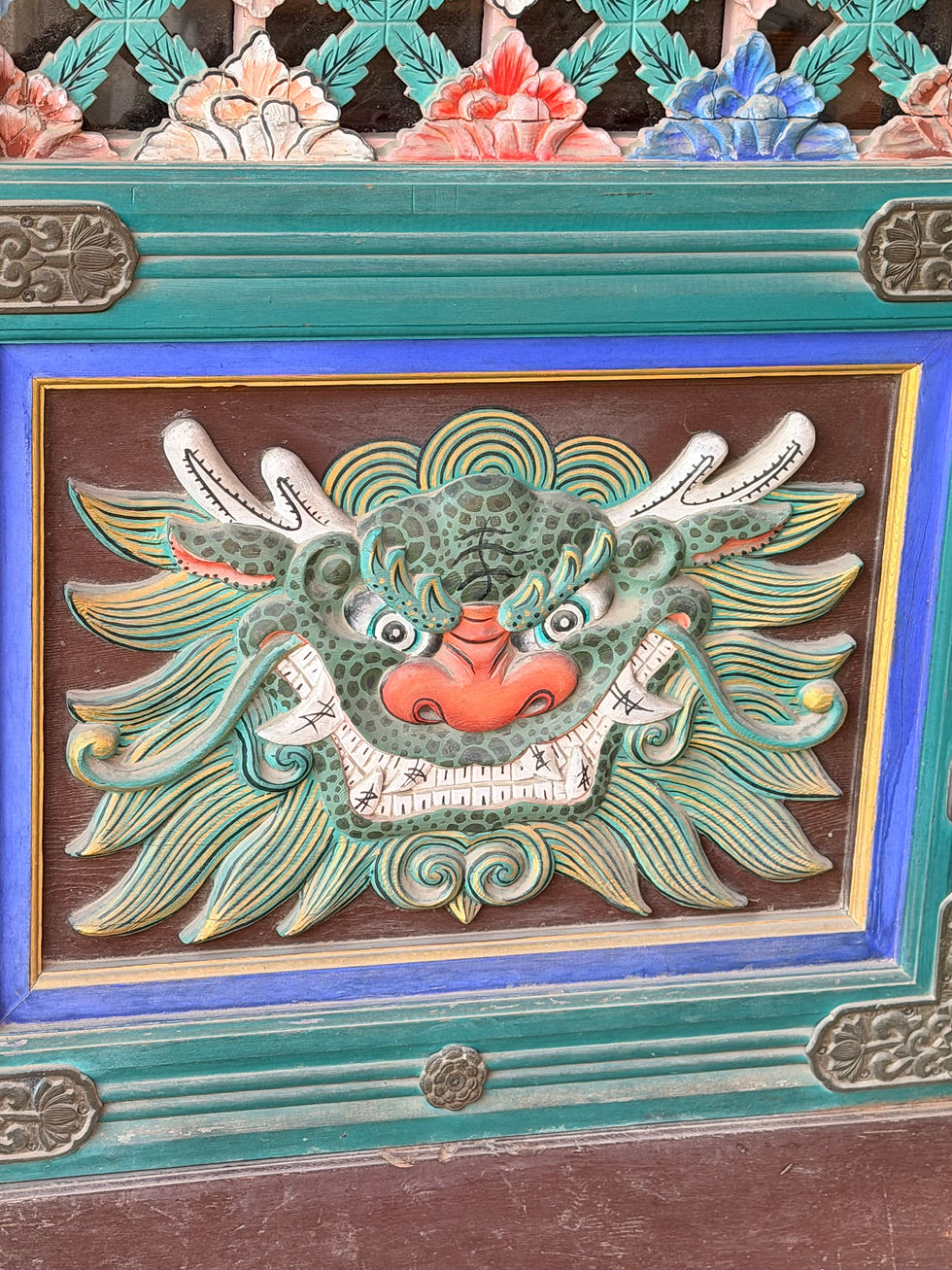


Bongeunsa was made one of the Korean Empire's 14 major temples in 1902. During the Japanese occupation, the temple became the headquarters of 80 smaller Buddhist temples around Seoul. In 1922 and 1929, Head Monk Cheongho saved over 700 people from drowning in the Han River, an act that inspired a monument of recognition. After colonial rule, Bongeunsa became subordinate to the Jogye Order, the largest Buddhist sect in Korea.


Write your prayer intentions


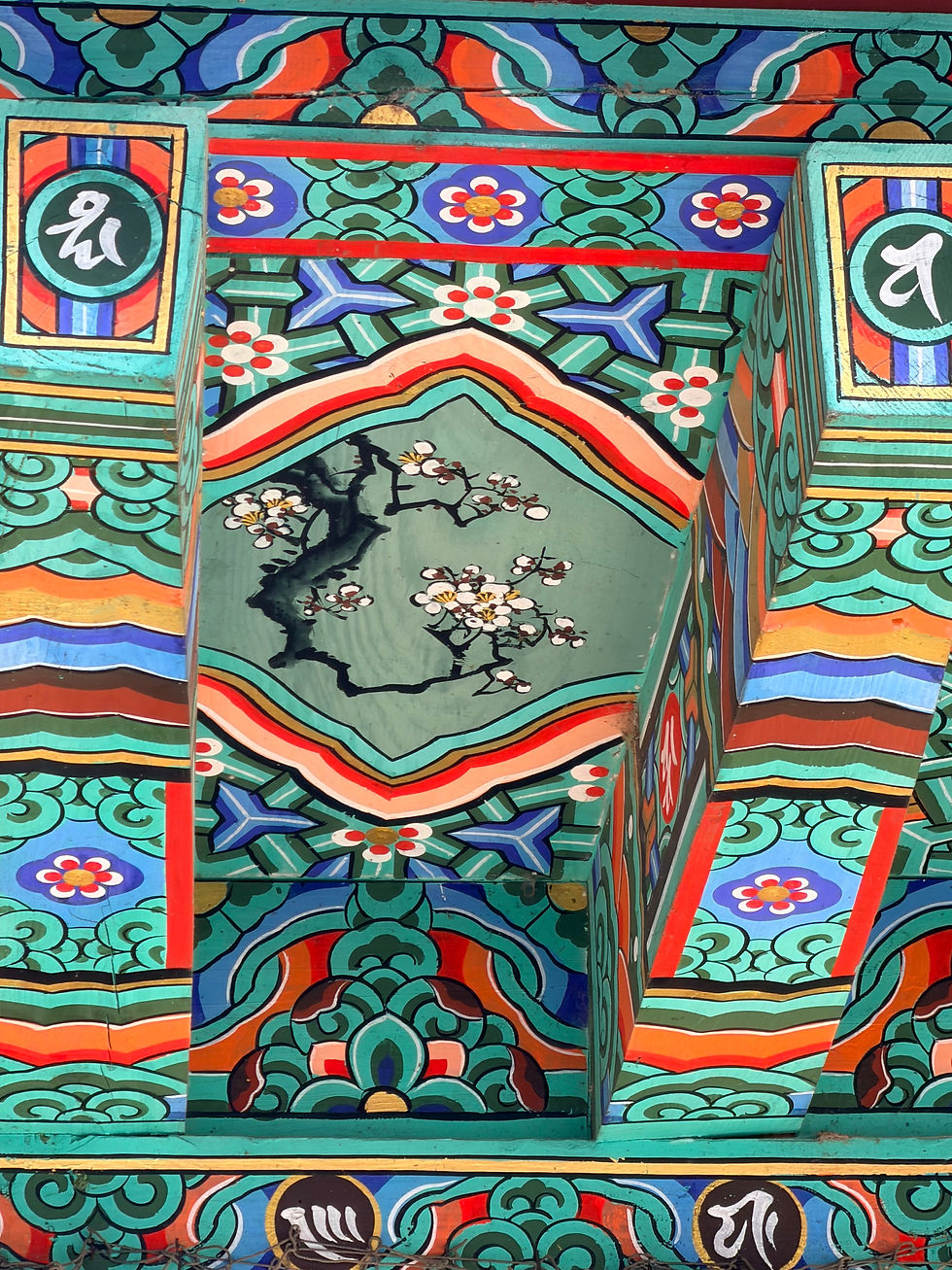
I was so fascinated with this building!!!


So many flowers to look at. You can find the flowers painted on the wood actually growing and blossoming on the grounds.



The Practicing Temple for the Revival of Korean Buddhism. Bongeunsa is a millennium Buddhist Temple with a long, storied history. This temple was founded in 794 during the United Shilla Dynasty. Around 15th century, the devoted Queens graced this temple to be rebuilt and enlarged at the present location. Even under the rule of Confucianism-led Dynasty, the qualifying national examination for monks was reintroduced after long interruption. Greatly through the religious devotion of Venerable Bowoo, Bongeunsa later became the cornerstone of the Korean Buddhism Seon lineage (Meditation). Enhanced by its status and function, the Temple has carried on this sprit on the Seon legacy through distinguished Masters including Venerable Seosan and Sameong selected by the national examination. During the late Joseon Dynasty, Venerable Yeonggi built Panjeon, where 81volumes of wood blocks of the Avatamsaka Sutra were enshrined. The calligraphy on the signboard of the Panjeon was written by Kim Jeonghee, one of the greatest scholars and calligraphers. While seeking the enlightenment, Venerable Cheongho was guided by Buddha's teachings of salvation to volunteer and rescue those afflicted by the floods of 1925. Nowadays, Bongeunsa has carried on this spirit into the present day, writing a new history of Korean Buddhism through practice-oriented temple management like Temple stay programs.
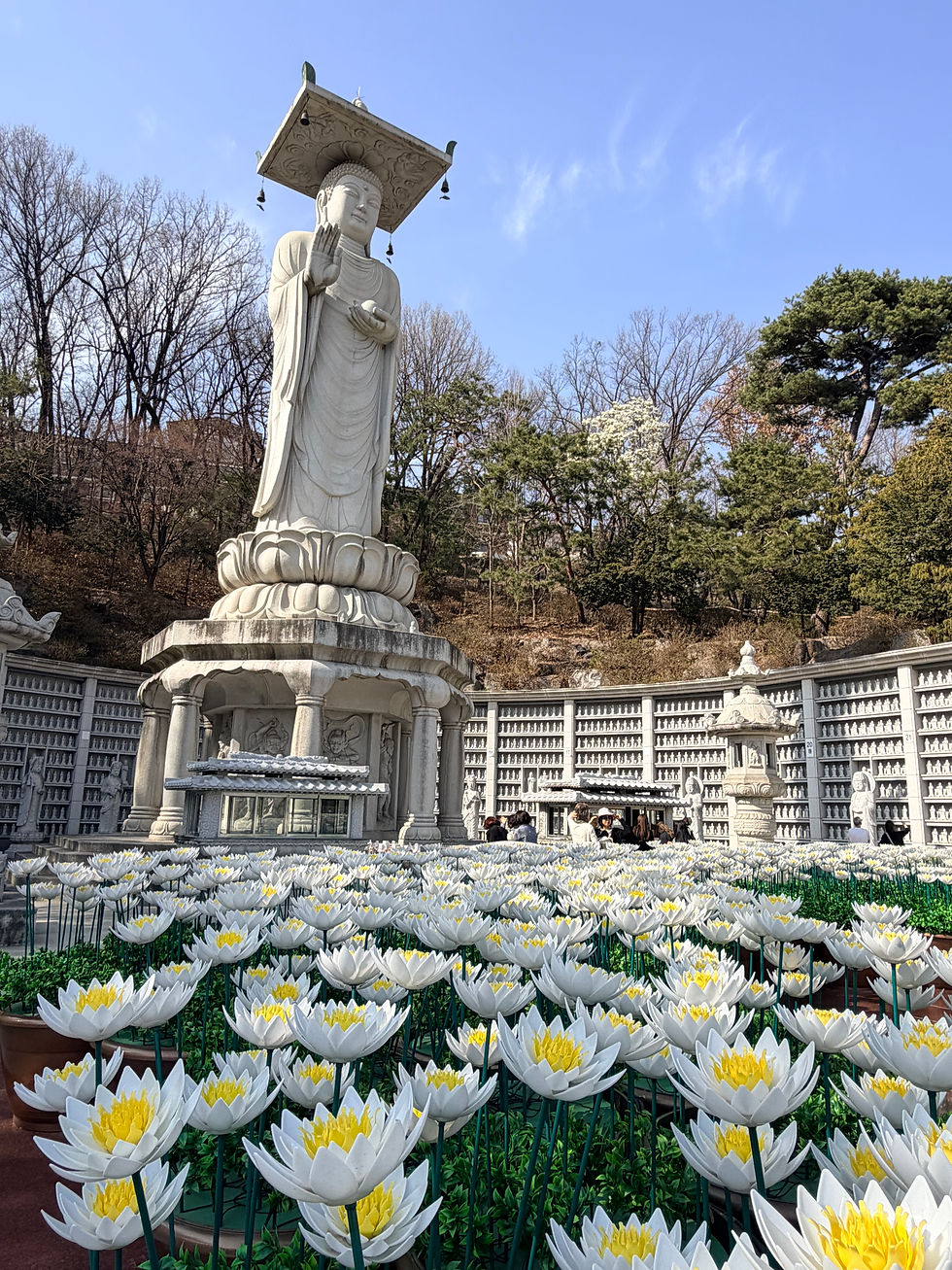
The main Buddha statue at Bongeunsa Temple in Seoul is the Mireuk Daebul (Great Statue of the Maitreya Buddha), a 23-meter-tall stone statue completed in 1996, making it one of the tallest in Korea. Situated in Gangnam-gu, it overlooks the temple grounds, offering a serene contrast to the surrounding modern cityscape.


Then, we went to see the Starfield Library.
"Located in the center of COEX Mall, Starfield Library is an open public space where anyone can freely come to sit down, take a break, and immerse themselves in books along with other bibliophiles. A wide selection of books in various genres such as humanities, economics, hobbies, etc. are readily available. Whole sections of the library are dedicated to foreign books and famous authors. iPads can be used to read e-books. Close to 600 magazines, domestic and foreign, are available for browsing. All these qualities set Starfield Library apart from other ordinary libraries. In addition, a plethora of events take place here such as meeting with authors, book talks, poetry reading, lectures, book concerts, and more."


Next stop was to Myeong-dong. Myeong-dong is a premier shopping and tourism district in central Seoul, renowned for its dense concentration of K-beauty brands, international fashion retailers, and bustling street food stalls. Located in Jung-gu, this vibrant, pedestrian-friendly area is a must-visit for tourists, offering a mix of luxury department stores like Lotte and Shinsegae, along with popular local cafes and attractions like the Myeong-dong Cathedral.


Last stop for the day took us to dinner at Soseonjae. The menu is quite succinct but has all of the must haves for local fare. Cooked by Ms. Kim who uses ingredients she picks from the wild.

June had the dried yellow croaker fish


Such vibrant colours again in tge buildings ,flowers and food ,it must have smelt wonderful x