
Sunrise to Sunset
- Deborah Kade
- Apr 25
- 9 min read

Beautiful day to explore more of Monument Valley!
Navajo guides are required to visit most locations at Monument Valley as this is sacred land of the Navajo people. The Navajo Nation is the largest federally recognized tribe in the United States and has the largest reservation in the country.

The View Hotel is Navajo-owned, with Armanda Ortega (of the Kiy`anníí Clan) recognized as the owner. The hotel was designed to fit into the landscape and provides economic opportunities for local Navajo residents.
Key details about the ownership and hotel:
"Navajo-Owned: The hotel is operated by the Dine (Navajo) people, promoting cultural preservation.
Founder: Armanda Ortega is the sixth generation of the Ortega family working in the area
Location: The hotel is situated in the Monument Valley Navajo Tribal Park.
Features: Opened in 2008, it features 96 rooms, all with views of the Mittens and Merrick Butte, as well as a trading post and a restaurant featuring Navajo cuisine. " All rooms face East.
John Wayne is credited as saying, “Monument Valley is the place where God put the West.” Romanticized images of those rugged buttes, and dramatic monoliths still weave their charm today, enticing both tourists and movie makers into Navajo Country.
Took these pictures from our room at sunrise.
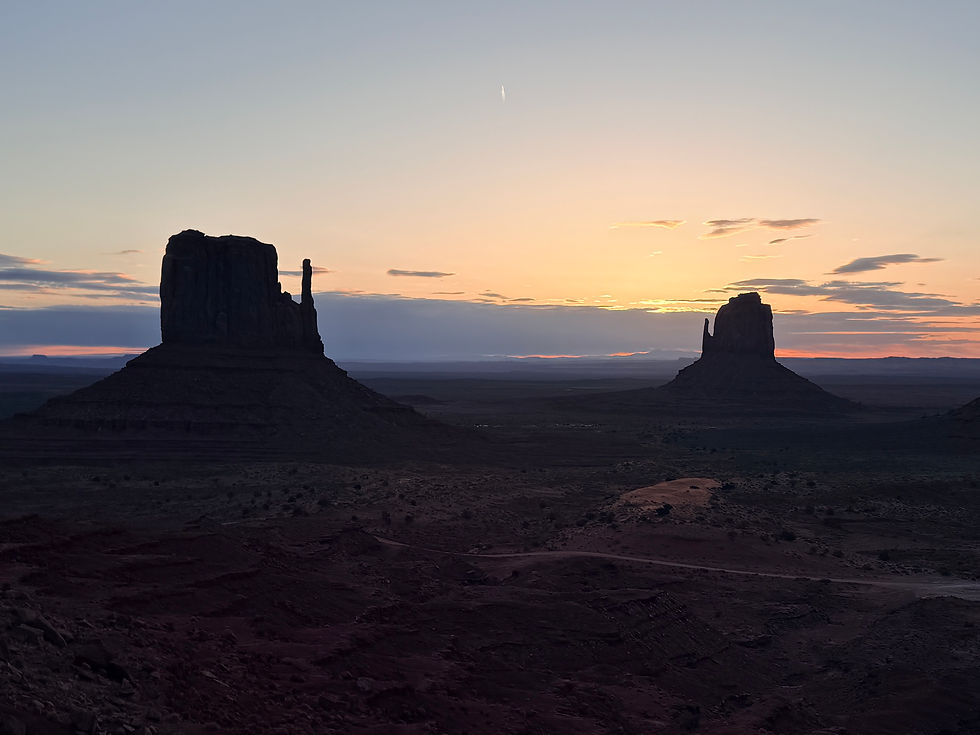


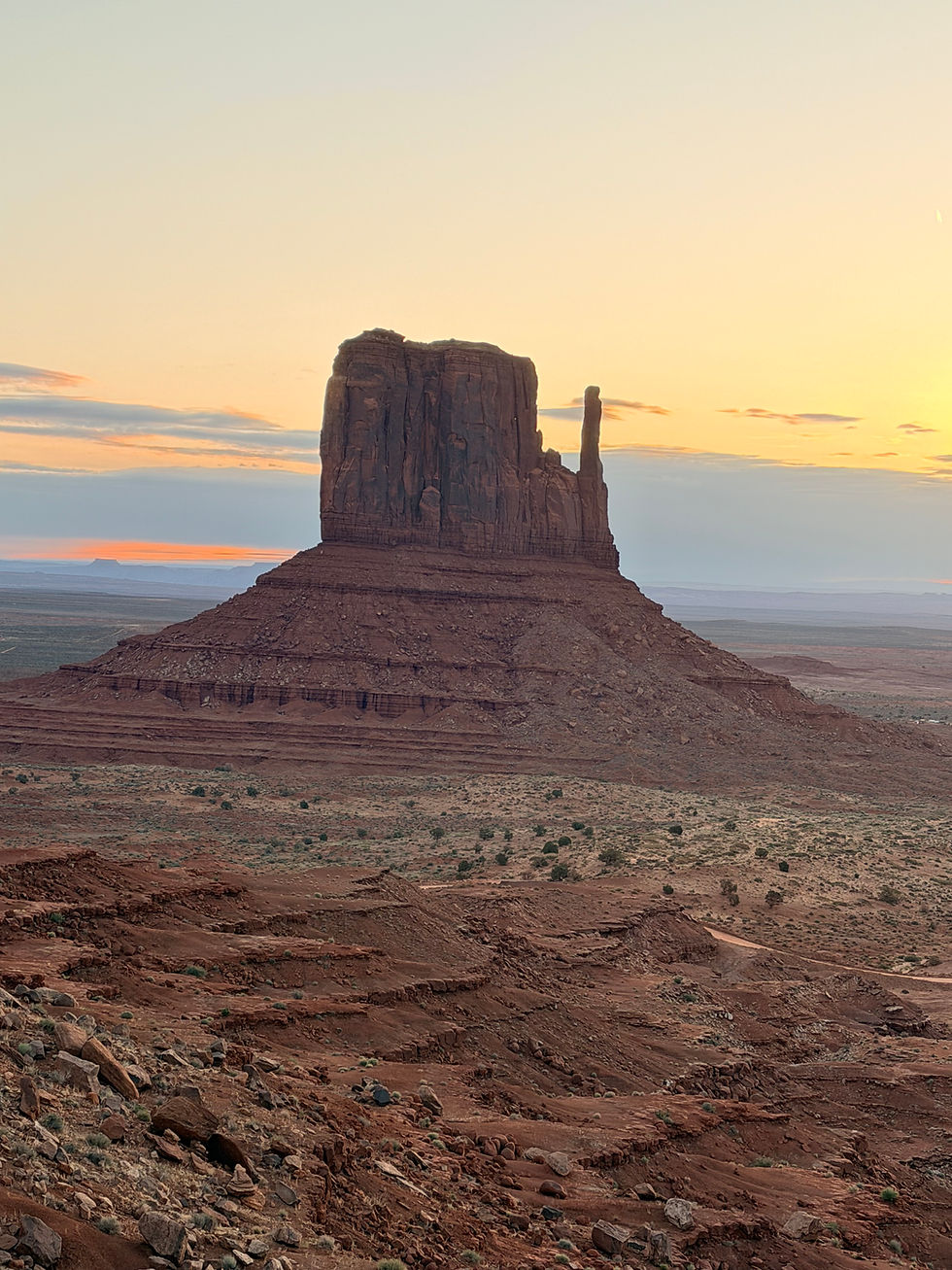

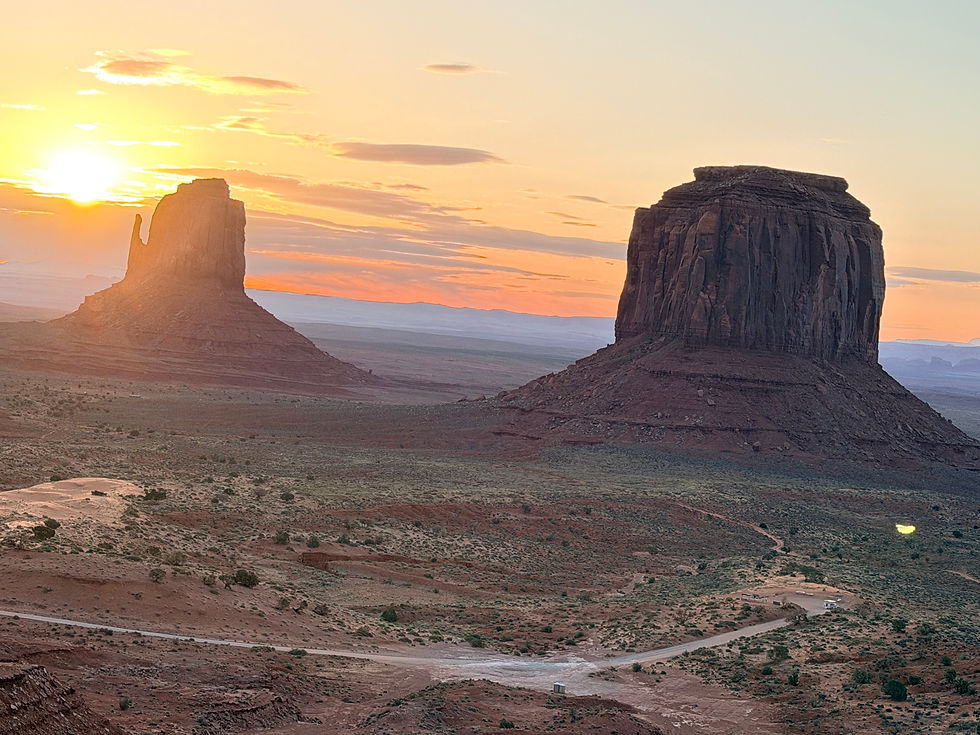


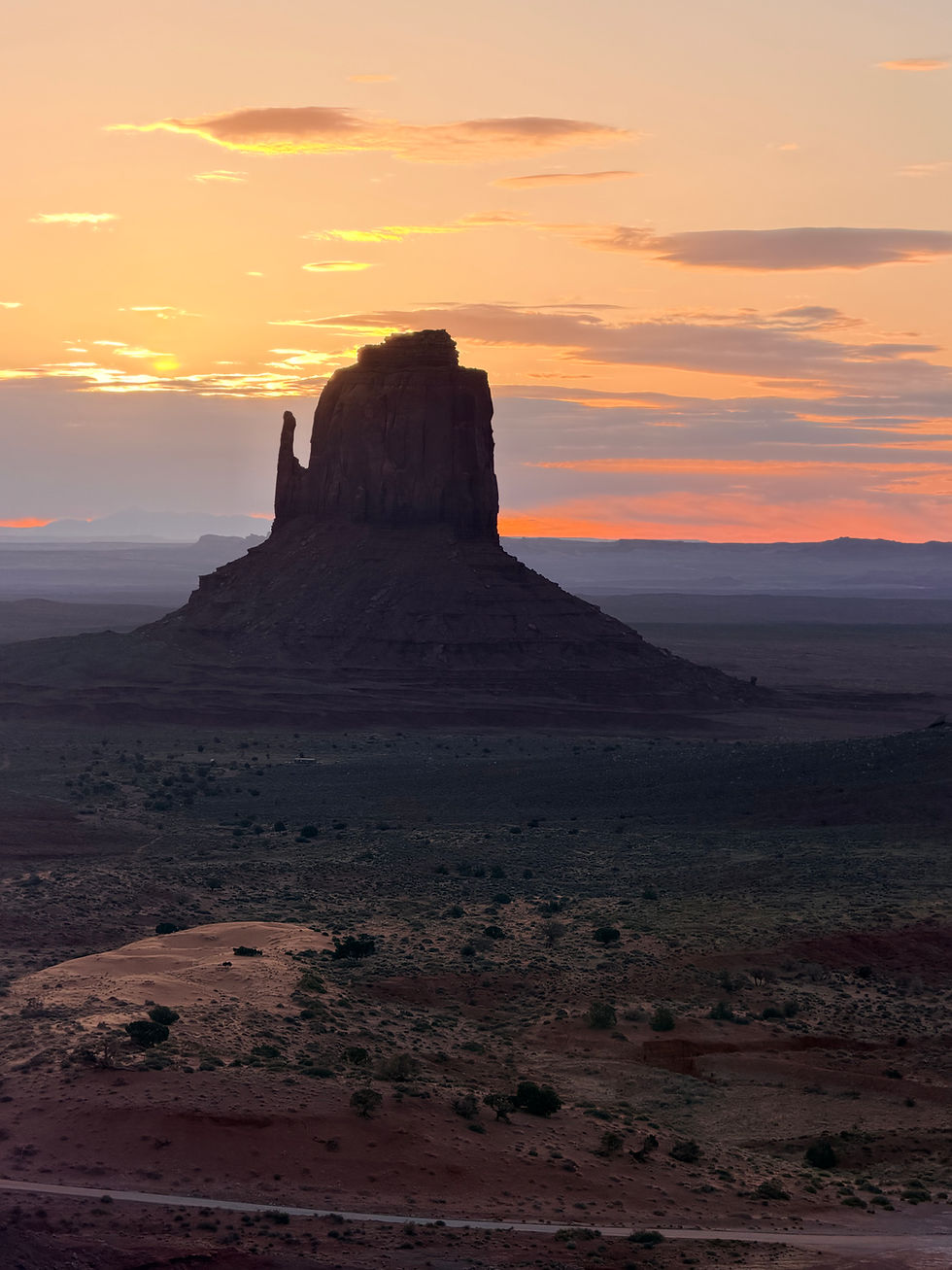


Took these pictures after breakfast which is included.
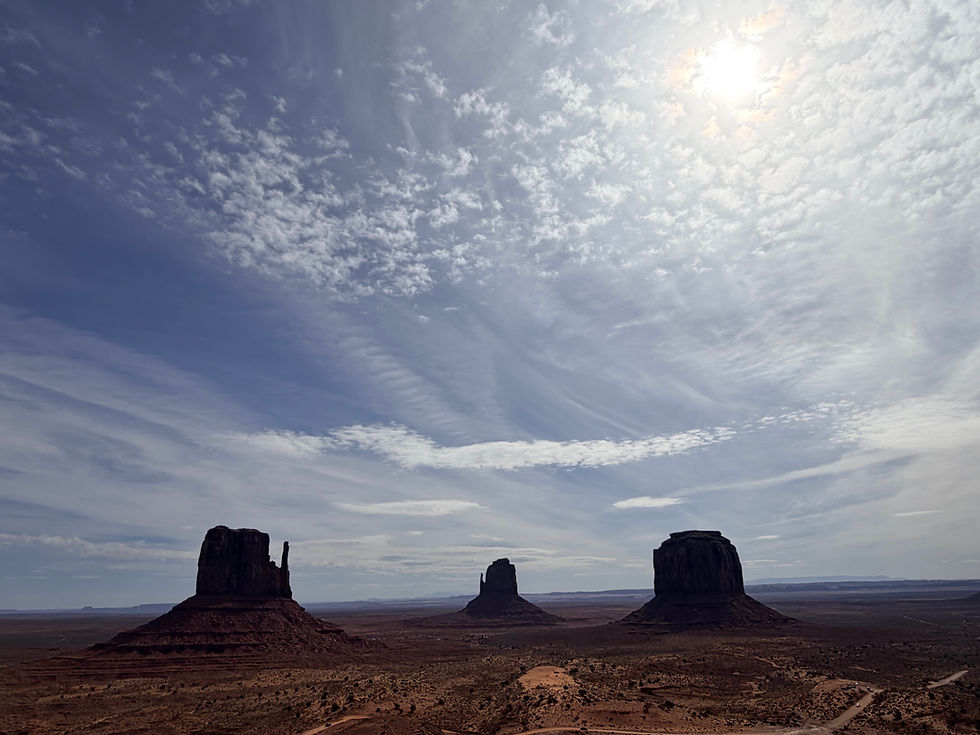


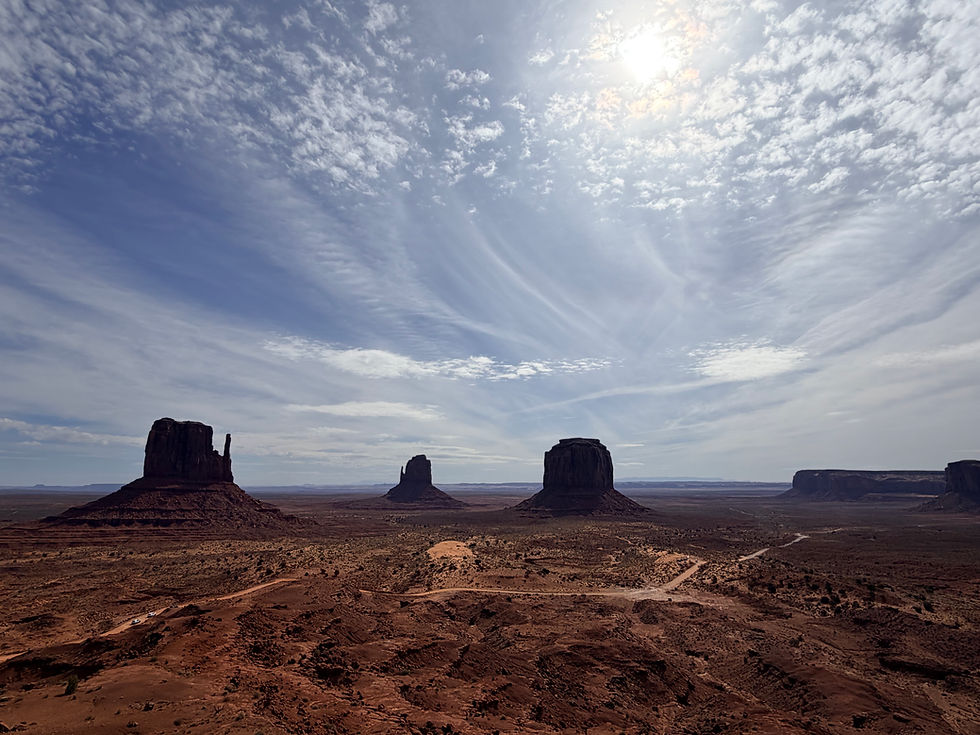


"The Monument Valley terrain is ancient, resilient, and breathtaking in its beauty. This distinctive landscape—a hallmark of the Utah desert—came into being through the erosion of the Rocky Mountains' sandstone deposits and geologic uplift, and it was further shaped by the relentless forces of wind and water over many centuries."
"Monument Valley's prominent buttes reveal three main layers—Organ Rock shale, de Chelly sandstone, and Moenkopi shale. The tallest of these stand-alone formations ascends 1,000 feet above the valley floor. Encompassing 91,696 acres, Monument Valley forms part of the expansive Colorado Plateau."

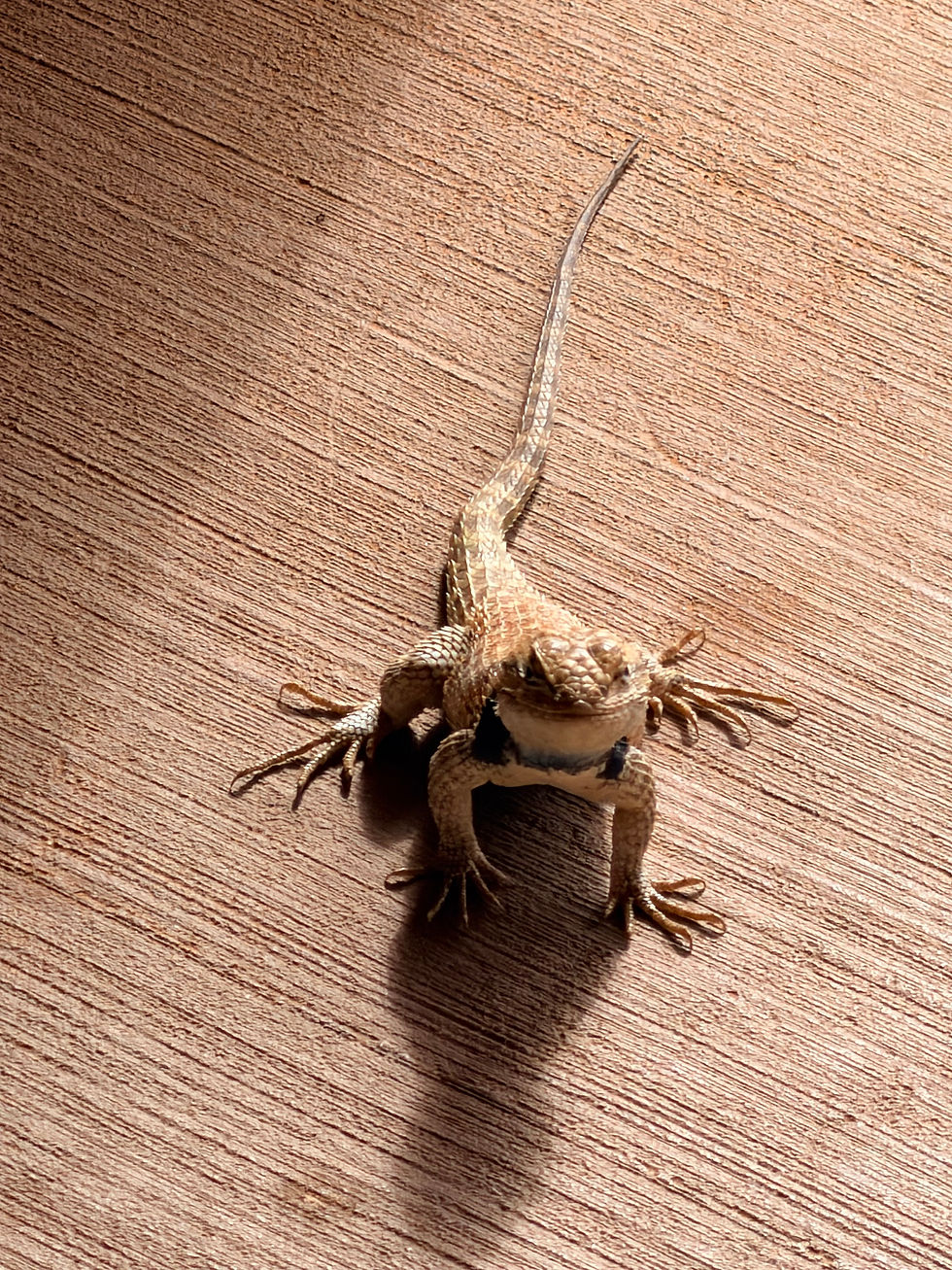
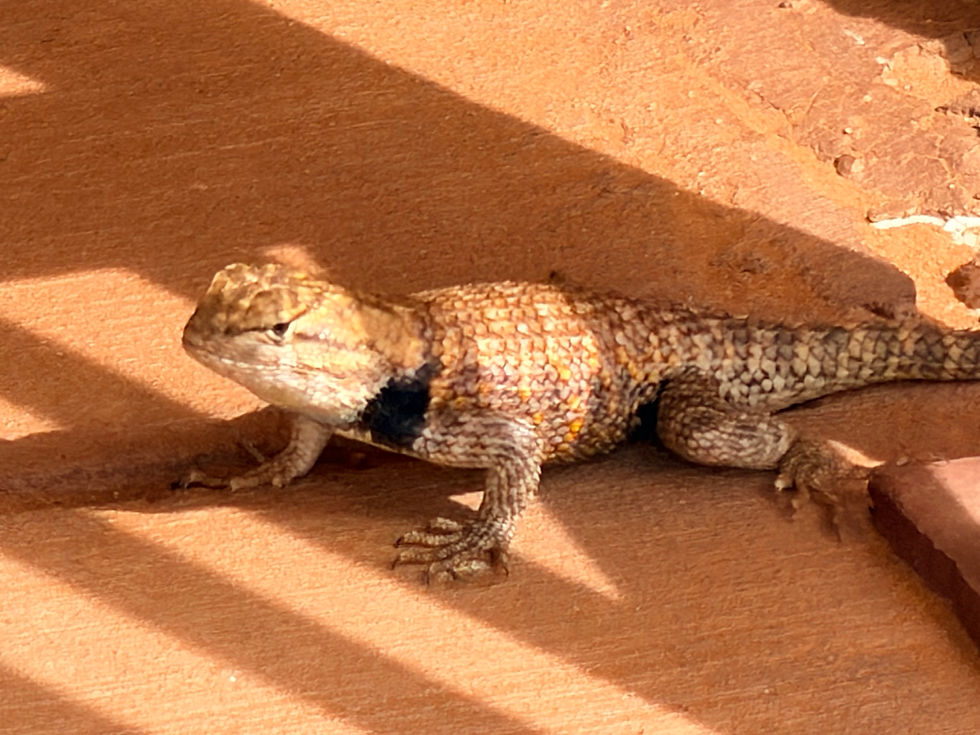
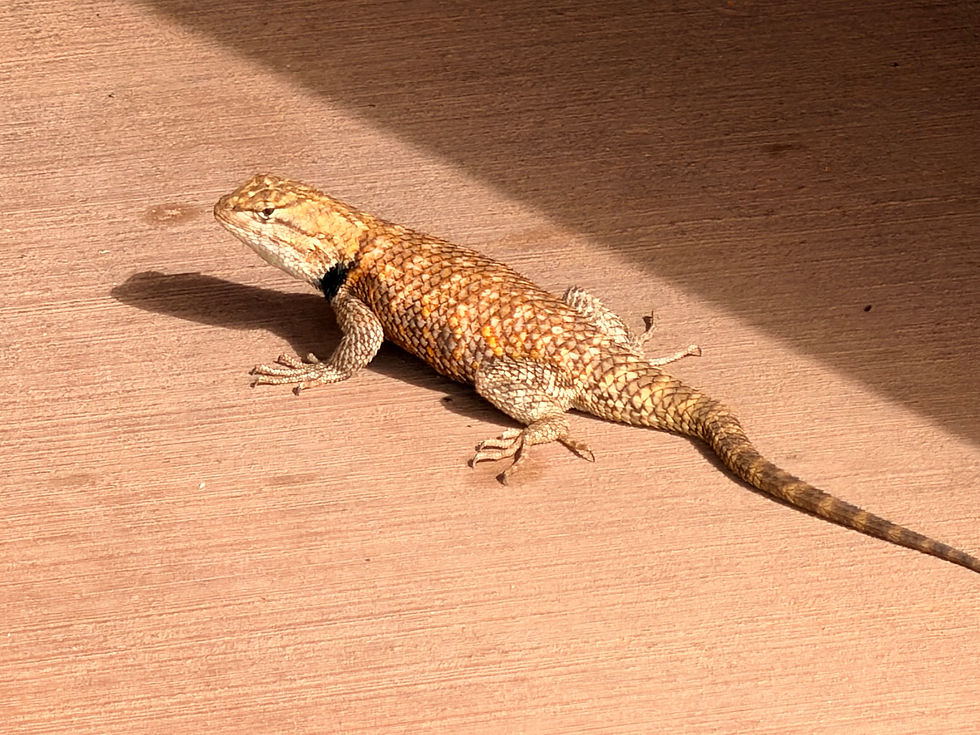
This little guy can move quickly! Not sure it was happy to have its picture taken, though.




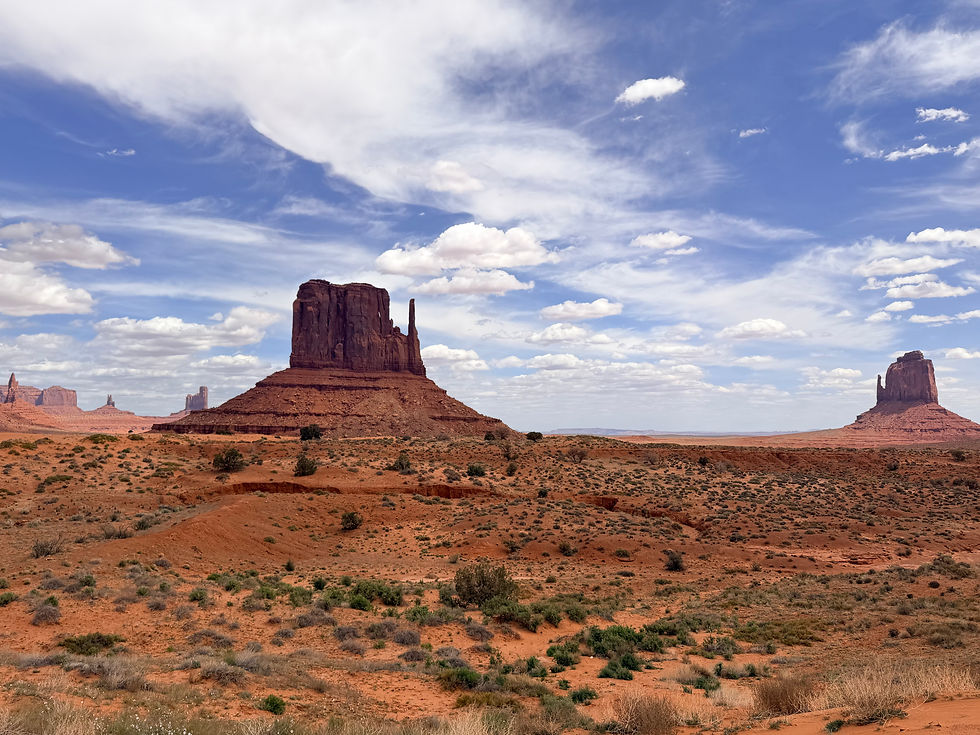
The West and East Mitten Buttes (also known as the Mittens) are two buttes in the Monument Valley Navajo Tribal Park in northeast Navajo County, Arizona. When viewed from the south, the buttes appear to be two giant mittens with their thumbs facing inwards.
The Mittens are about 0.6 mi (0.97 km) from the Arizona–Utah state line and West Mitten Butte is 1.1 mi (1.8 km) northeast of the park headquarters. The summit of West Mitten Butte is 6,176 ft (1,882 m) and East Mitten Butte is 6,226 ft (1,898 m) in elevation. The Mittens form a triangle with Merrick Butte about 2⁄3 mi (1.1 km) to the south and, with Sentinel Mesa, a more extensive plateau, towards the northwest. At the end of March and mid-September, for a few days only at sunset, the Mitten Shadow occurs, when the West Mitten shadow appears on the East Mitten.
The buttes are made of three principal rock layers. The lowest layer is Organ Rock Shale, the middle is de Chelly Sandstone, and the top layer is the Moenkopi Formation, capped by Shinarump Conglomerate.


Michael decided to book a tour. Super decision!


"While commonly referred to as Monument Valley Park, the area's Navajo name, Tsé Biiʼ Ndzisgaii, offers a more authentic reflection of its character, which roughly translates into 'the valley of the rocks.'"
"Contrary to what some might assume, Monument Valley is not a National Park, but rather a Tribal Park, as it lies within the boundaries of the Navajo Nation. The Tribal Park’s designation is important in order to preserve its unique heritage and geological wonders."
Elevation sits at 5,200 feet (1,585 meters)


The formation of Monument Valley started 300 million years ago as a low basin. Slowly, the sandstone layers were deposited in this basin, which later became the buttes of Monument Valley.
Over time, the forces of wind, water, ice, and temperature variations slowly eroded away the softer materials, leaving behind the massive sandstone buttes we see today.


West Mitten Butte East Mitten Butte


"The earliest known inhabitants of the Monument Valley area were the Ancestral Pueblo, who lived there from about 1 AD to 1300."
"After the Ancestral Pueblo, the Navajo people later inhabited the area. The Navajo, known as Diné, moved into the American Southwest around the 15th to 16th century. They established a pastoral society and lived in harmony with the environment. The land of Monument Valley is sacred for the Navajo people and featured in many of their creative narratives."

The Three Sisters


"The Three Sisters are towering, 1,000-foot sandstone pinnacles representing a Navajo legend of three women and a novice turning to stone. The story tells of them being protected from Spanish Conquistadors by eagle spirits, then being covered by a cloud and turned into stone pillars, forever guarding their land and remaining as a reminder of the chase."

The towers were first climbed in 1966 by Layton Kor and his team, with the middle tower noted as one of the thinnest in the area.

They are often described as a mother superior, a sister, and a small novice with a veil, standing in a row. In the story, the sisters were running from Conquistadors on the Colorado Plateau and fled into the valley between Tó Neinilii (Rain God Mesa) and Camel Butte.


"The first recorded European contact was in 1776 with Spanish explorers. However, Monument Valley remained largely unknown to people other than the Navajo until the late 19th century.
In the 20th century, the creation of the Monument Valley Tribal Park in 1958 by the Navajo Nation helped to protect the area and promote tourism."


"The area really came into the spotlight in the 1920s when the Goulding family began operating a trading post in Monument Valley. They sold the local population groceries and other supplies, serving as a hub of commerce in the area. Their establishment lasted through the 1960s.
During their time in this remote area of Utah, Harry Goulding caught wind of a new Western film in the works out in Hollywood. He and his wife packed up their things, went to Hollywood, and managed to arrange a meeting with the film’s location manager.
They showed him photographs of Monument Valley. Not long after that, the movie Stagecoach (1939), featuring America’s original cowboy, John Wayne, was filmed with Monument Valley as the setting. Since then, numerous major motion picture films have been shot in the area, along with countless commercials, music videos, and other productions.
Perhaps the most famous of all is the film Forrest Gump (1994). Monument Valley features in an iconic scene where Forrest Gump and his band of running followers jogged along U.S. Route 163. Fans of the movie often visit this stretch of the highway to recreate the scene or just take a few photos.
Monument Valley embodies the Old West with its iconic red sandstone buttes standing tall against the clear blue sky. However, no film can truly do it justice. Only by experiencing this majestic landscape firsthand can one fully embrace its awe-inspiring spirit!"
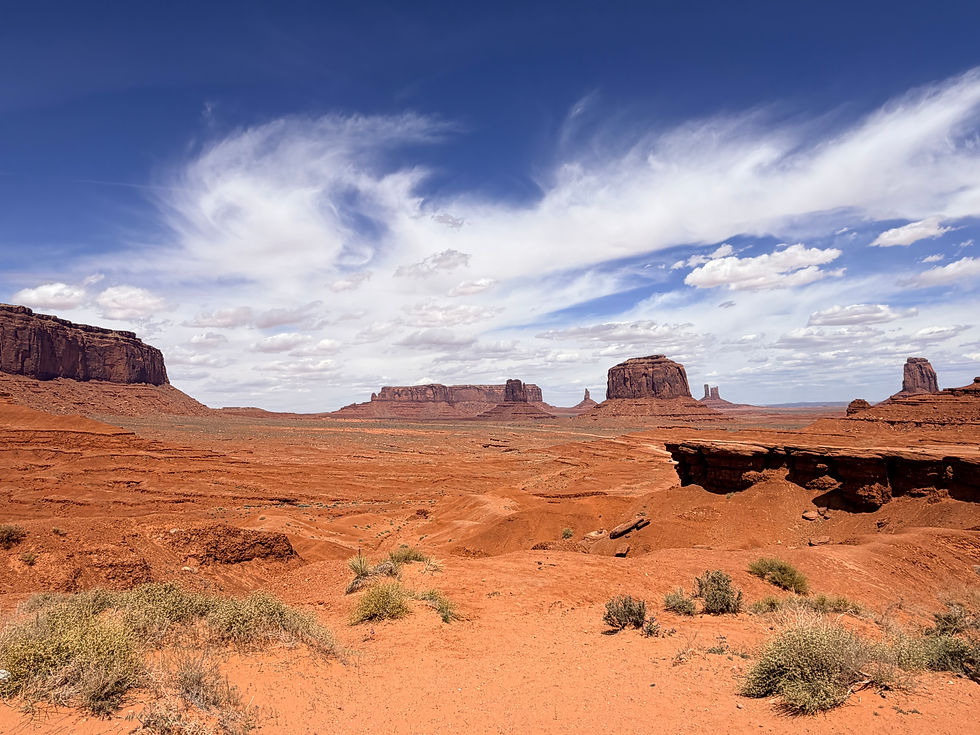
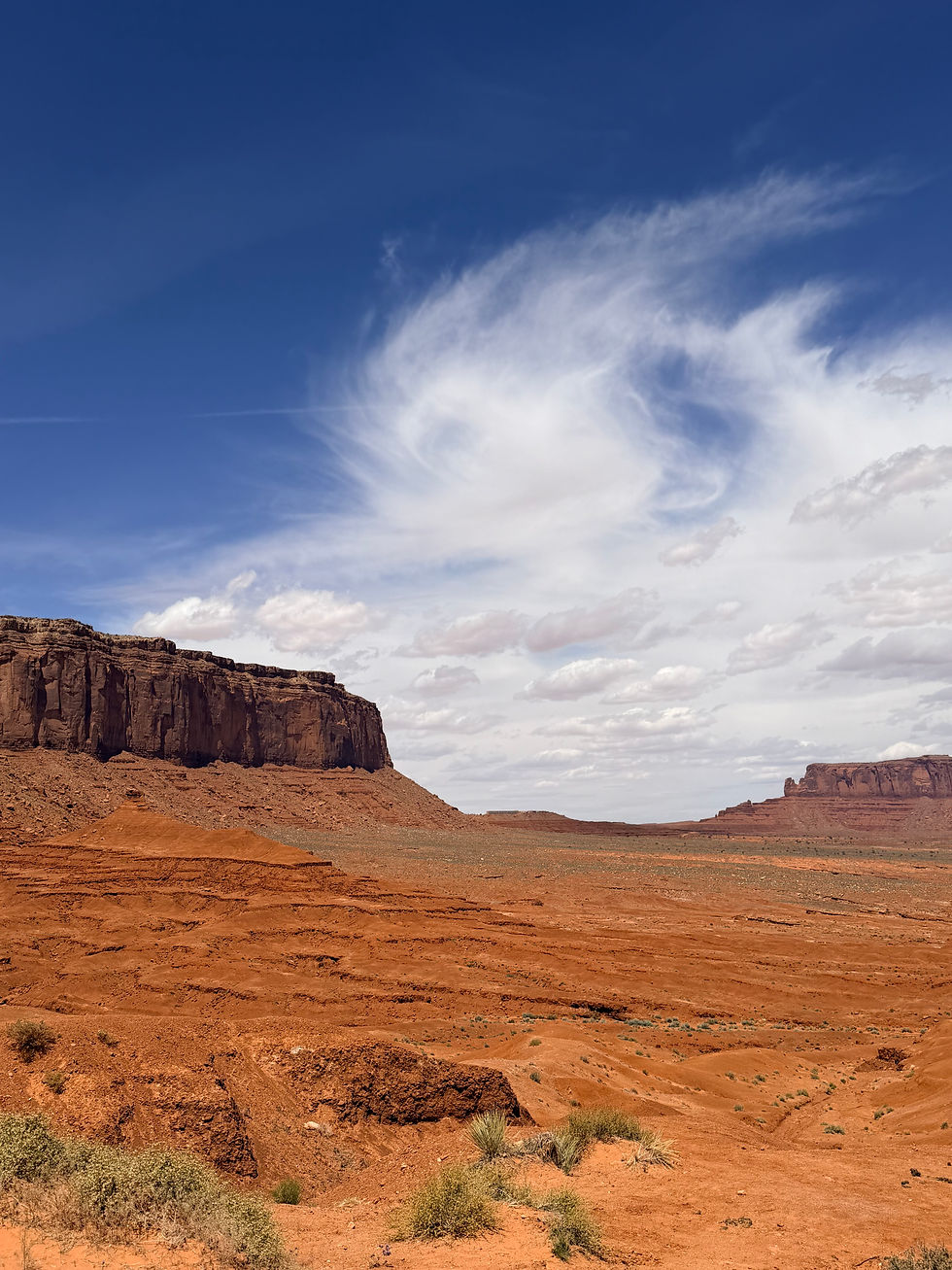
Yes, Monument Valley is an iconic filming location for Westerns and major Hollywood films.
Key Movies Filmed in Monument Valley:
Classic Westerns (John Ford/John Wayne): Stagecoach (1939), My Darling Clementine (1946), Fort Apache (1948), She Wore a Yellow Ribbon (1949), The Searchers (1956), Sergeant Rutledge (1960), and Cheyenne Autumn (1964).
Modern Classics & Popular Cinema:
Easy Rider (1969), 2001: A Space Odyssey (1968), National Lampoon’s Vacation (1983), Starman (1984), Back to the Future Part III (1990), Forrest Gump (1994), Thelma & Louise (1991), and Con Air (1997).
2000s & Recent Films: The Lone Ranger (2013), A.I. Artificial Intelligence (2001), Vertical Limit (2000), and Wild Wild West (1999).
A Million Ways to Die in the West (2014) was partially shot on location in Monument Valley. In Transformers: Age of Extinction (2014) the scene in which the surviving Autobots reunite was shot in Monument Valley.
Iconic Scenes:
Forrest Gump (1994): The spot on US 163 where Forrest stops running is known as "Forrest Gump Point".
Back to the Future Part III (1990): Used for scenes when the DeLorean appears in 1885.
Easy Rider (1969): Featured prominently during the characters' road trip.
Numerous scenes from the HBO series Westworld were filmed in Monument Valley. Monument Valley appears in the third-season premiere of the television adaptation of The Man in the High Castle, titled "Now More Than Ever, We Care About You." In this alternate history, the Empire of Japan tests an atomic bomb there.
The area is also famous for the "John Ford Point," named after the director who brought many of these films to the location.
The Marlboro cigarette commercials were filmed against the large formation.
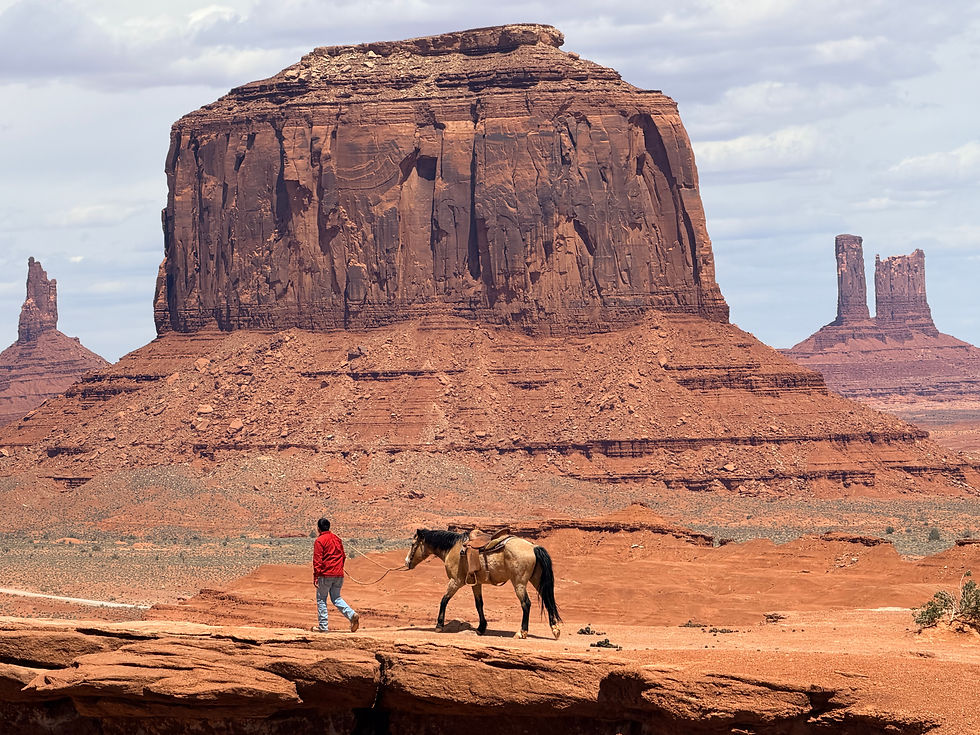
John Ford’s Point is a dramatic promontory offering sweeping panoramas across Monument Valley’s open plain and sandstone silhouettes. From this lookout, visitors can enjoy far-reaching views of the Mittens and Merrick Butte, some of Monument Valley’s most iconic formations.


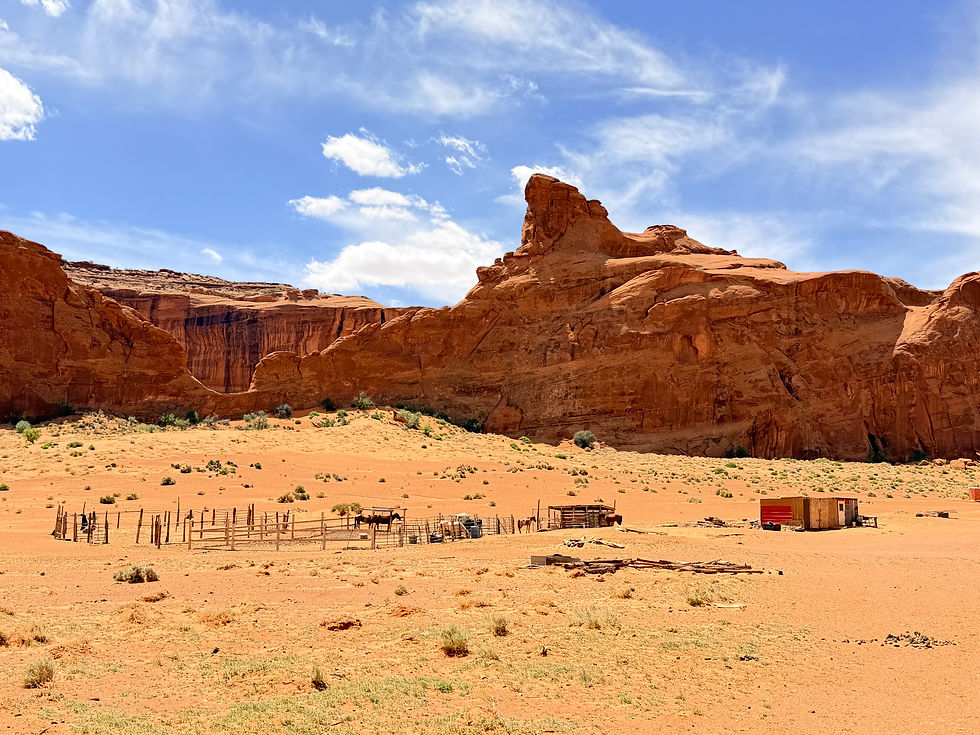
"A hogan (/ˈhoʊɡɑːn/ or /ˈhoʊɡən/; from Navajo hooghan [hoːɣan]) is the primary, traditional dwelling of the Navajo people. A hogan has walls and roof of timber, with or without internal support posts, and is covered with packed earth and stone in varying amounts."
Even families living in modern homes often maintain a traditional, dirt-covered hogan on their land for ceremonies.
Hogans are typically built facing east to welcome the morning sun, following traditional designs, although sometimes with modern materials.
Hogans serve as year-round or seasonal housing in some areas, particularly in parts of the Navajo Nation such as Monument Valley.
The hogan represents a living connection to Navajo culture, spirituality, and harmony with nature.

"Many Navajo (Diné) people still use hogans, though they are rarely the primary, daily residence for most families, who typically live in modern houses or trailers. While some traditional hogans remain as dwellings, they are now frequently used as sacred spaces for ceremonies, such as the Blessingway, and to maintain cultural ties to ancestors. "




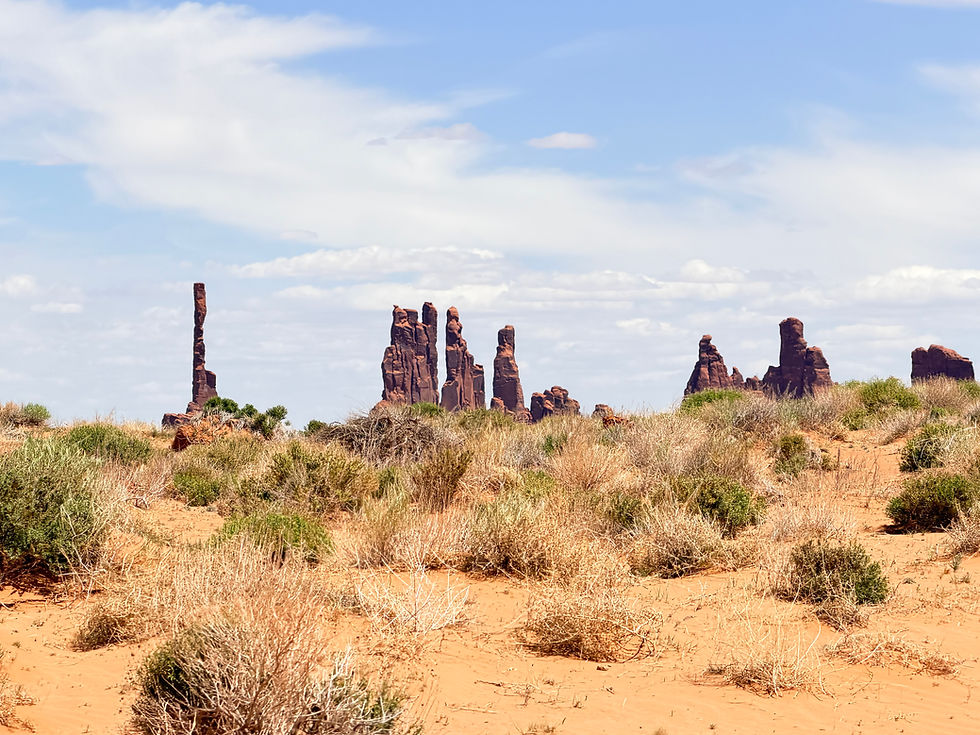
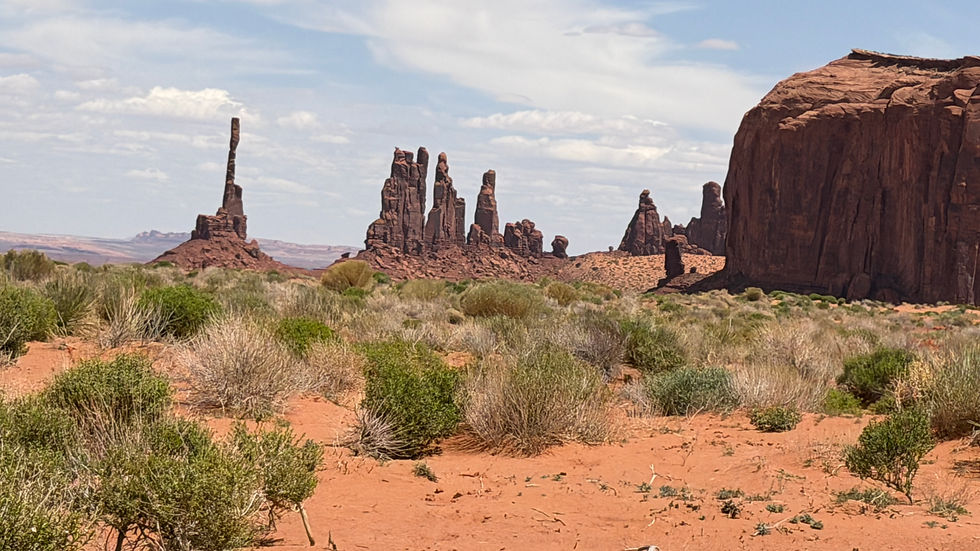
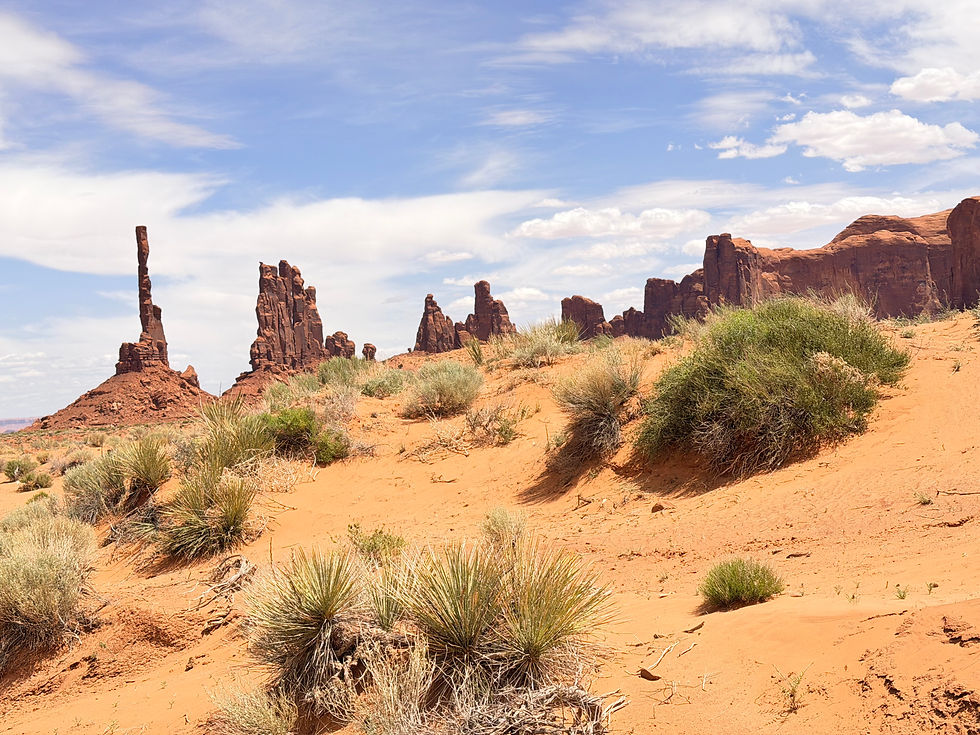
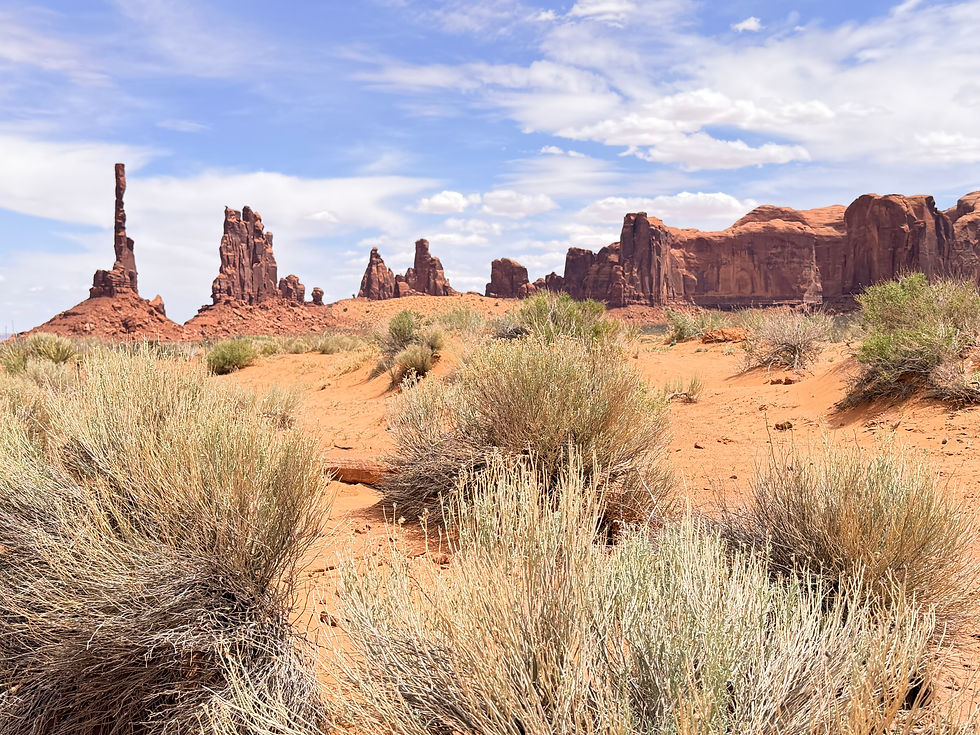
Totem Pole
"The Totem Pole is a pillar or rock spire. It is a highly eroded remnant of a butte. Deserts at the end of the Permian period, 260 million years ago, formed the De Chelly and Wingate Sandstones that make up the buttes, totems, and mesas in Monument Valley."

About The Eiger Sanction
The film is a 1975 action thriller that Eastwood both directed and starred in. It’s famous for its terrifyingly real mountain climbing footage.
The Plot: Eastwood plays Jonathan Hemlock, an art history professor and retired government assassin who is blackmailed into one last "sanction" (hit). He must identify and kill a target while climbing the north face of the Eiger in Switzerland.
Realism over "Papier-Mâché": Eastwood refused to use stunt doubles or studio sets. He famously dangled 1,000 feet in the air and personally cut his safety rope for a key scene—a stunt he later admitted was "psychologically damaging".
Tragedy on Set: The film’s dedication to realism had a dark side. On the second day of shooting in the Swiss Alps, 26-year-old British climber David Knowles was killed by a falling rock. Eastwood almost shut down the movie but decided to finish it in Knowles' honor.
The Music: It remains the only film where Eastwood collaborated with legendary composer John Williams.
It is illegal to climb any of the monuments within Monument Valley, and during the filming of Eiger Sanctions with Clint Eastwood they were allowed to climb the Totem Pole only if they would take down all the cams and pitons from the unsanctioned climbers.
To get permission from the Navajo Council to film on the sacred spire, Eastwood’s production team agreed to a "clean-climb" condition: they had to remove all the metal spikes (pitons) and hardware left by previous climbers.
The climb is considered one of the most remarkable feats in film history, particularly as it was done without modern safety equipment.

Since 1975, the Totem Pole has been strictly off-limits to climbers to preserve its spiritual significance.

Clint Eastwood famously climbed the Totem Pole without a stunt double. Eastwood insisted on doing his own stunts, including the dangerous climb. The climb was a pivotal scene in The Eiger Sanction, a mountain-climbing spy film starring and directed by Eastwood. While Eastwood climbed, his co-star George Kennedy was transported to the top via helicopter.

Eastwood performed his own climbing and was eventually helicoptered to the 18-foot-wide summit alongside co-star George Kennedy to film the final sequence.





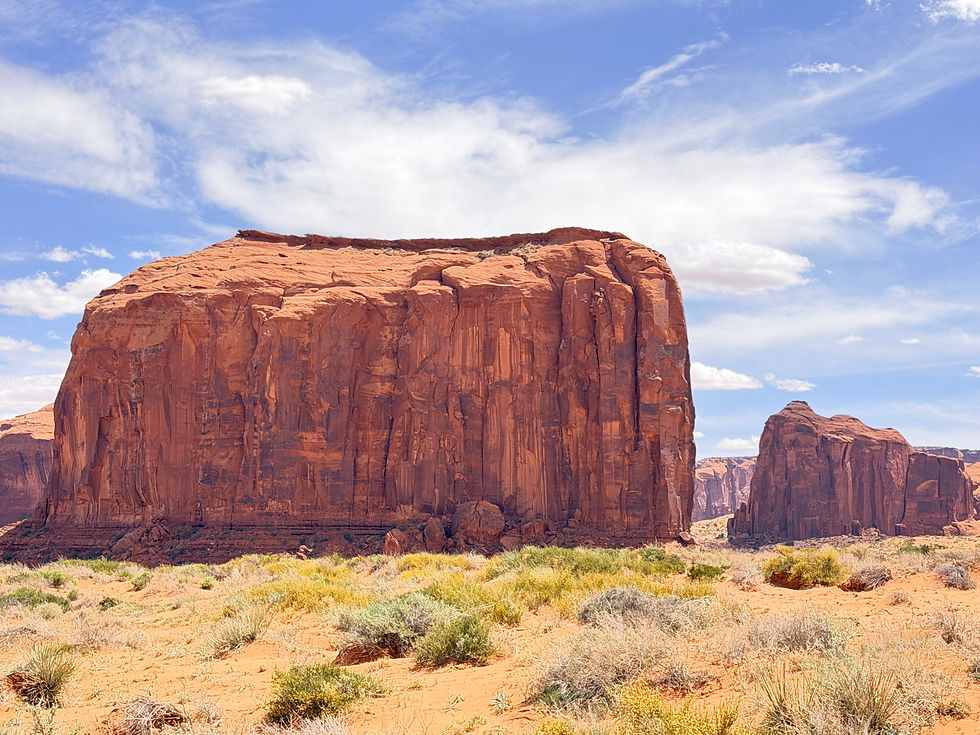


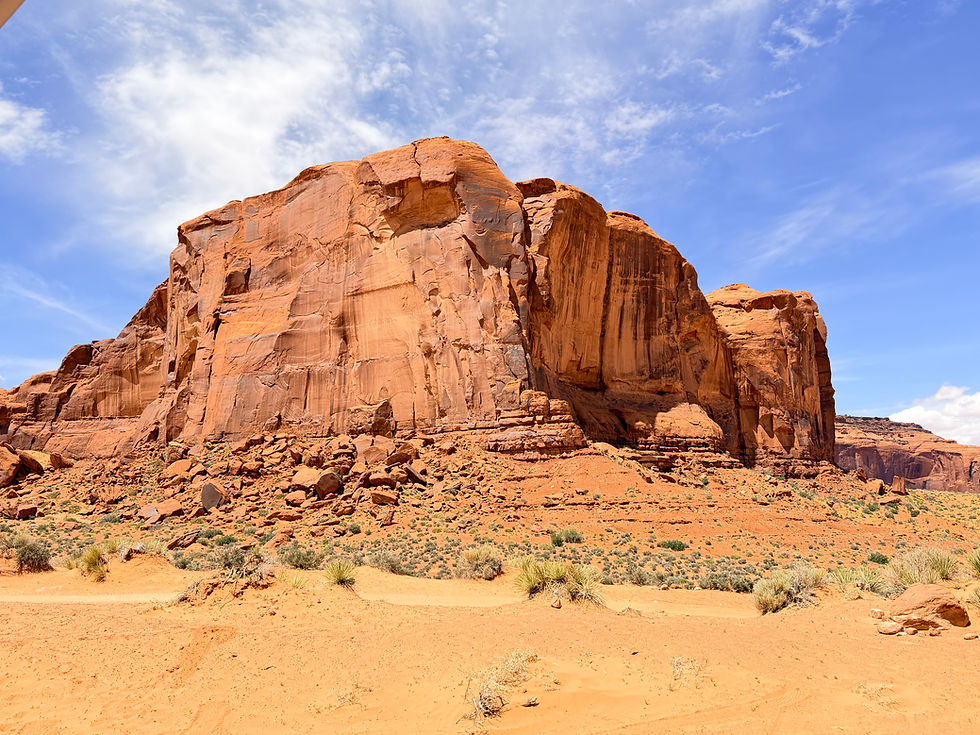


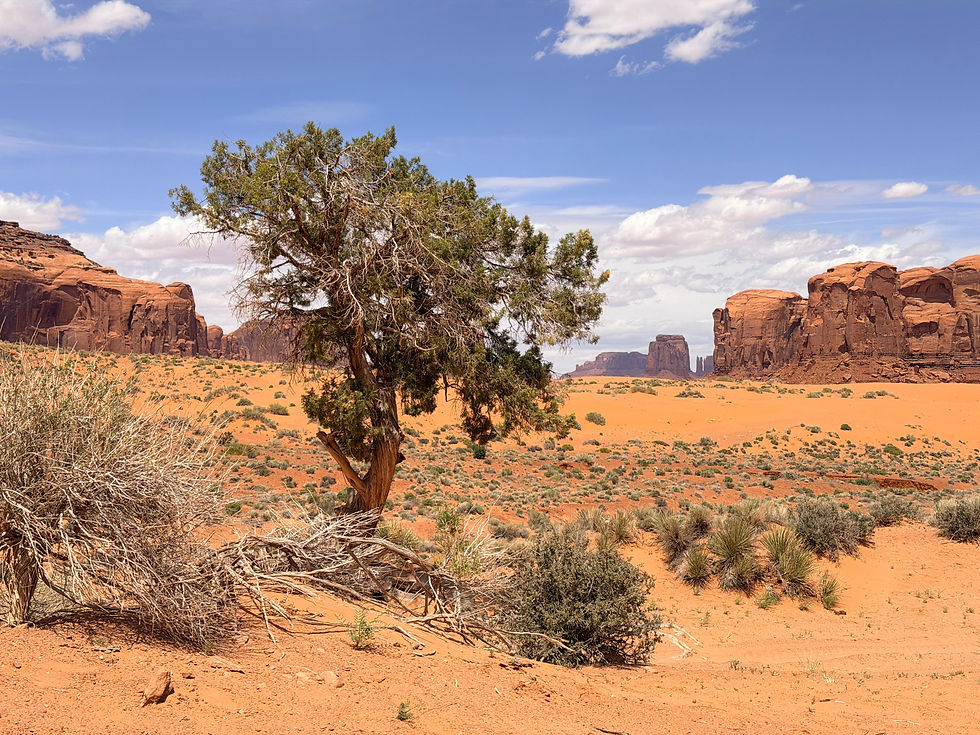


The boot associated with John Wayne
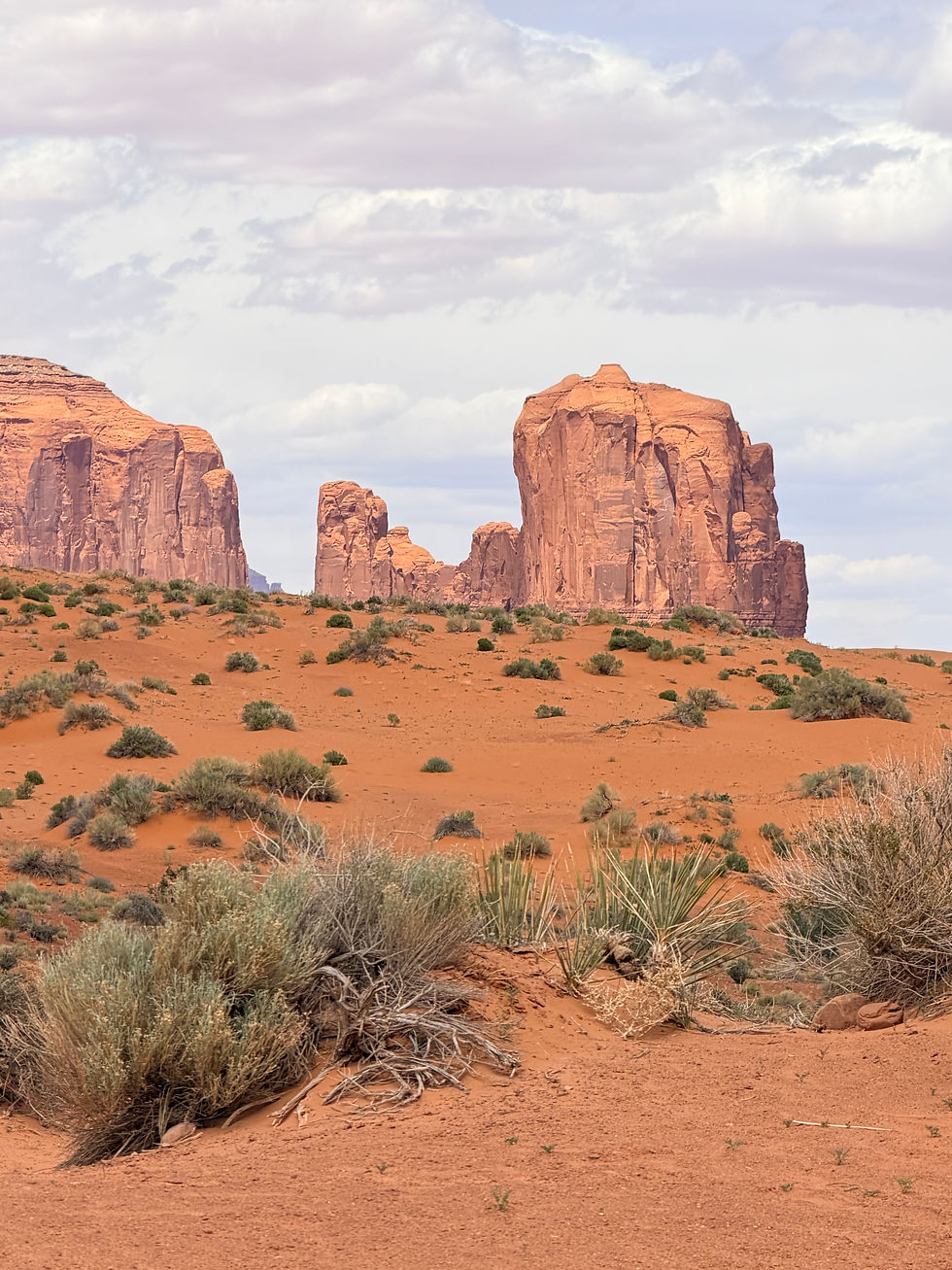


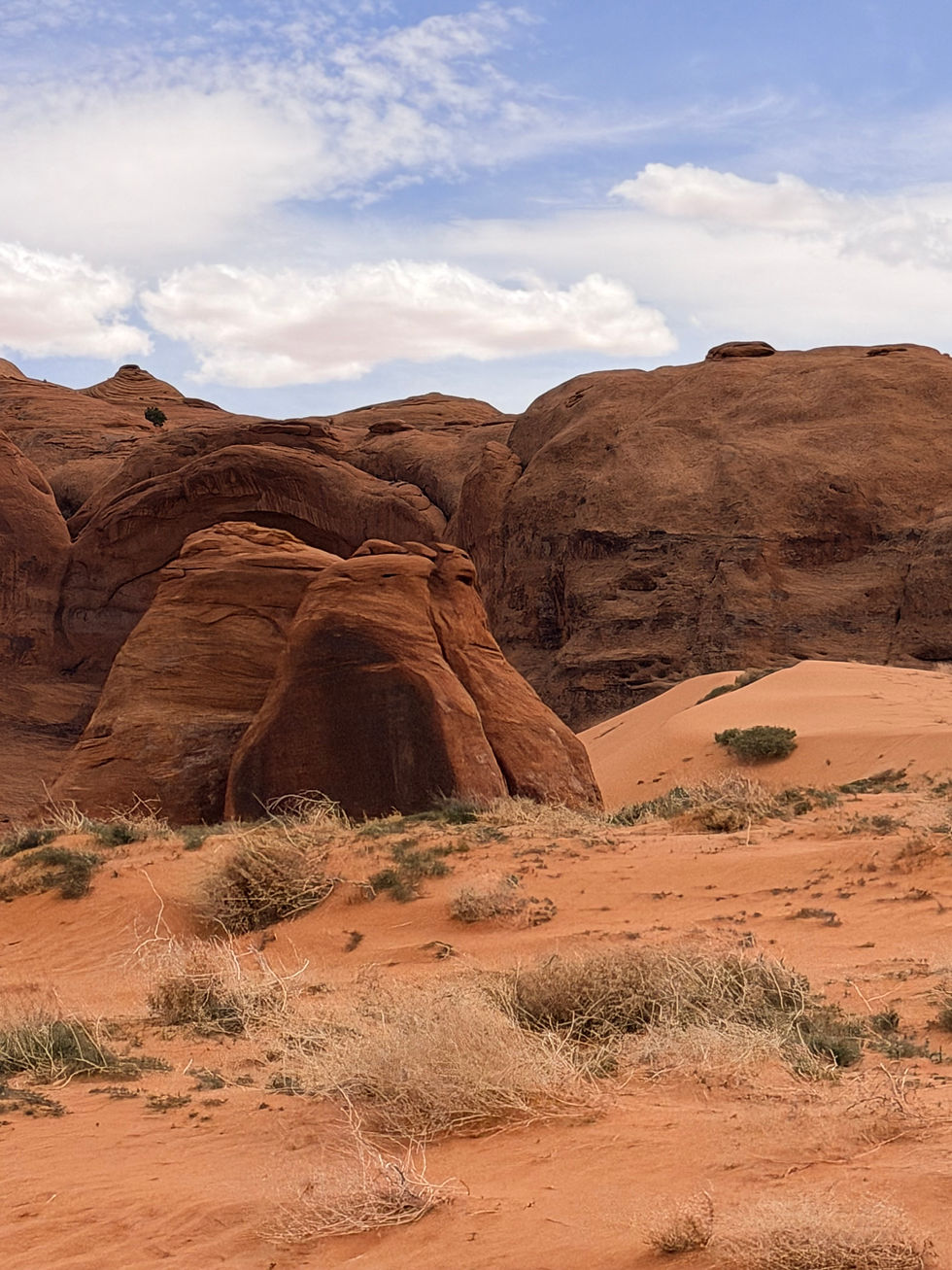

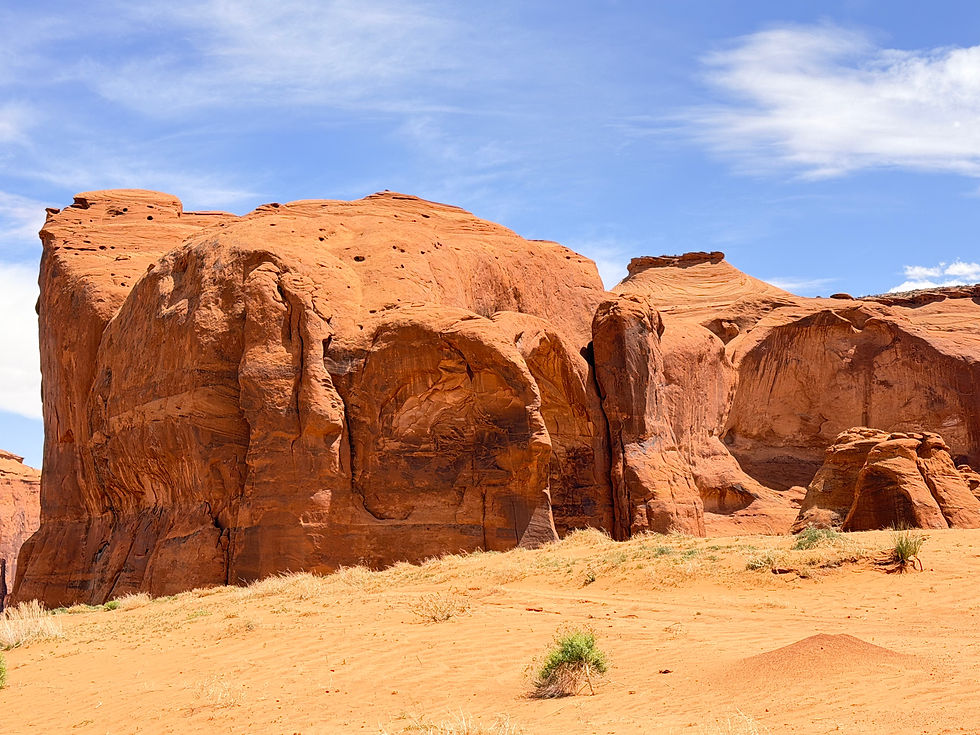
Moccasin Arch is a 30-foot-high natural arch eroded in DeChelly sandstone.


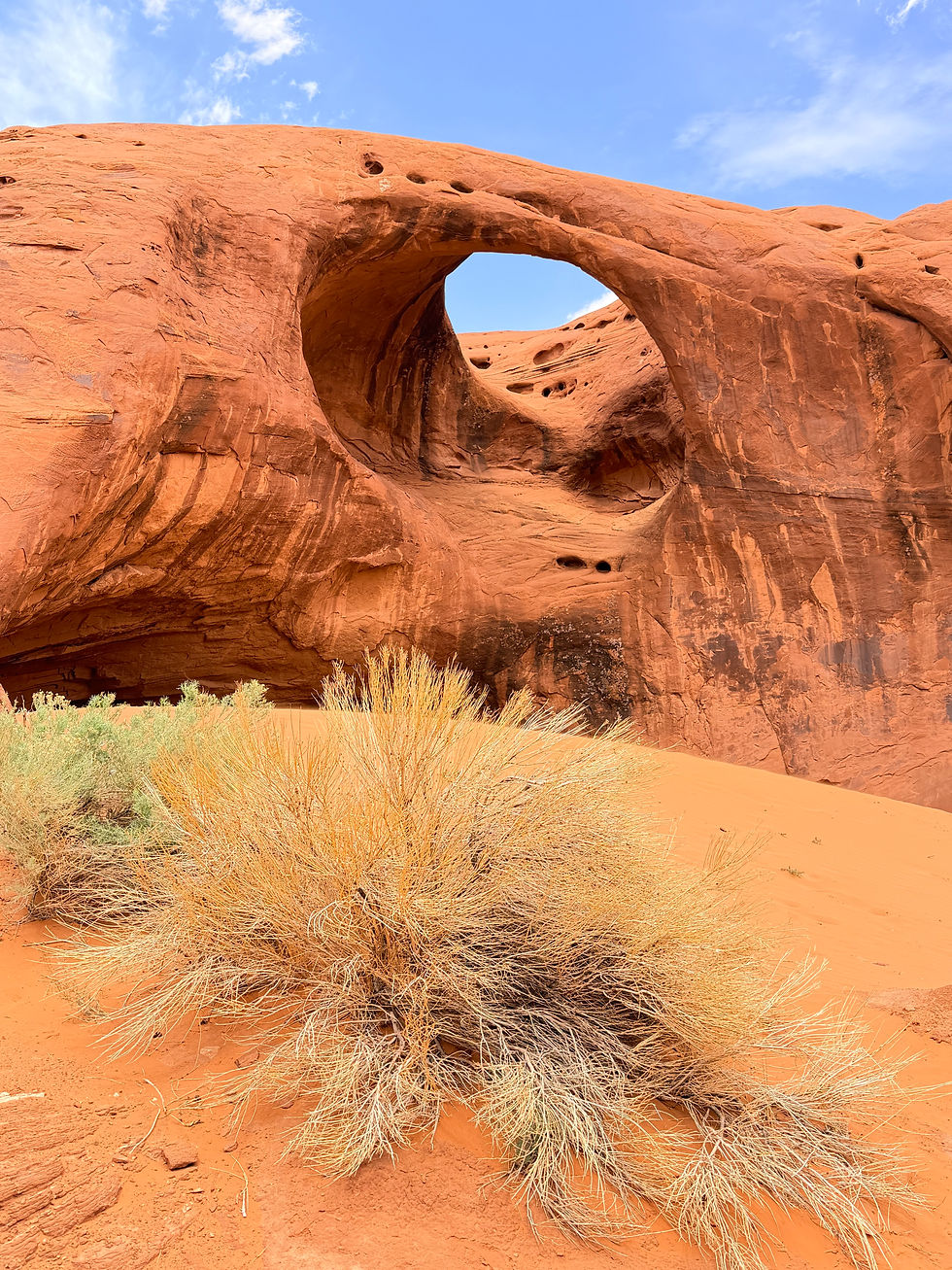


Named for its resemblance to a moccasin, this arch is a testament to the power of wind and erosion.


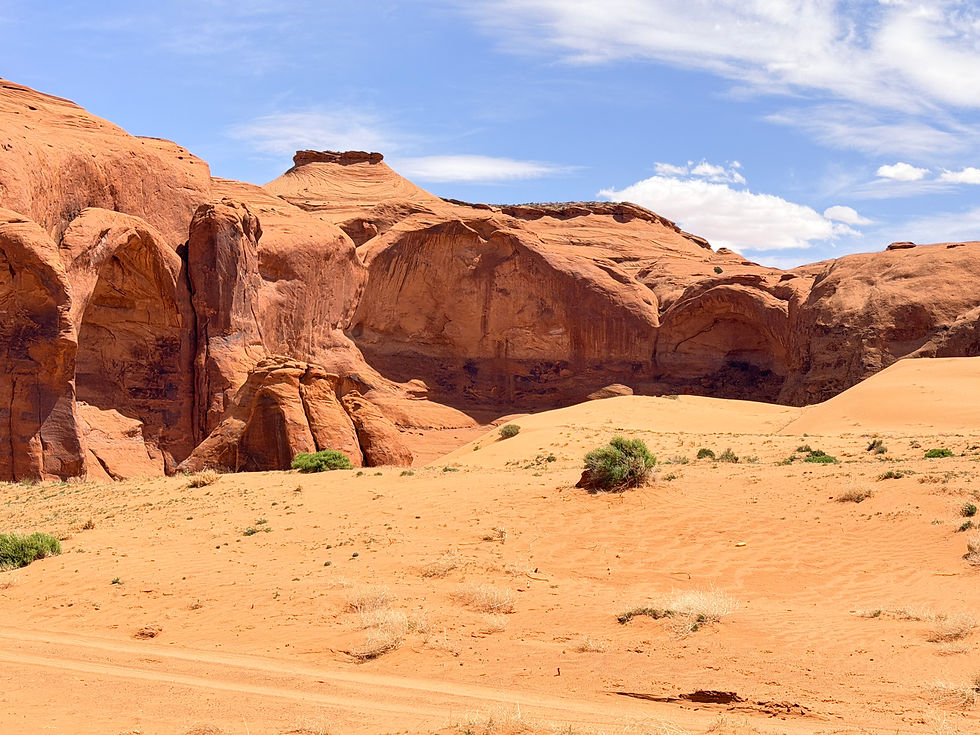
The Big Hogan, a vast alcove, is famous for the large amphitheater that it makes some guides like to sing, play drums or flute here.
The Big Hogan is a cave natural arch eroded in de Chelly sandstone, so named because it resembles the appearance of the inside of a hogan....a Navajo dwelling.

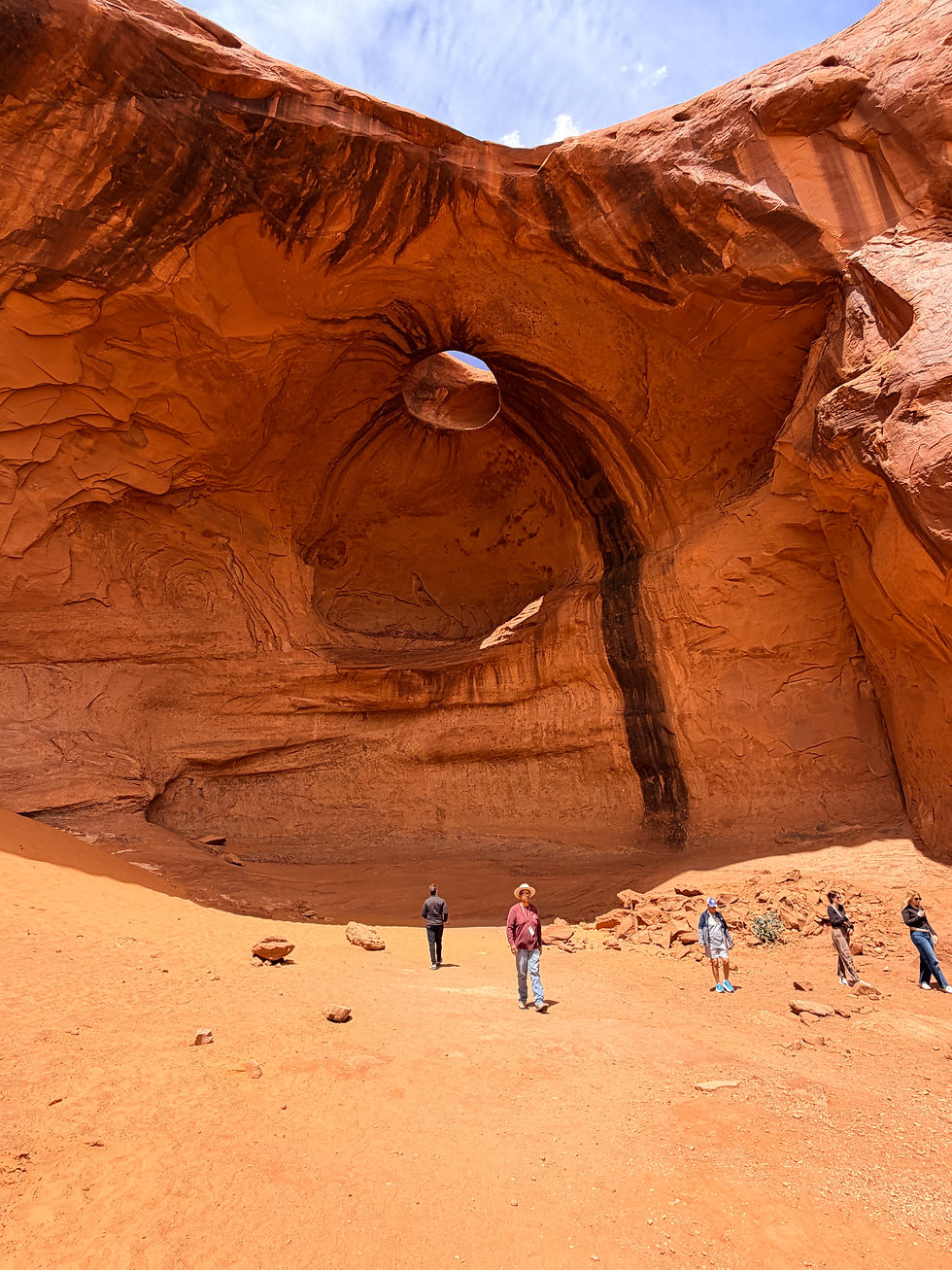

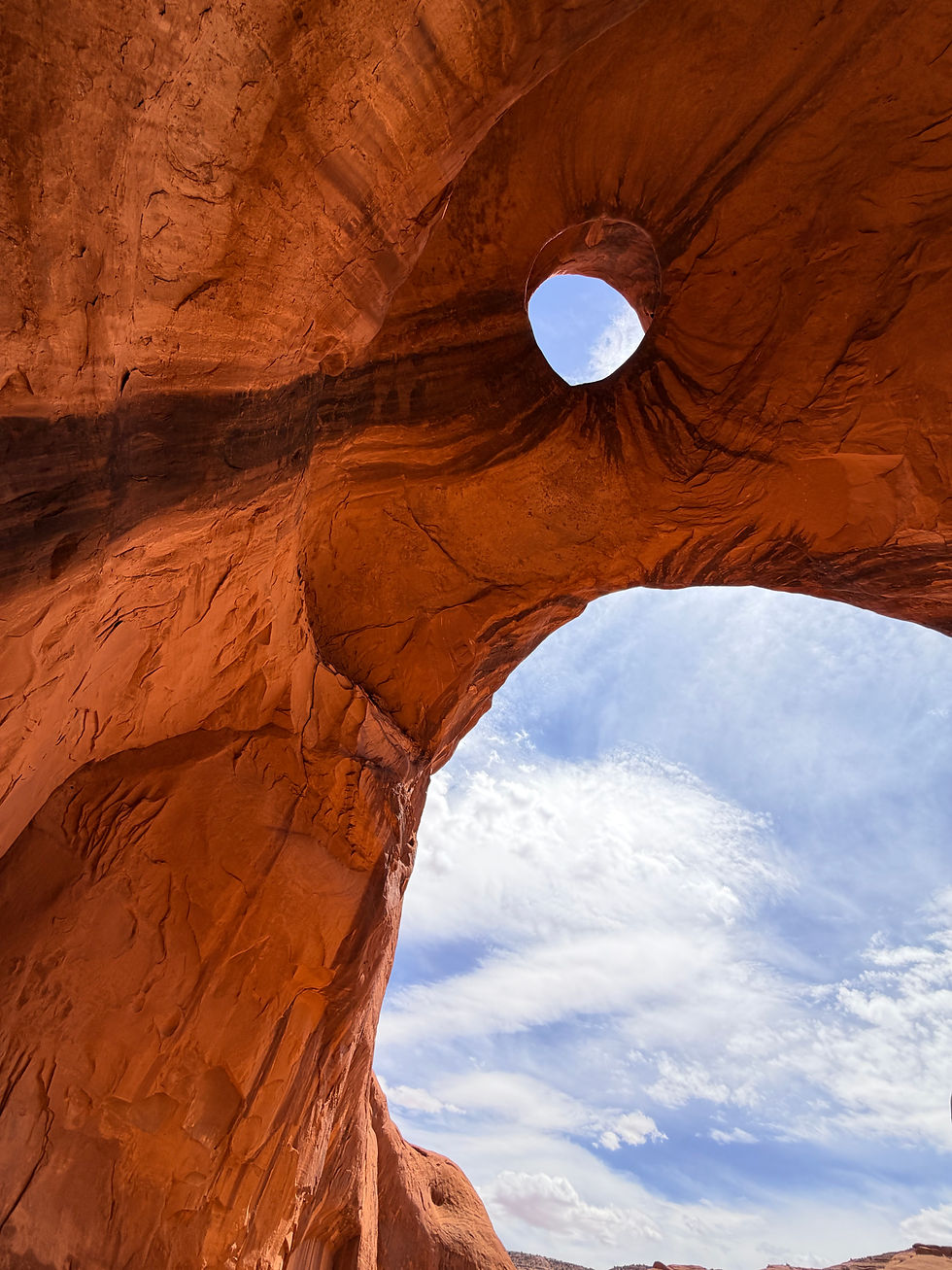
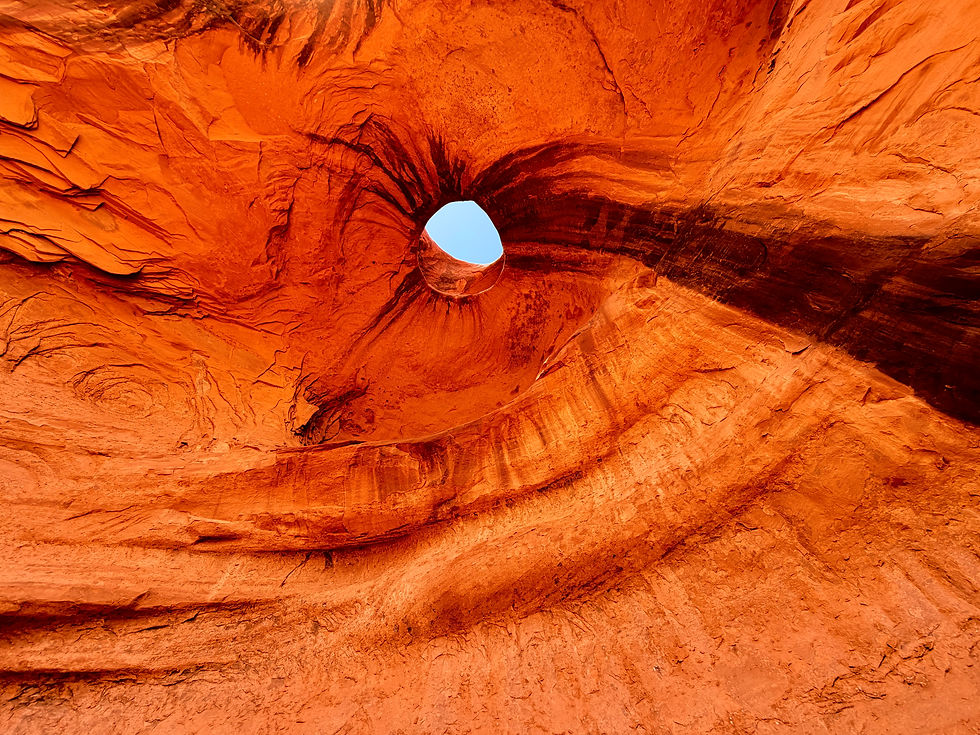


The acoustics are excellent and the setting is spectacular!
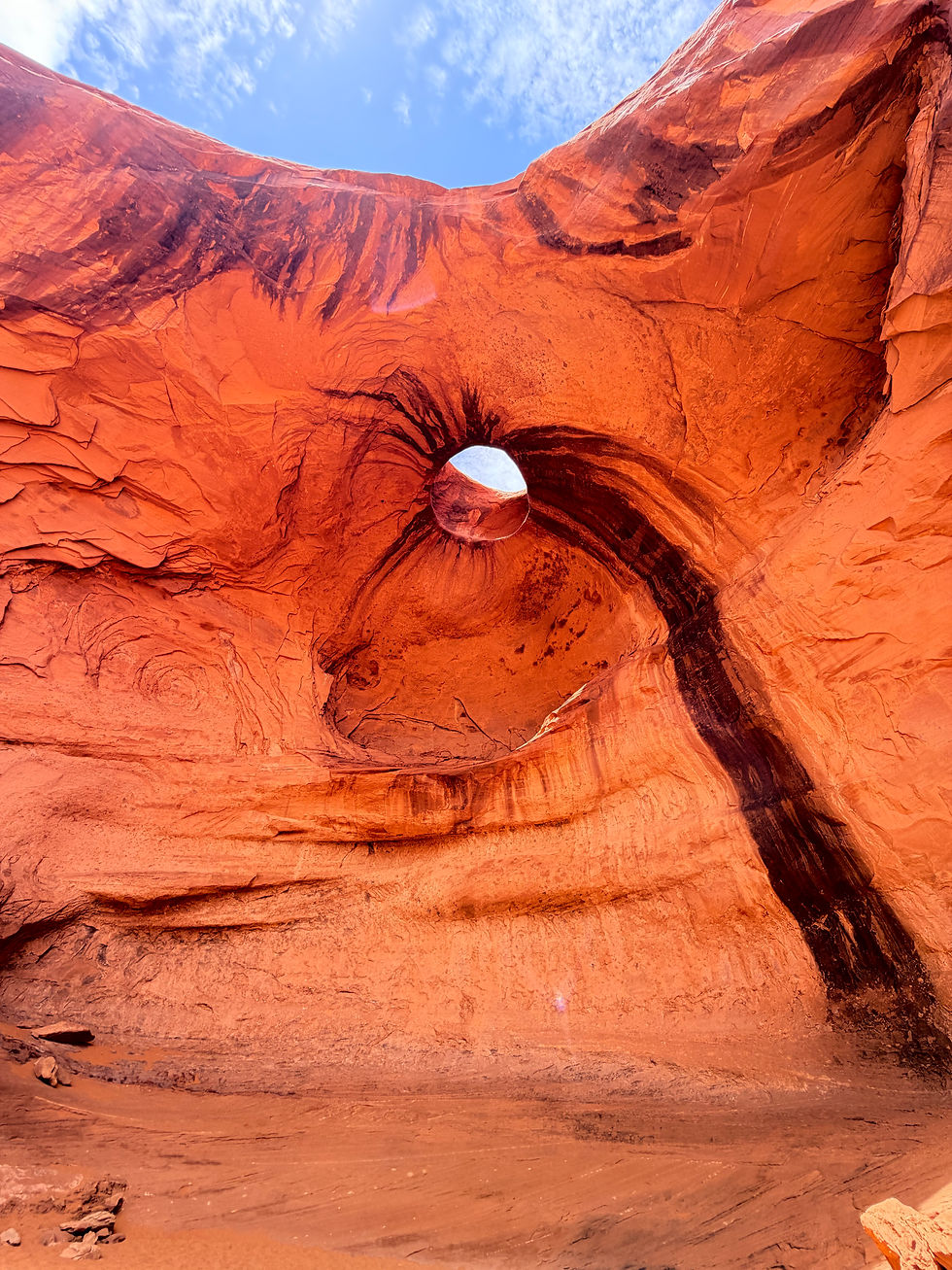


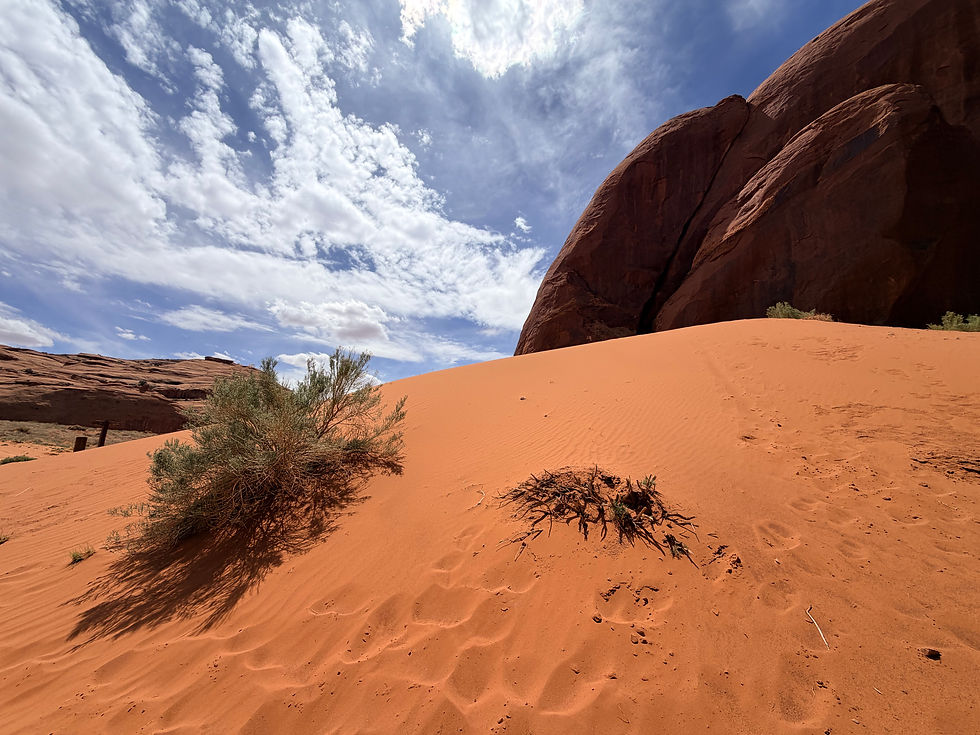
Many sand dunes


The Sun's Eye is a perfect, elliptical opening carved by time and wind, high above in the rock face.
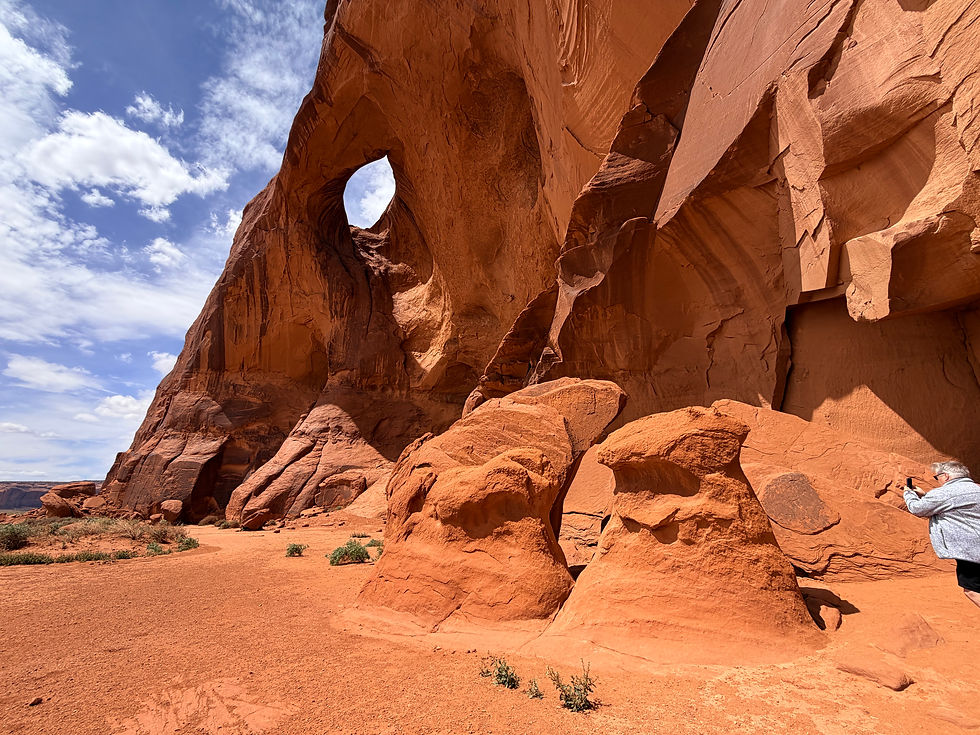


So many faces in these rock formations


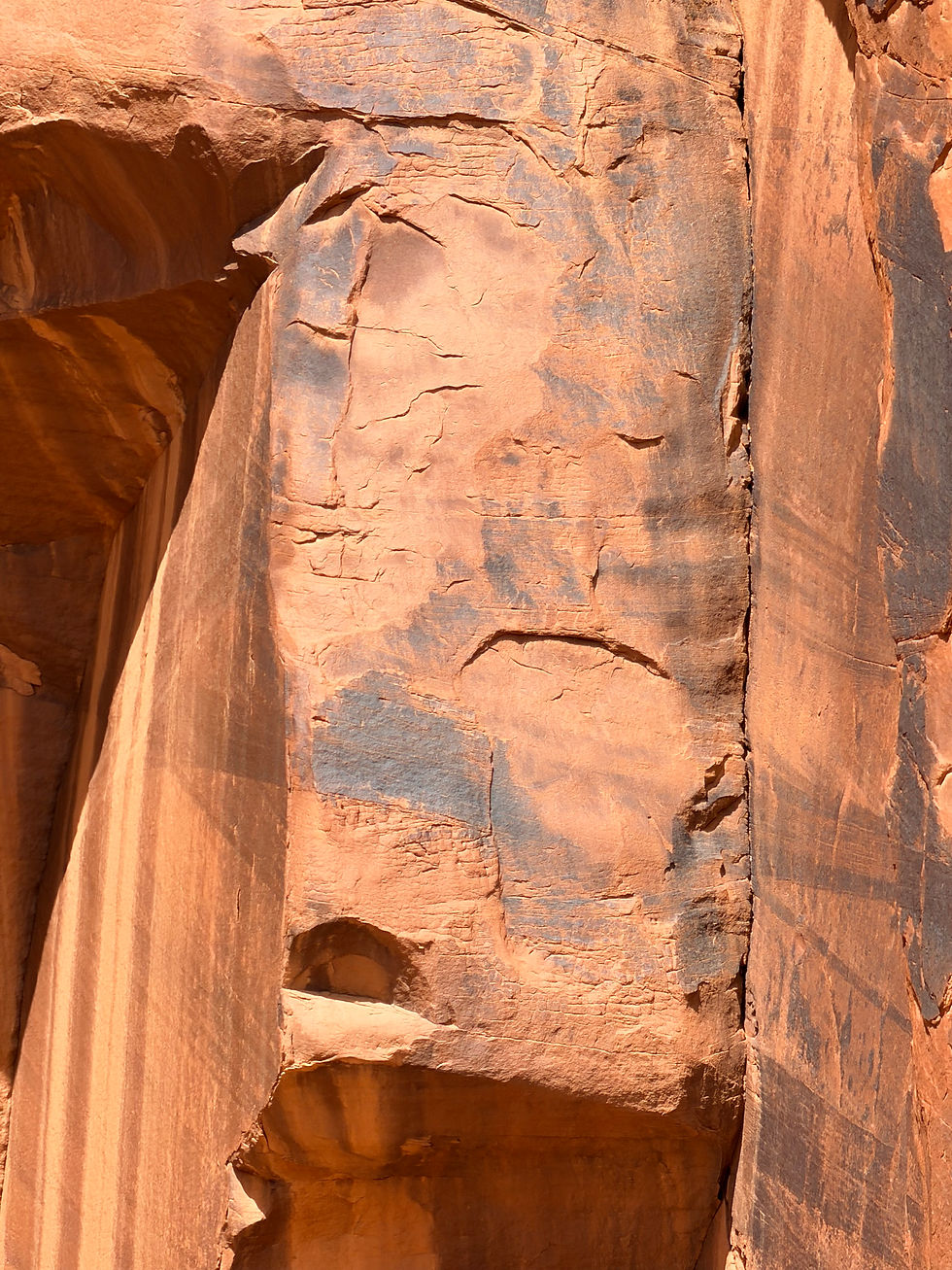

Can you spot the petroglyphs? They were primarily created by the Ancestral Puebloan (Anasazi) people. These ancient rock carvings are found throughout the tribal park, especially near Sun’s Eye Arch.


Sun’s Eye Arch Panel, also known as the "Flying Sheep Panel," features petroglyphs at the base of a tall cliff, showcasing figures often interpreted as bighorn sheep.

These panels feature bighorn sheep and geometric shapes.


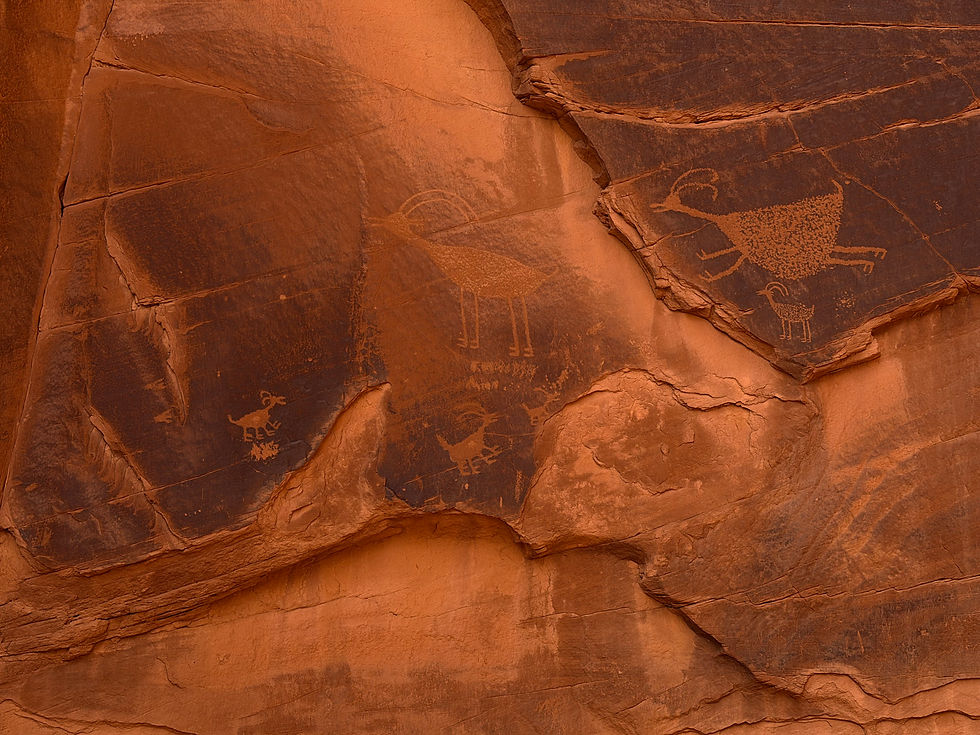
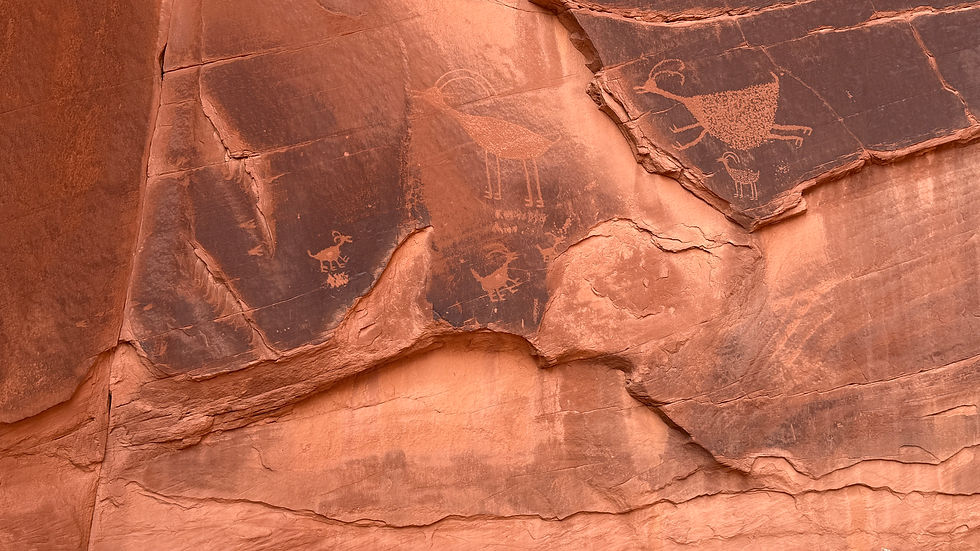
Rain is expected tomorrow and our guide said this whole area will be flooded. Yikes!


Our last stop was at Ear of the Wind
This landmark is venerated by the Navajo and seemingly buttressed here by the limbs of an old cedar tree. This location has heard many memorable tales.


Ear of the Wind is a 134 foot tall arch and one of Monument Valley’s most elegant natural arches—an enormous wind-carved opening framed by towering sandstone walls.
Ear of the Wind lies in a quieter, more secluded area. More sandstone formations can be seen through the archway.


Clouds have rolled in so there won't be any gorgeous sunset pictures tonight. At least we had a beautiful day exploring and photographing this unique, magical, and spiritual area. Rain is needed in this area but I hope it holds off until after we leave tomorrow.


Debbie.
All beautiful stories, photoes and the last video with you guys' voice are feeling like I am there with you.
How nice♡
I love to hear Forest Gump story a lot.^^
Take care & Miss you