
Secret Garden


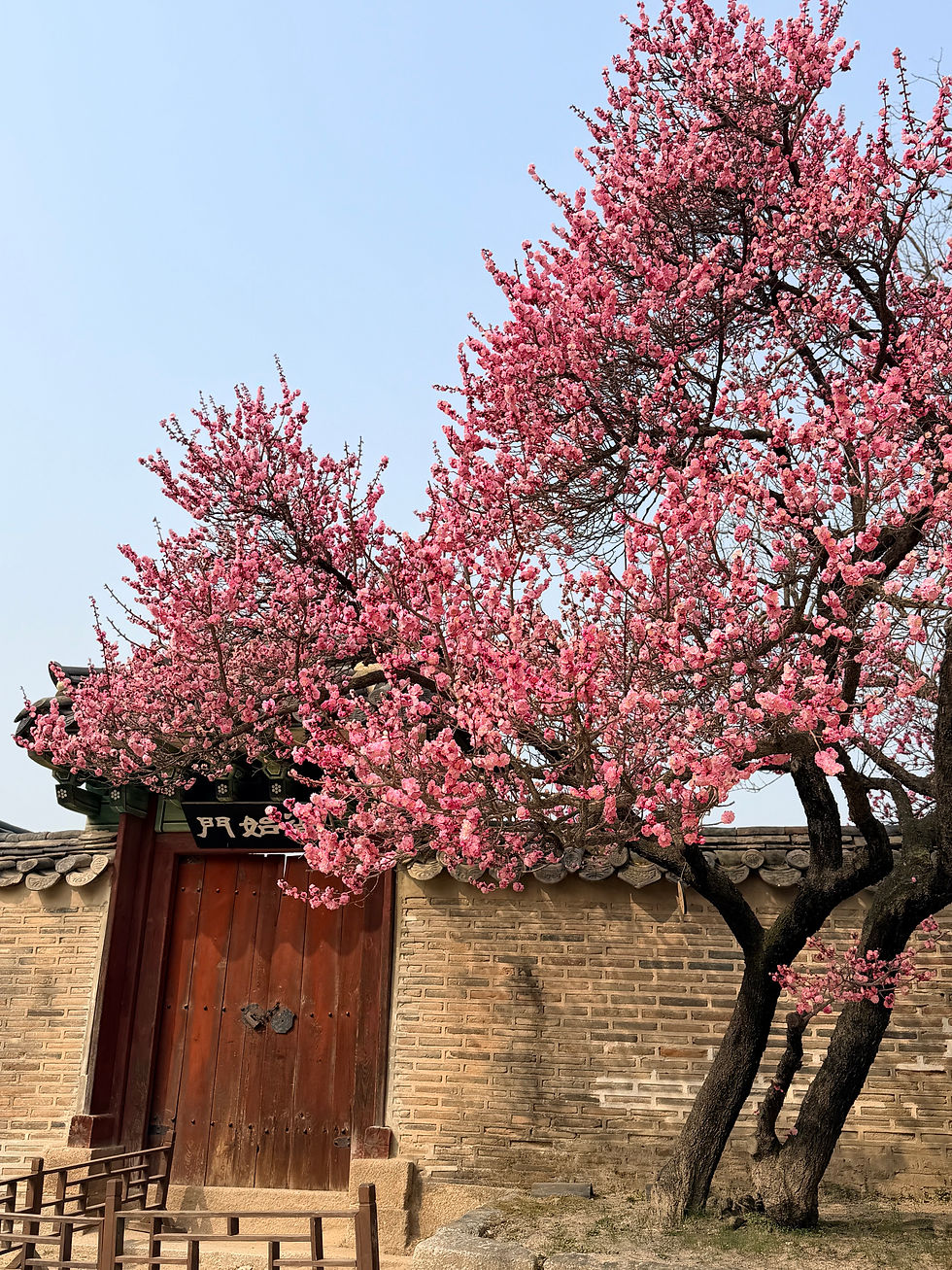

Royal Prince's residence


Changdeokgung Palace Complex
In the early 15th century, King Taejong ordered the construction of a new palace at an auspicious site. A Bureau of Palace Construction was set up to create the complex, consisting of a number of official and residential buildings set in a garden that was cleverly adapted to the uneven topography of the 58-ha site. The result is an exceptional example of Far Eastern palace architecture and design, blending harmoniously with the surrounding landscape."


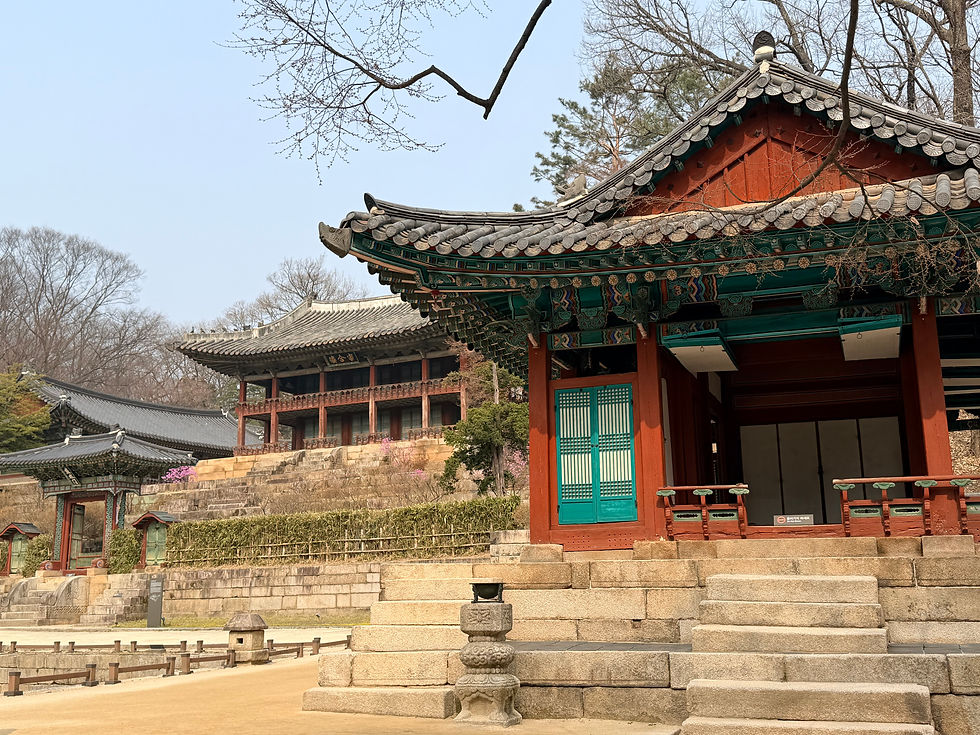


Eternal Life


Magnolia


The library


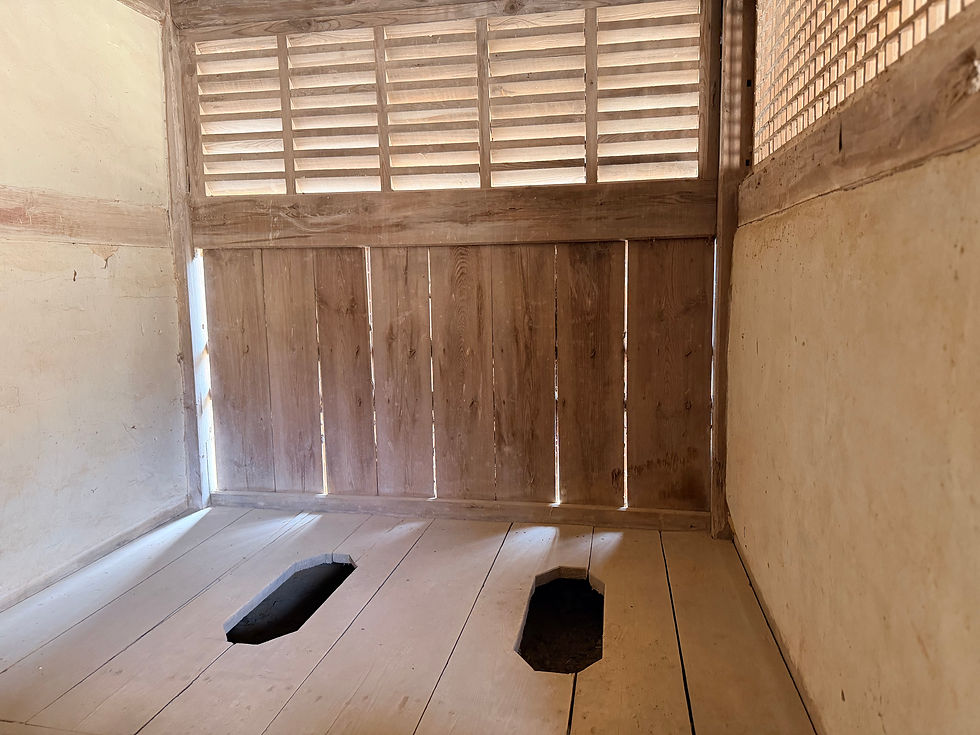
The Royal Outhouse
"Constructed in the 15th century during the Joseon Dynasty, the Changdeokgung Palace Complex occupies a 57.9 ha site in Jongno-gu, in northern Seoul at the foot of Ungbong Peak of Mount Baegaksan, the main geomantic (geomantic refers to the practice of divination or interpreting land topography to predict events, often involving the analysis of earth patterns, lines, or geological features) guardian mountain."


"Changdeokgung is an exceptional example of official and residential buildings that were integrated into and harmonized with their natural setting. The complex was originally built as a secondary palace to the main palace of Gyeongbokgung, differentiated from it in its purpose and spatial layout within the capital. Situated at the foot of a mountain range, it was designed to embrace the topography in accordance with pungsu principles, by placing the palace structures to the south and incorporating an extensive rear garden to the north called Biwon, the Secret Garden. Adaptation to the natural terrain distinguished Changdeokgung from conventional palace architecture."


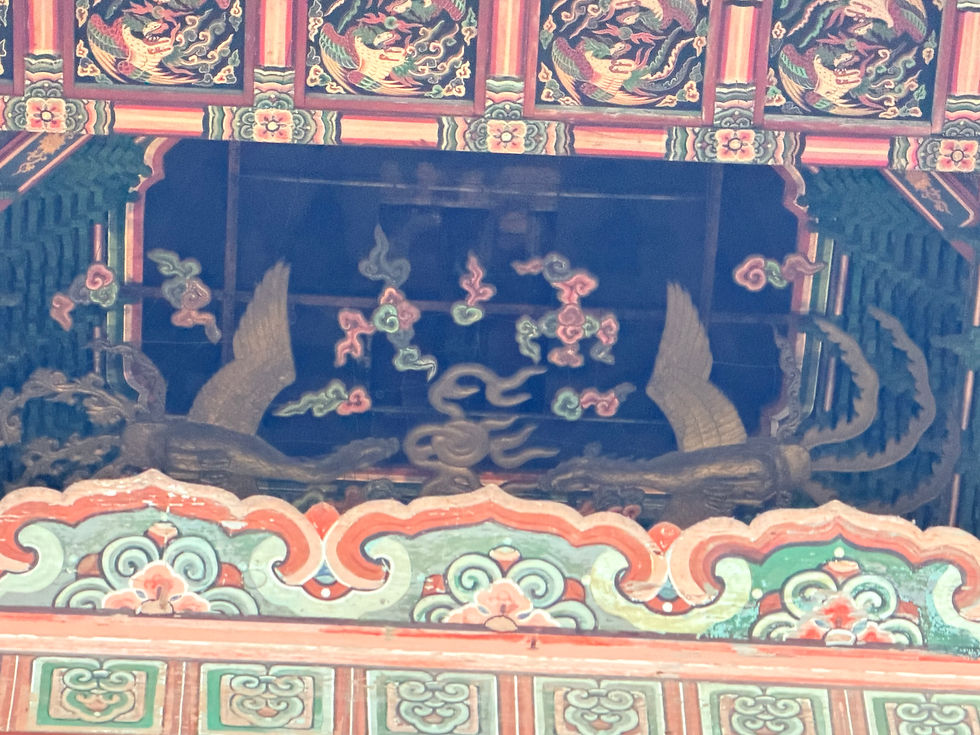
The Phoenix instead of the dragon for the king.


"The official and residential buildings that make up the complex were designed in accordance with traditional palace layout principles. The buildings and structures include three gates and three courts (an administrative court, royal residential court and official audience court), with the residential area to rear of the administrative area reflecting the principles of ‘sammun samjo (三門三朝)’ and ‘jeonjo huchim (前朝後寢)’. The buildings are constructed of wood and set on stone platforms, and many feature tiled hipped roofs with a corbelled (corbelled refers to an architectural technique where stones, bricks, or wood are stacked, with each successive layer projecting slightly beyond the one below, to support weight, form arches, or create domed roofs. This ancient construction method, known as corbelling, is used to span spaces by projecting masonry inward until a gap is closed) multi-bracket system and ornamental carvings."
"The garden was landscaped with a series of terraces planted with lawns, flowering trees, flowers, a lotus pool and pavilions set against a wooded background. There are over 56,000 specimens of various species of trees and plants in the garden, including walnut, white oak, zelkova, plum, maple, chestnut, hornbeam, yew, gingko, and pine."
"Changdeokgung was used as the secondary palace to Gyeongbokgung for 200 years, but after the palaces were burnt down during the Japanese invasion in the late 16th century, it was the first to be reconstructed and since then served as the main seat of the dynasty for 250 years. The property had a great influence on the development of Korean architecture, garden and landscape planning, and related arts, for many centuries. It reflects sophisticated architectural values, harmonized with beautiful surroundings."
"Criterion (ii): Changdeokgung had a great influence on the development of Korean architecture, garden design and landscape planning, and related arts for many centuries."
"Criterion (iii): Changdeokgung exemplifies the traditional pungsu principles and Confucianism through its architecture and landscape. The site selection and setting of the palace were based upon pungsu principles, whilst the buildings were laid out both functionally and symbolically in accordance to Confucian ideology that together portrays the Joseon Dynasty’s unique outlook on the world. "
"Criterion (iv): Changdeokgung is an outstanding example of East Asian palace architecture and garden design, exceptional for the way in which the buildings are integrated into and harmonized with the natural setting, adapting to the topography and retaining indigenous tree cover."
Integrity
"Changdeokgung incorporates all key components required in Korean palace architecture and conforms to Confucian principles and protocols in its spatial layout, arrangement of buildings, gardens and forested mountain landscape at the rear of the palace. All the palace components are still intact, including the Oejo, the royal court of the dynasty; Chijo, the administrative quarters of the palace; Chimjo, the residence of the royal family; and the garden intended for the king’s leisure. The entire architectural complex and natural setting of Changdeokgung are included within the boundaries of the property."
"The principal threat to the physical integrity of the buildings is fire. The wooden structures have been destroyed by fire on successive occasions throughout their history."
Authenticity
"The buildings of Changdeokgung Palace Complex were destroyed by fire and have undergone successive reconstructions, and some additions were made to the complex in the centuries following its construction. However, when judged against the philosophy and practices that are standard in Asia, the complex has a high level of authenticity. The buildings and natural elements of the rear garden have sustained their original forms, which generally date from the latter part of the Joseon Dynasty, and their relationship with the natural terrain and landscape. Most recently, work has been undertaken to reverse the changes made during the Japanese occupation during the early 20th century. This work is being carried out using traditional methods and materials, and is based on historical evidence and research."
Protection and management requirements
"The entire area of the Changdeokgung Palace Complex, including the individual buildings and plantings within the complex, has been designated as a State-designated Cultural Heritage under the Cultural Heritage Protection Act. In addition, a number of the buildings of the complex have been designated as National Treasures or Treasures (Injeongjon Hall, Injeongmun Gate, Seonjeongjeon Hall, Huijeongdang Hall, Daejojeon Hall, Old Seonwonjeon Shrine and Donhwamun Gate) or as Natural Monuments (the Chinese juniper tree and the Actinidia arguta plum tree). These designations impose strict control over any alterations to the property."
"The area extending 100 m from the boundary of the Changdeokgung Palace Complex has been designated as a Historic Cultural Environment Protection Area under the Cultural Heritage Protection Act, and all construction work and alterations within the area require the authorization of the Cultural Heritage Administration through the Jongno-gu district office. The Rear Garden of Changdeokgung has been designated as an Ecological Scenery Conservation Area under the Natural Environment Conservation Act."
"At the national level, the Cultural Heritage Administration (CHA) is responsible for establishing and enforcing policies for the protection and management of Changdeokgung, and for allocating financial resources for its conservation. The Changdeokgung Management Office, with approximately 40 employees, is in charge of day-to-day management. Regular day-to-day monitoring is carried out and in-depth professional monitoring is conducted on a 3-to-4 year basis."
"The area around Changdeokgung is managed co-operatively by the Urban Planning Division, Traffic Policy Division and Cultural Heritage Division of the Seoul Metropolitan Government. Seoul City‘s Basic Scenery Plan and District Unit Plan for the areas surrounding Changdeokgung, which are periodically revised and updated, provide the framework for management and work planning in the buffer zone."
"Conservation works in Changdeokgung are conducted by Cultural Heritage Conservation Specialists who have passed the National Certification Exams in their individual fields of expertise. The CHA is implementing the Integrated Security System Establishment Plan for the 5 Palaces and Jongmyo, in place since 2009, in preparation for accidents and/or disasters that could impair the integrity of the property."
We had already taken 7,283 steps before lunch.
Lunch at a dumpling restaurant.


While waiting in line, we watched the ladies make the dumplings

Quite the machine to seal the dumplings.
"Set inside a converted traditional hanok, this restaurant is built around its signature gaeseong-style dumplings, a recipe passed down from the owner’s grandmother. The dough, fermented for three hours, yields wrappers with a pleasantly elastic texture and a subtle wheat aroma, while the filling—pork blended with generous vegetables—offers a clean, harmonious flavor. The clear, milky broth is simmered for eight hours with beef and ten kinds of fresh vegetables, resulting in a naturally savory depth without heavy seasoning. The accompanying mul-kimchi and kkakdugi pair beautifully with the dumplings, completing a balanced and quietly refined meal."


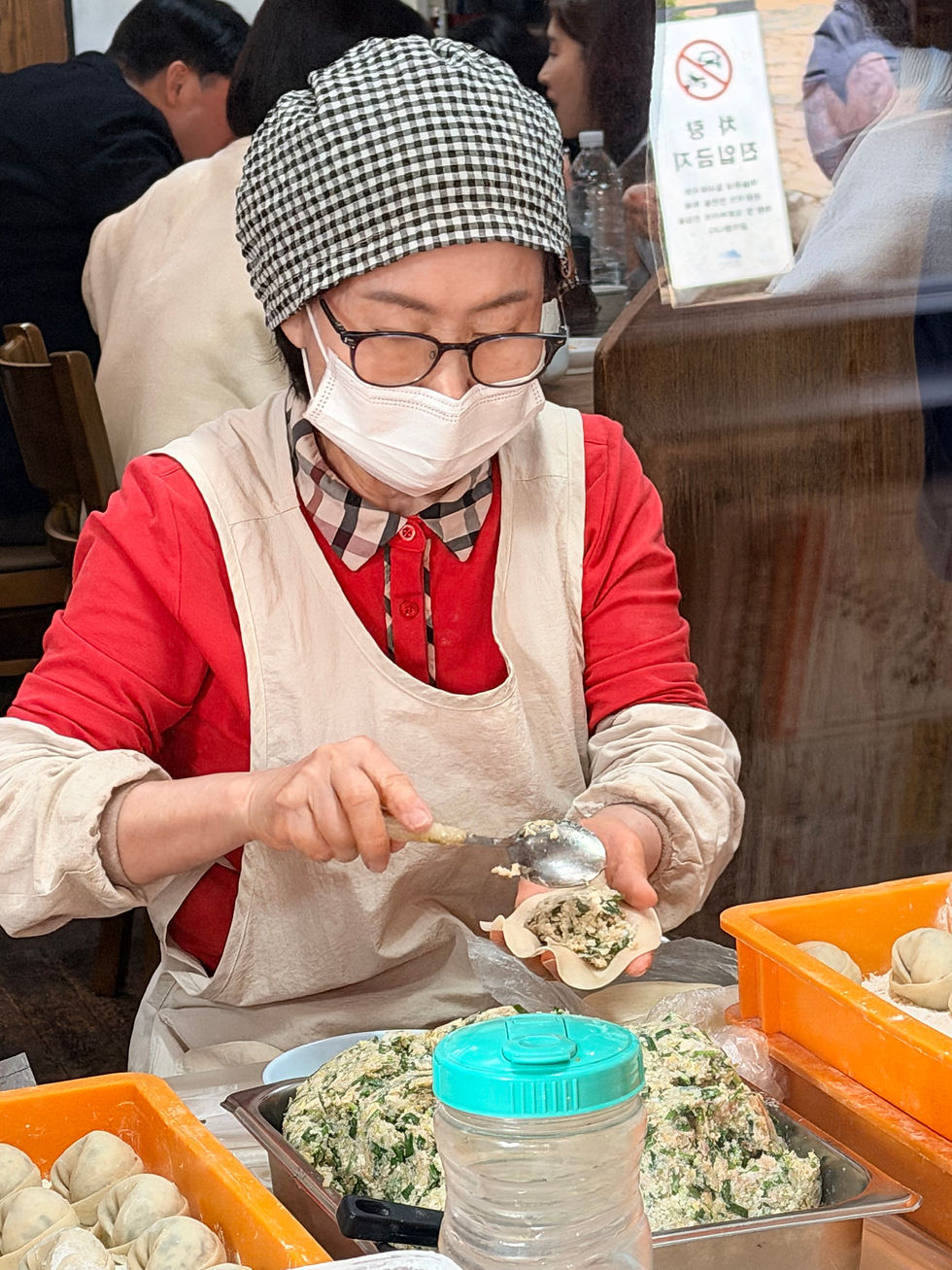


So delicious! So filling! Scrumptious!


Across the alley is another quaint eating place.


Jingwansa Temple
"Jingwansa Temple is one of the four Buddhist temples that surround Seoul. It was known as the center of Buddhism and academics. Jingwansa Temple is home to a variety of buildings, such as Daeungjeon Hall, Myeongbujeon Hall, and Nahanjeon Hall, all surrounded by the beautiful nature of Bukhansan Mountain. In fact, the temple complex is a popular fall destination for its fall colors."


Jingwansa Temple is in Bukhansan National Park.


The tea is made from 9 different herbs.

Seeds and nuts floated on top.

Used to sweeten the tea

Cookie with baked tofu on the inside and covered in seeds.


Yes, we took off our shoes and put on slippers to use the bathroom.

Jars filled with bean paste used in cooking.


"Jingwansa was established in 1011 to repay the Buddhist priest Jingwan for saving the life of King Hyeon-jong, the 8th king of the Goryeo Dynasty, when he was young. When Hyeon-jong was twelve, he was kicked out of the palace during a power struggle and monk Jingwan took him in, thereby saving his life. After Hyeon-jong once again took his place in the palace and became king he had this temple built for Jingwan and put it under the special protection of the Goryeo royal family."


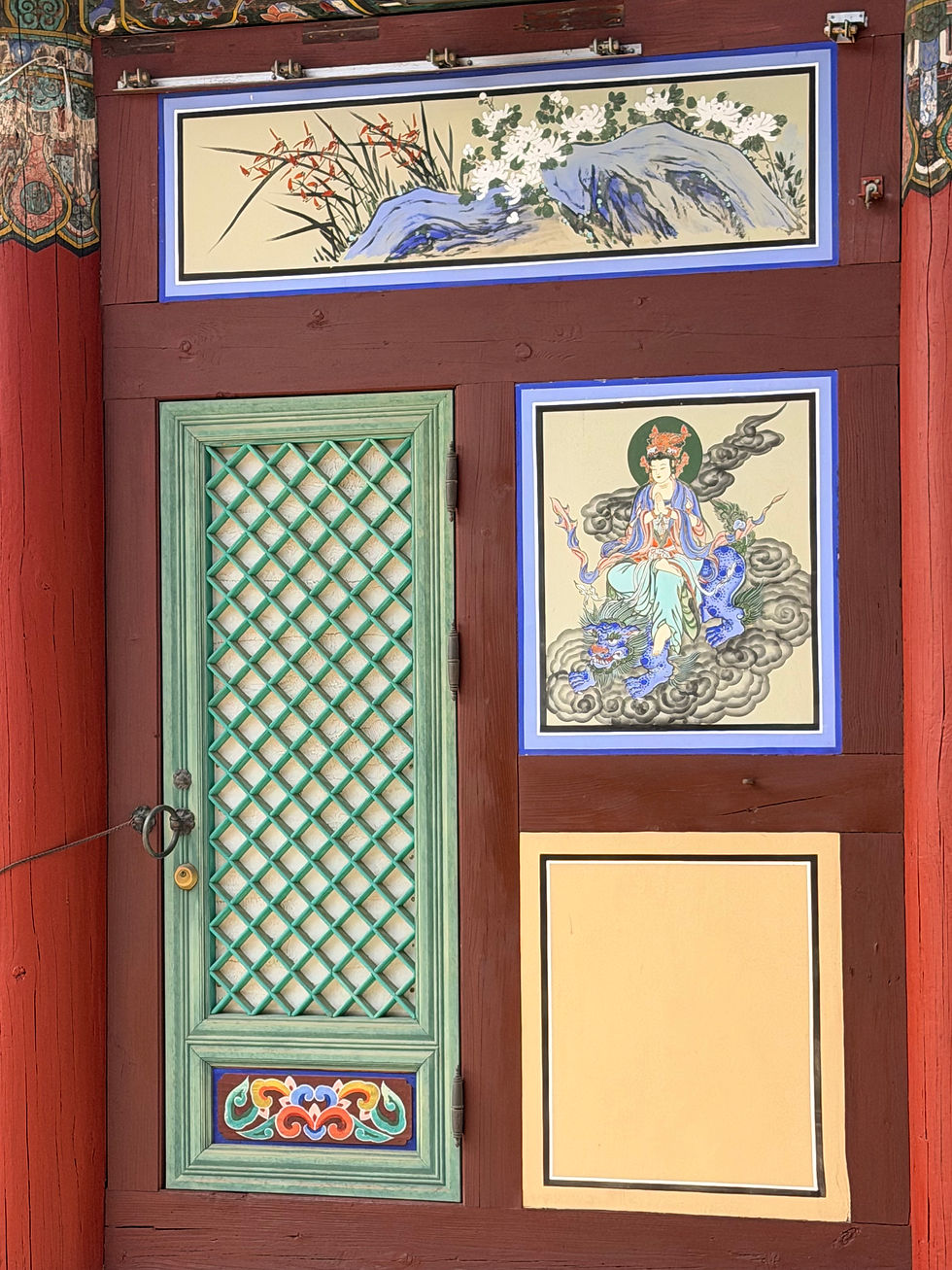


Constructed in 1907, Chilseonggak Hall enshrines the deity Chilseongsin, a significant figure in Korean Buddhist folklore and believed to be the god of fortune and protector against calamities. During the early 20th century, Chilseonggak Hall underwent renovations. Despite being damaged during the Korean War, the hall was one of the few structures to survive the conflict.


"Chilseonggak Hall houses a Buddhist altar situated close to the rear wall, a seated stone Buddha statue (Seoul Cultural Property Material No. 10), and a Buddhist painting (Seoul Tangible Cultural Property No. 147). The painting depicts Vairocana Buddha (Chiseonggwang Yeorae), considered to be a central figure in many East Asian Buddhist traditions. The painting also depicts Chilseongsin and other sage kings."
"Restoration work on Chilseonggak Hall in 2008 led to the discovery of an old Taegeukgi (Korean national flag) and anti-Japanese newspapers. This discovery revealed that the temple was a base for the Korean Independence Movement during Japanese colonial rule (1910-1945)."
"The construction of Dokseongjeon Hall in 1907 was made possible with the help of four court ladies and two civilian couples. They provided the funding for the project while construction was carried out by a skilled monks."
"Dokseongjeon Hall enshrined Dokseong, also known as Naban jonja. Dokseong was an arhat who became a monk to save the public right after Sakyamuni’s entry into Nirvana. Dokseong is a figure in Korean Buddhism who embodies the ideal of detachment and solitary practice. He is often depicted as a Daoist-style hermit and serves as an ideal for those who seek to follow a path of solitude and detachment."


"During the Joseon Dynasty, a library was added to the complex by King Sejong for Confucian scholars and the education hasn’t stopped there. This is the only temple in Seoul which serves Suryukje, a Buddhist ceremony to provide food and the Buddhist teachings to spirits and starved demons who wander the land and sea. The ceremony is performed every leap year for 49 days. The temple also has training facilities for biguni, or female monks, and offers a temple stay program to visitors."


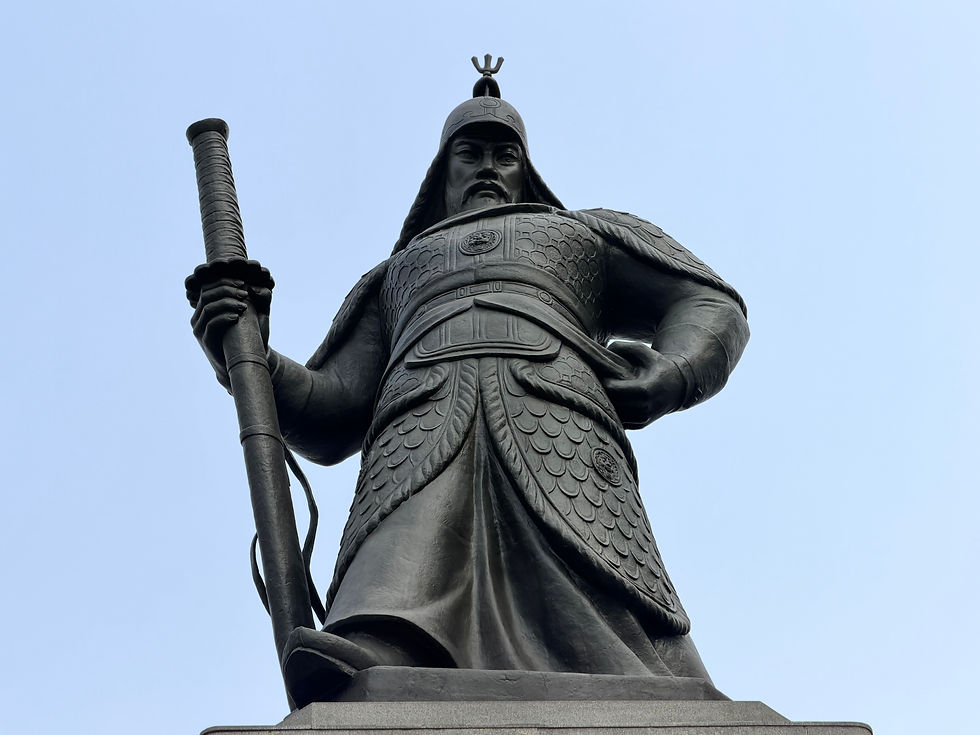
Yi Sun-shin (born April 28, 1545, Seoul, Korea (now in South Korea)—died December 16, 1598, off Noryang). He was a Korean admiral and national hero whose naval victories were instrumental in repelling Japanese invasions of Korea in the 1590s.
"After passing the government examinations to become a military officer in 1576, Yi served at various army and navy posts. Although he was twice discharged after being falsely accused by jealous colleagues, in 1591 he was appointed commander of the naval forces in Left Jeolla province, where he concentrated on training his men, stocking equipment and supplies, and developing the renowned kŏbuksŏn (“turtle ship”). The kŏbuksŏn is thought to have been the first ironclad battleship in history. Its upper deck was covered with armored plates to protect its crew, and spikes and knives were attached to the plates to discourage enemies from boarding. The ship’s bow was equipped with a dragon head through which cannon could be fired and clouds of smoke could be emitted to obscure the ship’s position. Cannon and guns could also be fired from the stern and the sides of the ship."

"As a result of Yi’s preparations, his forces, unlike most of the Korean military, were ready to fight when the Japanese invaded in 1592. Yi’s victories off the southern coast effectively cut off the Japanese troops in Korea from supplies and reinforcements and prevented the Japanese from pressing their initial advantage. In 1593 Yi was given command of the entire Korean fleet, but, following peace negotiations, in 1597 he was again falsely accused of disloyalty and demoted to the rank of common soldier. The Japanese then launched a second invasion and succeeded in destroying almost all of the Korean navy. Yi was reinstated as commander of the few remaining ships and, continuing his undefeated battle record, soon restored Korea’s control of the seas. He was killed by a stray bullet as he pursued the retreating Japanese forces during the final campaign of the war."


King Sejong the Great
"King Sejong, a scholar, placed great emphasis on scholarship and education. He promoted cultural, economic and scientific research. He instituted han'gul, the Korean script. Korea today enjoys many other lasting benefits of his rule."
"King Sejong, whose epithet is "the Great," is considered to have been one of the most outstanding Korean kings of the Choson Kingdom (1392-1910). Born in 1397, Sejong succeeded to the throne at the age of 22 when his father, King T'aejong, abdicated in his favor. Chosen in place of his oldest brother, the rightful heir to the throne, whose lifestyle and conduct were deemed unfit for a king, Sejong became the fourth monarch of the Choson Kingdom. His reign, which lasted until 1450, was a period of great cultural and intellectual accomplishment in Korea that is often called the Golden Age.
King Sejong governed according to the principles of Confucianism upon which the kingdom had been founded. These principles included the idea that justice and righteousness should characterize the relations between sovereign and subject. King Sejong believed that the basis of good government was a ruler with broad-ranging knowledge, virtue, and the ability to recognize and utilize men of talent for government service."
"As an administrator, King Sejong introduced many progressive ideas and implemented reforms to improve the life of the common people. In times of drought and flood, he established relief programs and opened centers to provide food and shelter. For farmers experiencing unsuccessful harvests, he reinstated a loan system that had been used during the Koryo Kingdom (918-1392) in which the government's stored surplus grains were loaned out to them to be paid back in kind with nominal interest."
"King Sejong, a noted Confucian scholar himself, placed great emphasis on scholarship and education. He promoted research in the cultural, economic, and political heritage of Korea, and he sponsored many new developments in the areas of science, philosophy, music, and linguistics. To encourage young scholars to devote their time to study, he established grants and other forms of government support."

"The most outstanding of his achievements by far was the creation of the Korean alphabet, or han'gul. Previously, scholars had learned classical Chinese and had relied on the Chinese script for literary purposes, but Koreans did not have an appropriate script for their spoken language. Until the invention of han'gul, they had used clumsy and cumbersome systems that made use of some Chinese characters for their pronunciation and others for their meaning to represent the vernacular language But Chinese, a language very different form Korean in its vocal patterns and sentence formation, could not represent Korean sounds and structure adequately. Besides, the complexity of Chinese characters made the writing system too difficult for those other than the privileged few to learn and master."
"King Sejong wanted to provide Koreans with a written means of expression other than the complicated Chinese system. With this objective in mind, he commissioned a group of scholars to devise a phonetic writing system that would correctly represent the sounds of spoken Korean and that could be easily learned by all people. The system was completed in 1443."
"Initially, the use of han'gul was opposed by many scholars and government officials. They argued that its use would hinder education and government administration, both of which were dependent on the Chinese writing system. Despite this, however, King Sejong ordered popular poems, religious verses, and well-known proverbs to be translated into han'gul to encourage its use. Han'gul was thus a political, in addition to a linguistic, achievement."

"King Sejong commissioned a significant number of literary works. He saw books as a means of spreading education among his people. One of the first works he commissioned was a history of the Koryo Kingdom. Others included a handbook on improved farming methods to increase production, a revised and enlarged collection of model filial deeds, and a illustrated book of the duties and responsibilities that accompany human relations."
"King Sejong contributed to Korean civilization in a number of other ways, as well. He made improvements in the movable metal type that had been invented in Korea around 1234. He initiated the development of musical notation for Korean and Chinese music, helped improve designs for various musical instruments, and encouraged the composition of orchestral music. King Sejong also sponsored numerous scientific inventions, including the rain gauge, sundial, water clock, celestial globes, astronomical maps, and the orrery, a mechanical representation of the solar system."


An orrery is a mechanical, usually clockwork-driven, model of the Solar System that demonstrates the relative positions and motions of planets and moons around the Sun, typically using a heliocentric model. Often used for education or as demonstration pieces, they illustrate orbital speed—where inner planets move faster than outer ones.


Last day in Seoul. We have a 12:30 PM train to Busan tomorrow.


Comments