
Busy Day in Seoul
- Deborah Kade
- Mar 22
- 13 min read


We are staying at the Four Seasons and the breakfast buffet is included. If you go away hungry, it is certainly your fault!
There are so many different selections from Korean fare, typical American breakfast of made to order omelets and eggs, etc. There is a salad section, hot prepared dishes, etc. I could have spent all day tasting everything!


My favorite was the egg special of the day! It was so delicious, I went back and thanked the chef! It was soft scrambled eggs with black truffle served with parmaham and shaved parmesan cheese. OMG!!!!!


The Palace Royal Guard Changing Ceremony reenacts the historical movements of soldiers guarding the palaces and the capital during the Joseon Dynasty (1392–1910).
The Royal Guard Changing Ceremony in Seoul is a vibrant reenactment of Joseon Dynasty traditions, featuring colorful costumes, traditional music, and weapons at Gyeongbokgung Palace. It takes place at 10:00 AM and 2:00 PM (closed Tuesdays) at Gwanghwamun Gate and is free to watch.


"In the Joseon dynasty, the royal guards of the palace were gatekeepers who were responsible for guarding the the main gates of Gyeongbokgung Palace as well as the main gates of the city such as Heunginjimun Gate and Sungnyemun Gate. The royal guards worked in shift duties and were in charge of opening and closing Gwanghwamun Gate. Before the royal guard system was enforced in 1469, the palace gates were protected by soldiers of the central army. The Palace Royal Guard Changing Ceremony held at Gyeongbokgung Palace and the Gwanghwamun area reenacts the guard-changing procedure that took place during the Joseon dynasty, along with the reproduction of costumes and weapons, based on historical records."


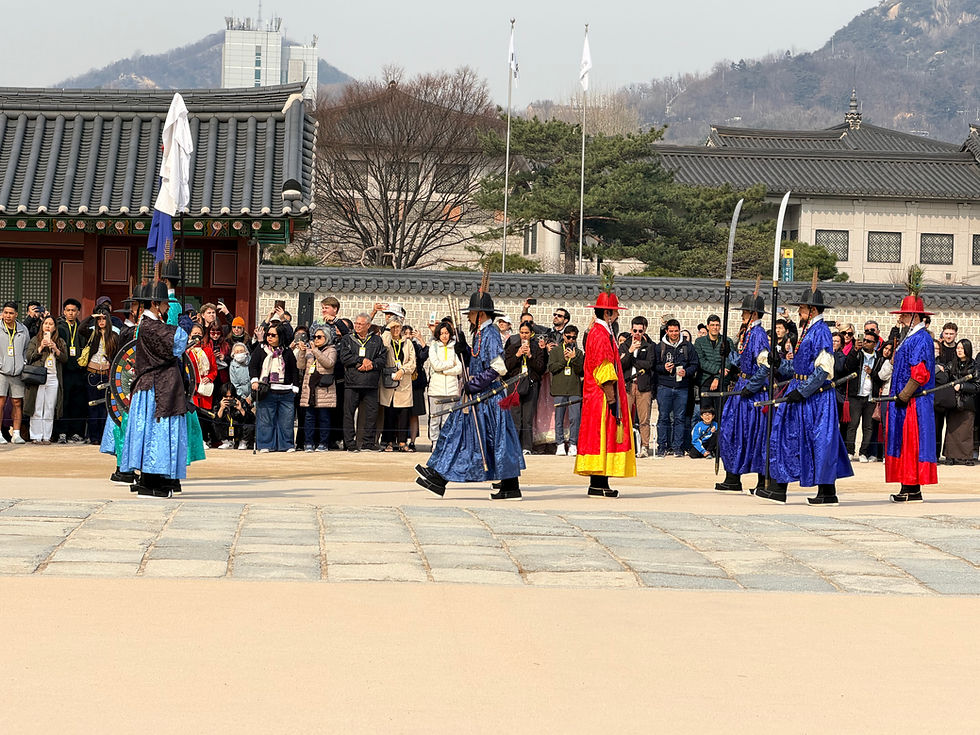


"During the Joseon Dynasty, the royal guards were responsible for guarding and patrolling the gates of the capital city and the royal palaces. The royal palace guards, who were known as the "Wanggung Sumunjang", had the very important duty of protecting the king by guarding the entrance gates of the primary royal palace where the king resided. They were in charge of opening and closing the palace gates, inspecting all visitors, and maintaining a close surveillance of the palace. They were divided into day and night shifts, and the Changing of the Guard ceremony took place whenever the shifts changed over.


In the early period of the Joseon Dynasty, the Changing of the Guard ceremony was conducted at Gyeongbokgung Palace as at that time Gyeongbokgung was the primary royal palace and the king then resided there. However, in the late period of the Joseon Dynasty when Gyeongbokgung was burned down during the Imjin Waeran (Japanese Invasions of 1592 - 1598), Deoksugung was made the primary royal palace and the Changing of the Guard ceremony was then conducted at Deoksugung.
After some extensive historical research, this splendid and elegant traditional Korean royal court cultural ceremony was first re-enacted in 1996 and has been a must-see among Seoul's tourist attractions ever since. This ceremony is a great opportunity to experience a rare traditional scene in Korea, as the ceremony is reenacted exactly as it used to be held, with guards wearing royal uniforms, carrying traditional weapons and playing traditional instruments. This is a tradition comparable to the Changing of the Guards at Buckingham Palace."


"Gyeongbokgung Palace was built in 1395 as the official palace of the Joseon dynasty by Yi Seong-gye, the future King Taejo and founder of the new regime. Gyeongbokgung Palace is commonly referred to as the Northern Palace because of its location to the north, comparied to Changdeokgung Palace in the east and Gyeonghuigung Palace in the west. Gyeongbokgung Palace is arguably the most beautiful and is the largest of all five palaces. Many Joseon kings were crowned here. The premises were once destroyed by fire during the Imjin War (1592-1598). However, all of the palace buildings were later restored under the leadership of Heungseondaewongun during the reign of King Gojong. The assassination of Empress Myeongseong, however, resulted in Gyeongbokgung Palace losing its function as a royal palace, eventually witnessing the downfall of the Joseon dynasty. Gyeongbokgung Palace retains the original Gyeonghoeru Pavilion, a prime example of Joseon architecture, and the Hyangwonjeong Pavilion and pond. The sculptures in the Geunjeongjeon Hall exemplify Joseon-era sculpture techniques. The west side of the area outside Heungnyemun Gate is occupied by the National Palace Museum of Korea, while the eastern side of Hyangwonjeong Pavilion within the Gyeongbokgung Palace is occupied by the National Folk Museum of Korea."

"Mountain (also known as Bugaksan Mountain) at the backdrop, and a wide Yukjo Street unfolds before Gwanghwamun Gate, the main gate of the palace. The name "Gyeongbok" means that "the new dynasty shall have good fortunes and prosper." Gyeongbokgung Palace was the very place where Hunminjeongeum (a script for writing the Korean language) was created and distributed."


If you wear traditional dress, you get in free.


"Gyeongbokgung Palace was destroyed during the Japanese invasion in 1592 (the 25th year of King Seonjo). It was left in ruins for many years, only to be restored in 1867 (the 4th year of King Gojong), 270 years after the war’s end. During the restoration by King Gojong, the palace was added with new buildings such as Geoncheonggung Palace, Taewonjeon Hall, and Jibokjae. In particular, Okhoru Pavilion at Geoncheonggung Palace is where the tragic incident of the Assassination of Empress Myeongseong (1895) took place."


Stones represent the ranking of people's positions


You can see bullet holes from the Korean conflict


Where the king held court and his house was in the back


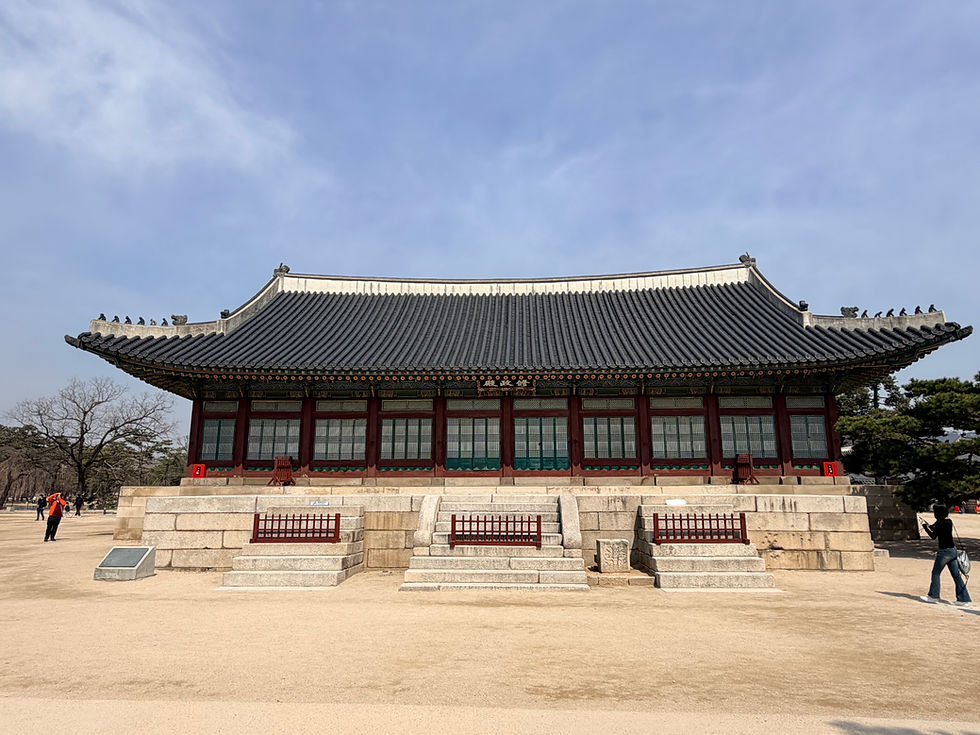

Where dignitaries were met


Magpie


Leading to the Queen's Garden. Once she became queen, she was not allowed to leave the pa;ace grounds.

How the buildings were heated

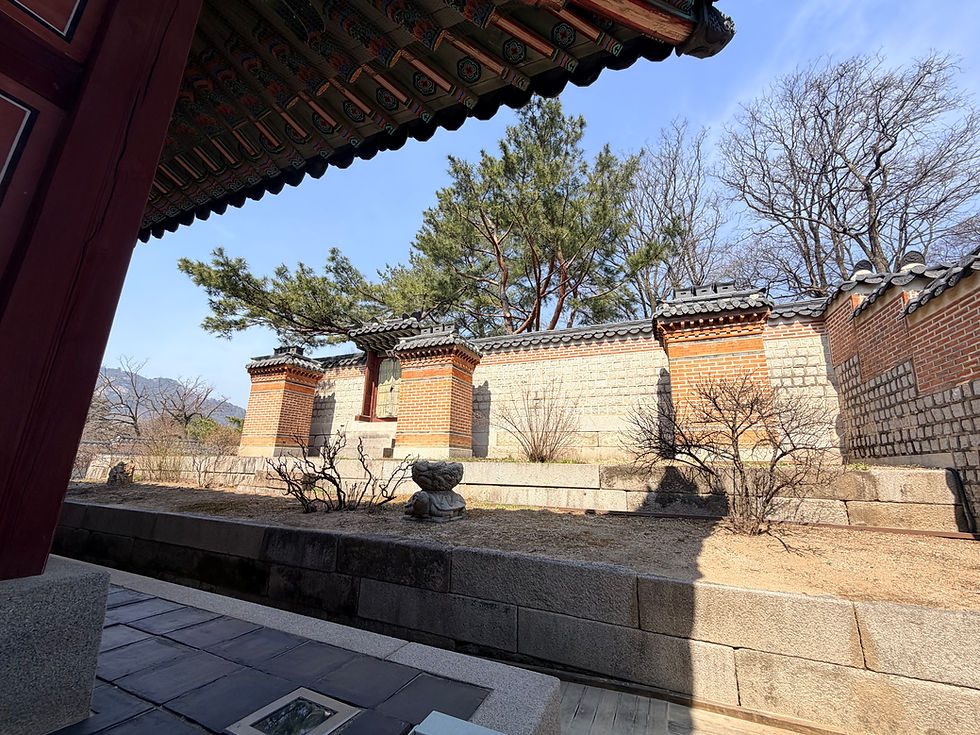

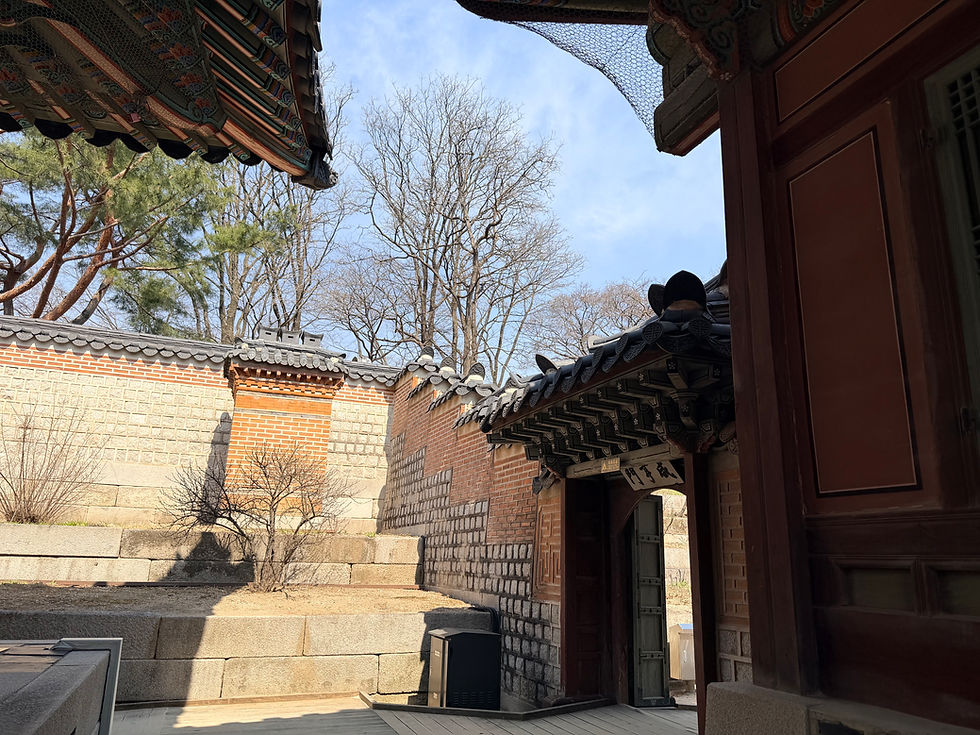


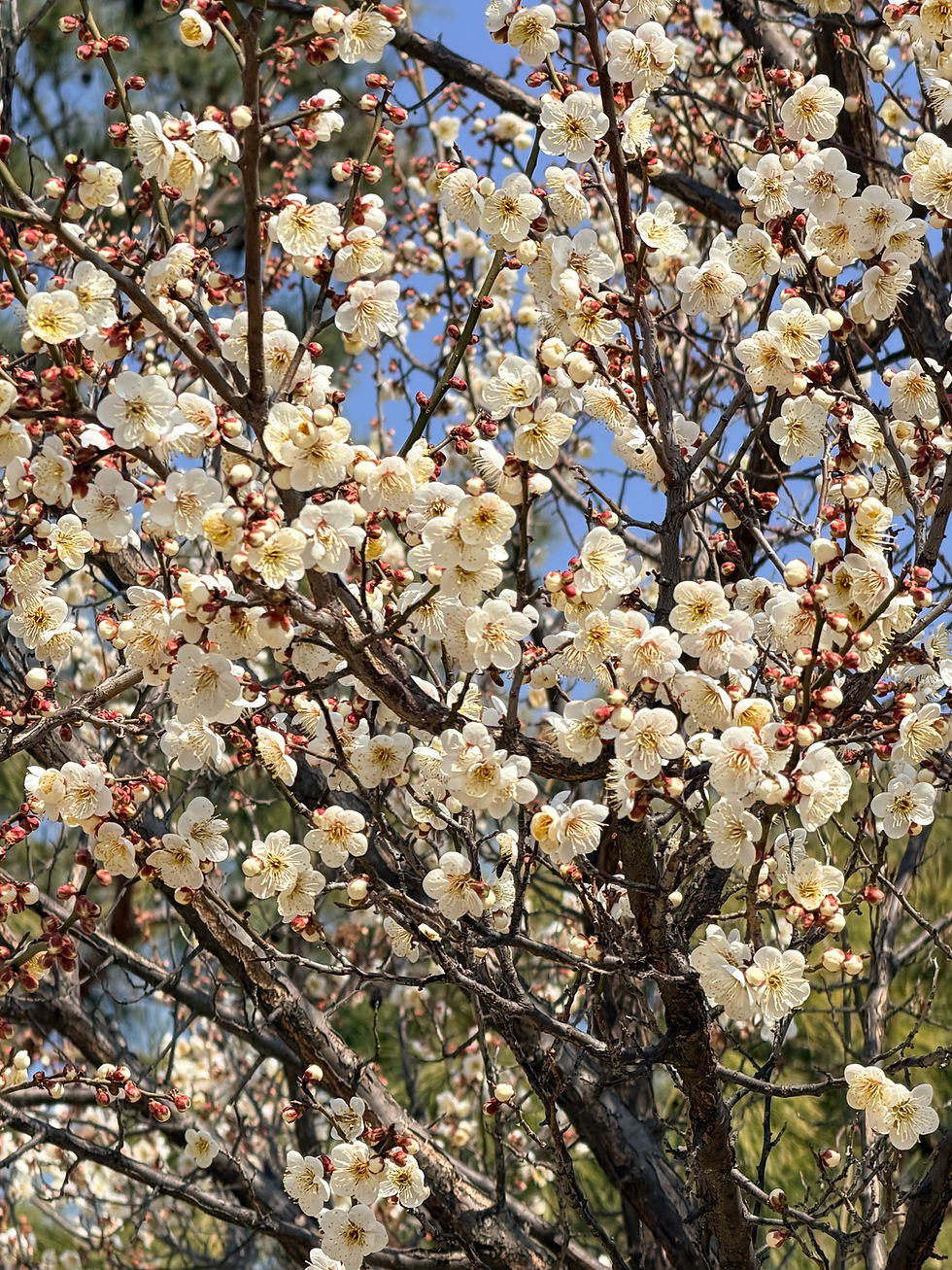
My first cherry blossoms



Man's bedroom

Woman's bedroom

Kitchen


"The shameful Korea–Japan Treaty of 1910 marked the beginning of the systematic destruction of Gyeongbokgung Palace. Most buildings were destroyed for the sake of hosting the Joseon Industrial Exhibition in 1915. In 1926, the entire palace was put in the shadow of the building of the Governor-General of Joseon. The palace restoration project began in the 1990s, and the Governor-General of Joseon building was demolished in 1996. The areas around Heungnyemun Gate, the royal living quarters, Geoncheonggung Palace, Taewonjeon Hall, and Gwanghwamun Gate were restored and stand to this day."
Cheong Wa Dae (Korean: 청와대;. ''Cyan-tile Pavilion''), also known as the Blue House, is the executive office and residence of the president of South Korea. Located in Seoul's Jongno District, directly behind the former Gyeongbokgung palace, it has served as the center of presidential administration and state receptions since 1948, except for a three-year period during the presidency of Yoon Suk Yeol from 2022 to 2025, during which it was opened to the public as a museum and urban park.

Cheong Wa Dae is a complex of multiple buildings built largely in the traditional Korean architectural style with some modern architectural elements and facilities. It currently consists of the Main Office Hall Bon-gwa[ the Presidential Residence, the State Reception House Yeongbin-gwan, the Chunchu-gwan, Press Hall, the Secretariat Buildings, and other buildings and structures. The entire complex covers approximately 250,000 square meters or 62 acres.


Cheong Wa Dae was built upon the site of the royal garden of the Joseon period (1392–1910). While Cheong Wa Dae served as an executive office, it was one of the most protected official residences in Asia. Upon the inauguration of President Yoon Suk Yeol in May 2022, Cheong Wa Dae was relieved of its duties as the official residence and executive office of the president, as the president's offices and residence were moved to the Ministry of National Defense building. The grounds served as a public park until late 2025. Since the impeachment and removal of President Yoon Suk Yeol in December 2024, there have been calls to return the presidential office and official residence to Cheong Wa Dae. President Lee Jae-myung returned to Cheong Wa Dae on December 29, 2025.
Goryeo and Joseon eras
"Cheong Wa Dae dates back to the Goryeo period of Korea. The location of Cheong Wa Dae was the site of a royal villa in Hanyang, the southern capital of the Goryeo dynasty (918–1392). It was built by King Sukjong (r. 1095–1105) in 1104. Goryeo's principal capital was at Kaesong, and it also maintained a western capital at Pyongyang and an eastern capital at Gyeongju on opposite sides of the Korean peninsula. After the Joseon period (1392–1897) moved its capital to Hanyang, Gyeongbokgung was built in 1395, the fourth year of the reign of King Taejo (r. 1392–1398) as the main palace, and the royal villa lot became the back garden of the palace. It was used as the site for civil service examinations and military training. Feng Shui singer Kim Wi-je said, "Samgaksan Mountain is a scenic view facing north and south. The mountain range that started there is three and four, and they are defending the famous place, so if you rely on Samgaksan Mountain to build a capital, the Dead Sea will come and pay tribute in nine years. After King Taejo of the Joseon Dynasty established the country, the new capital was designated in Hanseongbu. Later, in 1394, a new palace was built; the site was near the palace site of Nanjing, Goryeo, north of the former royal palace Gyeongbokgung. At that time, it was said that there were temples such as Chungsundang and Chirojeong Pavilion in this place. Here, descendants of kings and founding contributors gathered to conduct large-scale membership."
"After Gyeongbokgung was burned down during the 1592–1598 Japanese invasions of Korea, it was left unattended for a long time. However, during the reign of King Gojong, Gyeongbokgung was rebuilt under the leadership of Heungseon Daewongun, and a support was built outside the Sinmumun Gate and in the current Cheong Wa Dae. Later, buildings such as Yoongmundang were built in the background, and Gyeongmudang was also renovated at this time. There were 32 buildings in Gyeongmudae, including Oungak, a resting place for the king. In Yoongmundang, a festival and military training were held."
1910–1948: Foreign occupations
"Following the Empire of Japan's annexation of Korea in 1910, the Imperial Japanese governor of Korea used the Gyeongbokgung grounds for the Government-General Building. In 1927, many buildings in the background, including Gyeongmudae, were demolished. In July 1939, Japan built an official residence/office for the governor-general on the site of Cheong Wa Dae. Even after liberation following the Second World War (1939/1941–1945) in September 1945, this location was used as the official residence by the occupying United States and its designated United States Army Military Government in Korea's John Haji, during 1945-1948."
Evolution of Cheong Wa Dae1948–2022: Presidential residence of South Korea and an attempt to relocate
"After the establishment of the South Korean government in the southern portion of the Korean peninsula in 1948, its first president Syngman Rhee (served 1948–1960) named the former Imperial Japanese Governor-General's residence Gyeongmudae (경무대; 景武臺; lit. ''Scenery–force Pavilion''), which was the name of one of the few old buildings for former official residence there. He used it as his office and residence. The second South Korean President, Yun Po-sun (1897–1990, served 1960–1962), changed the name to "Cheong Wa Dae" after he was inaugurated in 1960. The name was reportedly changed as it had ostensibly become associated with authoritarianism and dictatorship.[3] An alternate name "Hwaryeongdae" was proposed alongside "Cheong Wa Dae" as a possible renaming candidate, but the latter was ultimately chosen."
"After Park Chung Hee (served 1962–1979) came to power through a military coup as the third President, some argued that the color should be changed to yellow, saying it is a more precious color, but Park dismissed it. During the Park regime, the Cheong Wa Dae structure had a president's office on the first floor and a living space for the president's family on the second floor. However, as the building was narrow and aging, a major renovation was carried out during the Park administration.
In January 1968, North Korean infiltrators nearly reached the building in a bid to assassinate Park during the Blue House raid. In the ensuing melee, 28 North Koreans, 26 South Koreans, and four Americans were killed."
"On October 26, 1979, Park was assassinated by the Korean Central Intelligence Agency (KCIA) Director, Kim Jae-gyu in a safe house on the Blue House grounds.
Presidents Park, Choi Kyu-hah, and Chun Doo-hwan used the building both as their office and official residence. While President Roh Tae-woo was in office, a new office building, official residence, and press center, called Chunchu-gwan, were built. The main office building was opened in April 1991. In September 1991, an advisory committee consisting of 22 experts was formed to gather opinions and build the current main building, official residence, and Chunchugwan. In 1993, during Kim Young-sam's presidency, the building built by Japan for the then-official residence was dismantled. Roh Moo-hyun tried to change the structure of the main building to strengthen communication with the staff, but failed. The wartime evacuation facility built by Park in 1975 was repaired in 2003 to create a room (underground bunker) for the National Crisis Management Center
Because the Cheong Wa Dae has often been regarded as a symbol of the president's power, many presidents have made efforts to relocate the presidential office and residence."
"Kim Young-sam was the first to push for relocation as a symbolic break from the previous military dictatorship era. Kim Young-sam pledged to move his office to the Seoul Government Complex near Gwanghwamun but was unable to achieve this. Instead, the road in front of Cheong Wa Dae and the mountain Inwangsan was made open to the public. In addition, 12 safe houses located in Gungjeong-dong and Samcheong-dong were demolished, and Mugunghwa Garden, a civic park, was created.
Kim Dae Jung also pushed for a plan to set up offices at the Seoul and Gwacheon Government Complex but stopped due to security and cost problems. Instead, measures were taken to open the Chilgung Palace located in the Cheong Wa Dae precincts and expand the scope of Cheong Wa Dae viewing."
"The Roh Moo-hyun administration tried to move all government departments, including Cheong Wa Dae, to Sejong City but failed due to the Constitutional Court's decision to confirm the unconstitutionality of the new administrative capital law. Since then, Roh Moo Hyun opened Sinmumun Gate, the northern gate of Gyeongbokgung, and Bukaksanseong-ro."
"During the Lee Myung-bak administration, the relocation of the secretary's and security's office was also considered, but it was suspended due to costs and approval needed by the National Assembly."
"Moon Jae-In made President Gwanghwamun a presidential election pledge, but after taking office, it was cancelled due to security and cost issues. Instead, the road in front of Cheong Wa Dae and the fortress road of Bugaksan, which had been temporarily opened, were completely opened."
2022–2025: Conversion into a public park
"On March 20,2022, President-elect Yoon Suk Yeol announced that he would take office on the 10th of May in the Ministry of National Defense building in the Yongsan District of Seoul, and open Cheong Wa Dae to the public as a park. In May 2022, following an order issued by Yoon after he took office, the building officially converted into a public park and opened to public visitation for the first time in its 74-year history, with a maximum of 39,000 visitors allowed daily The visitors could witness cultural performances, tours, and use hiking trails that lead to the mountain Bugaksan, Cheongwadae's scenic backdrop."
"The Government of South Korea allocated ₩36 billion (about $29.5 million) from government reserve funds for the relocation of the office. However, the Ministry of National Defense at the time faced criticism, with concerns raised regarding the potential negative impact on national security, associated costs, and other issues such as heightened nuclear activity in North Korea and challenges to post-pandemic economic recovery. A survey revealed that 58% of the people opposed this move."
2025–present: Restoration of Cheong Wa Dae as presidential office
"In December 2024, after the impeachment of President Yoon, there were increasing calls to restore Cheong Wa Dae as the presidential office and official residence. Rep. Kim Byung-joo of the Democratic Party, a former general, said that the Yongsan office was unsuitable as a presidential office, while conservative mayor of Daegu, Hong Joon-pyo said that Yoon's move away from Cheong Wa Dae "diminished the president's charisma from the outset and emboldened the (political) opposition" and "The Blue House, like the White House in the United States, is a symbol of Korea."
"A joint survey released in June 2025 and conducted by South Korean broadcasters KBS, MBC and SBS found that 58.2% of respondents supported having the next South Korean president work at Cheong Wa Dae. Following his inauguration that same month, President Lee Jae-myung said he would stay in the Yongsan office until the presidential office is relocated to Cheong Wa Dae. On August1, 2025, Cheong Wa Dae closed to public for maintenance ahead of return of the presidential office."
"On December 8, 2025, the presidential office officially began its relocation back to Cheong Wa Dae. The transfer was finished on December 29th, with President Lee reporting for work at the residence that day
The Cheong Wa Dae logo was first enacted in 1995 during the Kim Young-sam administration. The logo was modified in 2005 during the Roh Moo-hyun administration. In 2008, with the inauguration of the Lee Myung-bak government, a new logo was released. In 2013, a new logo was released with the launch of Park Geun-hye's government and was used until the end of Moon Jae-in's government in 2022."
"Cheong Wa Dae has a land area of 253,505 m2 and a floor space of 76,685 pyeong. At the time of the Japanese colonial era, the site area of the Governor-General's office was 644,337 m2, but after liberation, it was reduced to 230,980 m2, and then increased to the current level with the expansion of related buildings and facilities such as security. 73 parcels belong to Cheong Wa Dae, including Sejong-ro 1, 157-94 Samcheong-dong, and 9 other parcels, Sejong-ro 1-91 and 17 parcels, and Gungjeong-dong 1–2, and 43 parcels."
From December 2007 to February 2008, the Munhwa Broadcasting Corporation covered the leaders of the Roh Moo Hyun government who were about to retire and made the last 100 days of the regime a documentary about Cheong Wa Dae. The program captured secret stories from the main building, where the president's office is located, to the official residence and the Yeomingwan. Lee Myung-bak also made and released his documentary video shortly before his retirement, and the interior of Cheong Wa Dae, including the official residence, was also released to some extent. Moon Jae-in opened the office to commemorate the 100th day since his presidency."
We had lunch here. It was so yummy!!!


Walked through this section


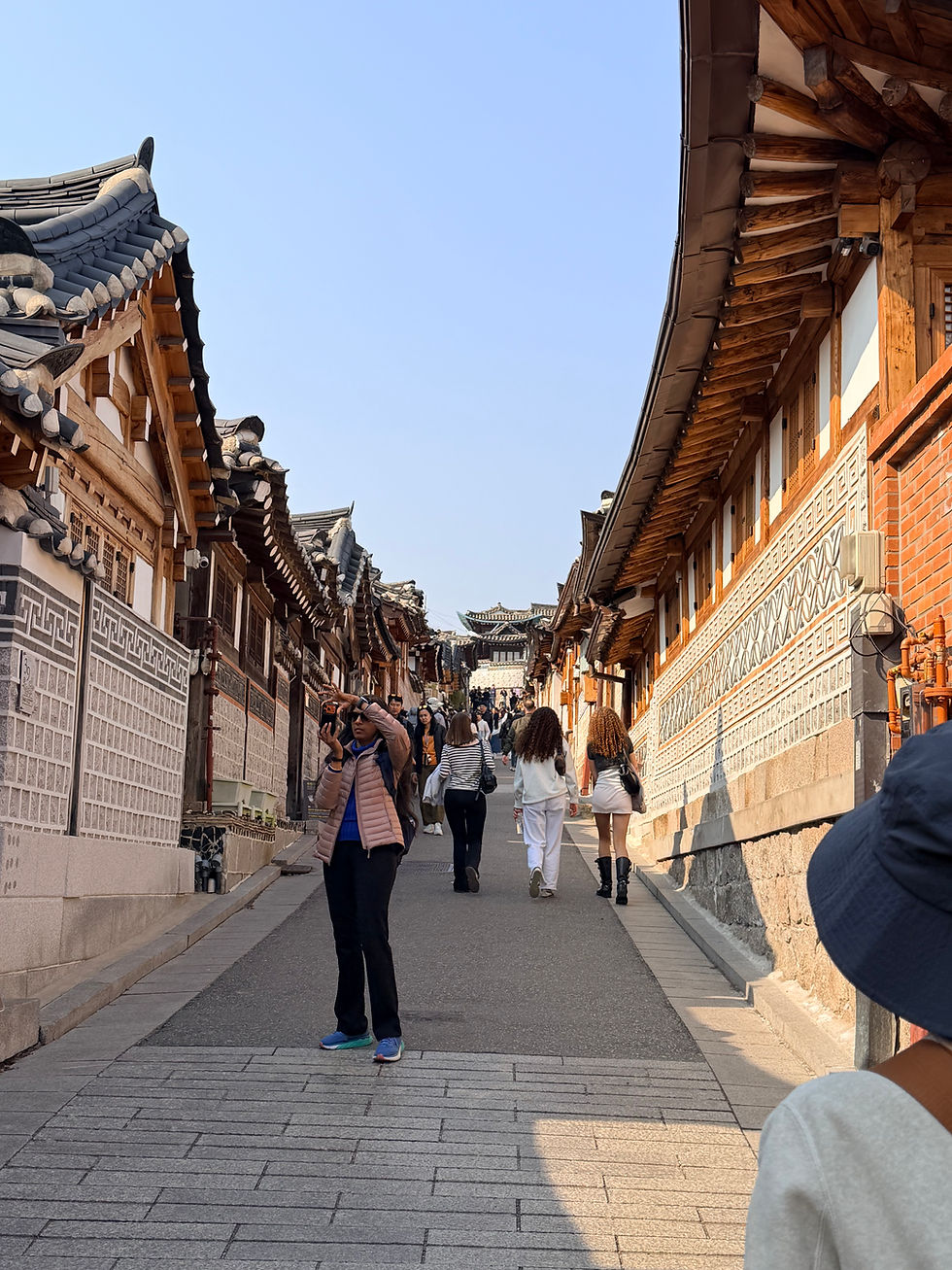


Gorgeous old architecture.


So many people visiting this area.


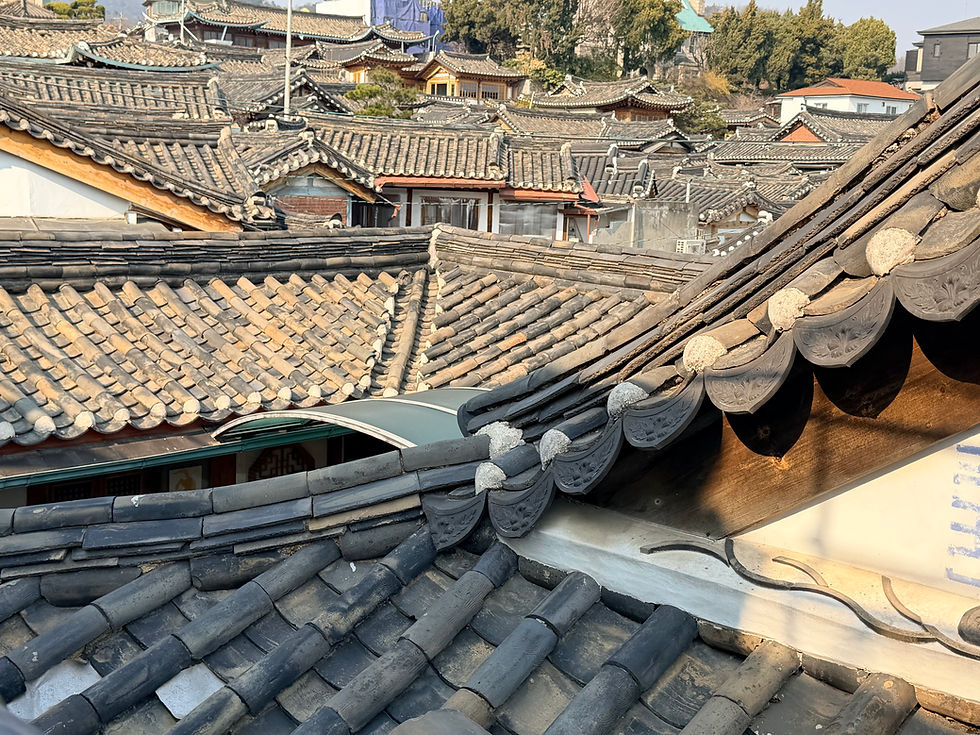
Looking out over the rooftops!



Stopped to have tea here.

Went to a very unique restaurant for dinner: Born & Bred better beef


There were 10 of us.


We had 21 different tastings. Scrumptious, delicious, yummy..........
The first two cuts of meat the chef prepared


Beef bone soup with mushroom Took two days to make the broth


Beef tartar

2 weeks in wine - Italian beef. Salt from Philippines has a coconut taste.


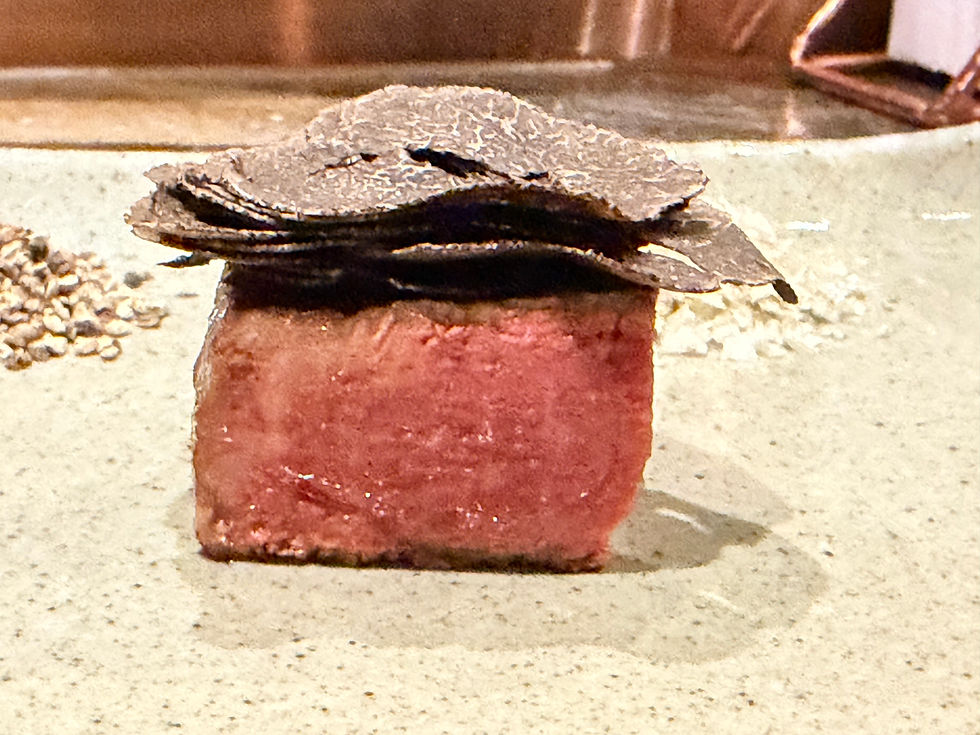
1st cut tenderloin with truffles 2nd bite with salt 3rd bite with pepper.


2nd cut strip loin 2nd bite with mustard 3rd bite add salt to the mustard


Sea pineapple with coriander acts as cleaner


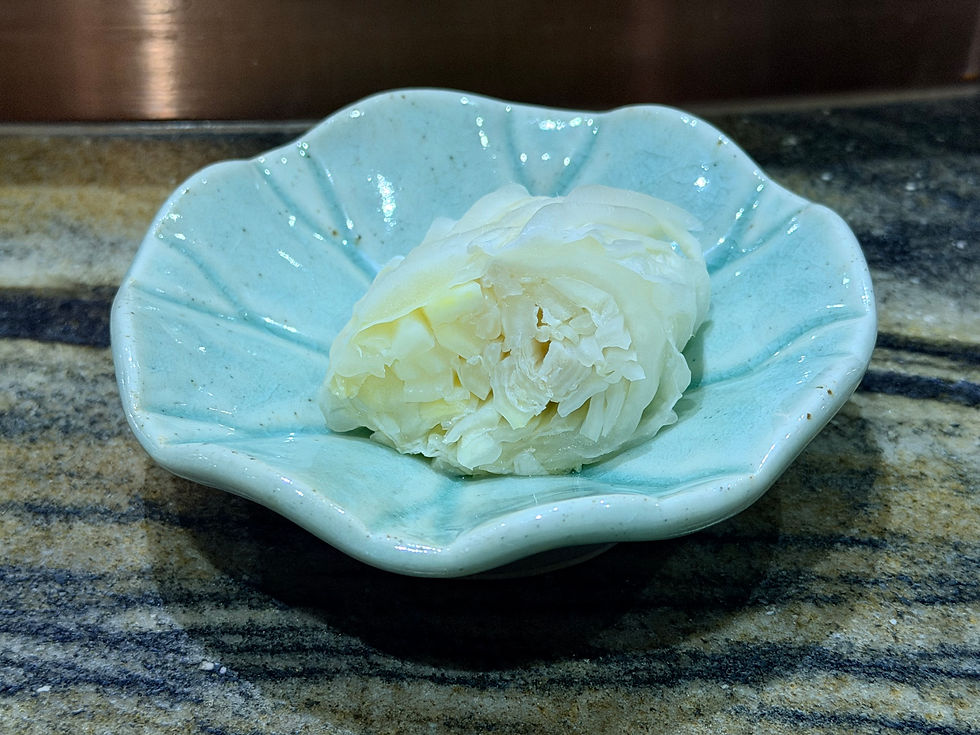
White kimchi acts like cleanser
Skirt 50% marble and a burdock root
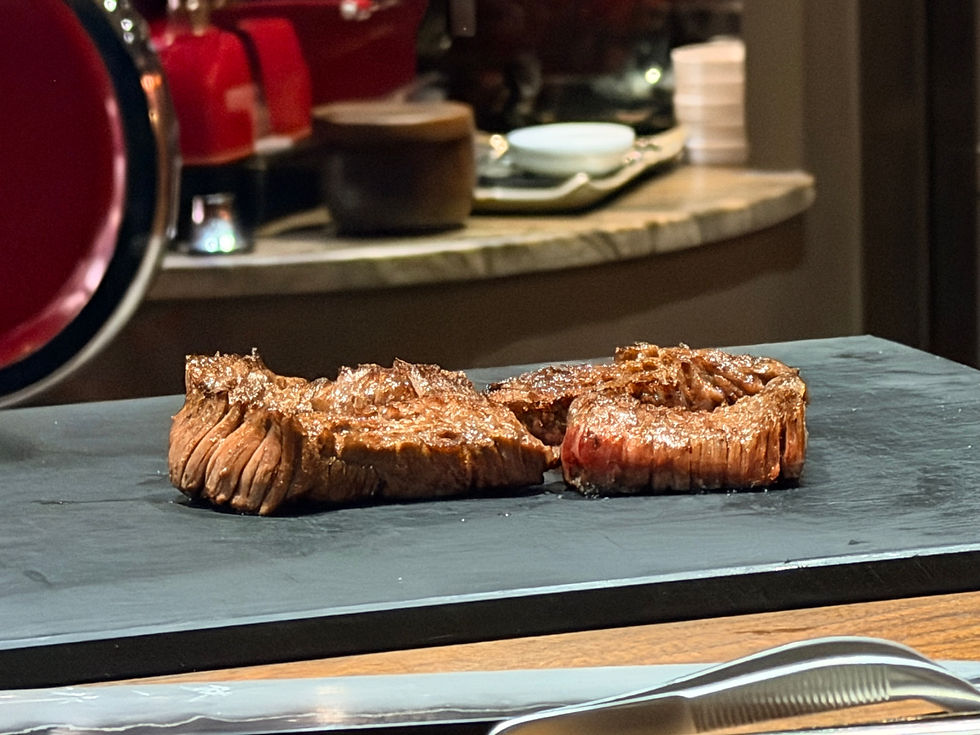


Flat iron with Korean sauce

Tenderloin chain beefy flavor dab of garlic


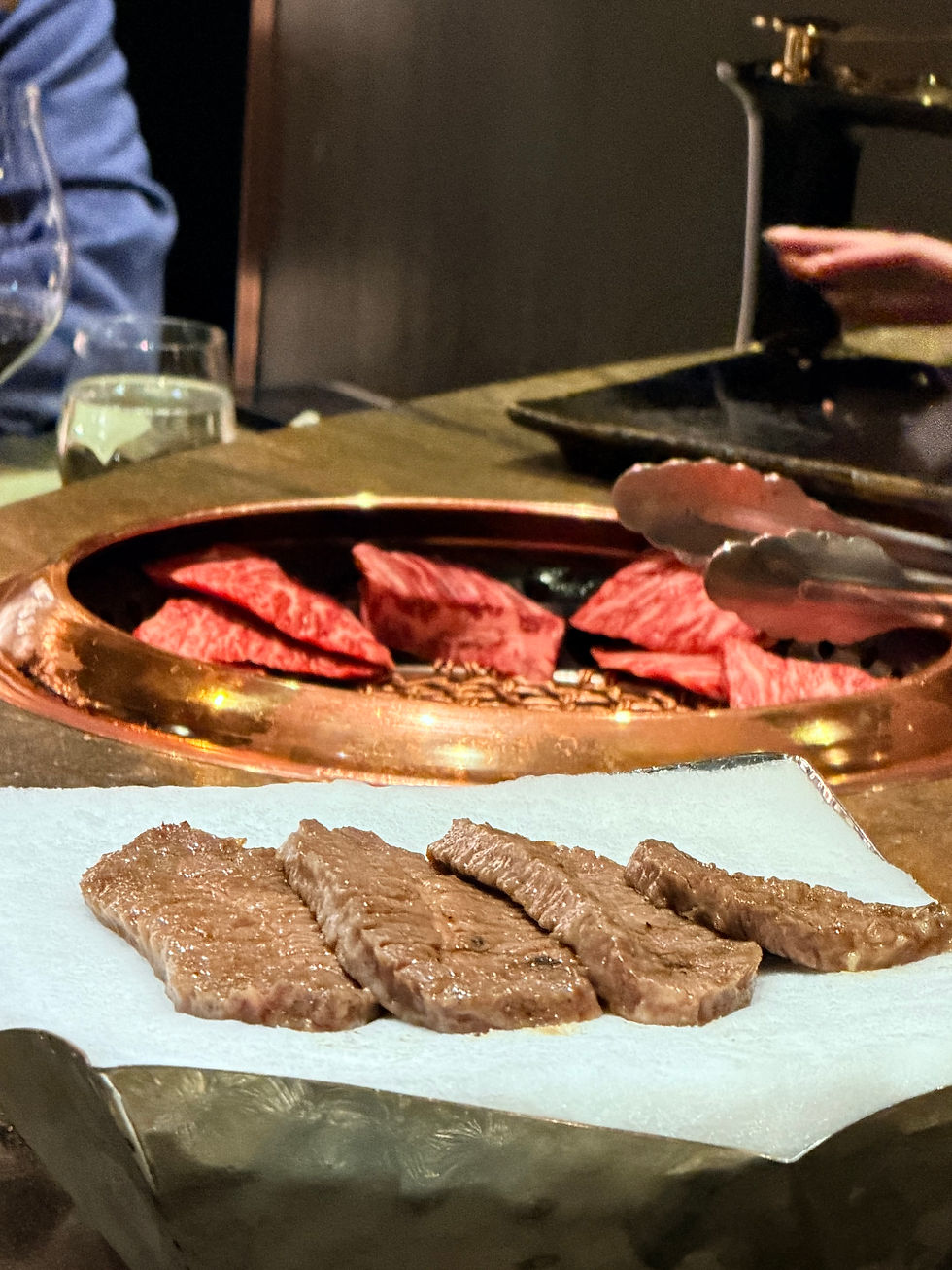
Hanger and outside skirt.

Skirt " look around snow" put on grill three times put on ice three times. No snow they wash it. Meat was marinated



Jeju Island tangerine jello


Hanger 1st bite with pepper 2nd with lettuce leaf root


Lemon zest dusting lemon sauce


Meat and fish called a chain layer.
Outside skirt salt and pepper
Fish and meat layer
Fresh wasabi root


Fattiest part of skirt

Soup put in helmet. When weather chilly people share. Jeolliptu


Soup bulgogi - Seoul style do it with broth and vegetables


Meat pie


Noodle and meat soup

Lychee

It is almost 1 AM so I think I will stop for tonight's writing!
Words can't describe what an adventurous and delightful day we had!


Keith says 600 I'm going 503