
A Phoenix, A Dragon & A Man Ascend Over Busan


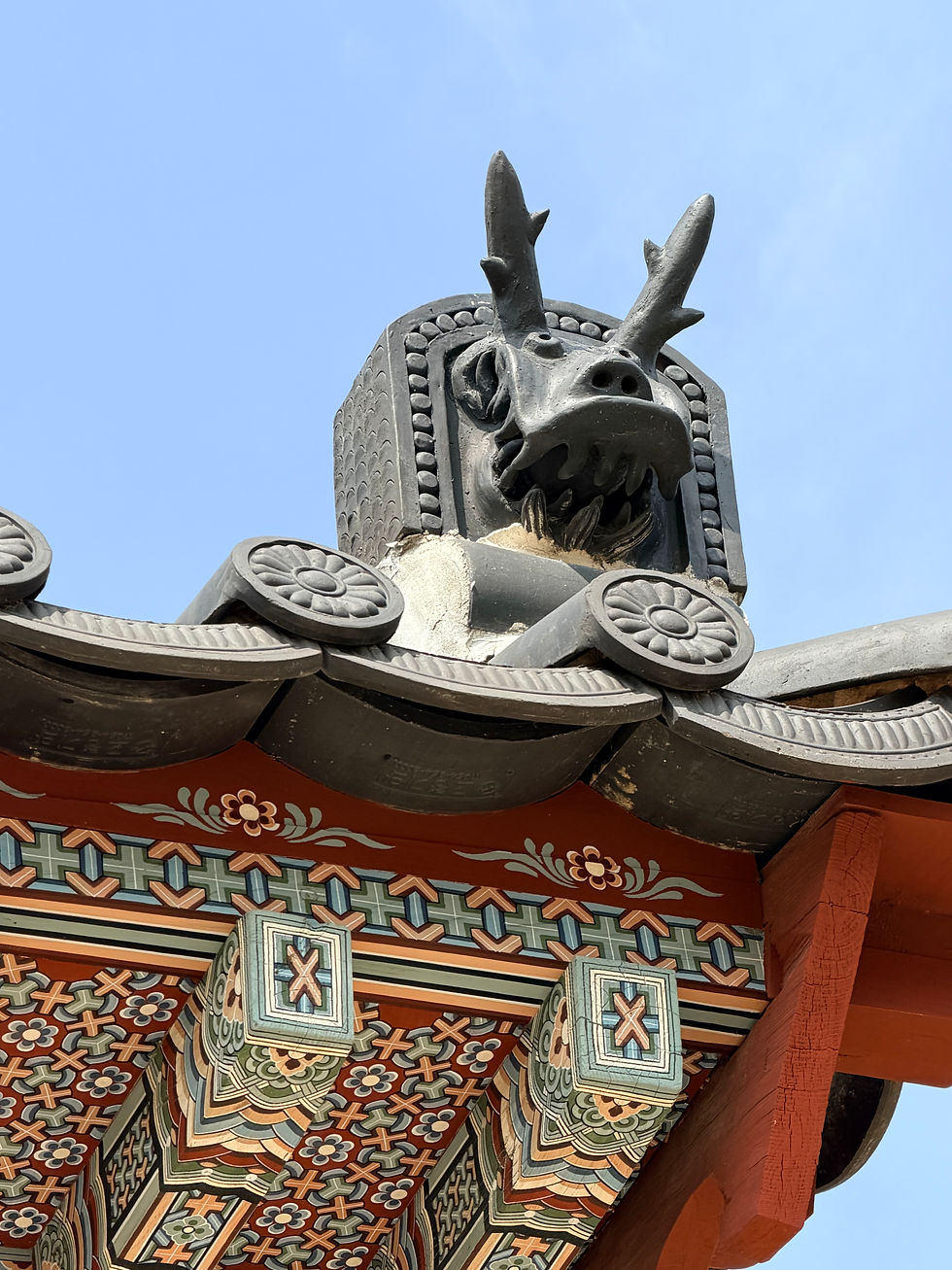
Can you see a man, a phoenix, and a dragon ascending into the sky over the temple?
Today we visited the Beomeosa Temple, "Temple of the Nirvana Fish". Beomeosa Temple, built in the Silla dynasty in 678, stands as a historic site known for producing outstanding monks. Situated amidst the splendid landscape of Geumjeongsan Mountain, it boasts a long tradition and rich history, housing numerous cultural relics.
The temple is a historic Buddhist temple over 1,300 years old. It is known for its peaceful atmosphere and traditional architecture in the mountains.
Beomeosa Temple is one of the head temples of the Jogye Order of Korean Buddhism in Cheongnyeongnopo-dong, Geumjeong District, Busan. Built on the slopes of the mountain Geumjeongsan, it is one of the country's best known temples.
Geumjeongsan, the mountain where Beomeosa is found, has a pool of water in a boulder near its peak. The pool is called Geumsaem or golden fountain. It is believed to have mystical properties because a golden fish from heaven now lives in the lake.
The temple gets its name from this legend: beom which means "Nirvāṇa", eo which means "fish", and sa which means "temple". Therefore, the temple's name can be translated as "Temple of the Nirvana Fish". The official website for the temple translates its name as "Temple of Gold Fish from Brahma Heaven".
Beomeosa Temple is considered one of the three major temples in southeast Korea, along with Haeinsa Temple and Tongdosa Temple. Its strong Seon Buddhist spirit has earned it the title "Great Headquarters Temple of Seon Buddhism".
There are three spots at the temple considered particularly scenic: the rock peak behind Wonhyoam Hermitage; two rocks in the shape of a chicken at Gyemyeongam Hermitage; and the legendary "golden well" on top of Mt. Geumjeongsan.
The temple participates in the Templestay program, where tourists can stay at the temple, eat Buddhist monk food, and experience the routine of the monks there.
Around the temple is a mass of wild wisteria, consisting of over 6,500 plants. The wisteria bloom a vibrant lavender color in late spring. This area has thus historically been called "Deungungok" "Wisteria Blossom Valley". I can only imagine what that must be like. Today I saw cherry and magnolia blossoms.


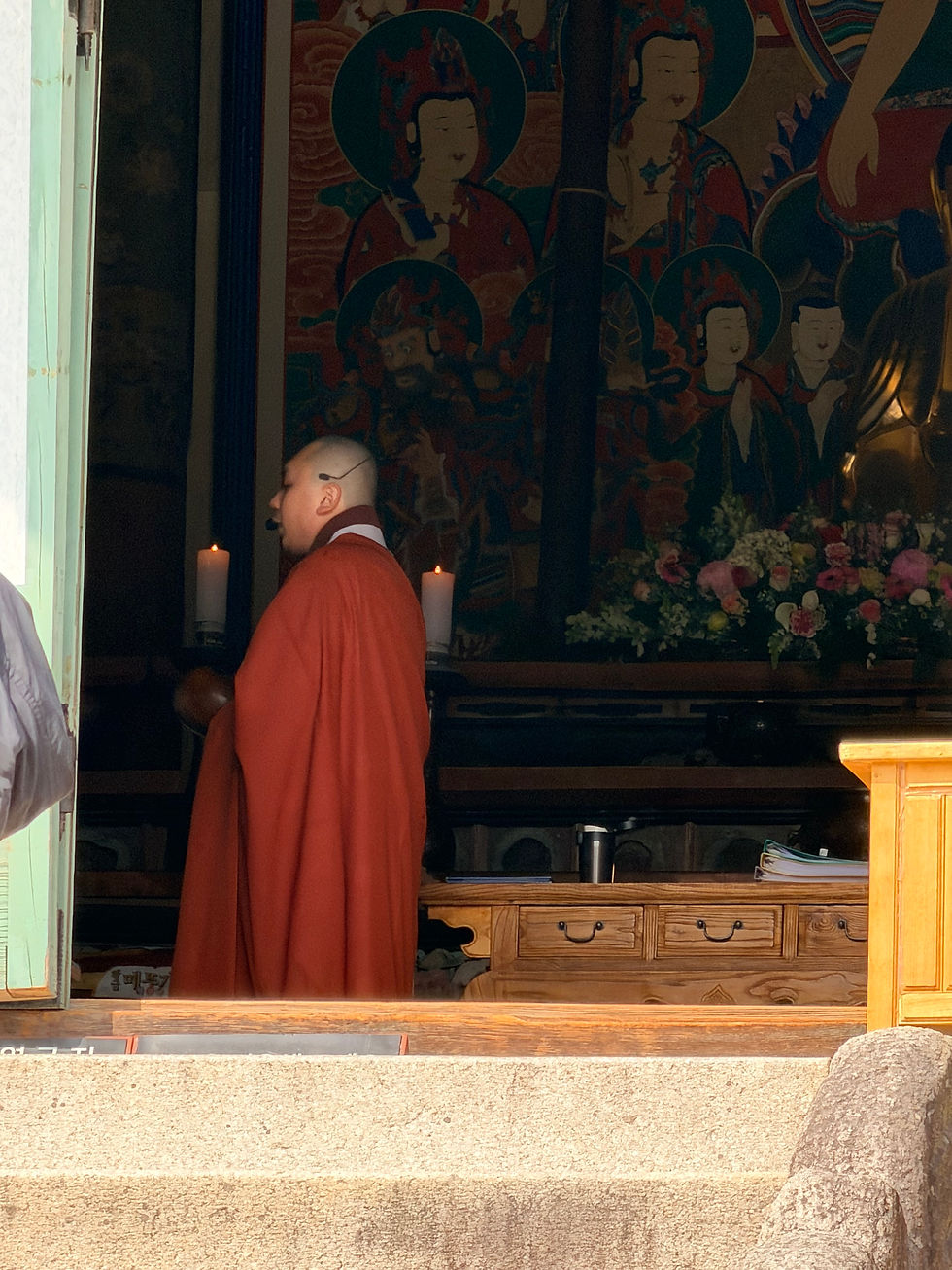


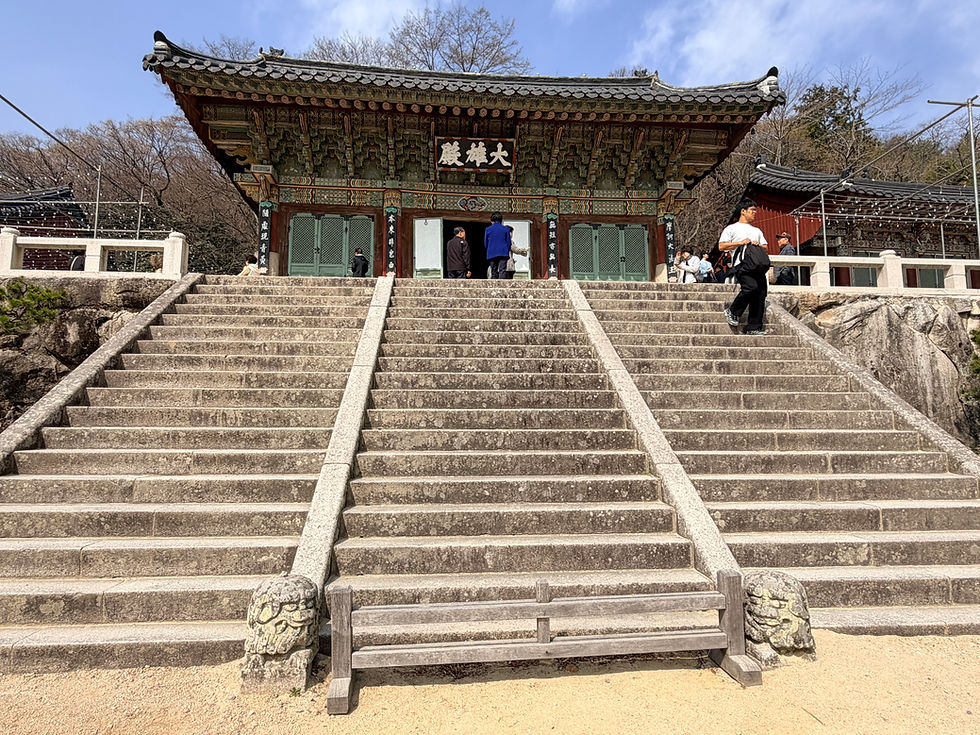
Only the monks can walk up the middle steps.
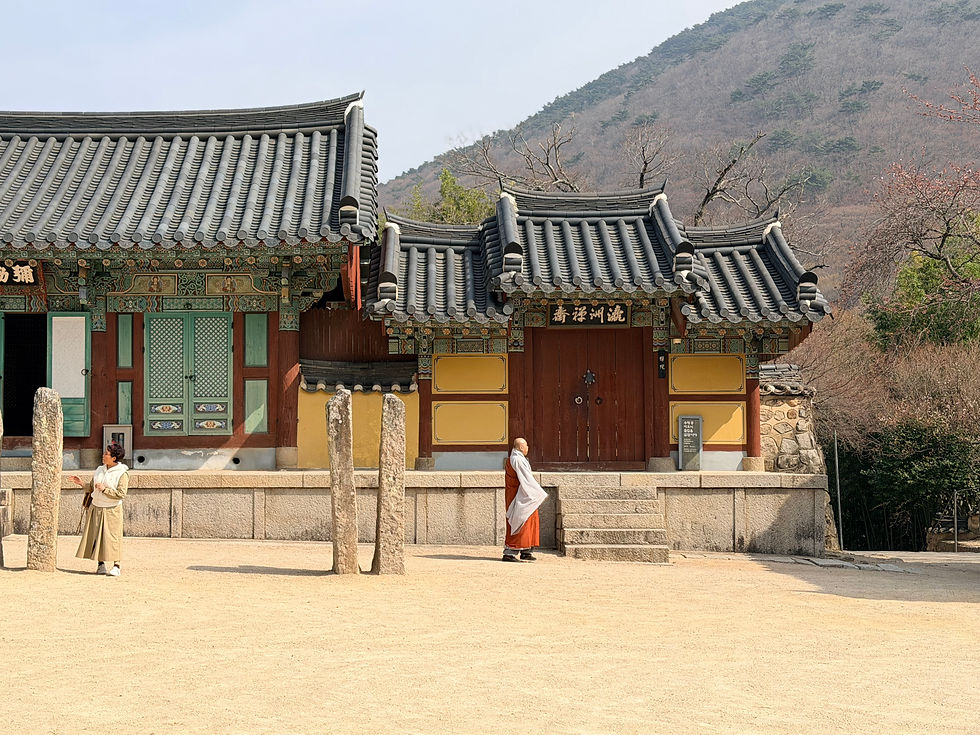
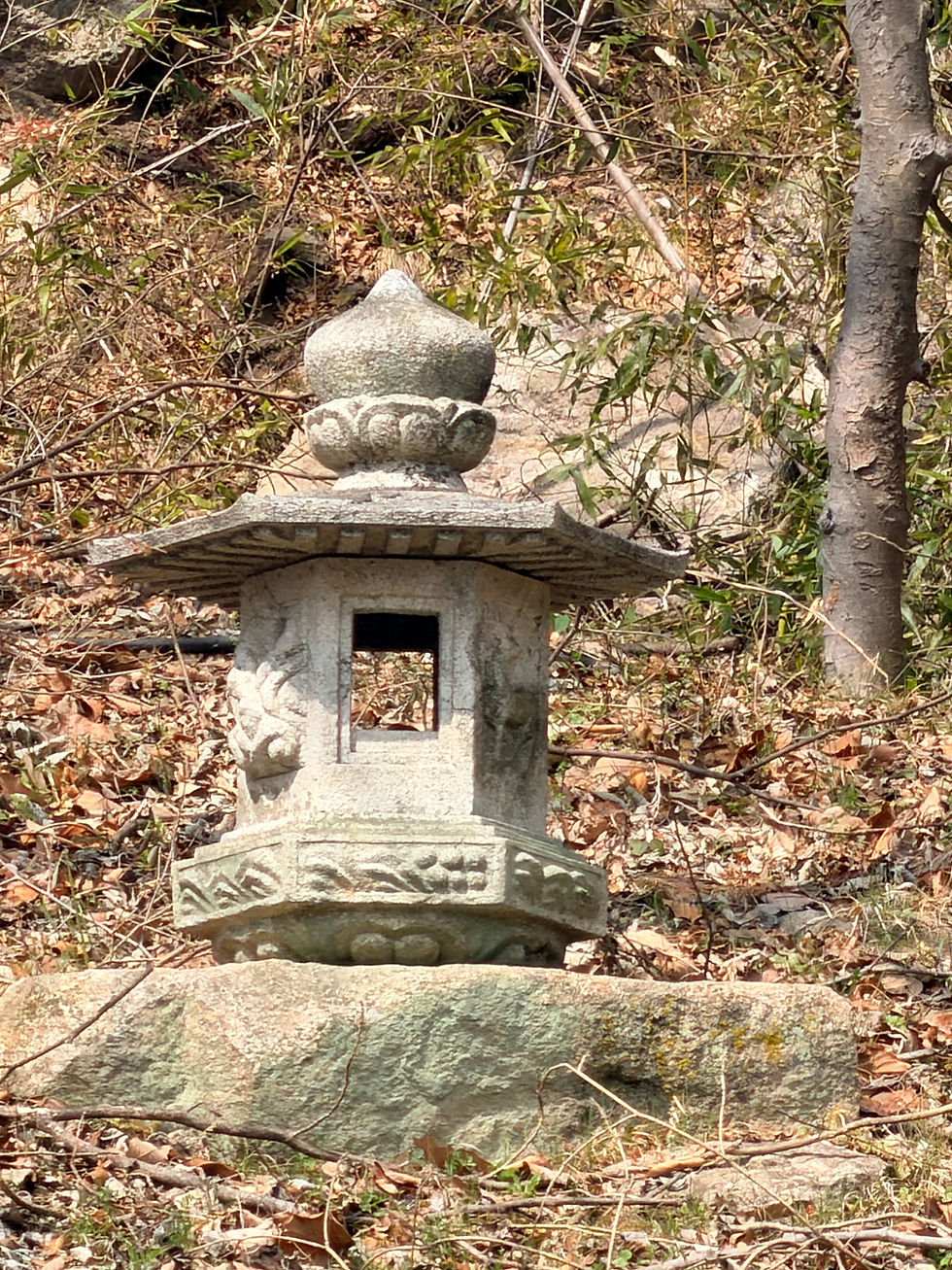
Stone Lamp dates back to the Silla era and was part of the original temple that was destroyed by fire in 1592.

This is a revered 500 year old tree.


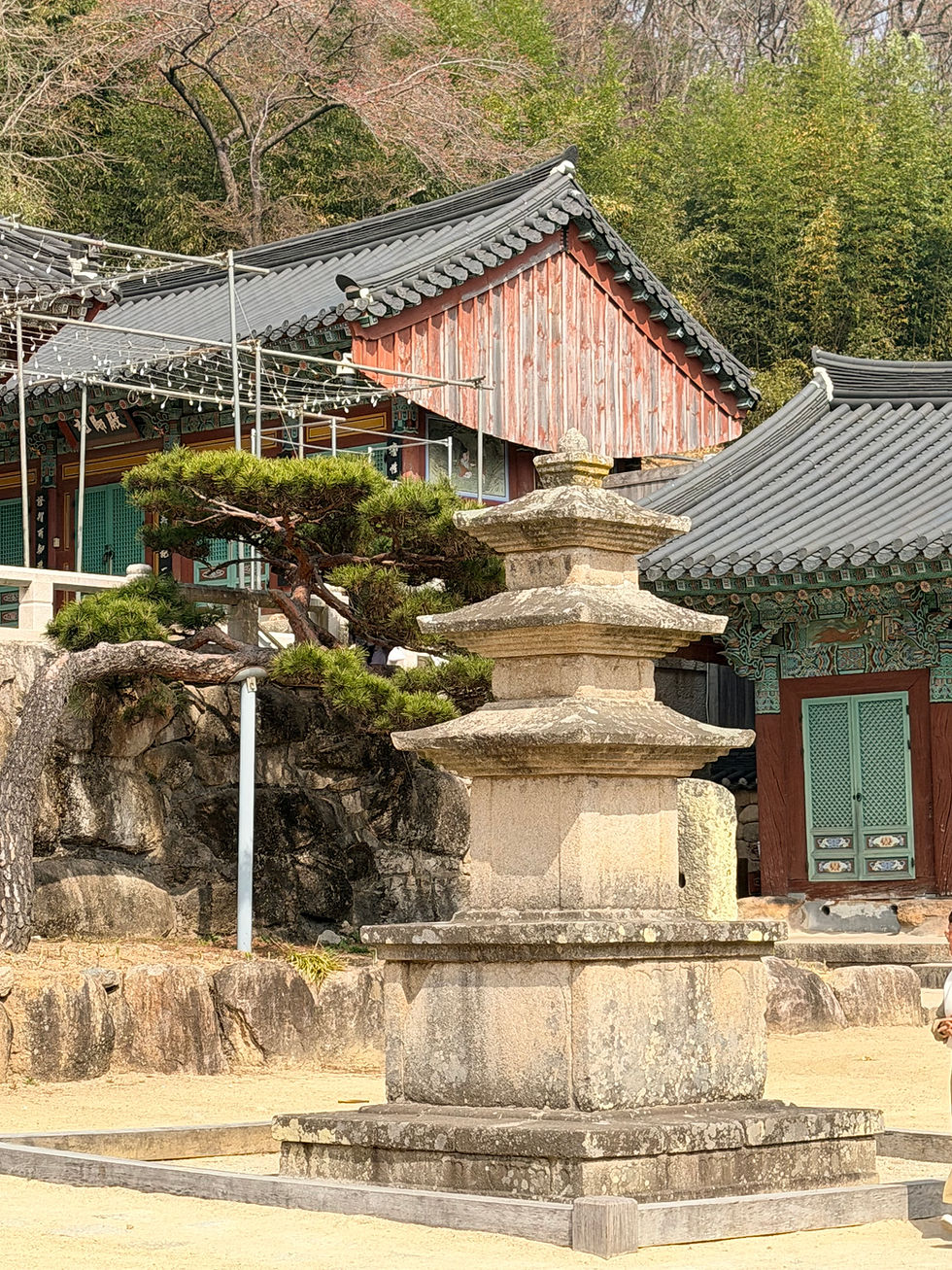
The pagoda is symbolism that Buddha was buried in a pagoda. You walk around the pagoda 108 times while praying.




Where the man is bowing, there is a girl and boy at the side
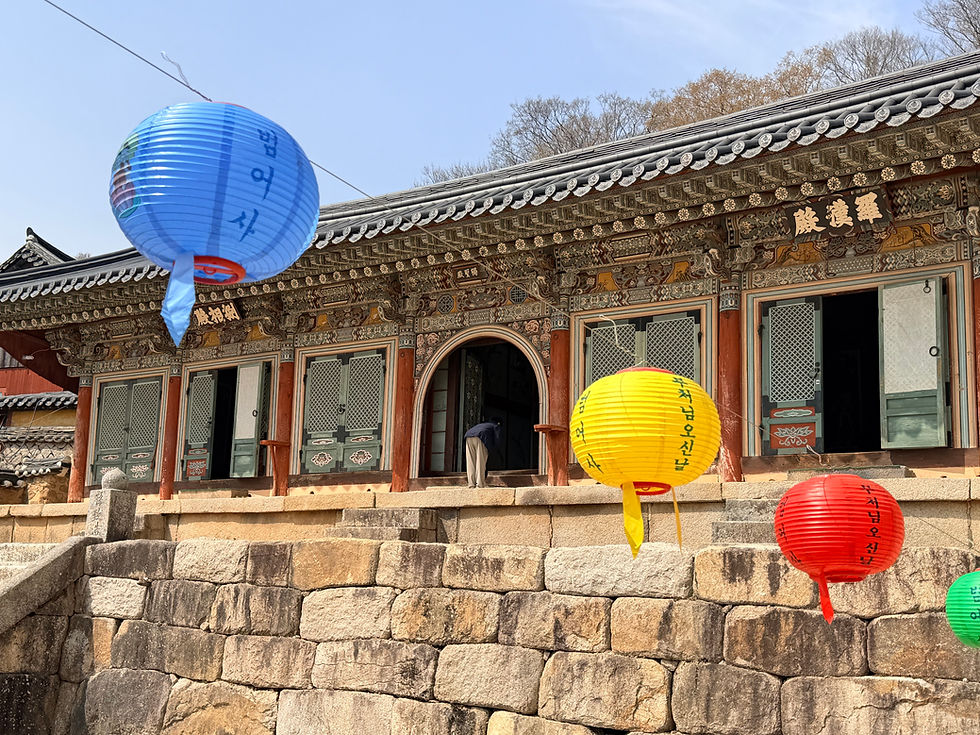


Beomeosa was established in 678 during the Silla period, as one of the ten major temples of the Avatamsaka School.
"As it was established by decree of King Munmu, Beomeosa Temple began on 360 gyeol of land and had 360 dormitory rooms. However, it was almost reduced to ashes during the Japanese invasion (1592–1597). Later, in 1613, monks like Ven. Myojeon and Ven. Haemin renovated some of its Dharma halls and the dormitory. The Main Buddha Hall and One Pillar Gate are known to have been built at that time."
"Seon Master Gyeongheo, an eminent monk of modern times, opened a Seon center at Beomeosa in 1900. Inspired by Ven. Gyeongheo, Seongwol, then abbot of Beomeosa, taught the Seon tradition by establishing Seon centers and Seon assemblies in Beomeosa's six hermitages in the span of 10 years as follows: Geumgangam in 1899; Anyangam in 1900; Gyemyeongam in 1902; Wonhyoam in 1906; Ansimnyo in 1909; and Daeseongam in 1910."
"Eminent monks who have lived at the temple include Great Masters Uisang, Pyohun, Nangbaek, Myeonghak, Gyeongheo, Yongseong, Manhae and Dongsan. Even today, Beomeosa Temple teaches serious Buddhist practice. In 2012, the temple was designated a Geumjeong Chongnim, one of eight comprehensive monastic training complexes for the Jogye Order of Korean Buddhism, and its first spiritual patriarch is Master Jiyu."
"On December 26, 2011, the Los Angeles Times printed a story of the fighting monks at this temple. South Korean Buddhist monk Ando demonstrates Sunmudo martial arts techniques. Monks from Beomeosa Temple are famed for defeating Japanese invaders during the late 16th century and again during the Japanese occupation of Korea in the early 20th century."




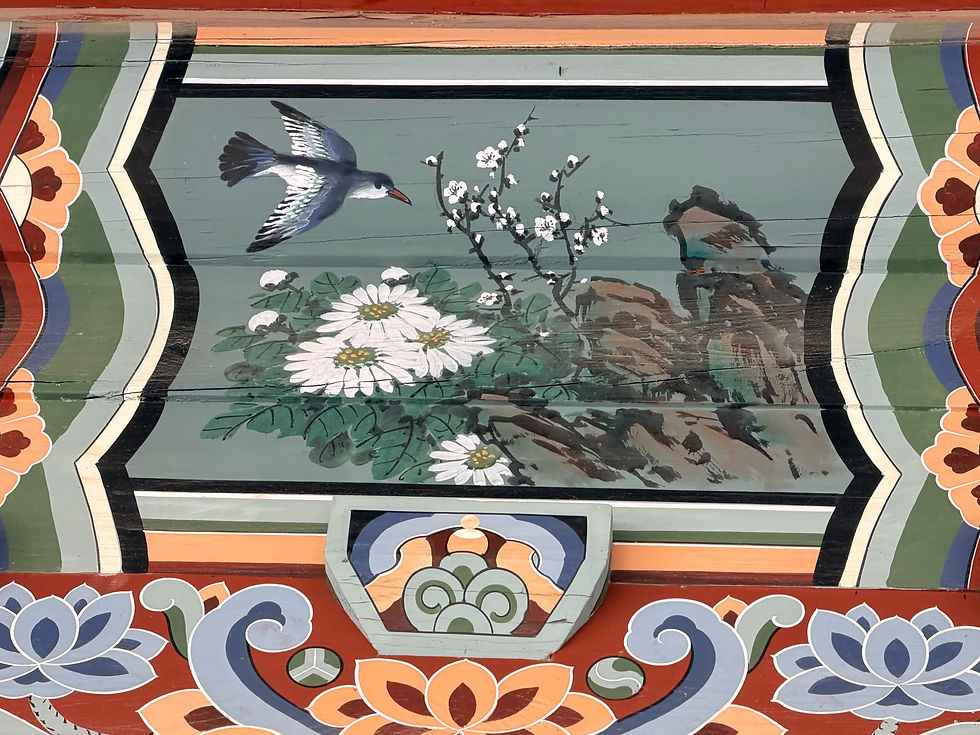


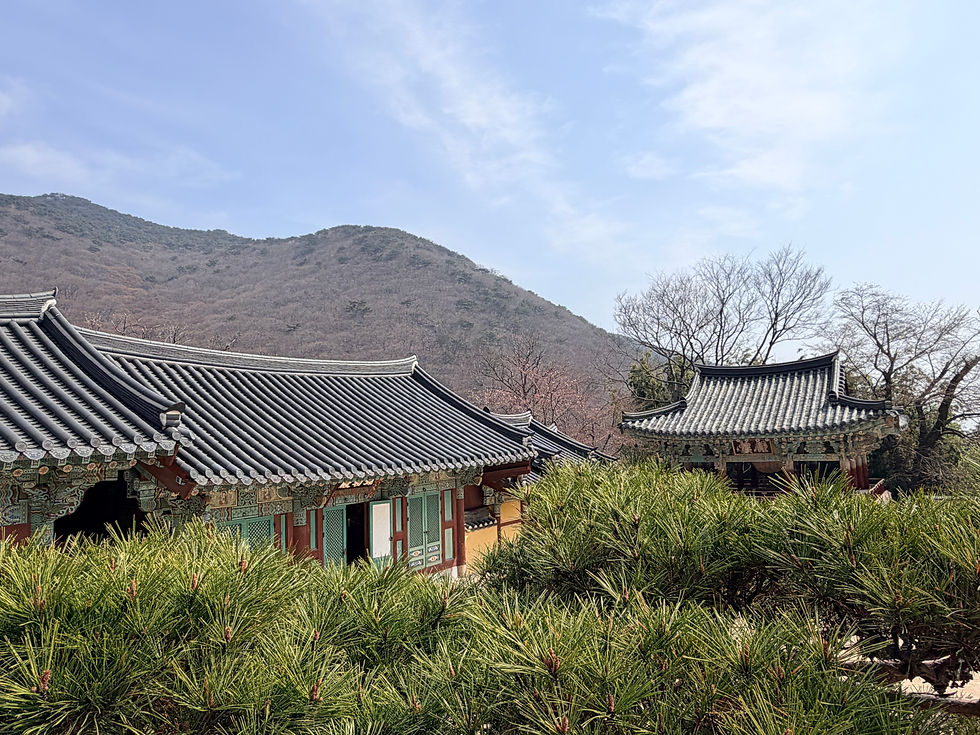


Cheongnyeonam Hermitage,"Blue Lotus Hermitage", is a vibrant, modern hermitage located north of the main Beomeosa Temple complex. Known for its scenic setting on Mt. Geumjeongsan, it features a large golden Buddha statue surrounded by numerous bronze statues, animal imagery, and, formerly, a training center for Sunmudo martial arts.
"Cheongryeonam Hermitage, which means “Blue Lotus Hermitage” in English, is located on the Beomeosa Temple grounds in Geumjeong-gu, Busan. Of the eleven hermitages on the expansive Beomeosa Temple grounds, Cheongryeonam Hermitage is the closest to the main temple. It’s unknown as to when Cheongryeonam Hermitage was first built; however, records indicated that the hermitage was rebuilt in 1709 by the monk Shinju-daesa. It’s believed that Cheongryeonam Hermitage was rebuilt around the same time as other hermitages at Beomeosa Temple."
"Cheongryeonam Hermitage is perhaps best known for reviving Seonmudo (The Way of War for Seon), which is a type of Korean martial arts. Officially, Seonmudo is known as “Bulgyo Geumgang Yeong Gwan ” in Korean. Seonmudo is believed to date all the way back to the Silla Dynasty (57 B.C. to 935 A.D.), when monks like Wonhyo-daesa (617-686 A.D.) and Wongwang-guksa (558-638 A.D.) taught martial arts of the mind and body to the Hwarang (Flower Knights). The Hwarang were a group of elite warrior monks from the Silla Dynasty. The Hwarang lasted until the 10th century. During the Imjin War (1592-1598), Korean Buddhist monks used Seonmudo, as well as swords and knives, to help defend the Korean peninsula from the invading Japanese. Afterwards, Seonmudo was passed on from generation to generation, until it was suppressed by the Japanese during Japanese Colonial Rule (1910-1945). Finally, during the 1970’s, Seonmudo was revived and systematized under the watchful eye of the head monk Jeogun at Beomeosa Temple. Cheongryeonam Hermitage was at the forefront of this resurgence and training of Seonmudo. Training laypeople started in the 1980’s for the very first time in the martial arts’ history. The central location for the training of Seonmudo martial arts is now located at Golgulsa Temple in Gyeongju; however, an integral component to the ever growing popularity of Seonmudo will always have its roots in Cheongryeonam Hermitage at Beomeosa Temple."


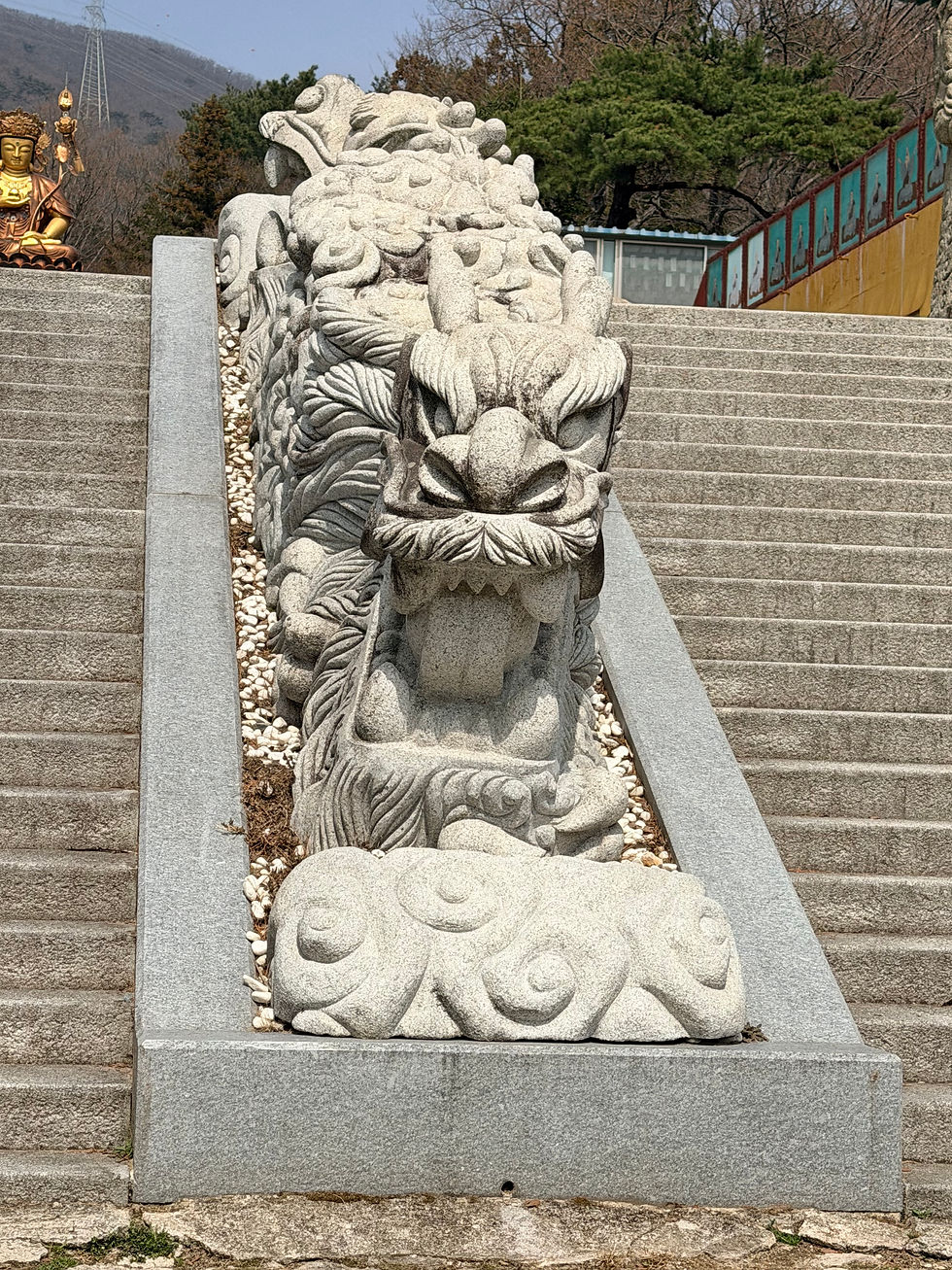
The Korean dragon has a ball in its mouth.


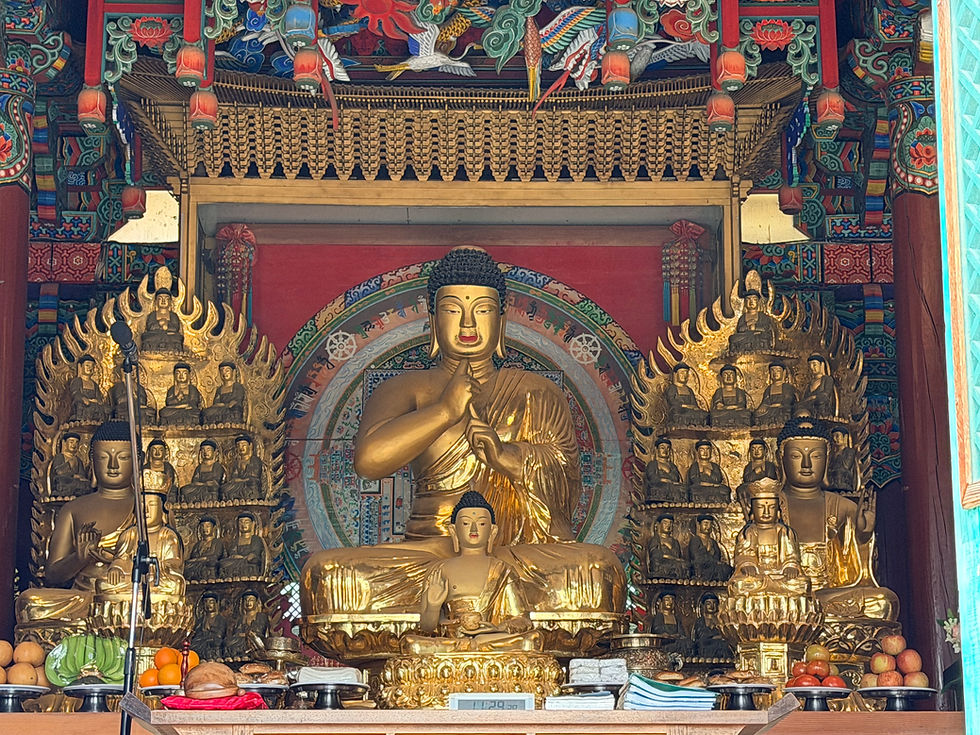
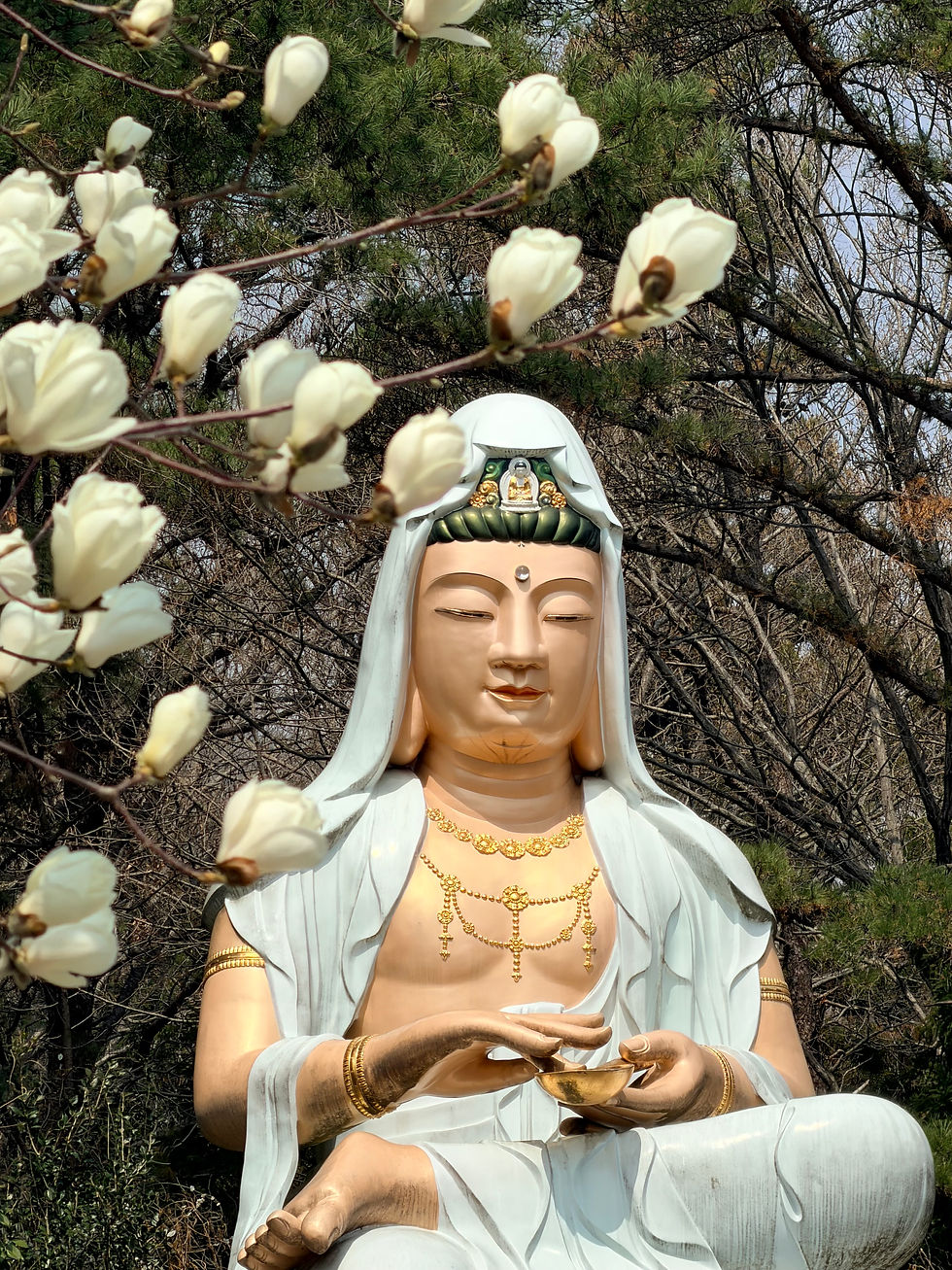
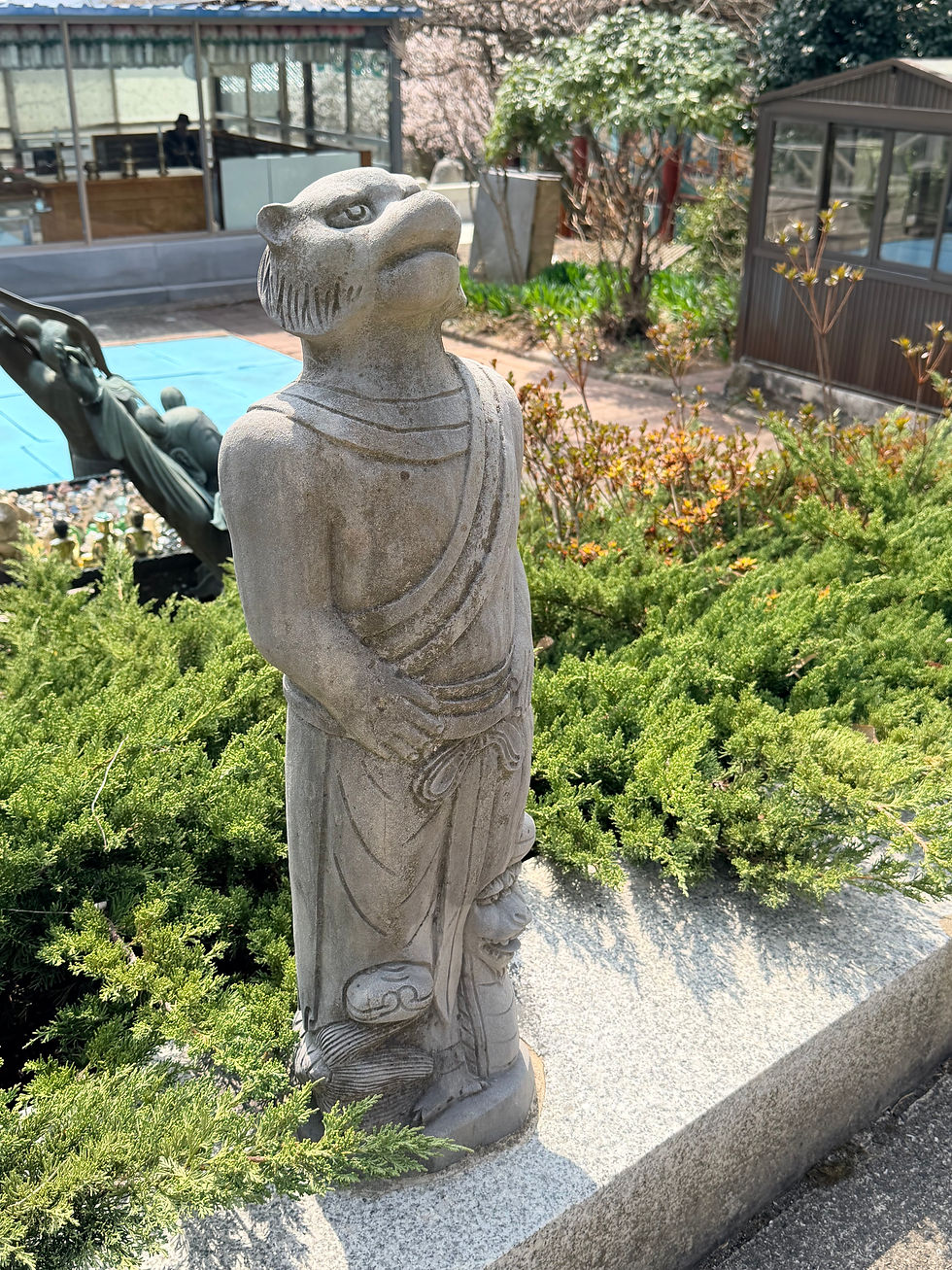
"The dazzling outdoor shrine dedicated to Jijang-bosal (The Bodhisattva of the Afterlife). This outdoor shrine dedicated to Jijang-bosal has to be one of the most impressive of its kind in all of Korea. Climbing two flights of stairs that are accompanied by two large Haetae (mythological creatures that consume fire), you’ll gain entry to this amazing outdoor shrine. In the centre of this shrine sits a large, bronze and golden statue dedicated to a seated image of Jijang-bosal. Fronting this central statue is a copper incense burner with a dragon-base that has turned green through the passage of time and the process of oxidation. This beautiful incense burner is joined by four green copper Bicheon (Flying Heavenly Deities) and a pair of copper monks. There are two entries to this outdoor shrine, which have two Geumgang-yeoksa standing over top of them. And surrounding the central statue of Jijang-bosal are countless smaller copper statues of the Bodhisattva of the Afterlife, as well as equally green copper statues of the Shiwang (The Ten Kings of the Underworld). The entire collection of copper statues are extremely impressive. And to the rear of this collection are a pair of large statues perched on top of the concrete wall backing this outdoor shrine. The white statue to the left is Gwanseeum-bosal (The Bodhisattva of Compassion), while the contemplative statue to the right is Mireuk-bul (The Future Buddha). Fronting the entire outdoor shrine dedicated to Jijang-bosal are a collection of smaller sized statues of the twelve Zodiac Generals."




Michael was born under the monkey, while I was born under the rabbit or hare.


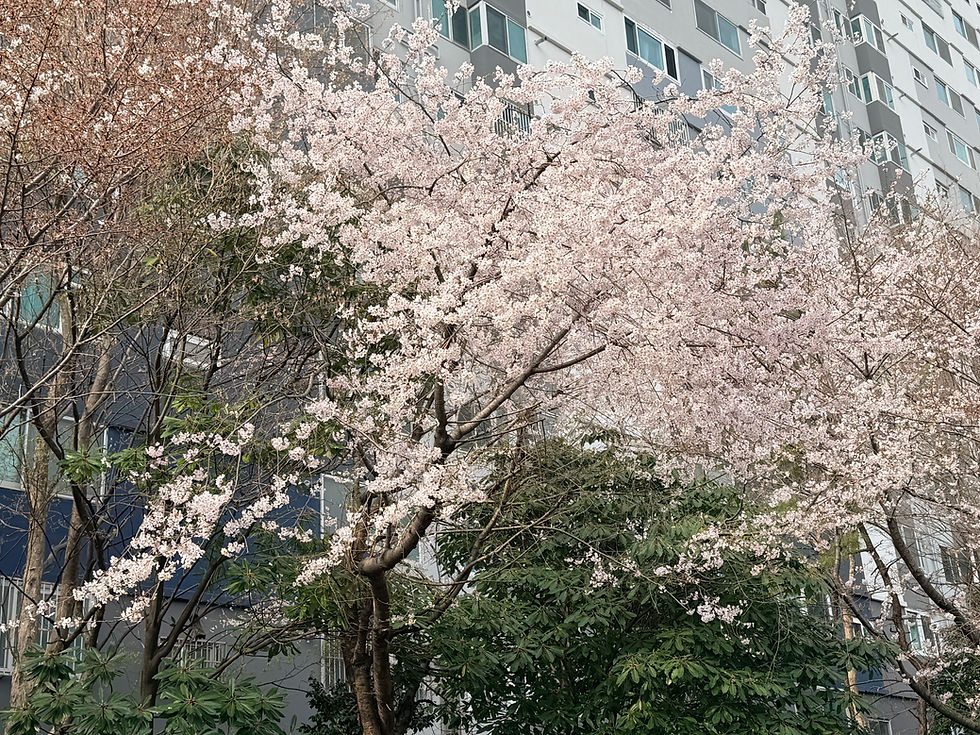
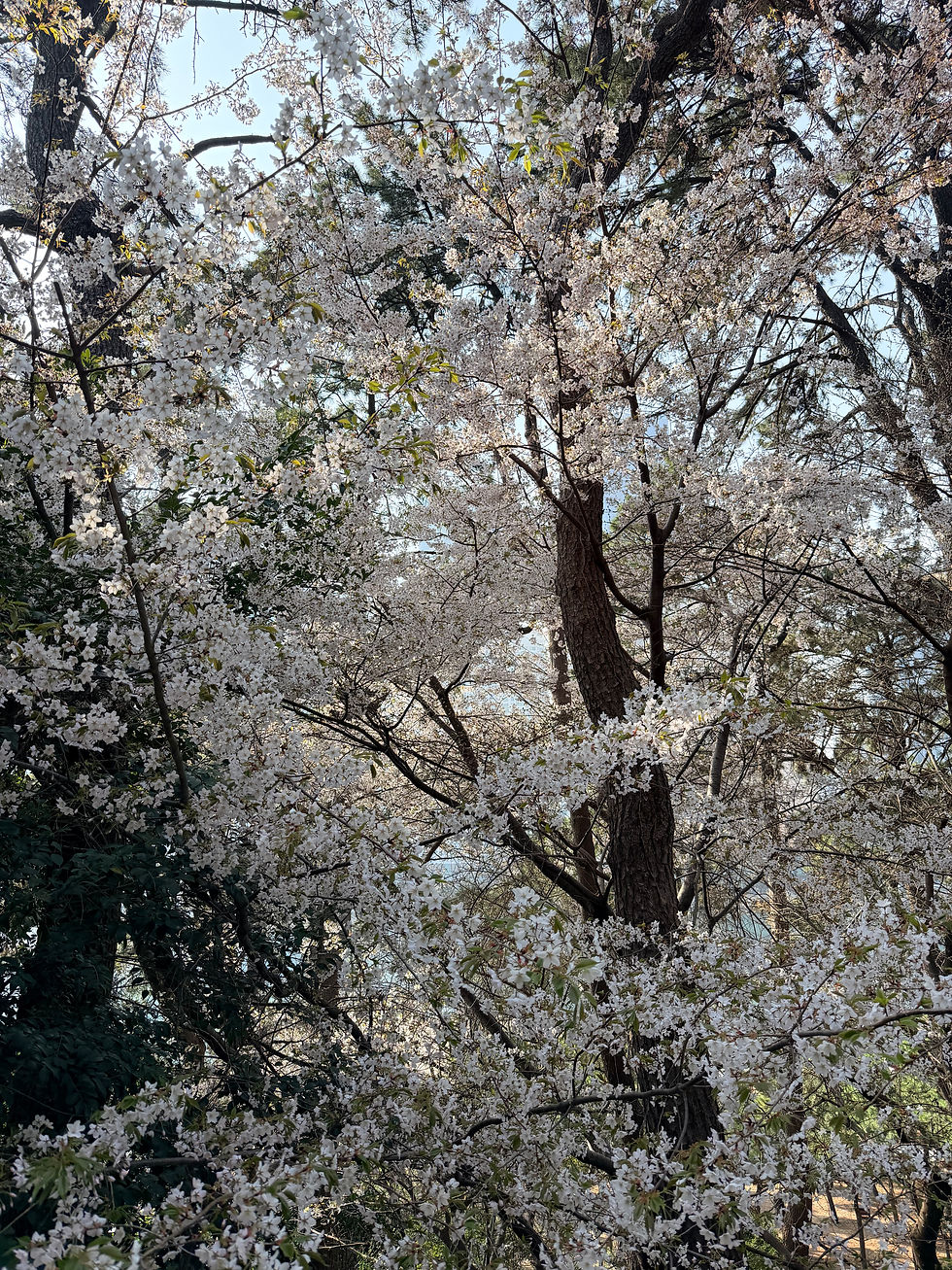
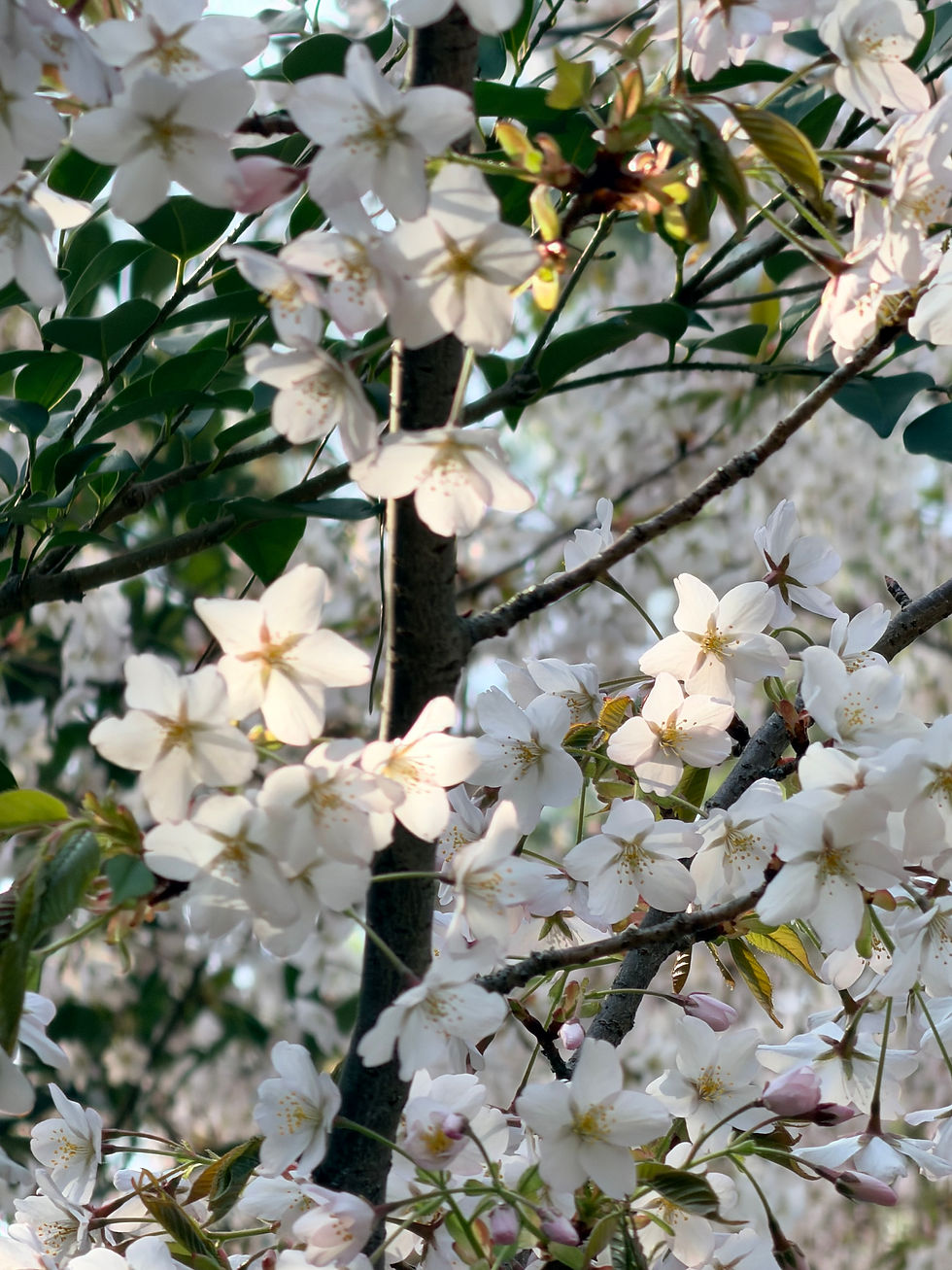
We stopped to see the cherry blossoms near the Haeundae Marina Apartments on Cherry Blossom Road. This area is famous in spring for its beautiful cherry blossoms, creating a calm and picturesque walking path.


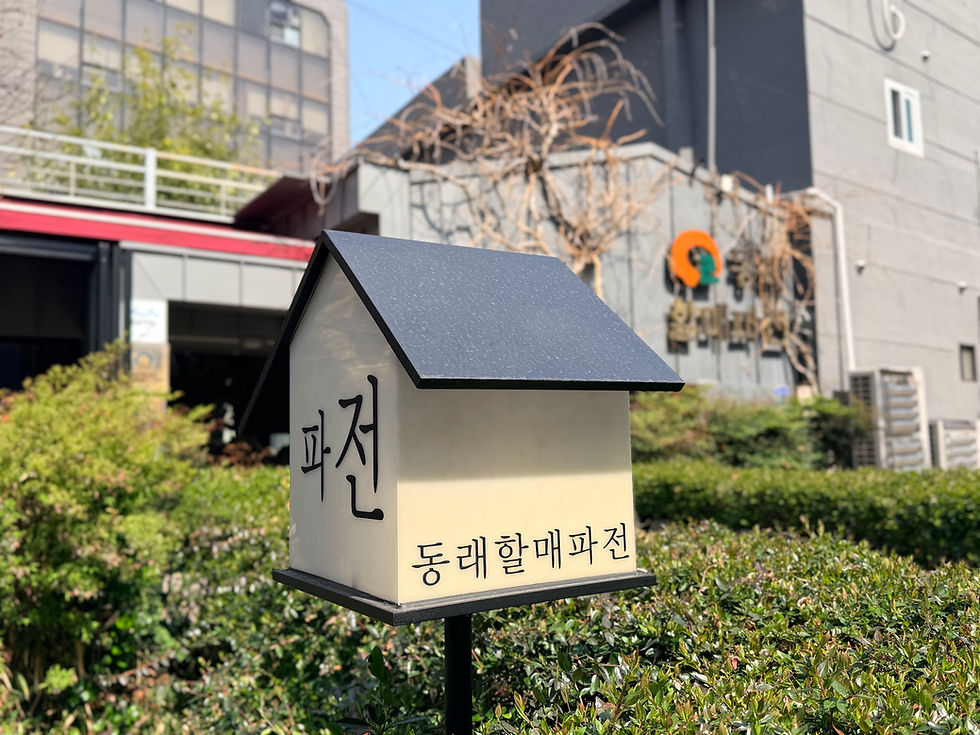
Lunch at Dongnae Halmae Pajeon


At Dongnae Halmae Pajeon, we enjoyed a “Ddumisang” set menu, featuring a variety of traditional dishes:
Dongnae Pajeon: The main dish — a thick, moist Korean pancake with green onions and seafood, crispy outside and soft inside. Pajeon is my favorite!!! Now, I know another way to prepare it.

Pickled cabbage

Dongnae Godong Jjim: A rich and savory dish made with sea snails in a thick, nutty sauce.

Dotori-muk Muchim (Seasoned Acorn Jelly): A refreshing side dish with a soft, jelly-like texture.


Grilled Deodeok (Sam-saek Deodeok Gui): Slightly bitter and aromatic grilled root dish with a unique flavor. This ws a little spicy.

Meal (Rice Set):
Stone pot bibimbap


Side dishes: soybean paste soup, braised cutlassfish, water kimchi, cabbage pickles, braised mushrooms, and radish kimchi (seokbakji)

Dessert:
Ujitji Tteok: A traditional rice cake made by pan-frying glutinous rice dough, filled with sweet red bean paste, folded in half, and decorated like a flower with jujube and herbs.

The meal was filling but absolutely delicious!!!
After lunch we visited Bokcheon Museum.
"Bokcheon Museum, an archaeological museum in Busan, opened its doors to the public on October 5, 1996 as a tribute to the long-honored history of Busan from the Samhan Era to the Three Kingdoms Era. The museum displays relics and artifacts excavated from the ancient burial ground in Bokcheon-dong. As many as 169 artifact pieces, including diverse earthenware, weapons, and ruins, found in a series of seven excavations are on display throughout the museum. The array of relics and tombs discovered in the Ancient Tombs in Bokcheon-dong, designated as Historic Site No. 273, are essential to solving the mystery of the Gaya Kingdom, which remains an uncharted, secret land."
"Since opening, the museum has been conducting further research at the site of the burial grounds and remains in the local area to better understand the antiquated history and culture of Busan as well as the ancient kingdom of Gaya. The museum, as a reputable venue for historical education and exploration, also holds academic seminars and special exhibitions to share the research results and achievements with scholars and the community alike."


View of the area by the museum.


Our last stop was Dongbaek Island and the Nurimaru APEC House. Dongbaek Island (Dongbaekseom), located at the southern end of Busan's Haeundae Beach, is a former island now connected to the mainland known for its dense pine trees and camellia flowers. It features a scenic 950-meter coastal walking trail, the iconic Nurimaru APEC House, and a Mermaid Statue.
Dongbaekseom Island was designated as a park in September 1, 1966. The island is full of dongbaek and pine trees and is connected to the main land by a bridge. The island also has a popular walking trail as well as badminton court, benches and restrooms.


Home for feral cats

Camellia
"Korean Fire" has bright red to deep burgundy flowers on a hardy camellia with a bright golden yellow center. These flowers appear in the early spring, which is an April bloomer. "Korean Fire" was a selection that was collected by Barry Yinger on Taechong Island along the North Korean coast."
The flower has a very deep meaning of romantic love, devotion, adoration and care.

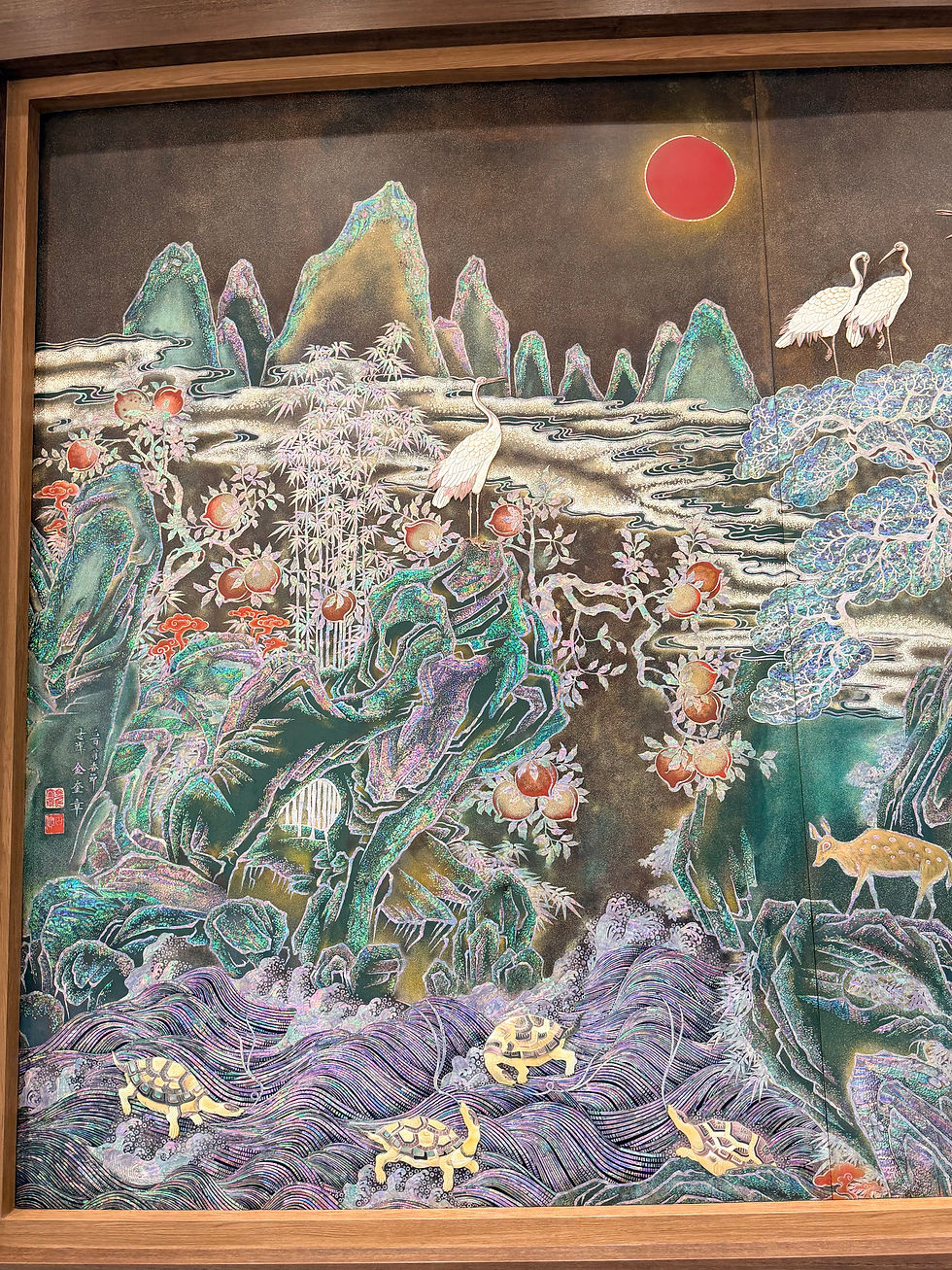
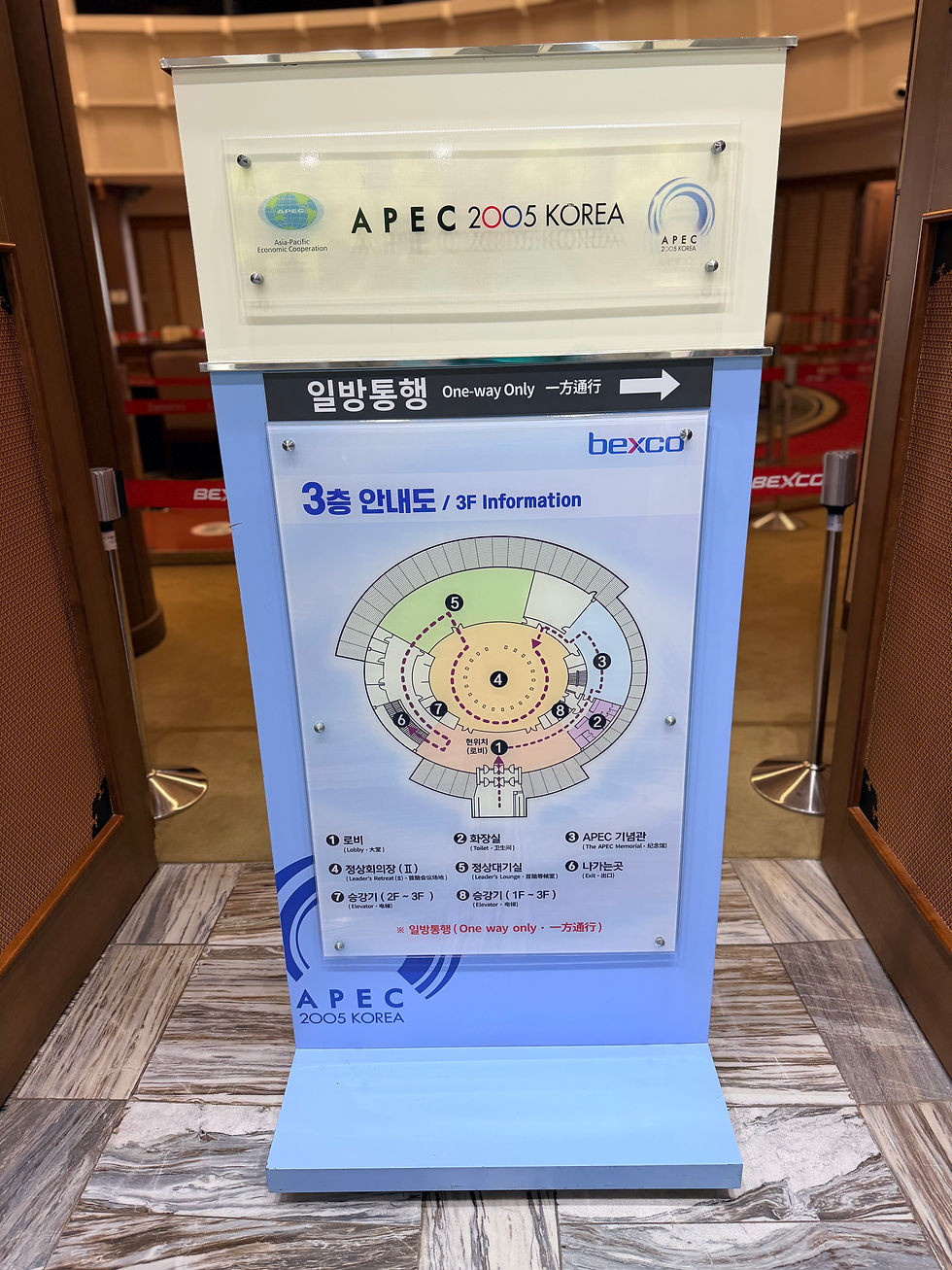
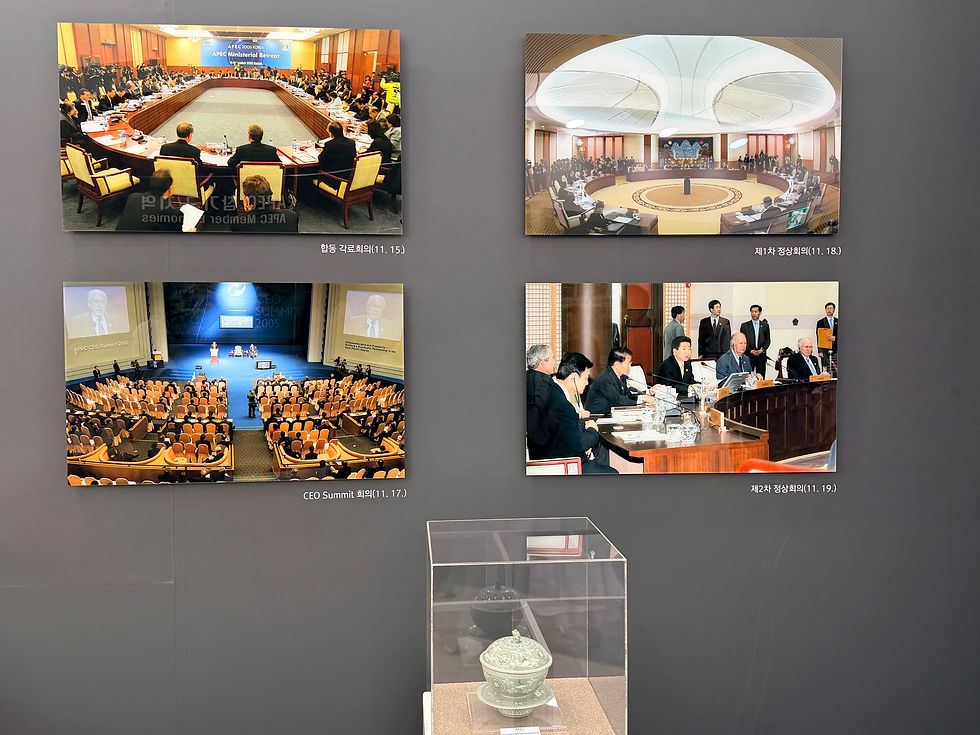
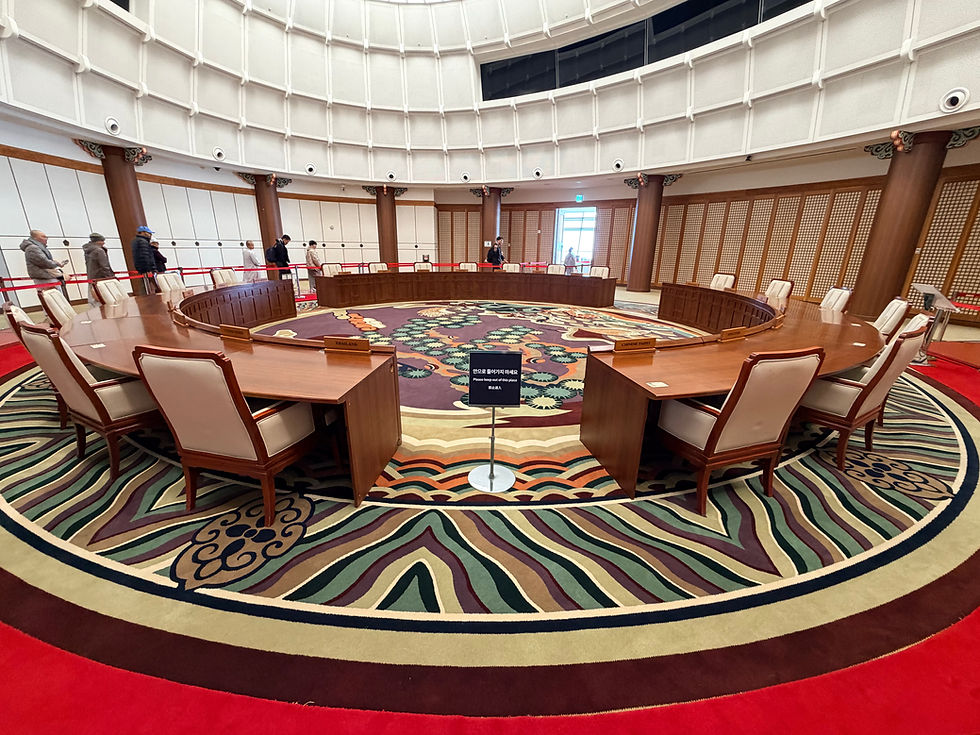
Nurimaru APEC House. Located on Dongbaekseom Island, an island of camellia trees, Nurimaru APEC House was the venue for the 2005 APEC Summit. Since then, it has been used as a memorial hall and a conference center. This three-story building is a contemporary recreation of a traditional Korean pavilion. The roof is inspired by the slope of Dongbaekseom Island, while the interior design features visual representations of traditional Korean culture. The terrace provides a great view of the Oryukdo Islets, Gwangandaegyo Bridge, and Dalmaji Hill. Visitors to Nurimaru APEC House can enjoy both the beauty of nature and the contemporary design of the building.





The parks have exercise equipment. Young demonstrating how to use the equipment.

I'm so happy that I am getting the chance to see all the cherry blossoms!


Enjoy the view from our bedroom. Good night.


Comments